



Engraved Glass Beaker
An engraved glass beaker is a tactile vessel bearing detailed wheel-cut or diamond-point ornamentation, prized for its decorative weight and historic craftsmanship.
Engraved Glass Beaker
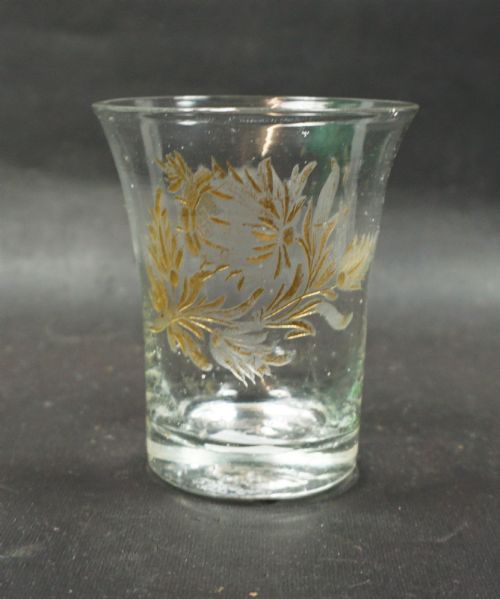
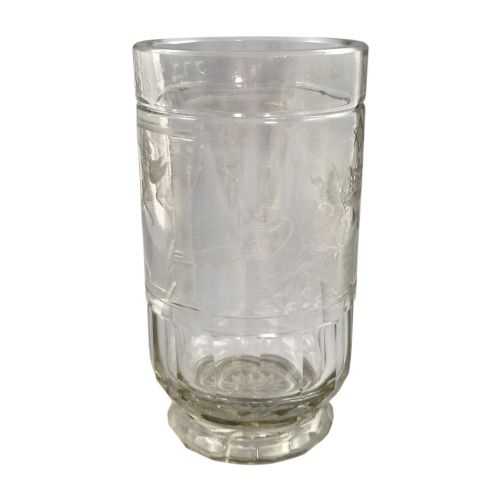
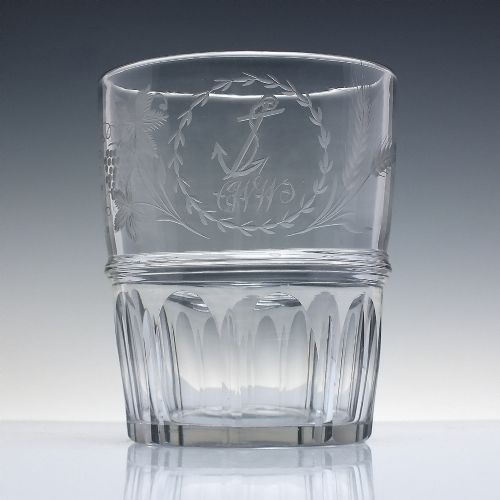
When you search for an engraved glass beaker, you encounter cylindrical drinking vessels and display pieces spanning the Georgian, Victorian, and eighteenth-century eras. The examples meeting you here range from substantial Bohemian ceremonial pieces to delicate English spirit beakers and medical measures.
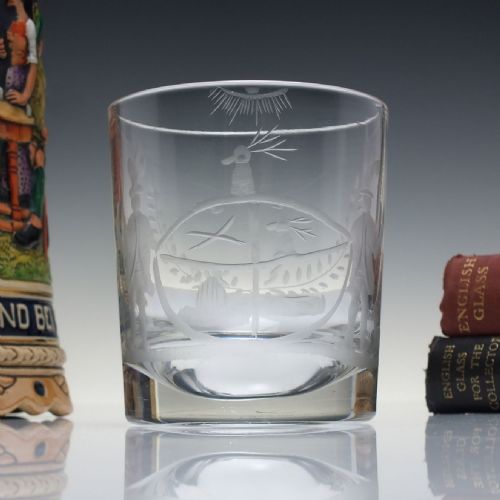
The forms shift from straight-sided eighteenth-century hand-blown green glass vases to nineteenth-century ruby flash glass tumblers and Masonic ceremonial vessels. Most items you find on this page reflect the Victorian and Georgian penchant for commemorative imagery and dense surface decoration.
Object types stretch from everyday drinking glasses and ale beakers to large ceremonial vessels and spirit measures. Each period brings a distinct silhouette, whether the generous proportions of an eighteenth-century Potsdam beaker or the compact utility of a Victorian medicine glass.
How they were made
The makers behind these objects utilised lead crystal, flint glass, and soda glass, shaping them through traditional hand-blowing techniques before applying surface decoration. Ruby flash glass and ruby glass achieve their striking hues through metallic oxide additions during the molten stage, providing a contrasting layer for subsequent engraving.
Engraving on these pieces relies on wheel-cutting or diamond-point scratching to carve intricate motifs into the body of the vessel. Gilding occasionally complements the engraving, adding metallic highlights to nineteenth-century vases and ceremonial beakers.
Engraved Glass Beaker Retail Price Guide 2026
Typical asking prices for engraved glass beaker among the pieces listed under this phrase on Sellingantiques today, from the lower quarter to the upper quarter. They describe what is for sale here now, not the wider market.
Listings span materials from clear lead crystal and flint glass to ruby flash glass, encompassing periods from the eighteenth century through to the Edwardian era.
What varies in quality
Quality in an engraved glass beaker rests upon the crispness of the wheel-cut lines and the proportional balance of the vessel. Superior pieces display deep, sharply defined motifs that catch the light, whereas lesser examples feature shallow, hesitant scratching.
The metal itself dictates the grade of the piece, with heavy lead crystal and clear flint glass offering superior brilliance compared to ordinary soda glass. The weight in the hand and the resonance when tapped distinguish the finer productions from utilitarian measures.
The Engraved Glass Beaker Glossary
- Flint glass
- A heavy, highly refractive type of glass containing lead oxide, developed to imitate rock crystal. It provides exceptional clarity and weight to antique drinking vessels.
- Ruby flash glass
- A vessel formed of clear glass coated with a thin outer layer of red glass, which the engraver cuts through to reveal the clear substrate underneath. This technique creates a dramatic two-tone decorative effect.
- Wheel-cut
- A method of engraving glass by holding the vessel against a rapidly rotating small wheel abrasive. It produces smooth, deep incisions and complex geometric or pictorial designs.
- Lead crystal
- A high-clarity glass incorporating lead, known for its dense feel and ability to disperse light into spectral colours. It forms the basis of many fine drinking vessels.
- Soda glass
- A common, lighter glass composition utilising sodium carbonate rather than lead. It was widely used for utilitarian and medical glassware.
Engraved Glass Beaker: Frequently Asked Questions
Can I still drink from these beakers?
Many sturdy Georgian and Victorian tumblers remain structurally sound for occasional use with cool beverages. Consider the thickness of the rim and the presence of any internal wear before serving drinks.
Displaying them as cabinet pieces or using them for dry storage preserves fragile seventeenth and eighteenth-century examples from accidental chipping.
What is ruby flash glass?
Ruby flash glass consists of a colourless glass body covered by a very thin outer layer of deep red glass. Engravers cut through this red skin to expose the clear glass beneath.
This layered construction creates striking contrast in nineteenth-century decorative glassware and ceremonial beakers.
How do I date an engraved beaker?
Examine the weight, pontil mark on the base, and the style of the engraving to establish a baseline period. Eighteenth-century pieces often display hand-blown irregularities and Potsdam or Bohemian motifs, while Victorian items lean towards dense commemorative and Masonic iconography.
Comparing the optical qualities of the glass itself against known period standards helps narrow down the decade of manufacture.