


18th Century Tea Chest
An 18th century tea chest holds the precious leaves of a luxury past, combining fine cabinetmaking with secure storage for the home.
What an 18th Century Tea Chest Is
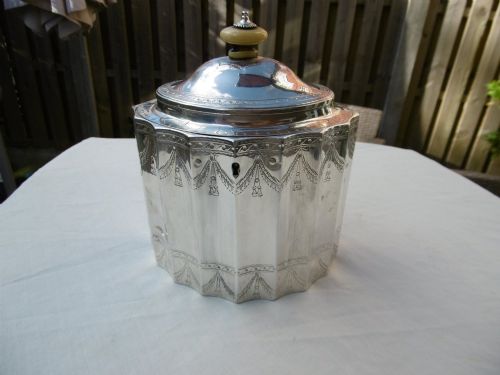
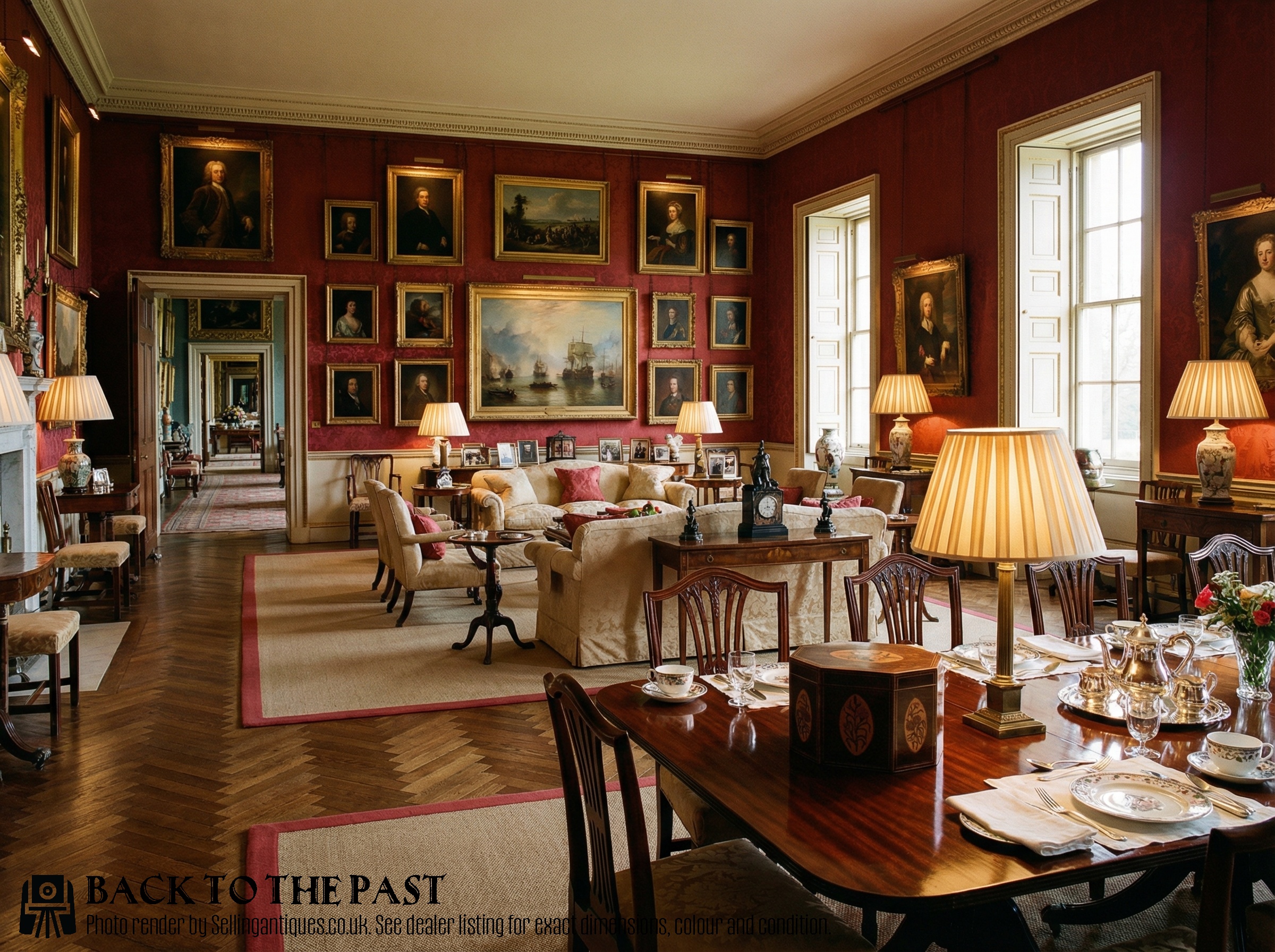
An 18th century tea chest is a refined storage box designed to keep valuable tea leaves safe under lock and key during the Georgian period. These pieces take the form of tea caddies and tea chests, frequently appearing in domestic settings where hospitality and social status met over the brewing pot.
Origins span Georgian Britain, with occasional wider geographic examples such as Dutch colonial teak pieces appearing in the record. These chests functioned as both functional containers and decorative objects for the parlour or drawing room.
Materials and Construction
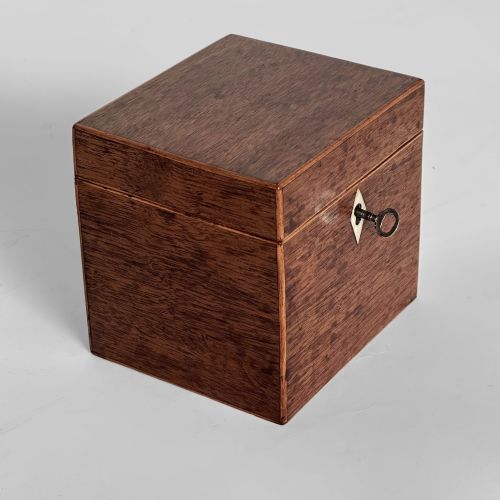
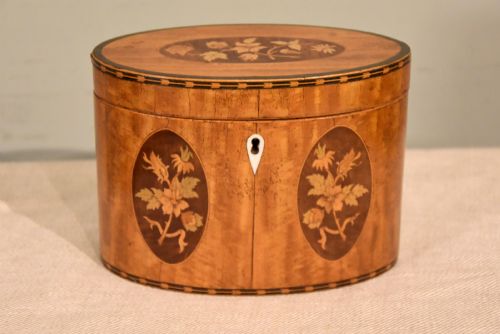
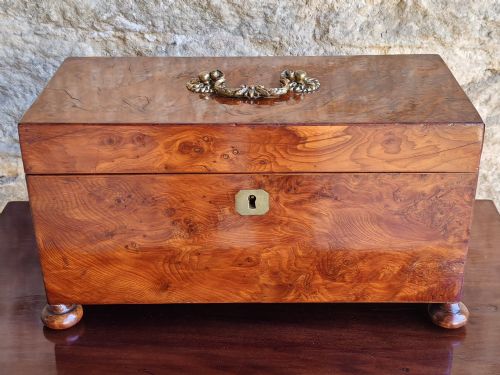
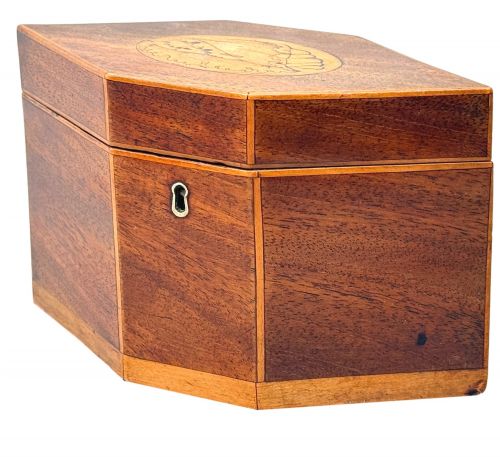
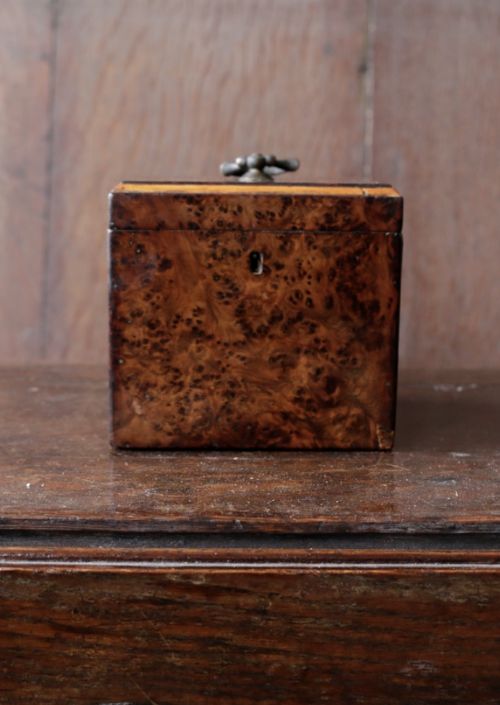
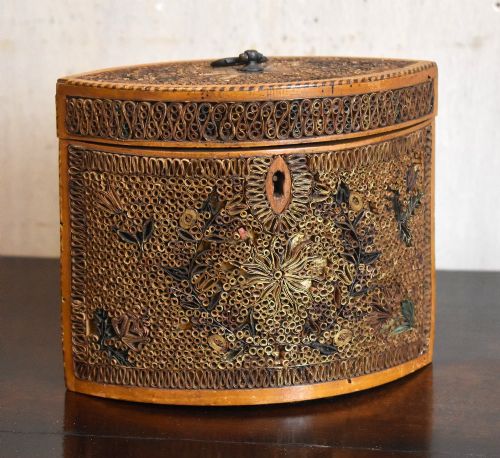
Makers utilised dense timbers such as mahogany and walnut as the primary structural bodies, often pairing them with decorative veneers like satinwood, harewood, and burr elm. Exterior surfaces frequently incorporated contrasting stringing or inlay work in boxwood and ebony to define geometric panels.
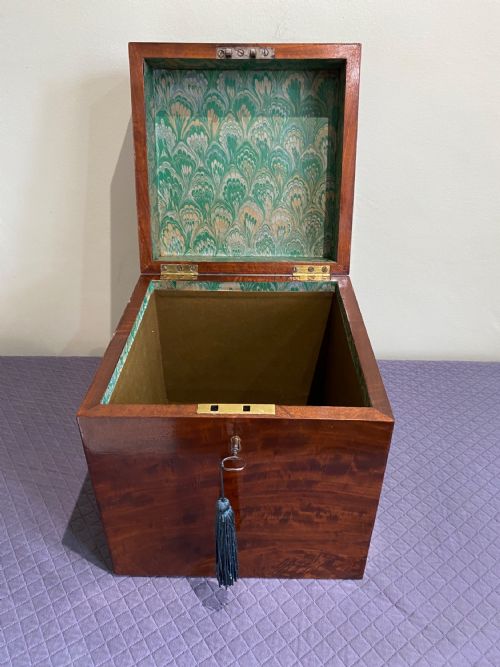
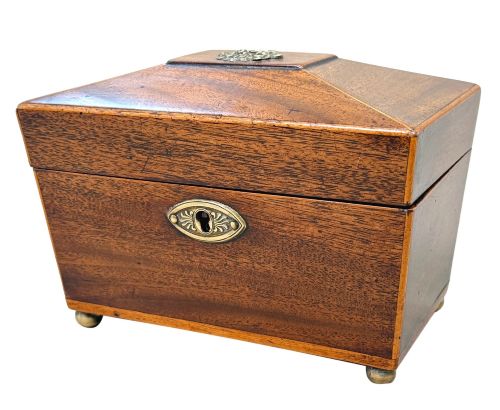
Metal fittings played a crucial role in construction, with brass employed for escutcheons, hinges, and carrying handles. Internal elements sometimes featured bone details, alongside specialised compartments designed to keep separate varieties of tea leaf dry and secure.
Retail Price Guide 2026
Typical UK retail prices for 18th century tea chest, calculated from the Sellingantiques database of over a million retail prices indexed since 2003. This retail price guide relies exclusively on Sellingantiques data; no external sources or auction records are used, so the figures do not describe the wider market.
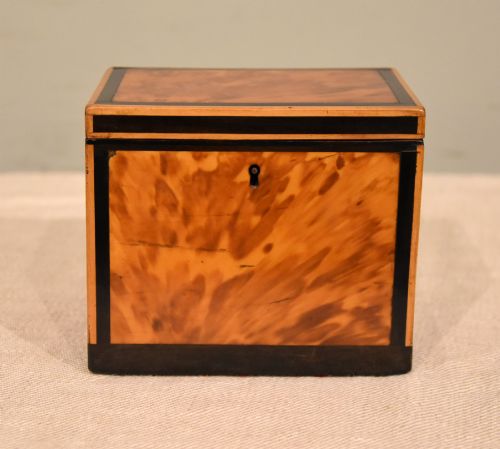
Recorded forms span simple rectangular mahogany tea caddies alongside decagonal tortoiseshell examples and Dutch colonial teak trunks.
Judging Quality and Execution
The distinction between standard domestic pieces and superior examples rests in the choice of timber figure and the precision of the cabinetwork. Grain patterns in burr elm, tortoiseshell, or figured mahogany demonstrate the maker's eye for decorative impact over plain utility.
Refinement shows in the subtlety of stringing, the integration of brass hardware, and the survival of original internal divisions. Harmonious proportions separate balanced architectural design from heavier, utilitarian storage boxes.
The 18th Century Tea Chest Glossary
- Tea caddy
- A small box or chest designed to hold tea leaves before the drink was brewed. These containers were central to the formal ritual of tea service in Georgian interiors.
- Stringing
- A narrow line of contrasting wood inlay used to outline panels and edges on furniture and boxes. This decorative technique highlights the structural geometry of eighteenth-century pieces.
- Escutcheon
- A protective plate surrounding a keyhole, usually fashioned from brass. On tea chests, this hardware secures the locking mechanism that kept expensive tea leaves under domestic control.
- Burr elm
- A specialised timber growth yielding highly figured, swirling grain patterns prized by cabinetmakers. It offers rich visual texture on the exterior surfaces of luxury caddies.
Frequently Asked Questions
What is an 18th century tea chest?
An 18th century tea chest is a lockable wooden box created during the Georgian period to store expensive tea leaves securely.
Because tea was a costly commodity at the time, these chests protected the contents from moisture and pilfering while remaining on display in the home.
How were tea chests used?
Tea chests were kept in the parlour or dining room, where the head of the household would dispense the leaves for each brewing.
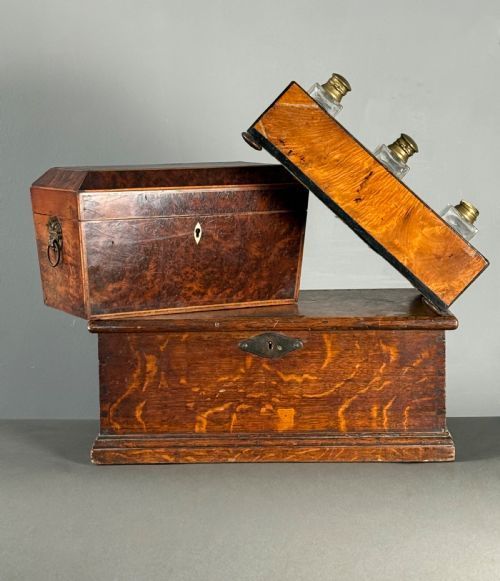
Many examples feature internal compartments or multiple caddies inside a single chest to separate black and green teas.
What materials are they made from?
These chests are primarily constructed from hardwoods like mahogany, walnut, and teak, often finished with decorative veneers.
Cabinetmakers embellished them using satinwood, harewood, burr elm, tortoiseshell, boxwood stringing, and brass hardware.
How do I identify a Georgian tea caddy?
Georgian pieces are identified by their characteristic timber choices, period brass fittings, and construction methods typical of the eighteenth century.
Look for traditional joinery, characteristic furniture styles of the era, and period locking mechanisms.