
18th Century Style Seating
These pieces of 18th century style seating offer the rich character and craftsmanship of Georgian and revival periods for everyday interior schemes.
18th Century Style Seating
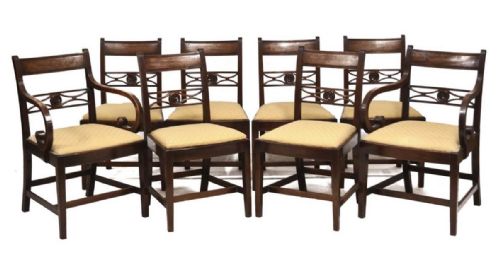
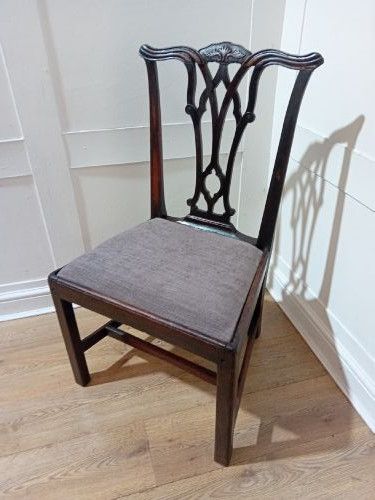
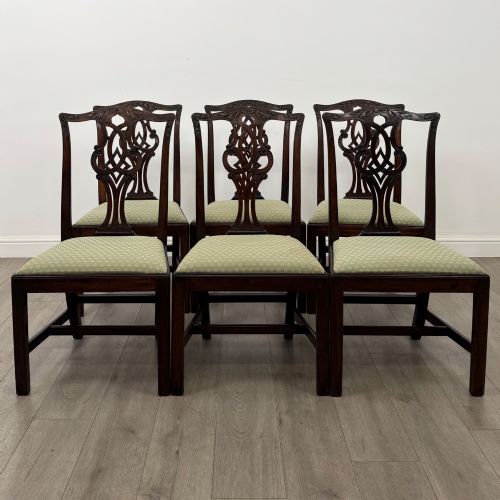
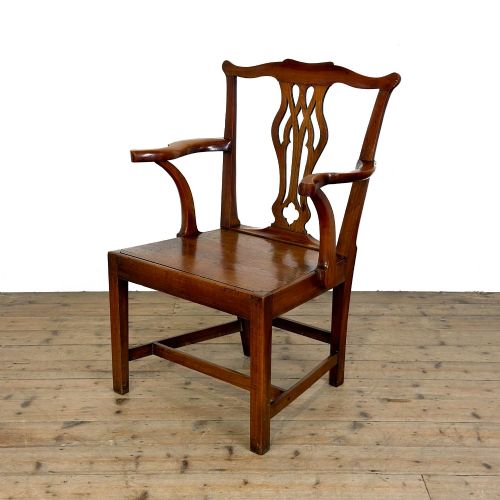
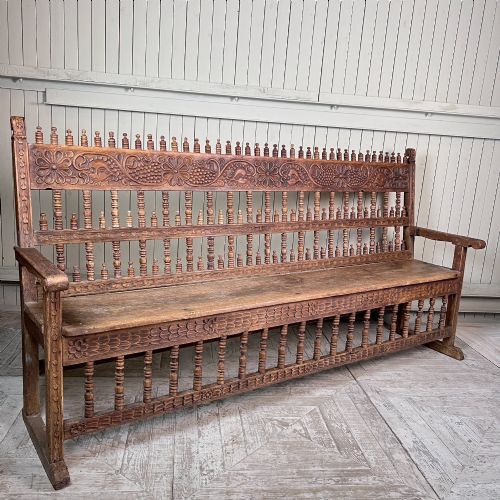
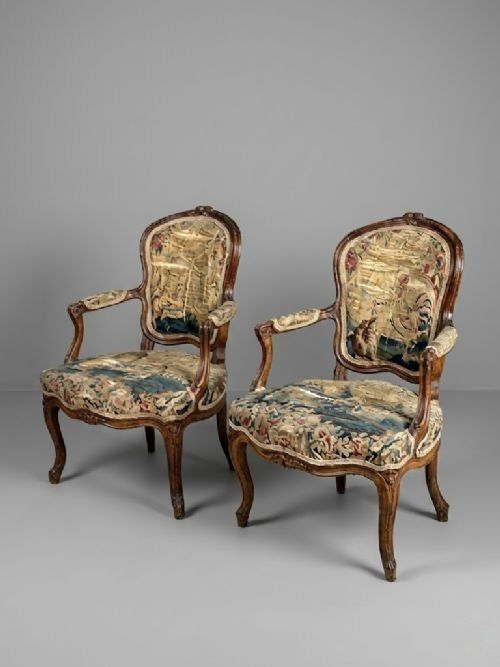
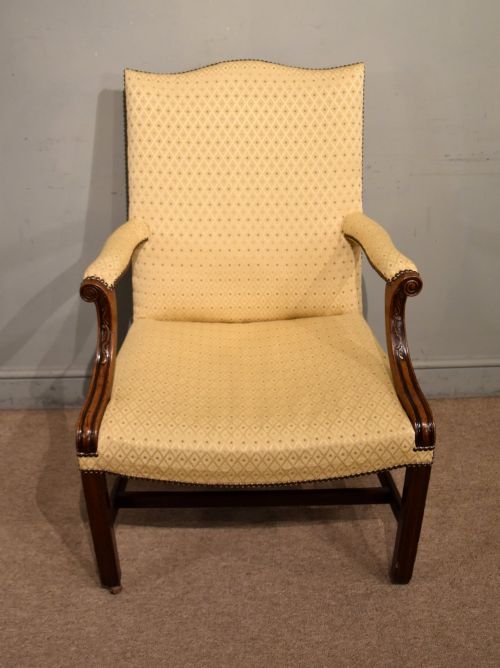
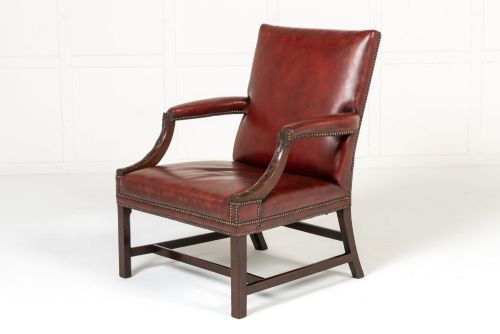
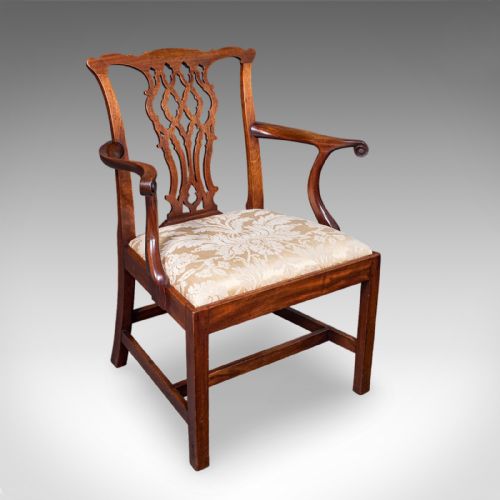
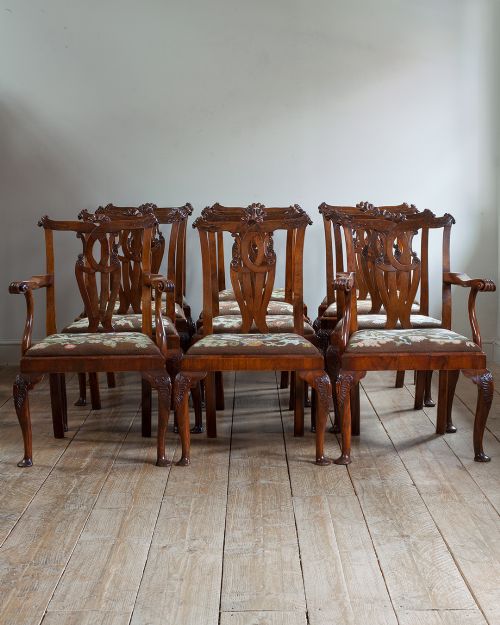
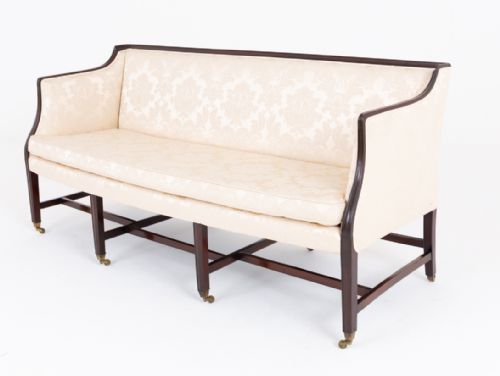
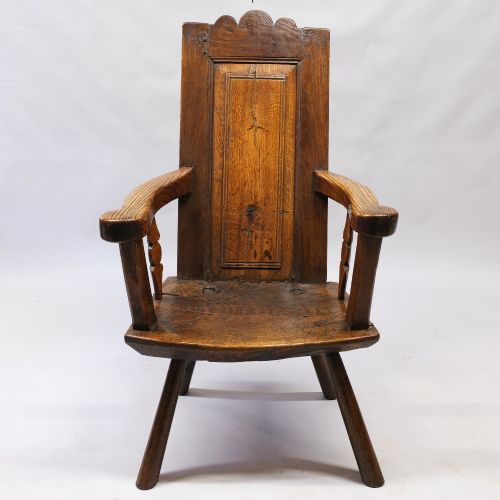
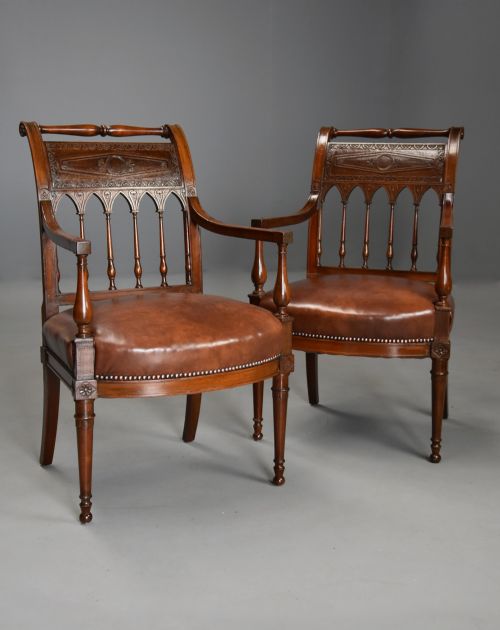
When searching for 18th century style seating, buyers encounter a diverse selection of dining chairs, armchairs, settees, and stools dating from the original Georgian era through to later revival periods. The inventory spans robust mahogany and walnut frames, ranging from formal Gainsborough library chairs to country Chippendale designs and painted seating.
The most common forms on this page are dining chairs in sets and individual armchairs, reflecting the domestic requirements of the period. Pieces originate from English, Scottish, Irish, and continental European workshops, demonstrating distinct regional interpretations of classic furniture designs.
Materials and Technique
Makers constructed these frames predominantly from solid hardwoods such as mahogany, walnut, and fruitwood, often selecting timber with pronounced grain patterns. Joinery relied on traditional mortise and tenon methods, frequently reinforced with corner blocks on seating frames to ensure structural stability.
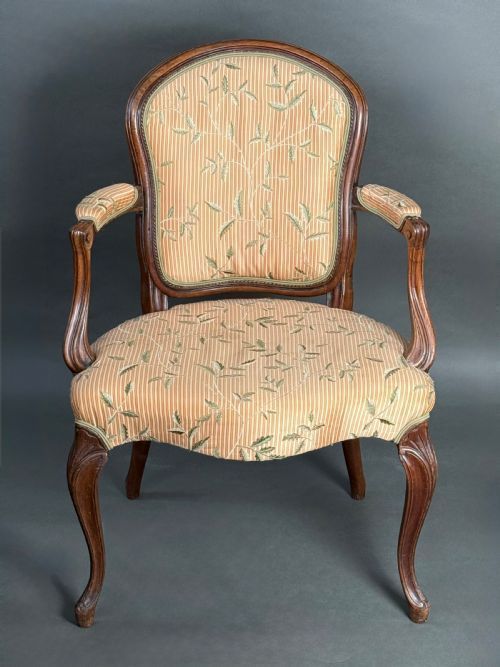
Upholstery techniques involved webbing and horsehair stuffing secured beneath top coverings of silk, leather, or woven fabric, while decorative surfaces received hand-carved details or painted finishes.
Listings feature mahogany, walnut, oak, fruitwood, and painted wood alongside textiles including silk, leather, and woven fabric.
What Varies in Quality
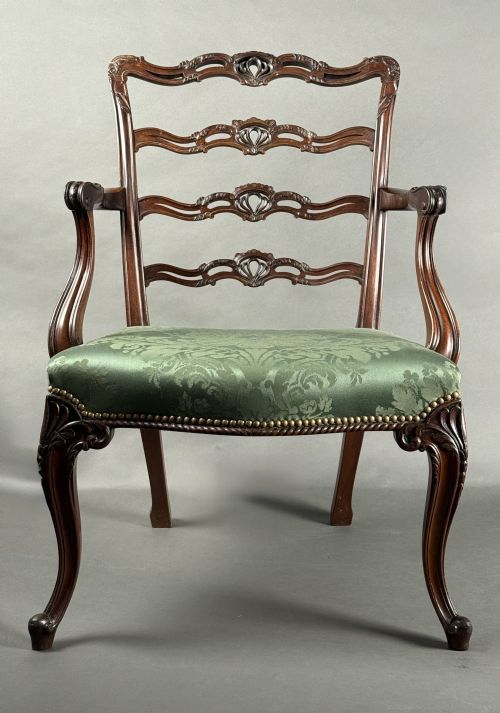
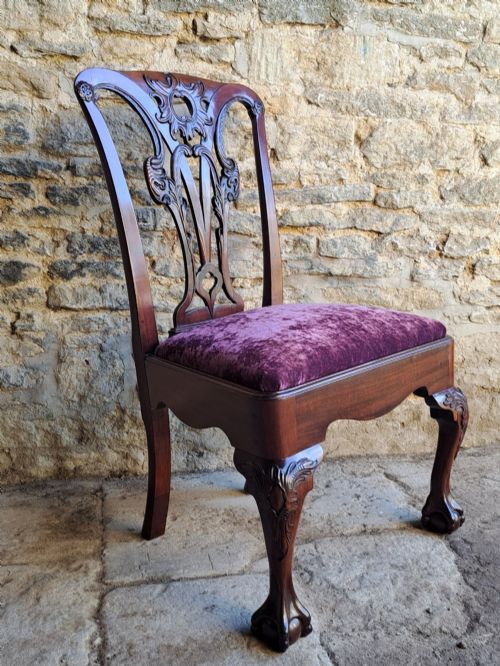
The degree of refinement in the hand-carving separates standard production from exceptional work, particularly in details such as ribbon backs, shell motifs, and ball and claw feet. Timber selection also dictates grade, with dense, deeply figured mahogany and quarter-sawn walnut commanding greater attention than plain woods.
Originality of components and structural integrity influence standing, with pieces retaining their primary frames and period upholstery foundations holding more historical weight.
Colefax and Fowler
The 18th Century Style Seating Glossary
- Cabriole leg
- A furniture leg that curves outward at the knee and tapers inward toward the ankle, typically ending in a pad or claw foot. This form derives from animal limbs and gained popularity during the Georgian period.
- Gainsborough chair
- A wide, open-armed armchair with a padded back and seat, designed for use in libraries or writing rooms. The style emerged during the mid-eighteenth century.
- Sgabello
- A light wooden chair originating from the Italian Renaissance, characterised by a high back and solid trestle supports instead of conventional legs. These chairs frequently appear in hallways.
- Ladder-back
- A chair back featuring a series of horizontal arched slats resembling the rungs of a ladder. This design is common in country vernacular seating.
18th Century Style Seating: Frequently Asked Questions
How do I identify a true Georgian chair?
Examine the timber species, construction joints, and decorative carving style to determine authenticity.
Original pieces typically display period joinery methods, such as hand-cut dovetails and pegged mortise and tenon frames, combined with native hardwoods like mahogany or walnut.
Are these chairs suitable for daily dining?
Most wooden dining chairs from these periods remain sturdy enough for regular domestic use.
Buyers should verify the stability of the frame joints and check whether the internal webbing requires reinforcement before placing them into heavy daily service.
What is a Gainsborough armchair?
A Gainsborough chair is a wide, upholstered armchair featuring open wooden arms and a square back.
Originally built for eighteenth-century libraries and drawing rooms, they provide a generous seating area while maintaining a relatively compact footprint.
How should I care for antique wood seating?
Maintain antique wooden frames by keeping them away from direct heat sources and sudden temperature fluctuations.
Apply a traditional beeswax polish occasionally to nourish the timber surface and preserve the natural patina without building up heavy residue.