
Mahogany Carver and Side Chairs
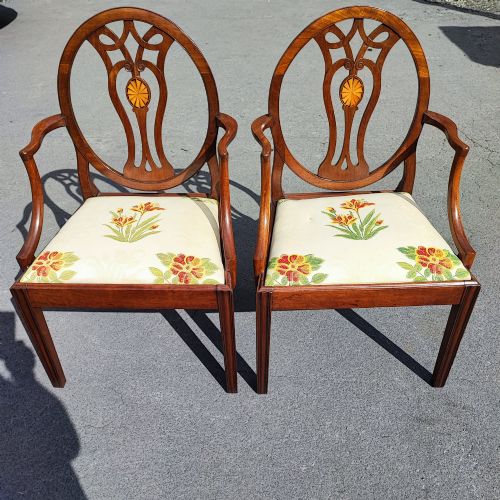
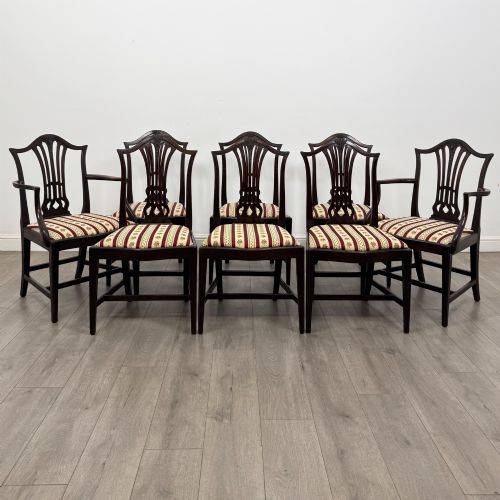
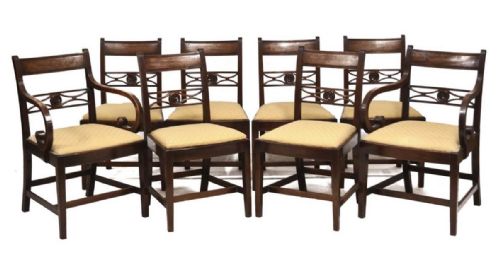
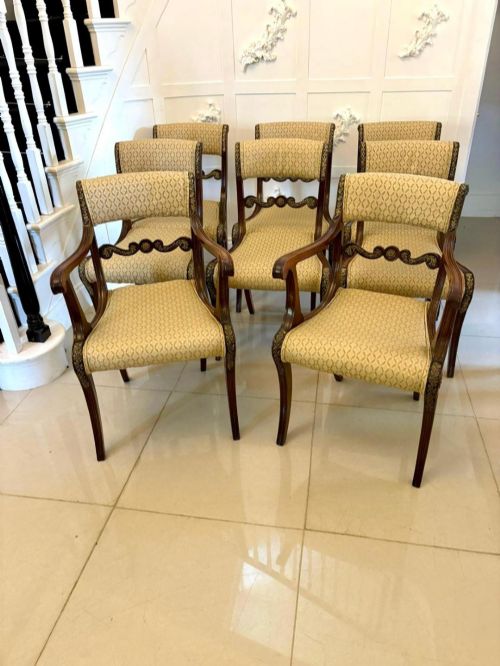
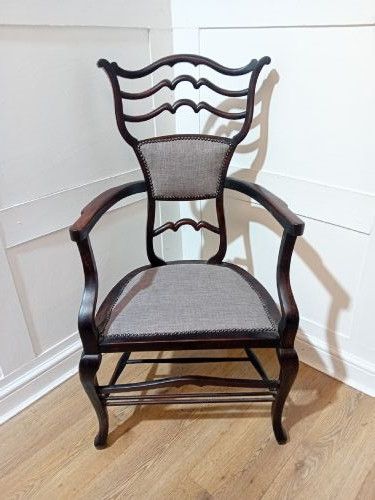
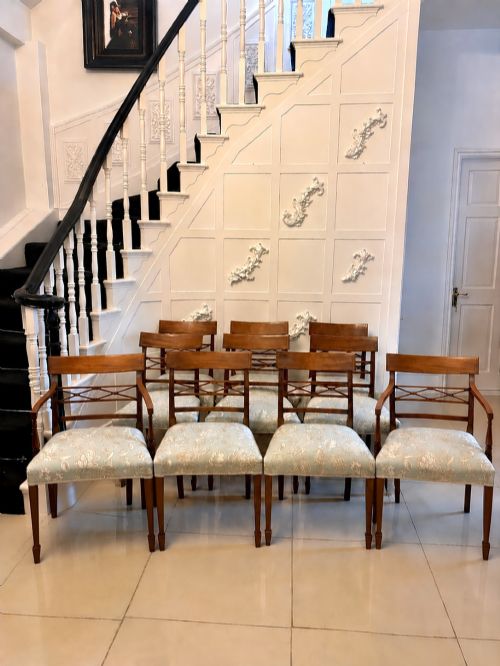
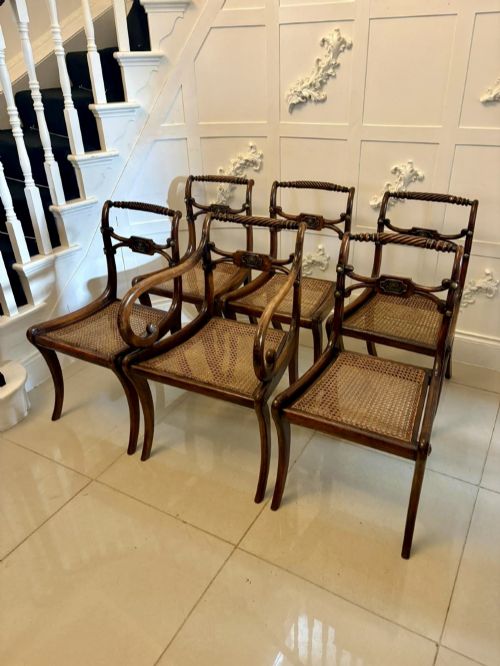
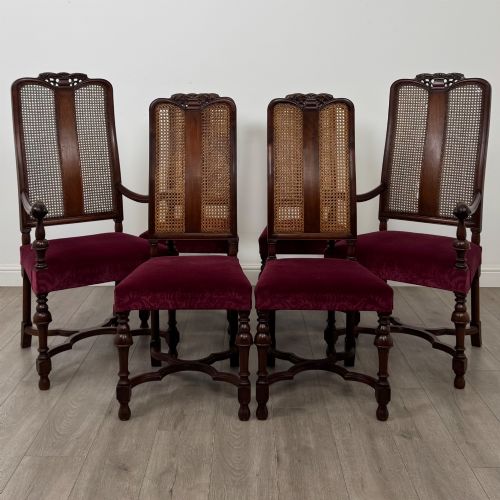
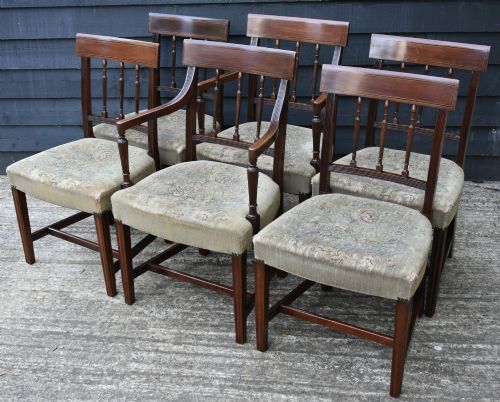
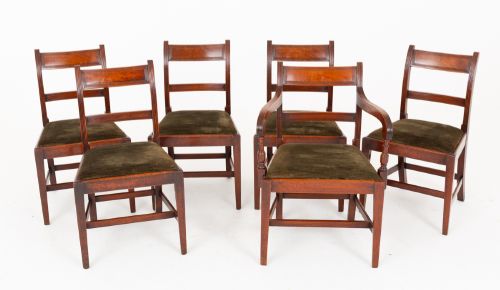
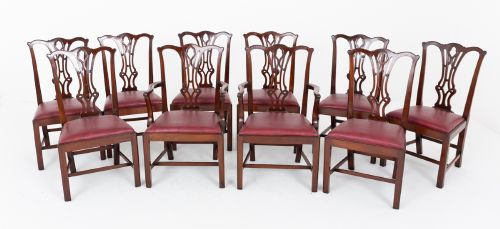
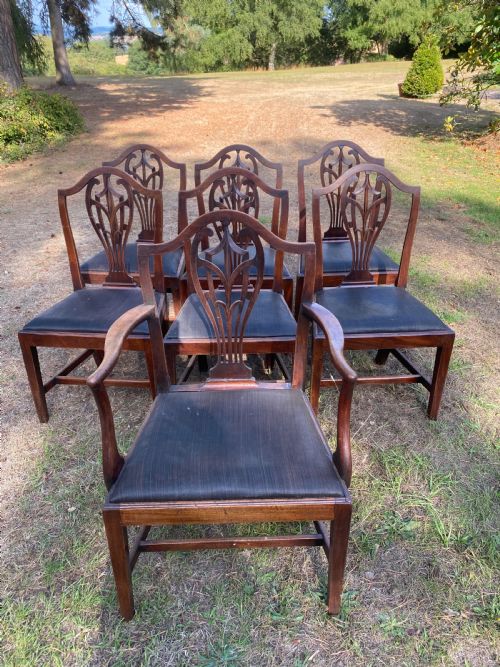
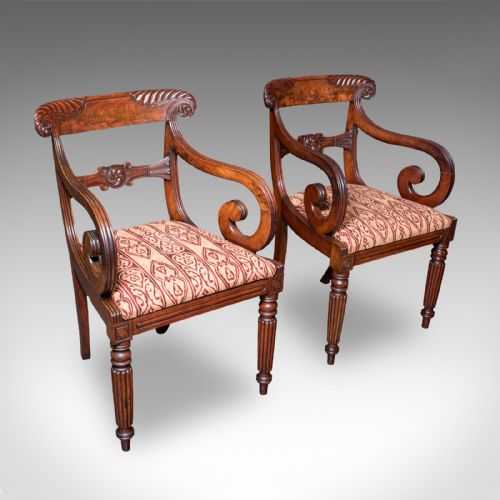
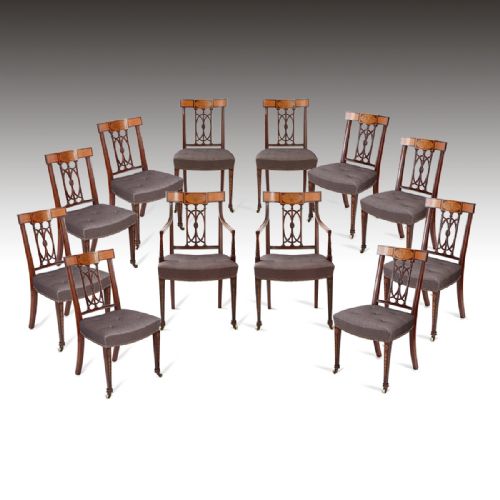
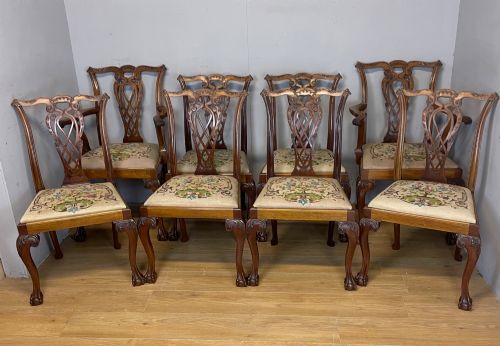
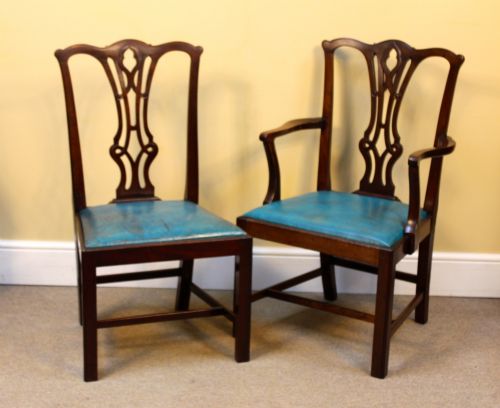
These mahogany carver and side chairs bring structured timber, carved splats and upholstered seats to the dining room.
Mahogany Carver and Side Chairs
Mahogany carver and side chairs form matched or assembled dining sets designed for formal domestic seating. A typical set balances arm-bearing carvers for the head of the table with armless side chairs along the flanks.
The selections span distinct periods from the Georgian and Regency eras through Edwardian revivals and early twentieth-century interpretations. Shield backs, lyre backs and Chippendale style splats recur across these generations.
Makers frequently produced these pieces in large sets of six, eight, ten or twelve to serve substantial dining tables. Surviving examples demonstrate the enduring demand for robust timber frames suited to daily domestic use.
How they were made
Makers utilised dense, durable mahogany for the primary structural frames, legs and carved back splats. This timber allowed intricate fretwork and ribbon-back designs while maintaining the necessary strength for daily seating.
Upholstered drop-in seats, fixed pads and cane webbing provide the sitting surfaces, often incorporating fabric, leather, or velvet over stuffing. Brass details appear on select pieces to accent the woodwork or reinforce structural joints.
Some Edwardian dining chairs travelled with extra slip seats so the upholstery could change with the dinner party season.
What varies in quality
The crispness and depth of the carved details separate standard production from superior work. Crisp ribbon splats, pierced backs and well-defined foliage indicate a skilled hand at the bench.
Proportion and wood selection also dictate the standing of a set. Well-figured timber with rich grain patterns and sturdy, unified frame construction elevate the status of both carvers and side chairs.
Warings·Maple and Co
The Mahogany Carver and Side Chairs Glossary
- Carver
- An armchair designed to match a set of dining side chairs, typically placed at the head of the dining table. The arms provide distinct support for the user.
- Side chair
- An armless chair intended for use around a dining table. These pieces make up the majority of a standard dining set.
- Splats
- The vertical wooden strip down the centre of a chair back. Elaborate piercing and carving distinguish revival styles from plain geometric forms.
Mahogany Carver and Side Chairs: Frequently Asked Questions
How do I mix carvers and side chairs?
Place the two carvers at opposite ends of the dining table and arrange the side chairs along the long sides. This traditional layout provides distinct seating for hosts while keeping the profile uniform.
Ensure the wood tone and carved style coordinate closely if you are combining pieces into a unified dining arrangement.
What is a set of eight usually comprise?
A standard set of eight dining chairs typically includes six armless side chairs and two matching carver armchairs. This ratio accommodates a standard rectangular dining table comfortably.
Listings often specify the exact breakdown of singles and carvers within larger sets.
How do I date mahogany dining chairs?
Examine the timber grain, leg shape and back splat design to identify stylistic markers of periods like George III, Regency or Edwardian revivals. Construction methods inside the seat frame also offer clues to the age of the piece.
Revival pieces from the late nineteenth and early twentieth centuries often replicate earlier Georgian forms closely.
Are cane seats original?
Cane work appears on Regency and Edwardian dining chairs to provide a lighter seating surface. Many retain their original or period replacement webbing alongside drop-in cushions.
Inspect the tightness and weave consistency of the cane to determine its condition and age.