







18th Century Style Bookcase
An 18th century style bookcase brings architectural presence and rich mahogany or walnut timber to a room, offering both display and concealed workspace.
18th Century Style Bookcase
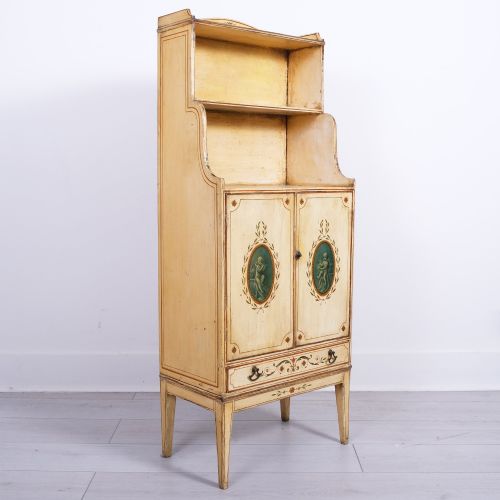
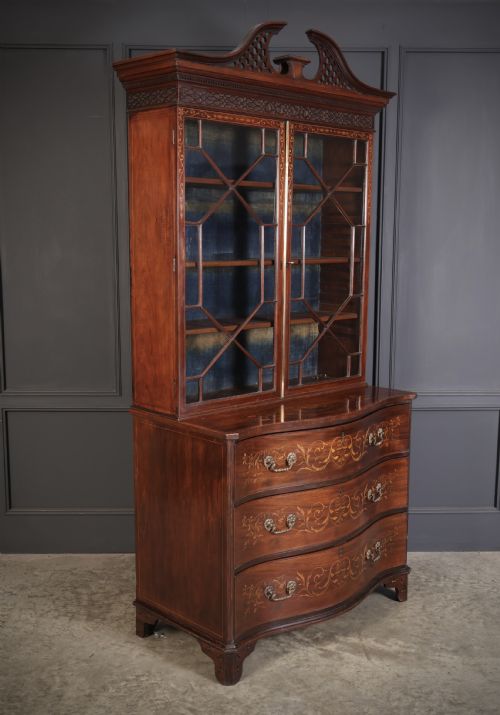
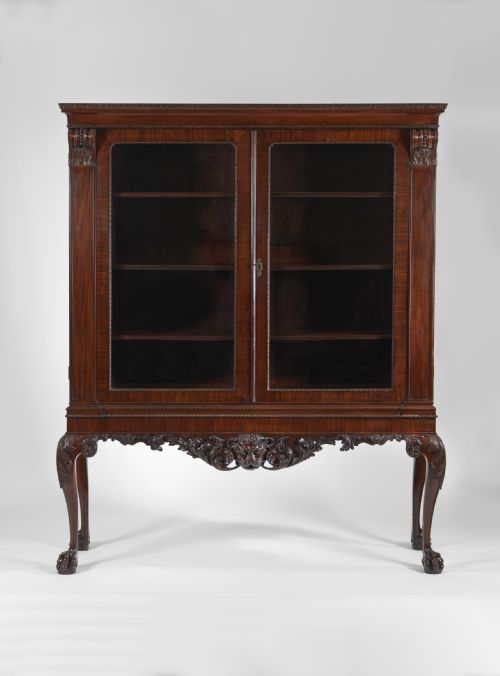
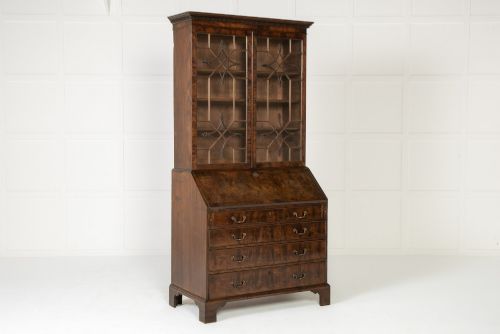
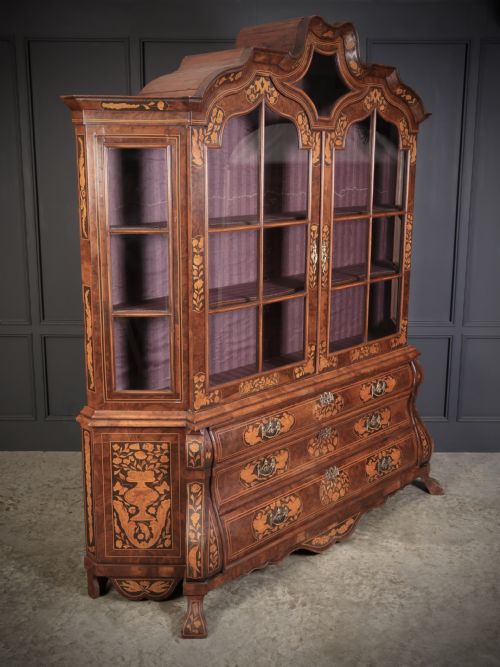
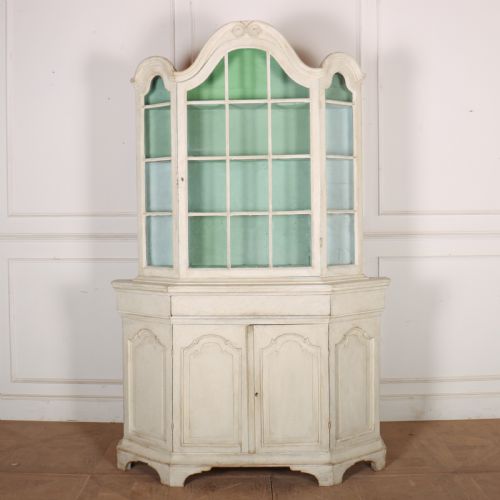
An 18th century style bookcase encompasses tall breakfront pieces, bureau bookcases with fitted writing drawers, and glazed display cabinets originating from Georgian and later revival periods. Buyers searching for an 18th century style bookcase will encounter forms ranging from George II and George III mahogany designs to Dutch marquetry walnut and painted vitrines.
Materials and construction
Cabinet makers utilised dense hardwoods such as mahogany and walnut, frequently embellished with marquetry inlay, satinwood banding, or painted finishes on wood surfaces. Brass hardware, glazed panel doors, and leather inserts complete the construction of these substantial pieces.
Joinery techniques include dovetail drawers and fitted pigeonholes within secretaire compartments, supported by structural elements like swan neck pediments and carved bracket feet.
Several cabinets conceal hidden compartments behind pigeonholes, built specifically for storing secret correspondence.
Craftsmanship and proportion
Quality rests in the precision of the marquetry inlay, the crispness of carved mahogany details, and the depth of figure in the timber veneers. Superior examples maintain balanced proportions across large breakfront forms and display harmonious integration between the upper glazed shelving and lower cabinet sections.
The refinement of internal fitments, such as secret drawers within a bureau bookcase or finely moulded astragal glazing bars, distinguishes master workshop output from simpler vernacular pieces.
William Kent·Giles Grendy·Gillows
The 18th Century Style Bookcase Glossary
- Secretaire
- A desk component featuring a fall-front or drawer that drops to reveal a writing surface and small compartments. This fitted interior often conceals hidden drawers.
- Bombe
- A swelling, convex curved profile typical of continental furniture design. This curvaceous form appears prominently on Dutch cabinets and commodes.
- Astragal
- The wooden or brass framing bars that hold individual panes of glass within a cabinet door. Fine astragals create intricate geometric or Gothic arch patterns.
- Marquetry
- Decorative veneer work forming pictorial or geometric patterns using various coloured woods. Craftsmen cut contrasting timbers like walnut and satinwood to fit precisely together.
- Breakfront
- A large cabinet facade where the central section projects forward from the flanking wings. This architectural arrangement breaks up the linear expanse of wide bookcases.
18th Century Style Bookcase: Frequently Asked Questions
How do I use a secretaire bookcase?
The fall-front drawer pulls down to create a convenient writing surface while keeping correspondence and stationery organised within internal pigeonholes.
Above this desk level, glazed doors provide dust-free display space for a library or collection of ceramics.
Where should I place a large breakfront bookcase?
These imposing cabinets require a principal reception room or study with adequate wall space and ceiling height to accommodate their architectural presence.
Keep them away from direct sunlight and strong heat sources to protect timber veneers and historic finishes.
How do I distinguish eighteenth-century pieces from later revivals?
Examination of construction marks, timber shrinkage, and secondary woods inside drawers helps determine whether a cabinet dates to the Georgian era or a later nineteenth-century revival.
Hardware fixings and hand-cut dovetailing also provide clear indicators of period manufacture.