
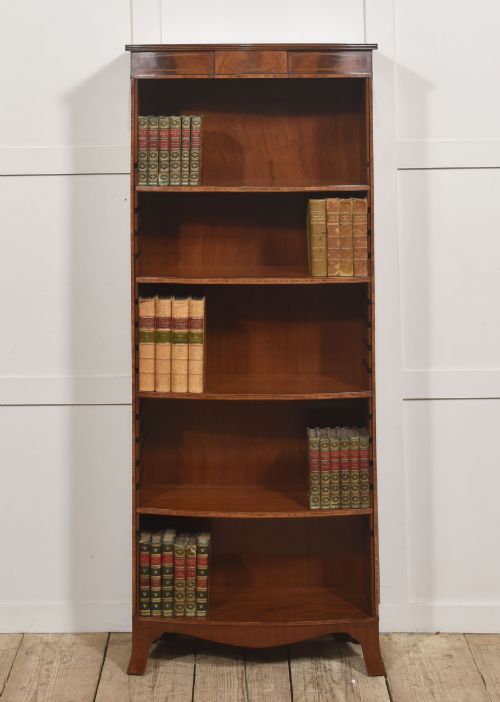


Georgian Open Front Shelves
Georgian open front shelves bring timeless display space and architectural timber into a room, offering accessible storage for books and collections.
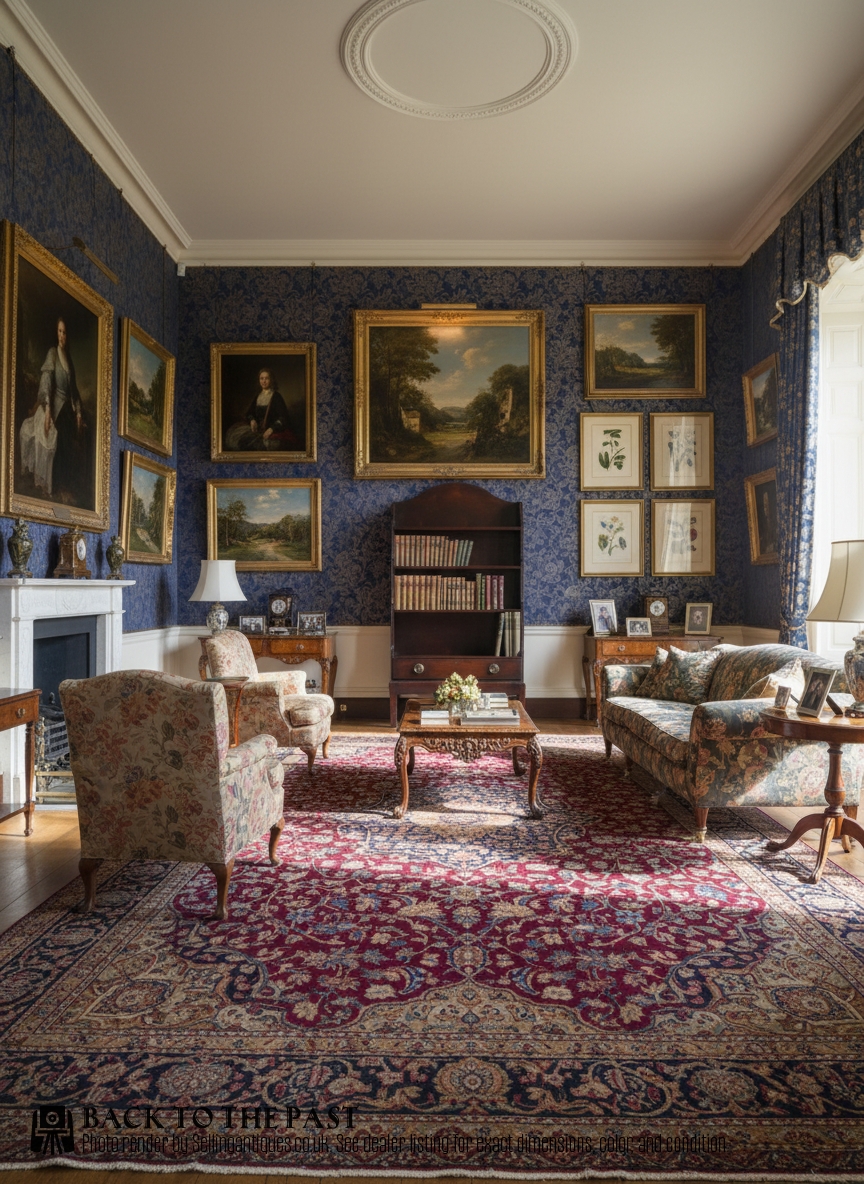
Georgian Open Front Shelves
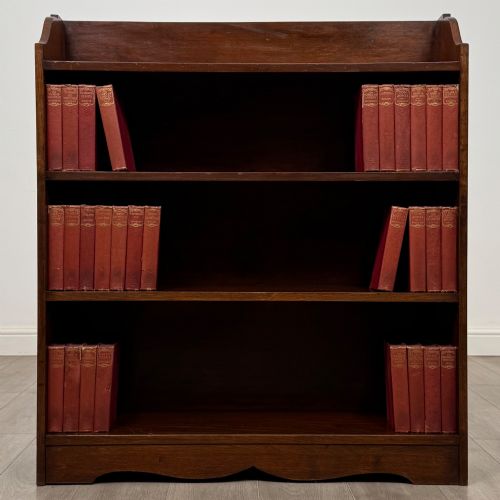
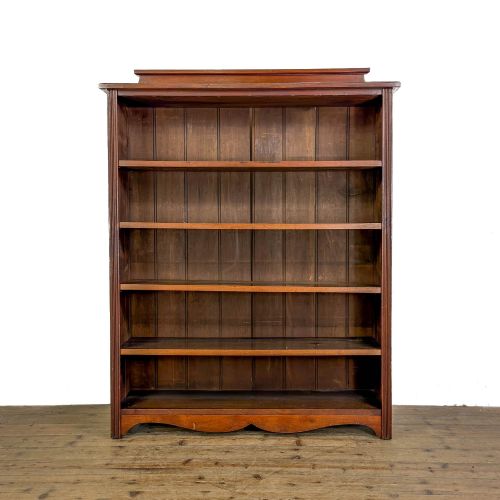
When buyers search for georgian open front shelves, they encounter architectural bookcases and dwarf shelving units designed for domestic libraries and parlours. These items present tiers of open shelving for easy access to volumes and decorative objects.
The pieces on this page span several eras alongside authentic Georgian works, including Regency, Victorian, Edwardian, and early twentieth-century interpretations. Mahogany dominates the selection, appearing in standard, flame, and figured varieties alongside rosewood, oak, satinwood, and pine.
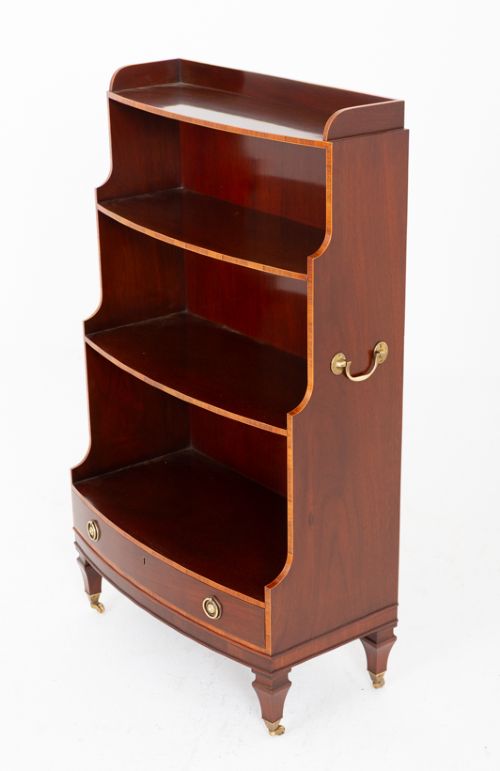
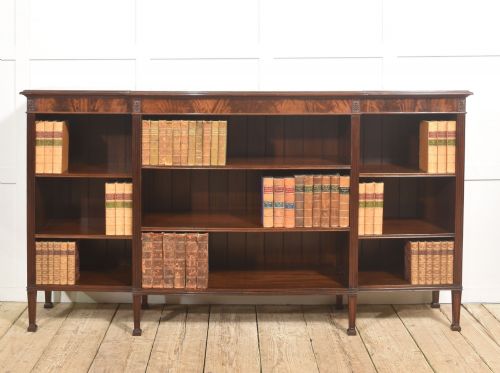
Forms range from tall library bookcases to waterfall shelves, low breakfront units, and smaller proportions suited to compact spaces. Inlaid details, brass mounts, and boxwood stringing frequently enrich the timber surfaces.
How they were made
Cabinet makers utilised solid and veneered timbers, selecting mahogany and rosewood for their stability and rich grain patterns. Flame mahogany and figured walnut veneers added decorative movement to larger breakfront surfaces.
Construction techniques incorporated precise joinery for fixed and adjustable shelving tiers. Fine details such as boxwood stringing, brass inlay, and carved mouldings required specialist hand tools and careful assembly.
Some dwarf bookcases double as chiffoniers, giving you a surface to set down your tea while you browse.
What varies in quality
Quality rests in the selection of timber figures and the crispness of decorative inlays such as boxwood and brass. Superior examples display balanced proportions and harmonious grain matching across expansive breakfront facades.
The refinement of architectural mouldings and the integrity of original shelf supports distinguish exceptional pieces from standard utility furniture. Finer works maintain uniform patination across all exposed timber surfaces.
The Georgian Open Front Shelves Glossary
- Breakfront
- A cabinet or bookcase whose central section projects forward from the flanking wings. This architectural arrangement creates depth and visual interest in large library pieces.
- Waterfall bookcase
- A set of open shelves that steps back progressively from bottom to top, creating a tiered profile resembling cascading water. These often feature curved gallery sides.
- Stringing
- A narrow strip of contrasting timber inlaid into the surface of a piece to form delicate borders and geometric patterns. Boxwood was frequently utilised for this contrasting effect.
- Chiffonier
- A low cabinet featuring shelving or a small superstructure on top, bridging the function of a sideboard and a bookcase. Regency examples often incorporate brass inlays and grille doors.
Georgian Open Front Shelves: Frequently Asked Questions
Where were open bookcases placed in a historic home?
These pieces traditionally stood in libraries, drawing rooms, and studies where immediate access to working volumes was essential.
Their open format distinguished them from glazed bookcases, serving everyday reading habits rather than archival storage.
How do I identify a true Georgian piece?
Authentic Georgian items exhibit construction methods, timber selections, and proportions characteristic of the eighteenth century.
Many later pieces adopt Georgian revival styles from the Edwardian era and the early twentieth century, echoing those earlier aesthetic principles.
Are these shelves suitable for modern books?
Most open front designs accommodate standard modern volumes on their fixed or adjustable wooden tiers.
It remains wise to verify shelf depths and vertical clearances before housing oversized folios or art monographs.
What maintenance do mahogany shelves require?
Regular dusting with a dry, soft cloth preserves the timber finish without accumulating heavy wax build-up.
Keeping the wood away from direct sunlight and sudden radiator heat prevents timber shrinkage and veneer lifting.