





18th Century Silver Candlesticks
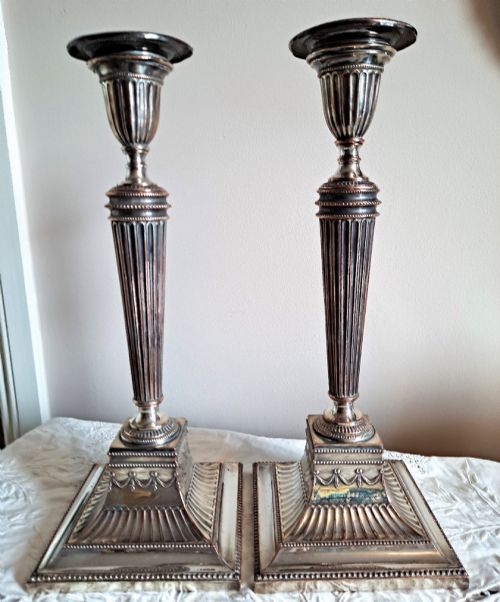
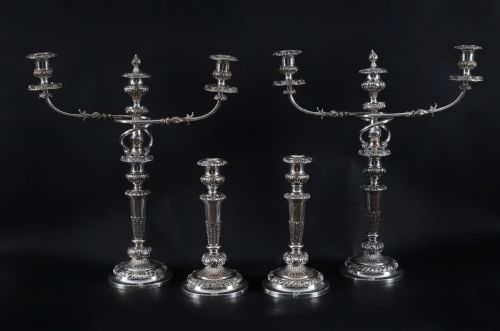
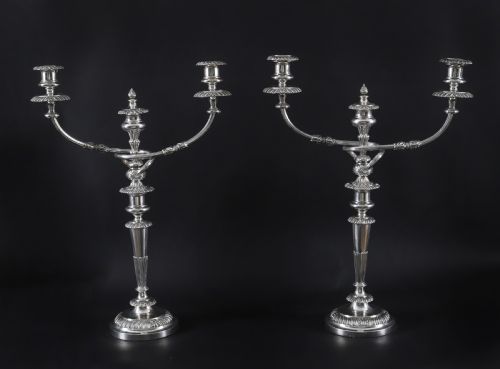
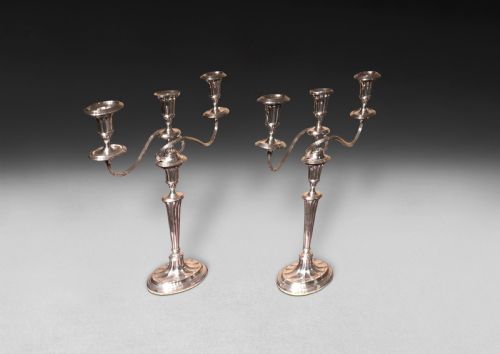
These 18th century silver candlesticks bring the heavy dignity of Georgian dining and continental altar-lighting straight to a tabletop.
18th Century Silver Candlesticks
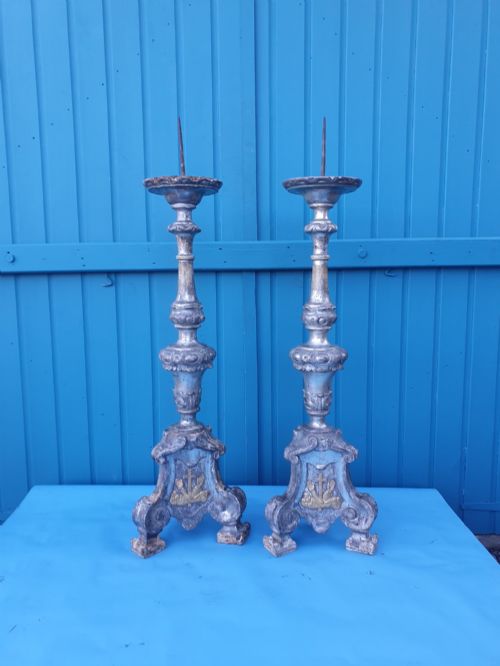
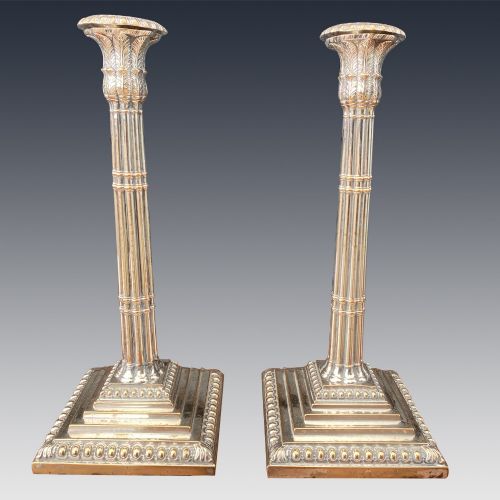
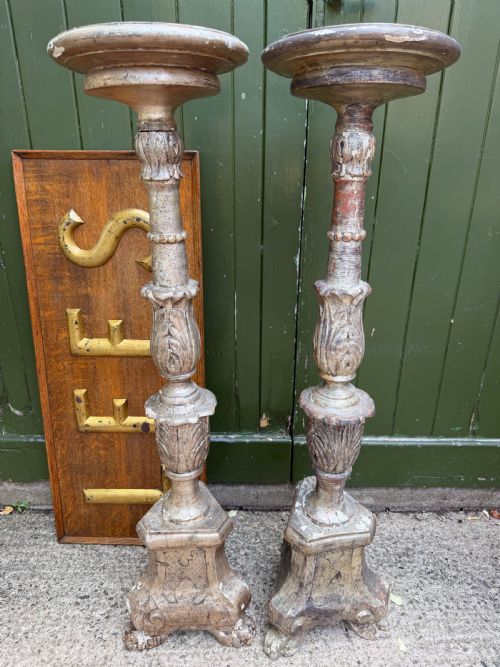
When you search for 18th century silver candlesticks, you encounter a varied group of lighting pieces spanning domestic and ecclesiastical forms. The selection includes standard domestic sticks alongside larger candelabra, chambersticks, and tall wooden torcheres coated in silver leaf or mecca.
Most domestic examples belong to the Georgian period, featuring sterling silver, silver plate, or Old Sheffield plate. Alongside British work, Italian examples in carved wood, bell metal, and paktong appear frequently across the periods seen.
How They Were Made
Silversmiths utilised seamed casting techniques for early sterling pieces, while Sheffield makers fused silver to copper bases. Carved wooden items relied on gesso and silver leaf to achieve their reflective finish.
Metal alloys such as bell metal and paktong provided alternative routes to durable domestic candlesticks without relying entirely on solid silver.
18th Century Silver Candlesticks Retail Price Guide 2026
Typical asking prices for 18th century silver candlesticks among the pieces listed under this phrase on Sellingantiques today, from the lower quarter to the upper quarter. They describe what is for sale here now, not the wider market.
Paktong was smuggled out of China as an alloy secret, letting Georgian homeowners pretend they had very heavy silver while secretly handling copper.
What Varies in Quality
The distinction between standard production and fine work rests on the crispness of the cast ornamentation and the balance of proportions. Maker attribution, such as pieces by John Cafe or Matthew Boulton, elevates certain domestic examples.
Preservation of original surfaces on plated items and the integrity of carved wooden altar sticks dictate their standing among collectors.
Matthew Boulton·John Cafe·David Green
The 18th Century Silver Candlesticks Glossary
- Old Sheffield Plate
- A composite material formed by fusing a thin sheet of silver to a thicker copper ingot. This technique preceded modern electroplating and produced durable domestic wares.
- Paktong
- A copper-nickel-zinc alloy imported from China, resembling silver in colour and weight. Makers utilised it for durable candlesticks and chambersticks.
- Candelabra
- A branched lighting fixture designed to hold multiple candles simultaneously. They often complement matching single candlesticks in large dining suites.
- Chamberstick
- A low candlestick fitted with a handle and a shallow pan to catch melting wax. People carried them through dark corridors at night.
- Sconce
- The detachable nozzle or upper socket fitted into the top of a candlestick to catch drips. Removable sconces simplify cleaning after use.
18th Century Silver Candlesticks: Frequently Asked Questions
How were chambersticks used in the home?
Chambersticks sat in hallways or bedrooms for household members to carry while navigating unlit corridors. The saucer base caught dripping wax to protect hands and floors.
Most include a small socket for a snuffer alongside the candle holder.
Are Italian altar candlesticks made of solid silver?
Continental altar sticks from this era are typically constructed from carved wood coated in silver leaf, gesso, or mecca. These materials created imposing decorative forms for churches without requiring massive blocks of solid metal.
They often appear alongside bell metal or gilt-wood variations.
Why do some candlesticks have removable sconces?
Removable upper nozzles collected melted wax during extended use. Owners lifted them out to clean hardened wax away from the main body of the candlestick.
Their presence indicates careful domestic design from the period.