






Neoclassical Silver Candleholders
Neoclassical silver candleholders bring formal classical order to a room through balanced proportions, fluted columns, and disciplined ornament.
Neoclassical Silver Candleholders
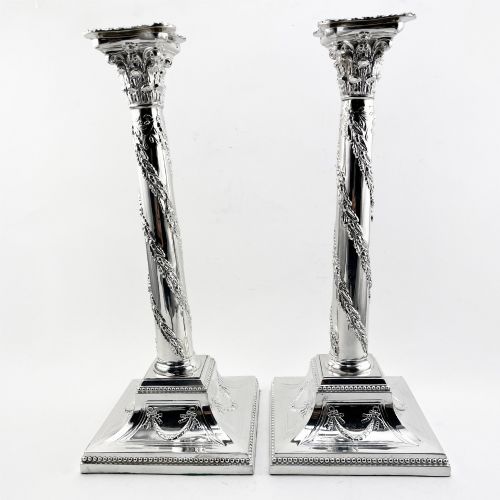
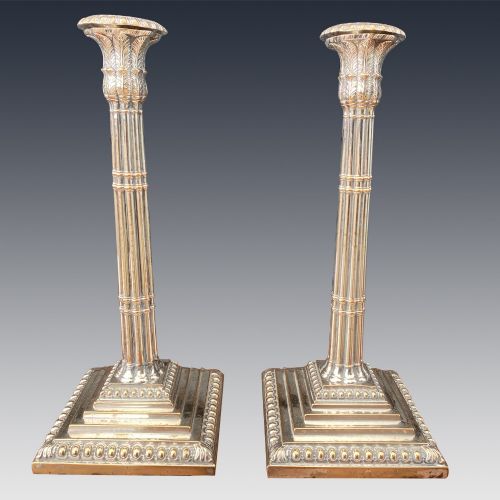
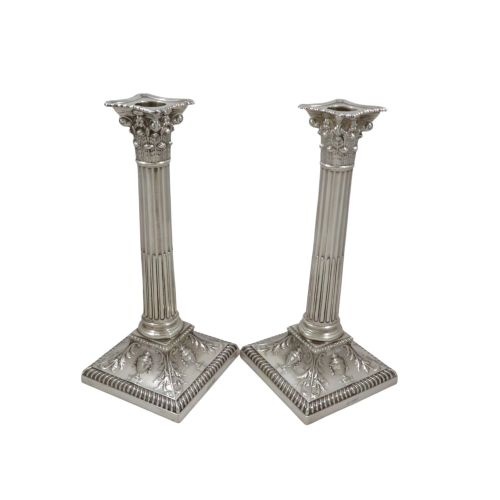
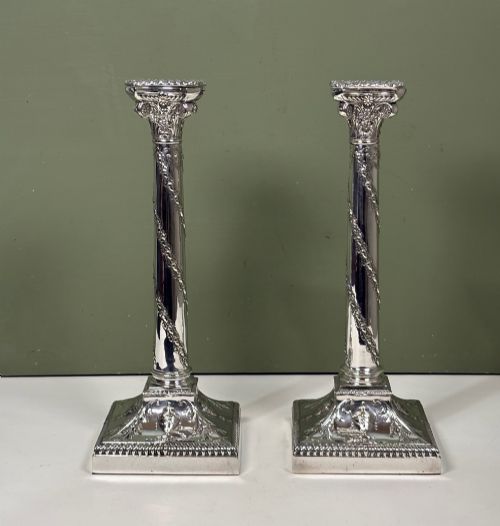
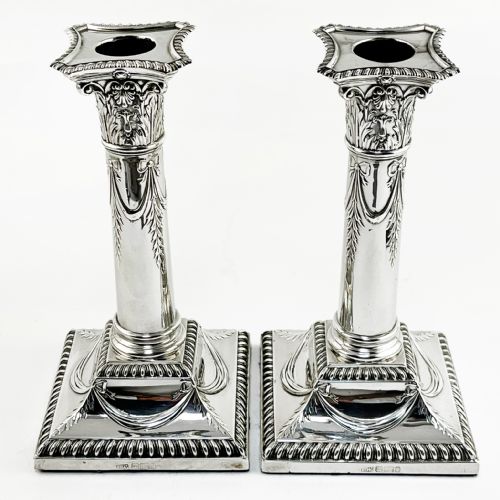
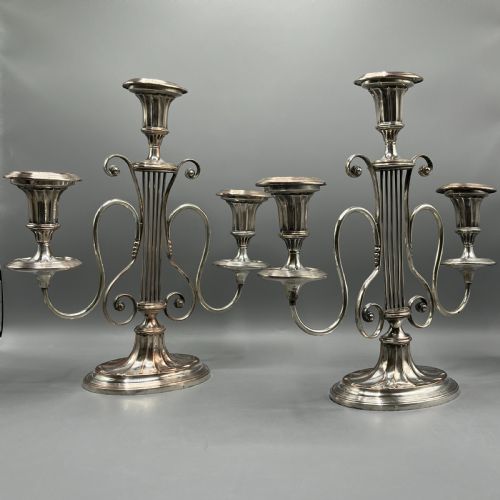
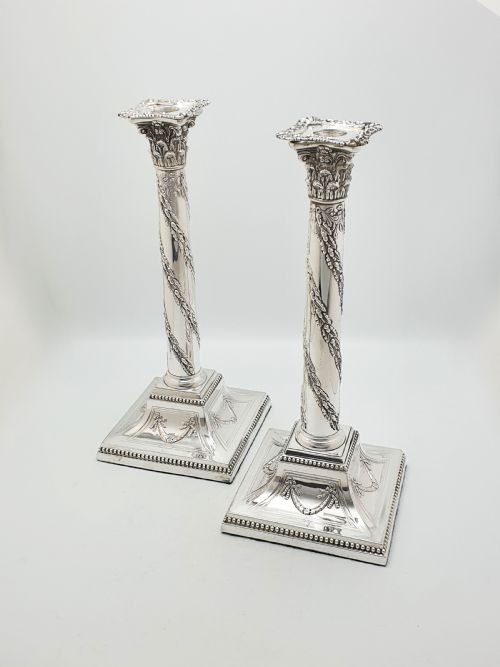
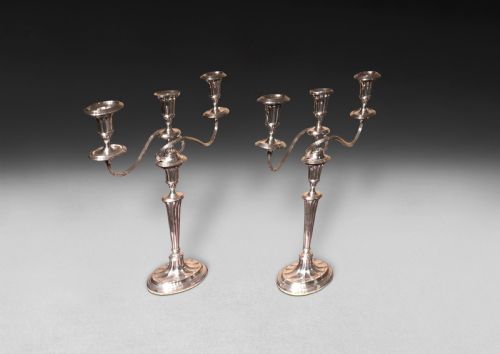
Neoclassical silver candleholders take the form of candlesticks and multi-light candelabra, appearing frequently as matched pairs from the eighteenth, nineteenth, and early twentieth centuries. These pieces draw on classical architecture and design vocabulary, presenting straight lines, urn motifs, and column forms rather than exuberant curves.
The selection ranges from early Georgian Old Sheffield plate examples and Italian altar-style candle-sticks to Victorian figural pieces and Edwardian sterling silver designs. Buyers encounter both solid sterling silver pieces bearing hallmarks and plated items utilising Old Sheffield plate or standard silver plate over copper or base metals.
Many of these items incorporate removable sconces and conversion elements to support multiple candles, functioning as both practical lighting and formal mantel or table decoration.
Materials and construction
Maker workshops produced these items using sterling silver, silver plate, Old Sheffield plate, and occasionally copper, brass, nickel silver, or carved and gilt wood. Sterling silver examples carry hallmarks indicating assay offices like Sheffield, while plated pieces fuse silver layers to base metals or utilise electroplating techniques.
Casting, chasing, and smithing formed the structural columns, bases, and sconces, often assembling separate components into cohesive classical architectural shapes. Wooden altar-style variants combine carved timber bases with silvered or mecca finishes to imitate metallic surfaces.
Neoclassical Silver Candleholders Retail Price Guide 2026
Typical asking prices for neoclassical silver candleholders among the pieces listed under this phrase on Sellingantiques today, from the lower quarter to the upper quarter. They describe what is for sale here now, not the wider market.
Materials range from sterling silver and Old Sheffield plate to copper, brass, nickel silver, and silvered wood.
Indicators of quality
Quality rests upon the crispness of the classical detailing, such as the depth of fluting on Corinthian columns and the clean definition of leaf and urn motifs. Heavier gauge metal and substantial weight indicate superior material use, particularly in sterling silver and early plate.
The integrity of construction, including the presence of original removable sconces and balanced proportions, separates standard production items from finer workshop output. Maker attribution through clear hallmarks or documented Old Sheffield plate construction adds historical substance to individual pieces.
Thomas Bradbury & Sons Ltd·Goldsmiths & Silversmiths Co
The Neoclassical Silver Candleholders Glossary
- Old Sheffield plate
- A fused composite material made by melting a sheet of silver onto a thicker copper ingot before rolling them together into sheets. This technique predates modern electroplating and appears on eighteenth-century items.
- Sconce
- The detachable pan or nozzle fitted at the top of a candlestick to catch melting wax. Removable sconces help with cleaning and indicate thoughtful design.
- Candelabra
- A branched lighting fixture designed to hold multiple candles upon a single base. These often feature removable arms that convert the piece into a standard single candlestick.
- Corinthian column
- A classical architectural column style featuring an ornate capital decorated with acanthus leaves. This form frequently dictates the shape of the candleholder shaft.
- Hallmark
- An official stamp applied to precious metals by an assay office to guarantee purity and origin. British pieces often display town marks, maker marks, and date letters.
Neoclassical Silver Candleholders: Frequently Asked Questions
How do I clean antique silver candleholders?
Clean silver surfaces gently using a specialist silver cloth or mild polish designed for antiques, avoiding abrasive pads that wear down thin plating. Take care around engraved details and soldered joints to preserve the underlying metal.
Keep moisture away from weighted bases and wooden components to prevent internal corrosion or warping. Regular dusting with a soft brush prevents tarnish buildup without requiring frequent chemical cleaning.
What is Old Sheffield plate?
Old Sheffield plate is an early fusing technique where a thin layer of sterling silver is thermally bonded to a copper core. This method differs from nineteenth-century electroplating by showing a visible edge or copper bleed where the metals meet.
Items made this way date predominantly to the eighteenth century and possess a warm visual character distinct from solid silver. The technique requires careful handling to avoid exposing the base metal beneath.
How do I spot a reproduction?
Examine the construction methods, weight, and wear patterns to distinguish period items from modern copies. Genuine antique pieces display casting seams, hand-chasing marks, and period-appropriate hallmarks rather than uniform machine stamping.
Review the style markers against known manufacturing periods like the Georgian or Edwardian eras. Inconsistent patination or modern alloy use often reveals a later imitation.
Can I use real candles in them?
Use standard taper candles that fit snugly into the sconce without forcing them into place. Ensure the diameter matches the socket to prevent dripping wax down the column or onto furniture.
Monitor burning candles closely, especially near removable sconces and older solder joints. Extinguish the flame before the wax reaches the metal cup to protect the antique surface.