

18th Century Secretary Bookcase
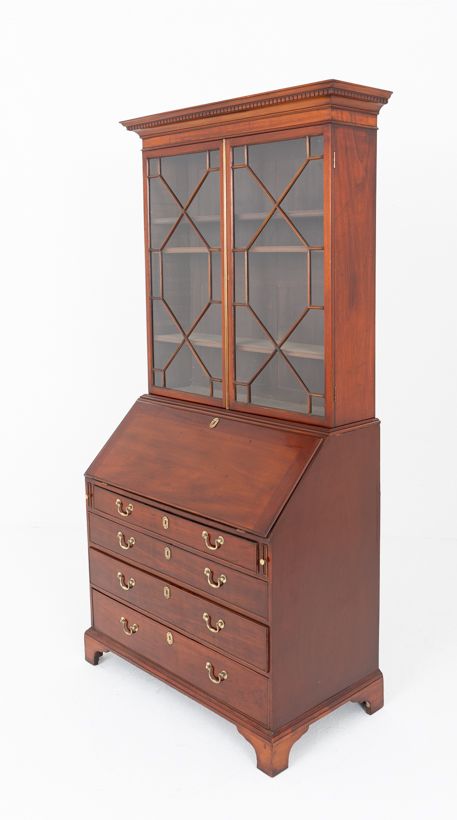
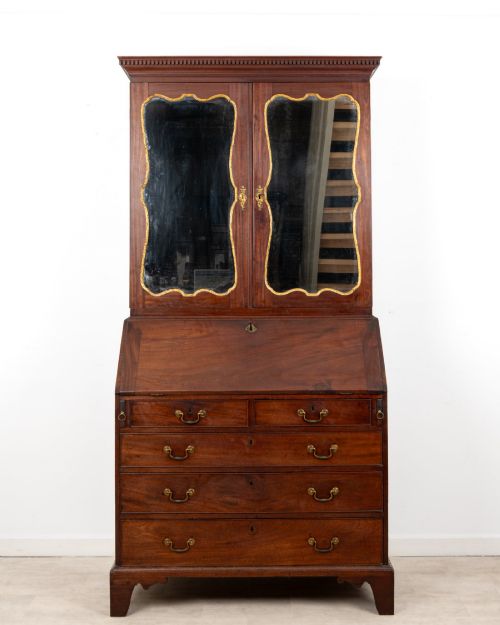
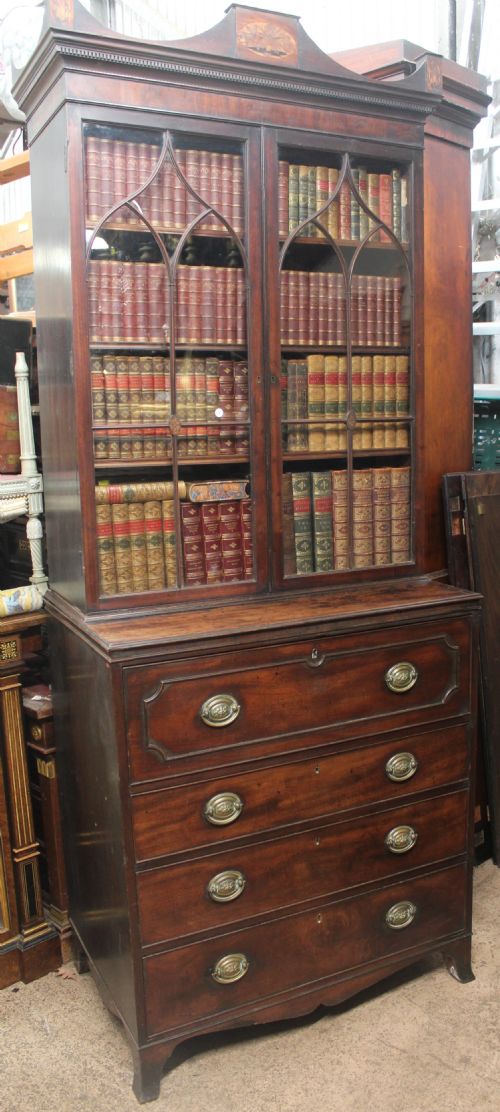
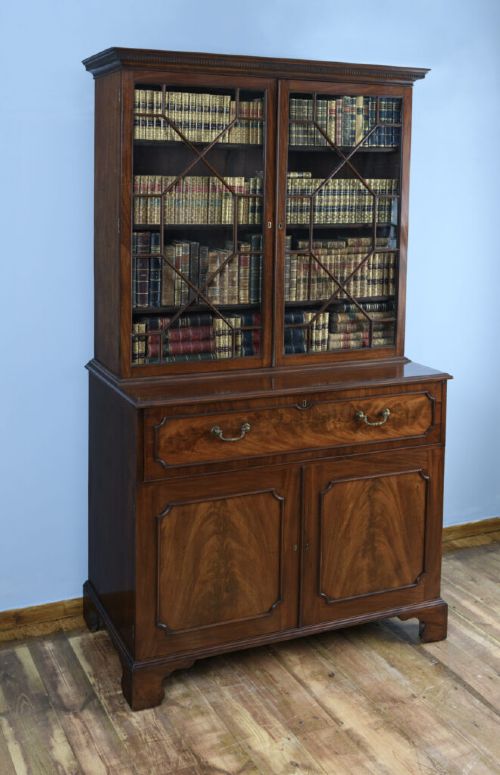
An 18th century secretary bookcase combines a fitted writing desk and a glazed upper cabinet, offering collectors a commanding architectural presence.
18th Century Secretary Bookcase
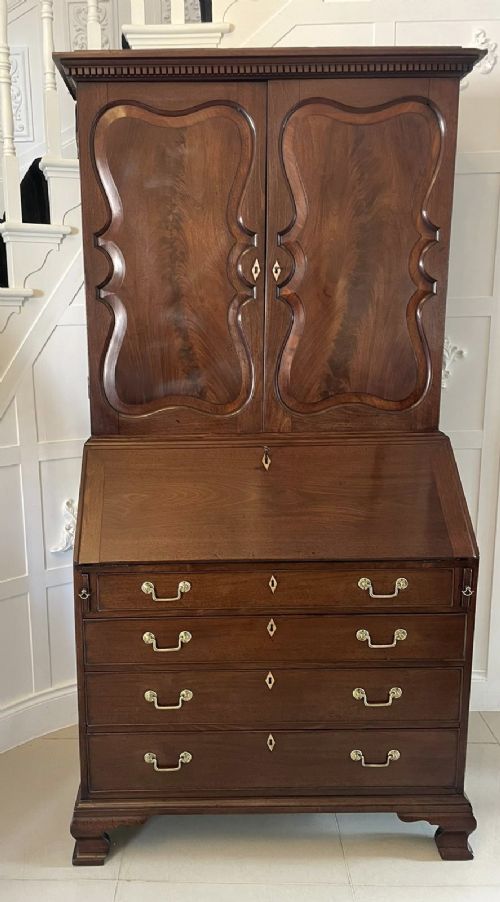
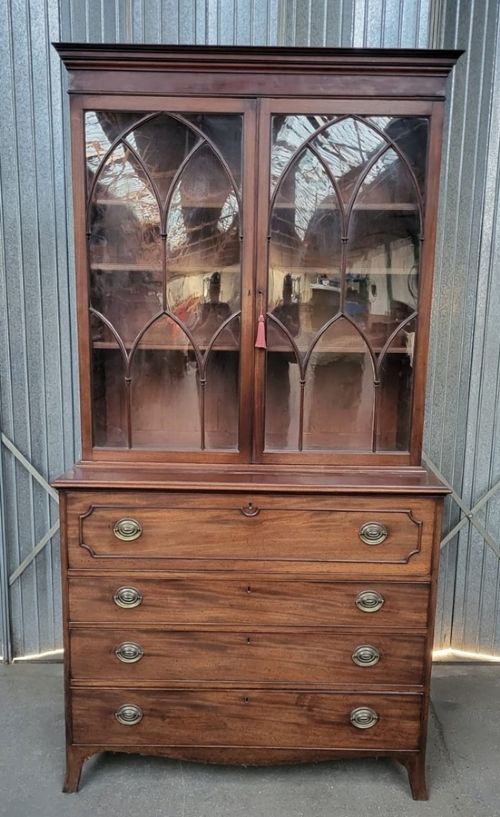
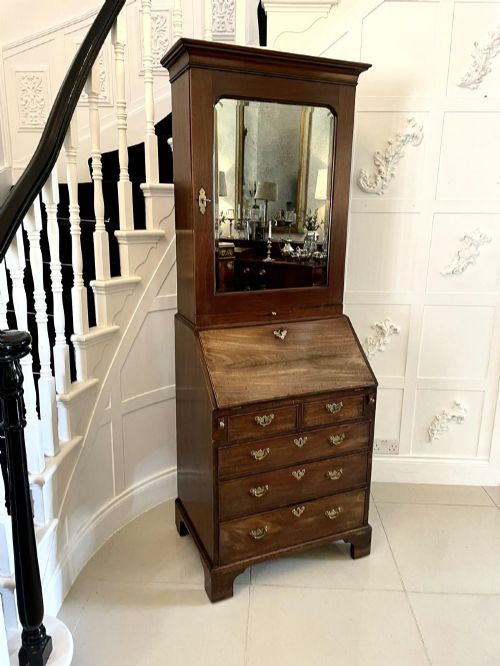
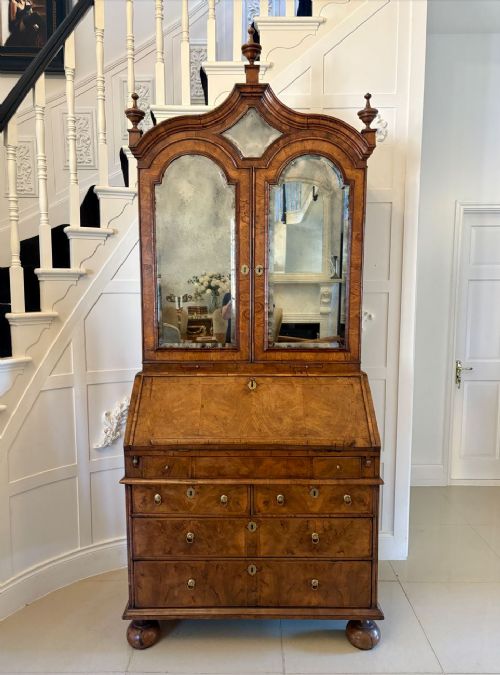
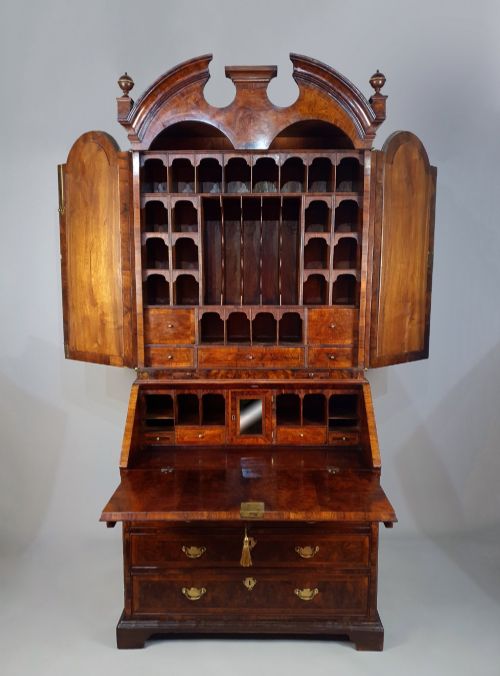
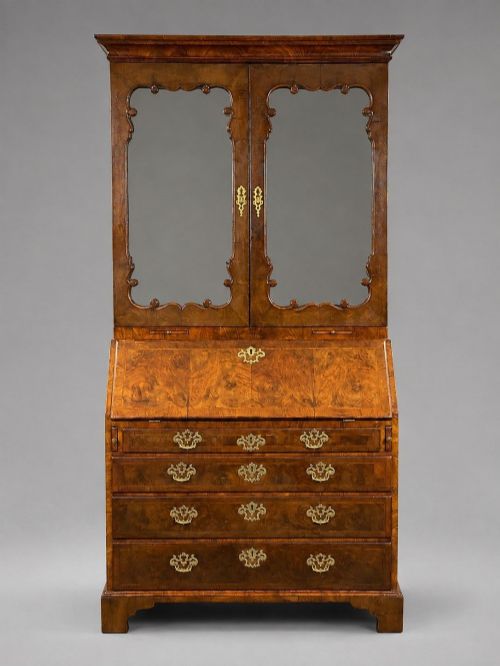
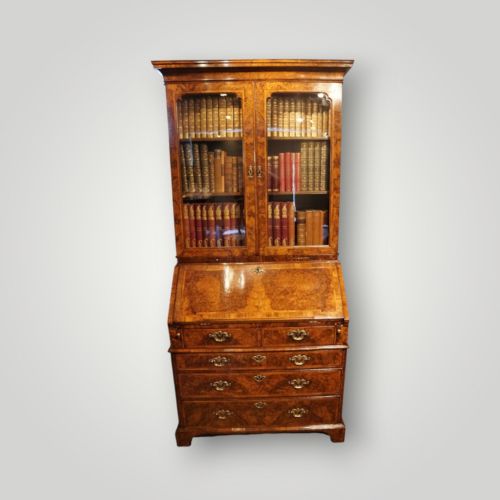
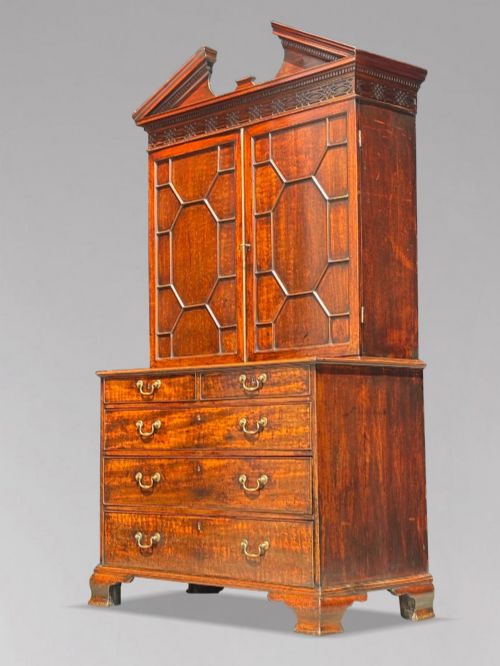
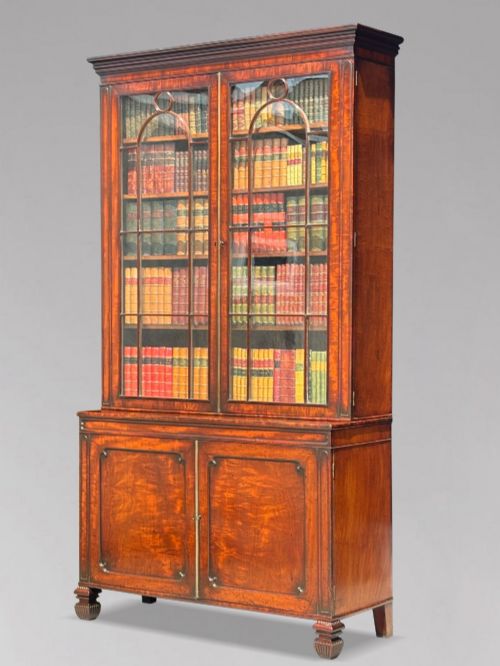
An 18th century secretary bookcase appears in this selection primarily through Georgian mahogany and burr walnut iterations, alongside continental examples showing marquetry or Dutch Baroque influences. Pieces span eras from Queen Anne and George I through George III, taking the form of bureau bookcases, secretaire cabinets, and tall library bookcases.
The dominant formats feature a glazed upper section for books above a fall-front desk or drop-down secretaire drawer that conceals pigeonholes and small drawers. Makers also produced double dome configurations and compact variations in oak, satinwood, and walnut.
Materials and Technique
Cabinet makers utilised dense native timbers like oak and mahogany, often applying figured veneers, featherbanding, or floral marquetry in tulipwood and walnut across the exterior surfaces. Brass hardware, candle slides, and mirror glass complete the primary construction of these tall sectioned units.
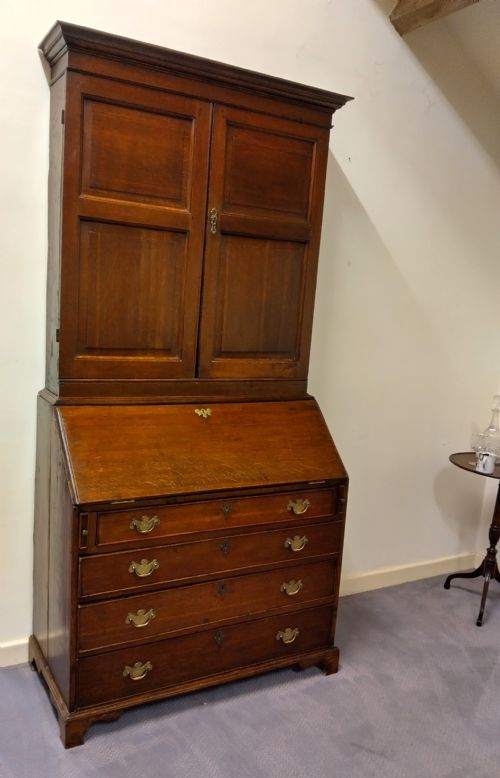
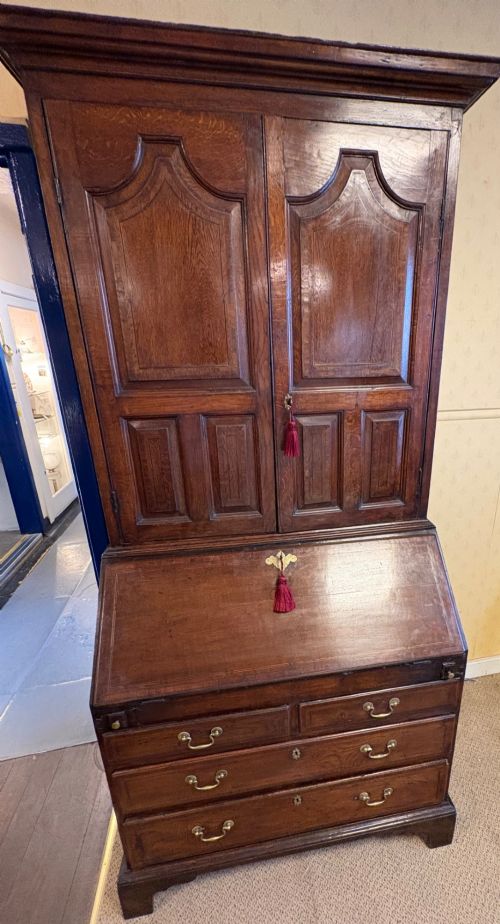
Joinery techniques involve panelled doors for the upper bookcase and pigeonhole interiors with stepped drawers fitted securely inside the lower desk compartments.
Early oak examples occasionally show clever adaptations, including one modified specifically to house a television.
Judging Quality
The distinction between tiers of quality rests upon the selection of timber veneers, such as heavily figured burr walnut or well-matched mahogany grain, paired with intricate interior compartmentalisation. Finer examples display meticulous marquetry inlay, original brass furniture, and balanced proportions across tall elevations.
Adaptations alter the standing of a piece within the hierarchy, shifting focus towards the integrity of the original glazed doors, feet, and internal configurations.
Thomas Chippendale
The 18th Century Secretary Bookcase Glossary
- Bureau bookcase
- A dual-purpose piece uniting a shelving cabinet with a lower sloping desk for writing.
- Secretaire
- A drawer or compartment featuring a drop-front writing surface that conceals internal pigeonholes and small drawers.
- Featherbanding
- A decorative inlay technique using veneer strips arranged in a herringbone pattern to frame drawer fronts and panels.
- Marquetry
- The art of forming decorative patterns using fitted pieces of various coloured woods and veneers.
- Candle slide
- A pull-out wooden board positioned beneath the upper cabinet to hold lighting for the writing surface.
18th Century Secretary Bookcase: Frequently Asked Questions
How do I use a secretary bookcase?
Lower the fall-front desk or pull out the secretaire drawer to reveal the writing surface and pigeonhole compartments for correspondence. The upper glazed doors provide display space for books and collections.
Keep the timber conditioned and place the unit away from direct heat sources to protect the delicate veneers and old glass panels.
What is the difference between walnut and mahogany models?
Walnut pieces predominantly date from the earlier decades of the 18th century, often exhibiting figured burr surfaces and featherbanding details. Mahogany examples tend to align with the Georgian and George III periods.
Both timbers offer distinct grain patterns that define the aesthetic of the respective decades.
Are these pieces made in sections?
Many examples are constructed in multiple sections, typically separating the upper glazed bookcase from the lower bureau cabinet to ease transport and placement.
This modular design reflects period workshop practices for handling large, tall furniture pieces safely.
Where were continental models made?
Continental examples originate from regions such as Italy, Germany, and the Netherlands, displaying regional characteristics like floral marquetry or double dome structures.
Dutch and Venetian workshops favoured elaborate inlaid veneers and distinctive curved profiles distinct from English cabinet work.