


18th Century Satinwood Bureau
An 18th century satinwood bureau brings refined figure and practical writing space into a room, offering the warmth and grain that collectors value.
18th Century Satinwood Bureau
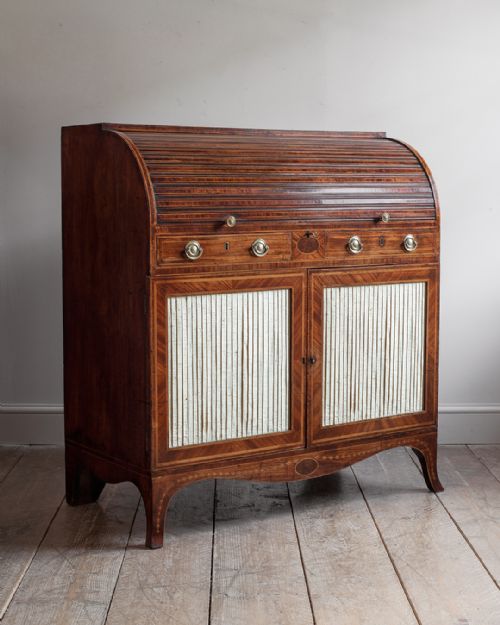
An 18th century satinwood bureau typically appears in forms such as writing cabinets, cylinder desks, and bureau bookcases associated with the George III and Sheraton periods. These pieces serve as functional writing furniture while showcasing the light, figured timber prized by period cabinet makers.
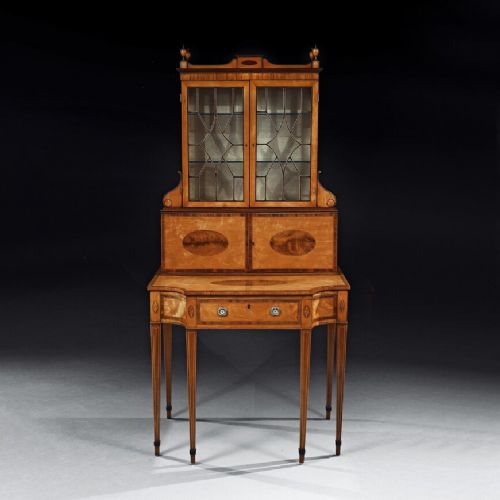
Buyers frequently encounter George III examples featuring mahogany crossbanding, brass hardware, and fitted interiors with small drawers and pigeonholes. The selection on this page ranges from compact ladies' desks and bonheur du jour tables to larger glazed secretaire bookcases.
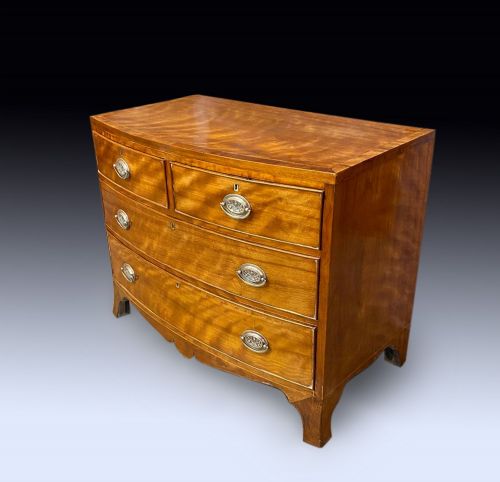
Makers and workshops of the era utilised veneers and solid cuts to create contrasting panels and stringing. The survivals span cylinder tambour desks, bow fronted chests, and kneehole configurations that reflect the evolution of Georgian interior taste.
What varies in quality
The sophistication of the timber figure and the crispness of the inlay separate standard items from superior works. Finer examples display carefully matched grain patterns across multiple drawer fronts and harmonious colour contrast in the crossbanding.
Internal arrangement and secondary woods also indicate grade, with top-tier pieces offering complex configurations of secret compartments, satinwood pigeonholes, and original brass fittings. The precision of the drawer linings and the integrity of the original wood veneer remain key indicators of workshop standard.
Several pieces conceal tiny internal compartments behind sliding satinwood panels, designed for keeping private notes out of sight.
Gillows of Lancaster·Thomas Shearer
The 18th Century Satinwood Bureau Glossary
- Satinwood
- A dense, light yellow timber with a lustrous sheen, highly favored for fine English furniture during the Georgian era. It takes a high polish and shows distinctive mottled figure.
- Secretaire
- A piece of furniture containing a pull-down writing drawer or flap that conceals small drawers and pigeonholes. This form allows a chest or bookcase to function as a desk.
- Crossbanding
- A strip of veneer applied to the border of a panel or drawer front with the grain running perpendicular to the central section. It provides a neat framing effect.
- Cylinder desk
- A writing cabinet featuring a rolling curved wooden shutter that conceals the desk interior when closed. The mechanism slides smoothly into the body of the piece.
- Bonheur du jour
- A light lady's writing desk with a small cabinet or set of shelves on the upper surface. This form emerged during the second half of the eighteenth century.
18th Century Satinwood Bureau: Frequently Asked Questions
How do I identify George III satinwood?
George III satinwood pieces display a characteristic pale golden hue and a dense, light-reflecting grain that shifts in tone under the light. Makers often paired this timber with dark mahogany crossbanding and boxwood stringing.
Examination of the internal drawer construction and secondary woods helps confirm the period. Hand-cut dovetails and period brass hardware are typical of this era of English cabinet making.
Where should I place a satinwood desk?
Satinwood furniture benefits from placement away from direct sunlight, which can alter the delicate golden tone of the timber over time. A stable indoor environment with moderate humidity preserves the wood veneer and prevents shrinkage.
These desks suit studies, drawing rooms, or quiet corners where their figured grain can be appreciated. Their compact proportions often allow them to sit comfortably in lighter living spaces.
What distinguishes a bonheur du jour?
A bonheur du jour is a small, elegant writing table featuring an upper tier of tiny drawers or a cabinet section. These pieces were designed for light correspondence rather than heavy administrative work.
They frequently showcase fine satinwood veneers and delicate inlay work. Their slender legs and refined scale separate them from larger bureau bookcases and heavy secretaire cabinets.