




18th Century Pottery Vases
These 18th century pottery vases bring tangible craft and historic character into a room, spanning tin-glazed earthenware and porcelain.
18th Century Pottery Vases
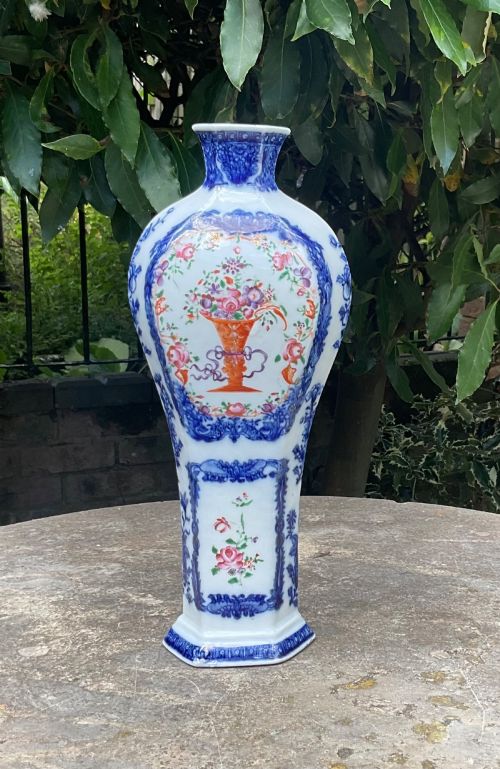
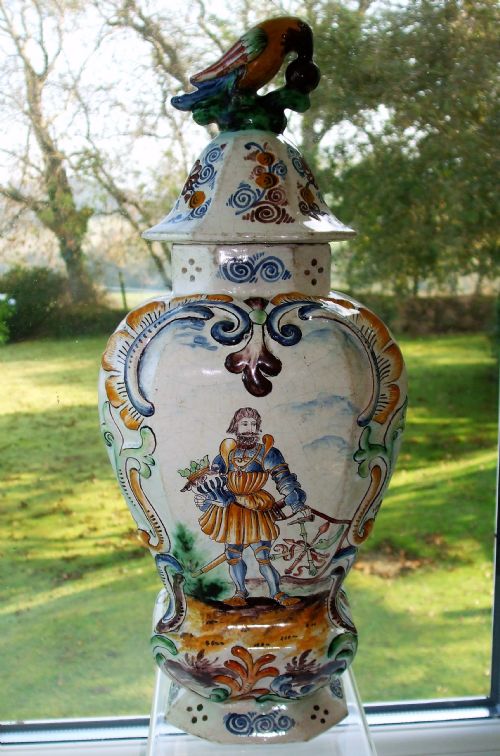
When you search for 18th century pottery vases, you encounter a selection of vessels primarily made from tin-glazed earthenware and porcelain. These objects include Dutch Delftware, English Delftware, Italian Majolica, and Chinese Export pieces from the period.
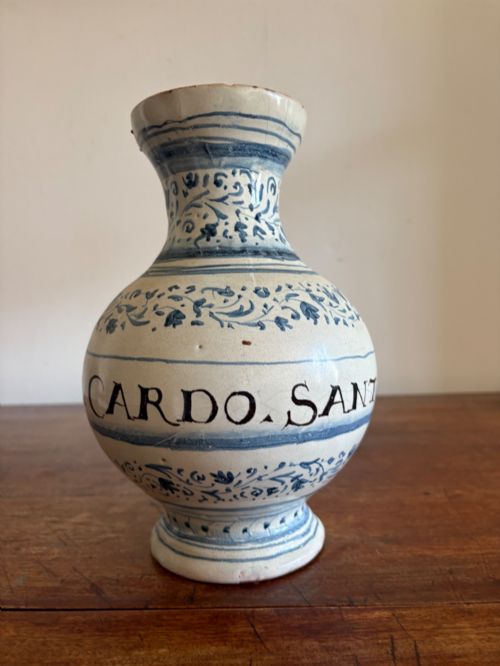
The forms vary widely from lidded jars and baluster vases to apothecary albarelos and pilgrim flasks. Many of these ceramic vessels take the form of handled urns, beaker vases, and decorative bottles.
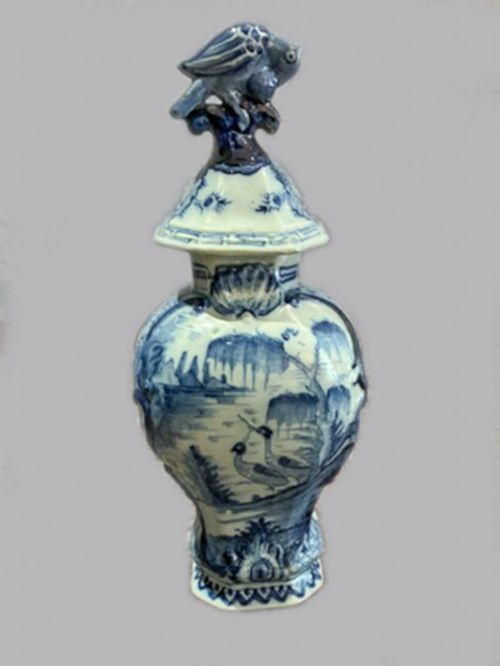
You are most likely to meet Dutch Delft vases, often featuring blue and white or polychrome decoration. Some examples have been converted into table lamps with rewiring over time.
How they were made
Makers shaped these vessels from earthenware or porcelain clay before applying tin glazes to create a smooth, white surface for painting. Potters then decorated the pieces using cobalt blue or polychrome pigments before firing.
Many items feature hand-painted details including Chinese export designs, floral motifs, and baroque styling. Lidded pieces and vessels with applied handles required careful assembly of separate thrown or moulded components prior to the final kiln process.
Listings feature tin-glazed earthenware and porcelain vessels spanning the 17th, 18th, and 20th centuries, alongside brass elements.
What varies in quality
The distinction between tiers rests upon the crispness of the hand-painted decoration and the uniformity of the tin glaze. Pieces with sharp, well-defined brushwork and harmonious colour palettes stand apart from simpler or more heavily worn examples.
The survival of original lids and covers significantly elevates a piece, as many containers have lost their matching tops over the centuries. Furthermore, the complexity of the form, such as ribbed beaker shapes or moulded pilgrim flasks, reflects the skill required by the potter.
3 Bells Drie Klokken Factory·Louis Victor
The 18th Century Pottery Vases Glossary
- Tin-glazed earthenware
- Pottery coated with an opaque white tin oxide glaze that provides a ground for painted decoration. This technique defines much of the Delftware and Majolica found in this category.
- Albarello
- A cylindrical earthenware jar used in pharmacies and apothecaries to store drugs and ointments. These vessels often feature a waisted body for easier gripping.
- Pilgrim flask
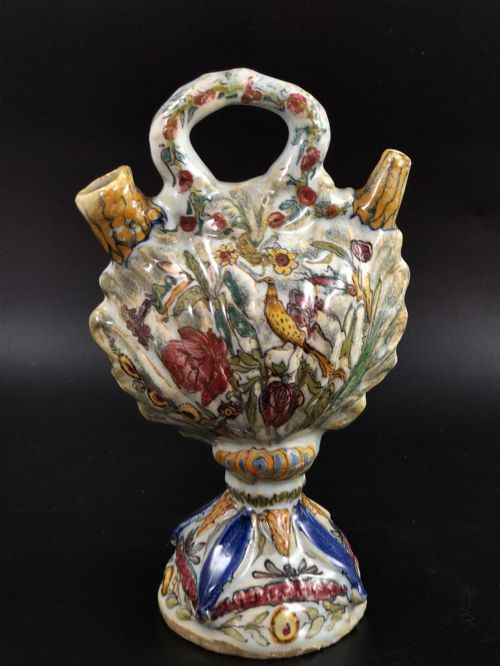
- A flattened pear-shaped or round bottle with handles for suspension cords, originally used for travel. Ceramic versions often adopt elaborate shell or baroque forms.
- Baluster vase
- A vessel characterised by a swelling lower portion that tapers towards a narrow neck. This classic shape appears frequently in blue and white Delftware.
- Polychrome
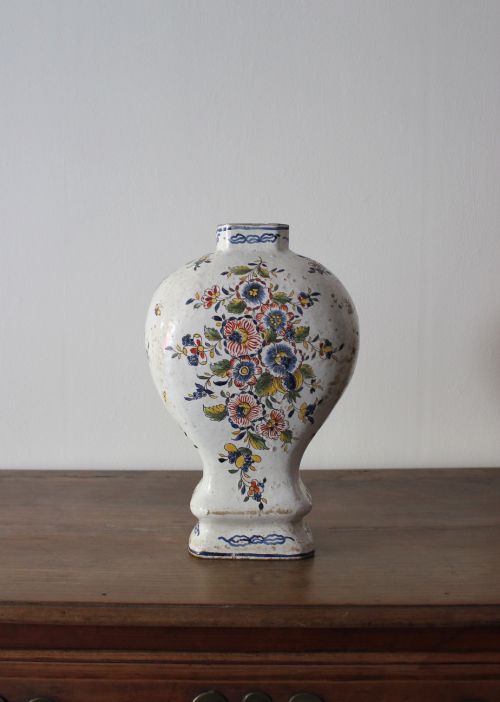
- Decoration employing multiple colours rather than a single hue like blue and white. In these ceramics, painters utilised a palette of several pigments across the tin glaze.
18th Century Pottery Vases: Frequently Asked Questions
What were apothecary jars used for?
Apothecary jars and albarelos held dry drugs, herbs, and liquid medicines in historic pharmacies. Pharmacists relied on these labelled ceramic containers for daily dispensing.
Over time, many of these utilitarian vessels transitioned into decorative objects due to their painted decoration and distinctive shapes.
Can I use converted lamp vases?
Vases converted to table lamps provide a way to incorporate historic ceramics into modern interior lighting setups. Many of these pieces retain their original ceramic bodies despite electrical wiring additions.
Placing them in a room adds a focal point that combines period craftsmanship with functional illumination.
What is a pilgrim flask?
Pilgrim flasks are rounded or flattened bottles historically designed for travellers to carry liquids on journeys. Ceramic versions translate this portable form into decorative tin-glazed earthenware.
They often feature side loops for hanging and ornate shell moulding or painted panels.