
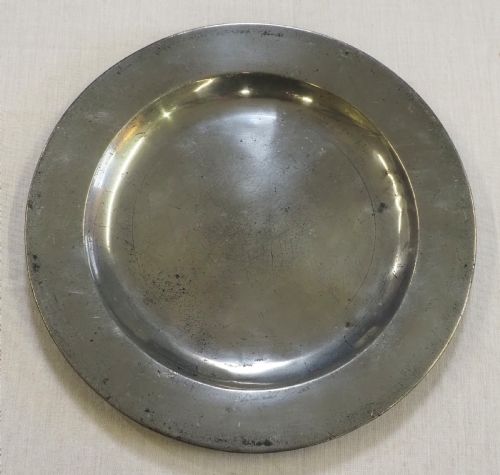
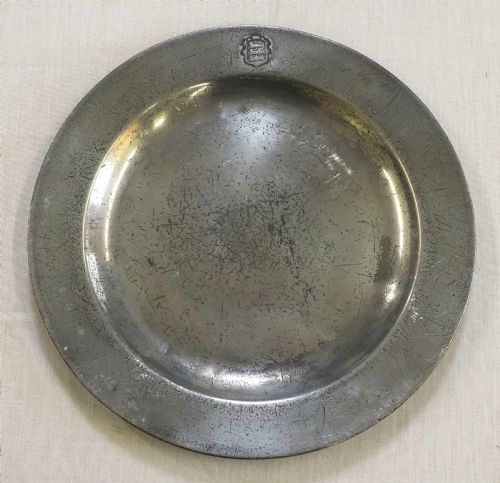
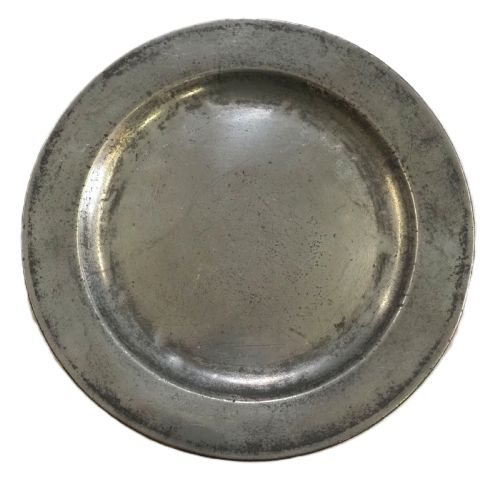


18th Century Pewter Plate
An 18th century pewter plate brings tactile Georgian history to the table with its substantial weight and soft, historic metal.
18th Century Pewter Plate
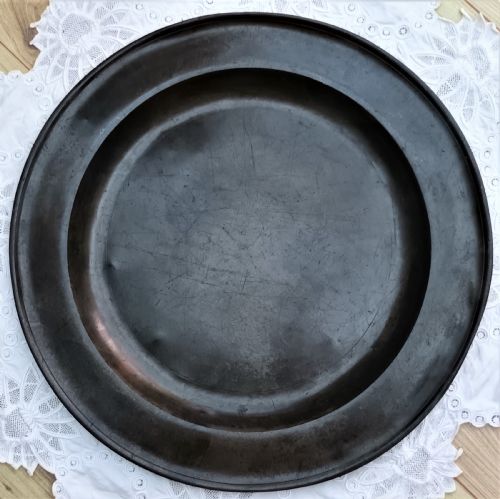
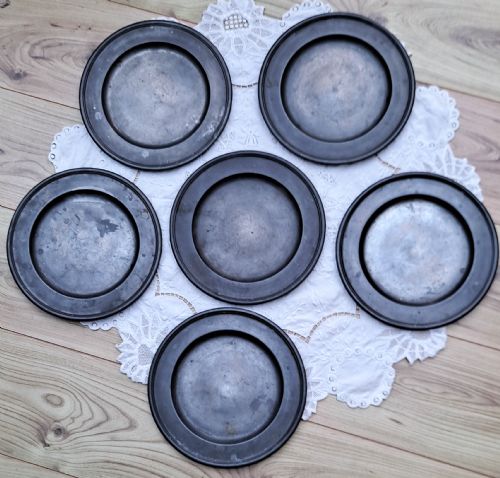
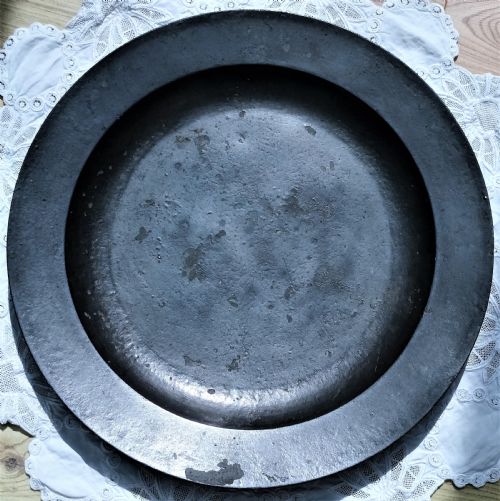
An 18th century pewter plate takes the form of plain rim plates, wavy edge plates, and wide chargers originating from English and European workshops. These domestic and ceremonial items display the characteristic grey lustre of an alloy composed primarily of tin with lead or copper.
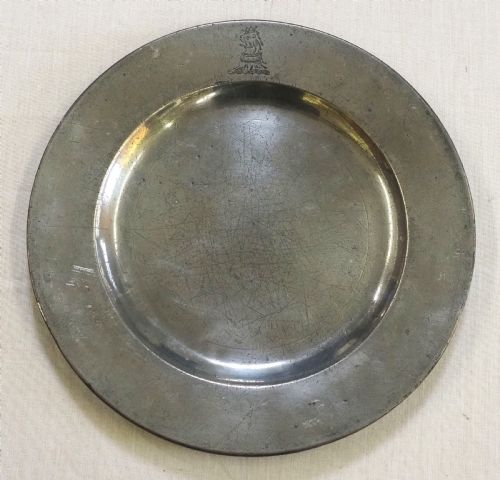
The selection centres on individual dinner plates alongside large chargers and matching sets bearing makers' marks or armorial crests. Domestic pieces range in scale from modest nine-inch examples up to substantial chargers spanning over twenty inches.
How they were made
Makers cast the alloy in brass or stone moulds before turning the metal on a lathe to finish the surface and impart smooth rims. Hammering was often employed to harden the metal and achieve the desired thickness across the centre and the raised border.
Pewter requires precise temperature control during casting to prevent pitting and to maintain the malleability needed for reeded edges or deep charger wells.
Listings feature 18th century pewter alongside contemporary domestic items in copper, silver, and Old Sheffield Plate.
What varies in quality
The crispness of touchmarks and the legibility of maker stamps distinguish workshop standards, alongside the retention of original surface thickness against centuries of scouring. Heavier chargers maintain their structural integrity better than thinned domestic dinner plates.
Engraved armorial crests, lion crests, and city coats of arms elevate standard utilitarian pieces into items commissioned for specific households or civic institutions.
John Duncomb·William Wright·Samuel Smith·James Spackman·Richard King·Wood And Michell·Humphrey Evans II·Edward Leapidge I·John Barlow·Thomas Alderson·Robert Bush
The 18th Century Pewter Plate Glossary
- Charger
- A large circular dish used primarily for serving food at the table or as a base plate for smaller vessels. These massive plates often measure sixteen inches or more across.
- Touchmark
- A proprietary stamp struck into the pewter by the maker to identify their workshop and compliance with guild standards. These marks serve as the primary tool for dating and attribution.
- Plain rim
- A flat, undecorated border surrounding the central well of a plate or dish. This unadorned style represents the most common utilitarian form.
- Reeded edge
- A border decorated with concentric raised bands or parallel parallel lines turned into the rim. This treatment adds rigidity and decorative definition to larger dishes.
- Armorial stamp
- An engraved or punched heraldic crest indicating the family or institution that owned the piece. Such additions personalise domestic tableware with distinct lineage.
18th Century Pewter Plate: Frequently Asked Questions
Were these plates used for daily dining?
Pewter served as the primary tableware for prosperous households throughout the Georgian period before ceramic creamware gained dominance. Plates held daily meals while larger chargers fulfilled both dining and display functions.
Over decades of use, metal surfaces absorbed the wear of cutlery, leaving fine scratches that record centuries of domestic service.
How do I clean an old pewter plate?
Historic metal requires minimal intervention to preserve the dark patination accumulated over generations. Washing with mild soap and warm water removes surface dirt without stripping the soft grey finish.
Aggressive metal polishes strip away age and remove shallow touchmarks, permanently diminishing the historical character of the piece.
What do touchmarks tell us?
Stamps impressed into the soft metal identify the individual pewterer and the guild hall responsible for enforcing alloy standards. These hallmarks often reveal the working dates and city of origin.
Matching a touchmark to historical records allows collectors to narrow down the manufacture of a plate to a specific decade.
How do I display chargers safely?
Large chargers require sturdy support due to their heavy metal composition and tendency to bend under improper pressure. Oak plate racks and dedicated wall brackets distribute the weight evenly.
Keeping pieces away from direct heat sources prevents warping in the soft tin-based alloy.