


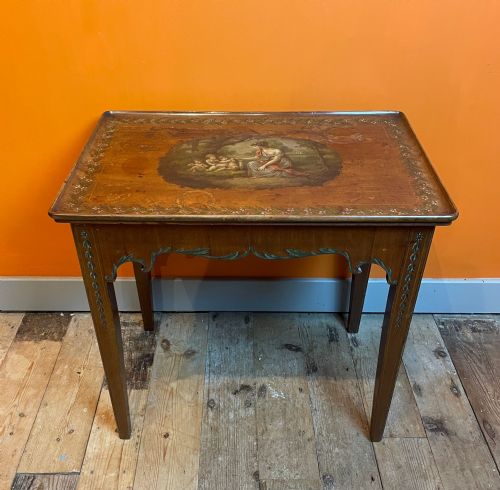

18th Century Painted Tray
These 18th century painted tray pieces bring hand-painted porcelain and papier-mâché into daily interiors for colour and display.
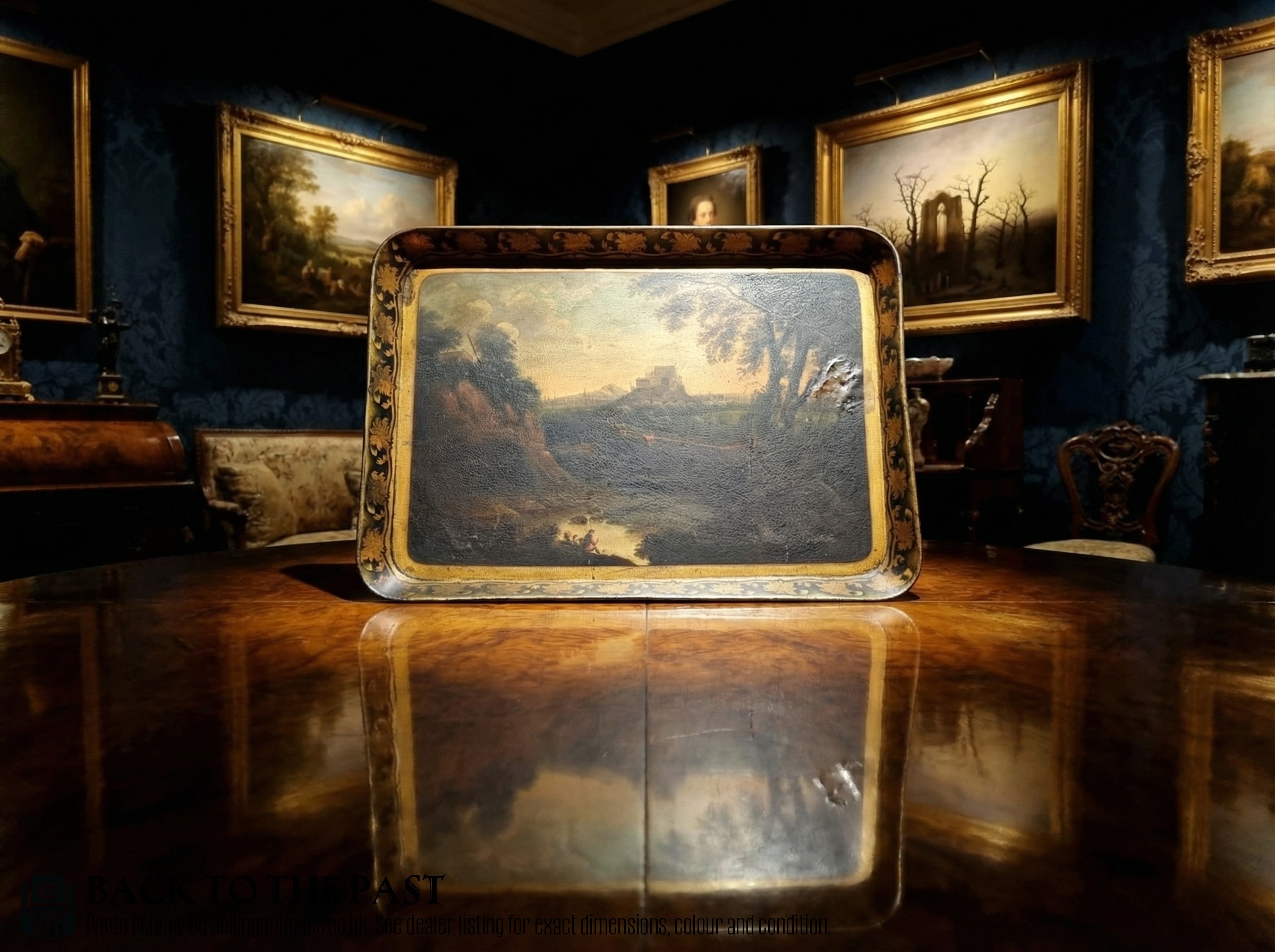
18th Century Painted Tray
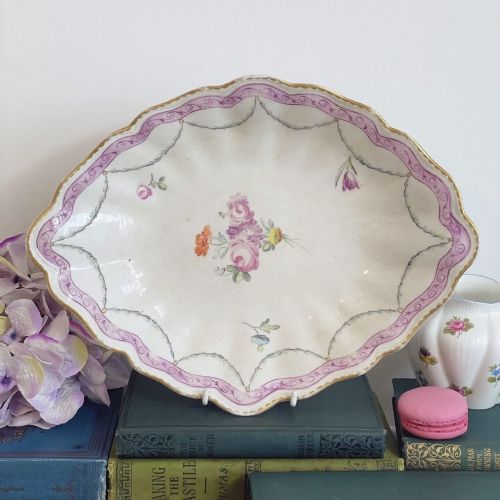
When you search for an 18th century painted tray, you find serving dishes, platters, and occasional tables originating from the Georgian period alongside later 1850 examples. These decorative items include porcelain, enamel, and papier-mâché forms shaped as octagonal, oval, or leaf dishes.
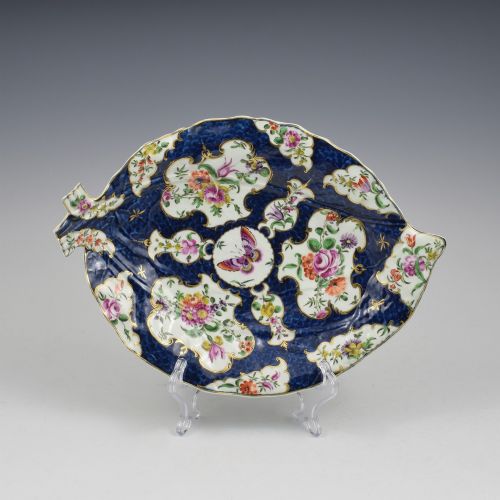
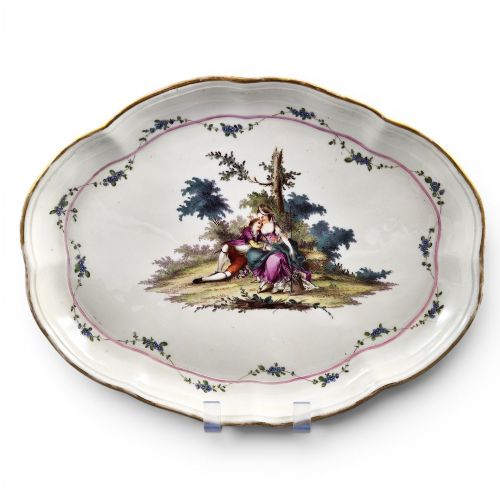
The pieces on this page span factories and workshops across England, France, and Germany. Common varieties include soft-paste porcelain trays with polychrome flowers, scale blue grounds, and naive fishing scenes on papier-mâché.
How they were made
Makers utilised soft-paste porcelain and papier-mâché as the primary bodies for these painted items. Artisans applied hand-painted polychrome pigments, gilding, and gold leaf directly to the surfaces.
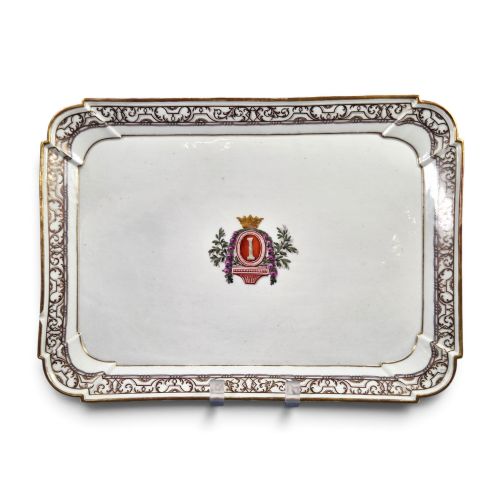
Firing techniques in eighteenth-century porcelain kilns required precise temperature control to set delicate floral motifs and heraldic monograms. Papier-mâché trays received layered paper construction painted with lacquers and detailed neo-classical scenes.
A massive naive papier-mâché tray records a surprising day out with a distinct focus on fishing.
What varies in quality
Quality rests in the precision of the hand-painted brushwork and the complexity of the polychrome or Kakiemon palette. Skilled hands produced finely detailed butterflies, botanical specimens, and armorial monograms that elevate standard serving dishes.
The choice of material and depth of gilding also separate pieces. Heavy gold leaf application and robust papier-mâché or soft-paste porcelain forms indicate higher workshop standards.
Ludwigsburg Porcelain·Joseph Gaspard Robert·Sevres·Meissen
The 18th Century Painted Tray Glossary
- Soft-paste porcelain
- A ceramic material composed of clay and glass frit used by eighteenth-century factories before hard-paste formulas became widespread. It absorbs enamel colours with a distinct warmth.
- Papier-mâché
- A composite material made from paper pulp or reinforced sheets of paper mixed with glue, then moulded and painted. It provided a lightweight alternative to metal trays.
- Polychrome
- Decoration employing several colours rather than a single monochrome tone. Artisans used this technique for naturalistic floral sprays and pictorial scenes.
- Gilding
- The application of gold leaf or powdered gold to ceramic and wooden surfaces. This highlights rims, handles, and borders.
18th Century Painted Tray: Frequently Asked Questions
What were 18th century painted trays used for?
These pieces served practical functions at dining tables for sauces, gravies, and serving dishes.
Over time, many functioned as decorative display trays for drawing rooms and occasional tables.
How do I care for papier-mâché trays?
Keep these items away from direct sunlight and damp environments to protect the painted lacquer finish.
Clean them gently with a dry or barely damp cloth, avoiding chemical polishes entirely.
How do I distinguish porcelain factories?
Examine the underside for factory marks, painted ciphers, or blue crescents associated with specific kilns.
Consider the paste texture and enamel colours to identify English soft-paste porcelain from continental equivalents.
Are all painted trays from the 18th century?
Most examples date from the Georgian era and the late eighteenth century, though some pieces originate from 1850.
Check the materials and style indicators like neo-classical scenes to determine the period.