

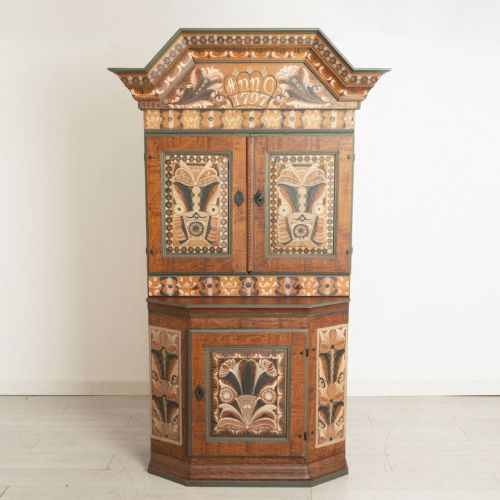
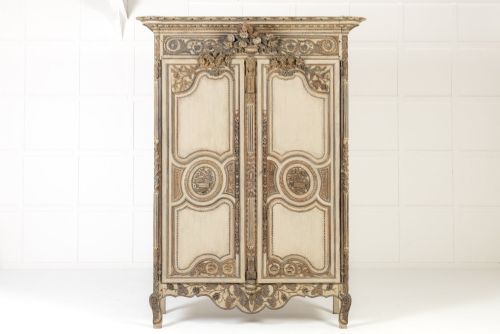


18th Century Painted Press
An 18th century painted press provides architectural storage with a historic surface finish that anchors a room.
18th Century Painted Press
When you search for an 18th century painted press, you are looking at large storage furniture built during the Georgian and 18th century periods to hold linens, books, and household goods. These pieces take forms such as armoires, housekeepers cupboards, linen cupboards, and bookcases originating from English, French, Swedish, Italian, and Dutch workshops.
The version you are most likely to meet on this page is constructed from pine or walnut with original or historic painted finishes, often reflecting regional styles like Gustavian, French Provincial, or Scandinavian Country. They serve as monumental focal points that combine deep interior shelving or hanging space with disciplined exterior proportions.
Construction and materials
These pieces are built primarily from solid pine and oak, joined with traditional framing methods to support heavy panelled doors and internal shelving. Workshops applied layers of lead or oil-based paint directly to the timber, often creating layered monochrome or distressed polychrome surfaces.
Hardware such as brass hinges, iron locks, and occasional glass panels were integrated into the structural joinery to secure large doors on armoires and housekeepers cupboards. The combination of dense softwood or hardwood with brushed or burnished paint finishes allowed these large storage units to survive centuries of domestic use.
18th Century Painted Press Retail Price Guide 2026
Typical asking prices for 18th century painted press among the pieces listed under this phrase on Sellingantiques today, from the lower quarter to the upper quarter. They describe what is for sale here now, not the wider market.
Listings feature eighteenth-century and Georgian pieces built from pine, oak, walnut, and painted wood, alongside iron, brass, and glass elements.
Assessing quality and craftsmanship
Quality in these large storage forms rests in the integrity of the original timber frame and the survival of the early painted surface rather than a pristine modern appearance. Pieces that retain their primary structural joinery without excessive timber replacement demonstrate superior regional carpentry.
The depth and character of the painted finish distinguish standard vernacular items from finer provincial examples. Surface patination that shows genuine age, combined with well-proportioned cornices and panelled doors, elevates a piece above simpler utilitarian storage.
The 18th Century Painted Press Glossary
- Armoire
- A large upright cupboard or wardrobe with doors enclosing shelving or hanging space. This form serves as a primary bedroom or hallway storage unit in French and continental traditions.
- Housekeepers cupboard
- A large multipurpose storage piece traditionally used in country houses for linens and dry goods. It typically combines upper and lower cupboard sections with substantial internal capacity.
- Cornice
- The moulded projection that crowns the top of a large cabinet or press. It defines the architectural silhouette of the piece against the wall.
- Buffet à deux corps
- A tall two-tier French sideboard or cupboard featuring an upper cabinet set upon a deeper lower base. This form provides grand architectural storage for dining rooms and halls.
18th Century Painted Press: Frequently Asked Questions
What is an 18th century painted press used for?
These large pieces function primarily as statement storage units for clothing, linens, books, and household goods. Their deep internal shelving and hanging spaces accommodate substantial modern utility while adding historic presence to a room.
Placed in hallways, bedrooms, or living spaces, they conceal everyday items behind imposing panelled doors. The upper and lower sections allow for organised storage of bulky items away from view.
How do I identify a regional style?
Regional characteristics appear in the silhouette, timber choice, and the treatment of the painted surface. English pieces often utilise pine or oak in housekeepers cupboards, while Swedish and French examples lean towards lighter painted pine and walnut with distinct neoclassical or provincial mouldings.
Examining the cornice, feet, and panel arrangement reveals whether a piece originates from an English workshop or continental traditions like Gustavian or Italian Provincial. Each region utilised local carpentry habits that remain visible in the assembled frame.
Are painted surfaces original?
Surface analysis requires looking at how the paint interacts with the underlying pine or walnut timber. Historic paint layers show natural wear, craquelure, and integration with the wood grain built up over generations of use.
Many pieces carry early or historic painted finishes that define their aesthetic value. Understanding the distinction between original pigment layers and later over-painting helps interpret the history of the object.
How do I care for antique painted furniture?
Maintenance involves protecting the historic timber and fragile painted surfaces from extreme humidity and direct sunlight. Stable indoor climates prevent the pine or oak from shifting and causing paint to flake.
Dusting with a dry, soft cloth preserves the surface patination without introducing moisture or chemical polishes. Gentle handling ensures the original iron and brass hardware remains secure within the wood.