



18th Century Mahogany Side Cabinet
An 18th century mahogany side cabinet brings rich dark timber and functional storage into a room, offering Georgian proportion alongside practical surface space.
18th Century Mahogany Side Cabinet
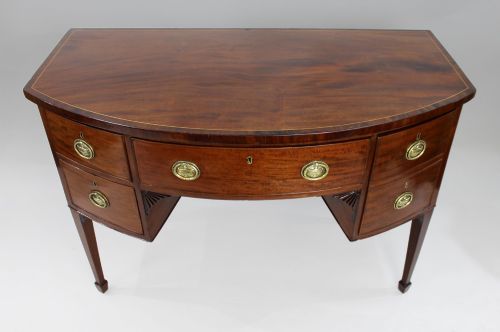
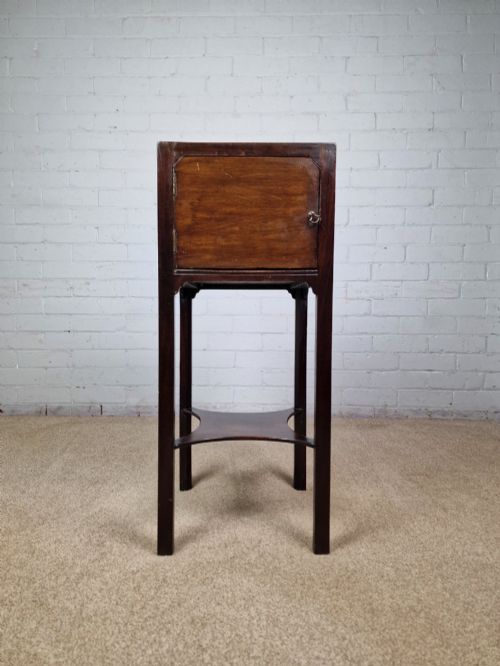
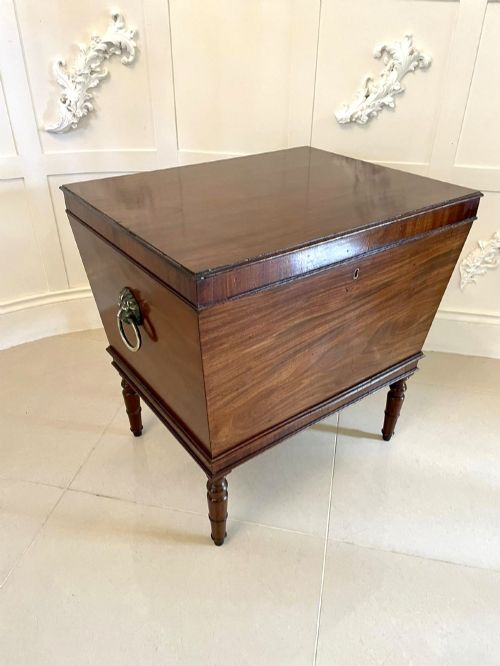
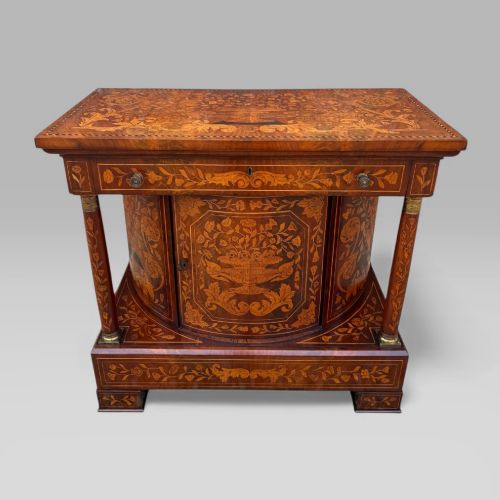
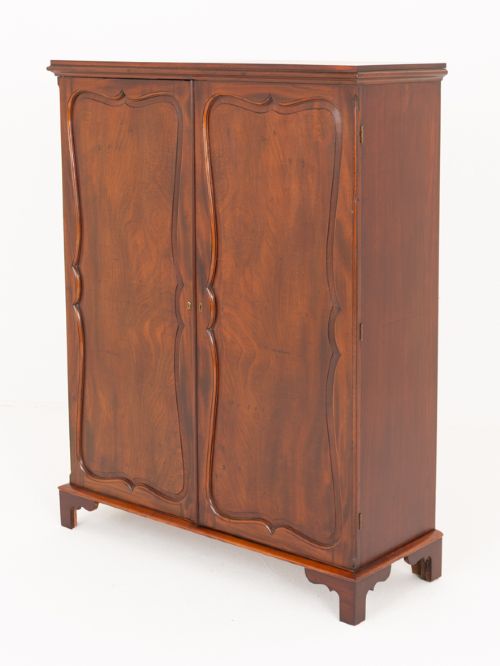
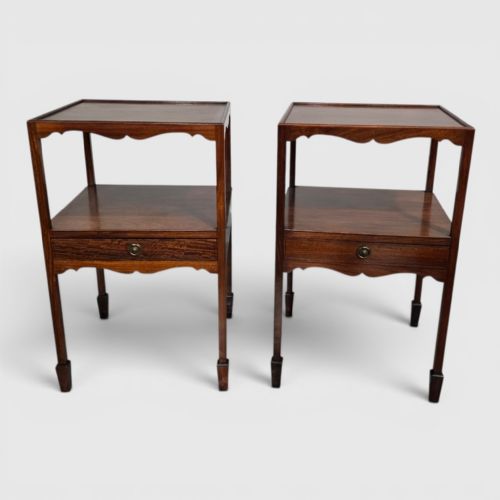
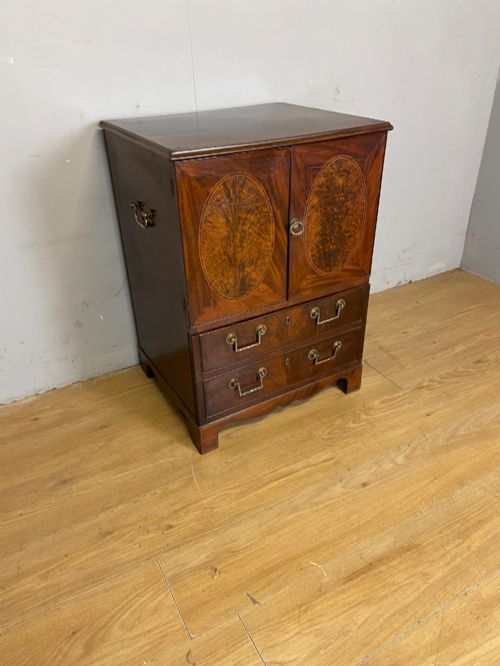
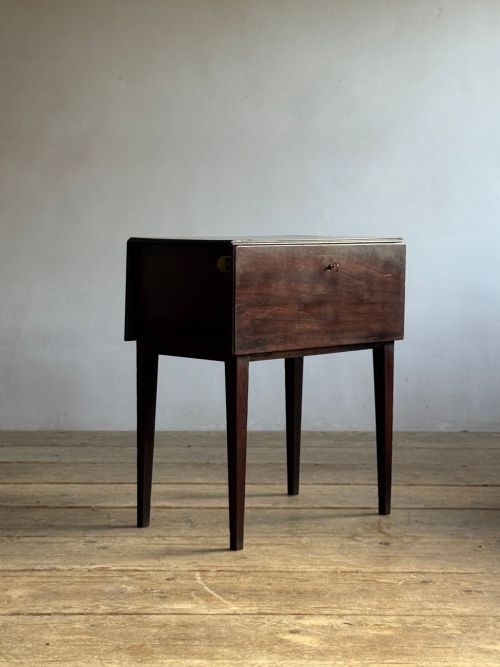
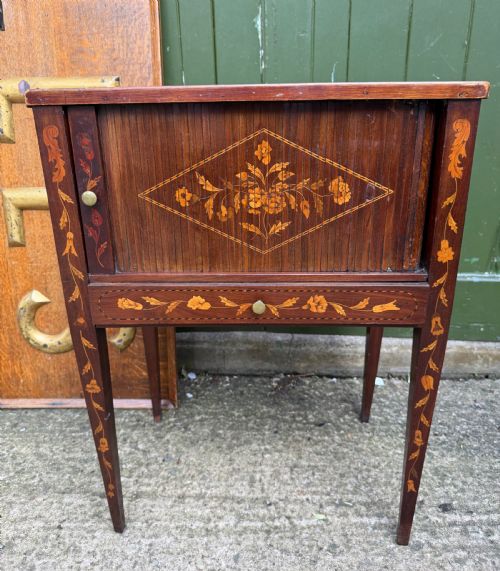
An 18th century mahogany side cabinet encompasses a variety of utilitarian and formal storage forms, ranging from compact bedside commodes and night stands to larger breakfront sideboards and console tables. The pieces documented here predominantly stem from the Georgian and George III periods, alongside Dutch marquetry interpretations featuring ornate floral inlay.
Buyers will encounter bedside tables with tray tops, two-door cupboards, and serpentine-fronted cabinets intended for domestic organisation. Regional variations appear in Dutch neo-classical and Baroque styles, bringing contrasting woods and sweeping curves to the standard British carcase construction.
Materials and Technique
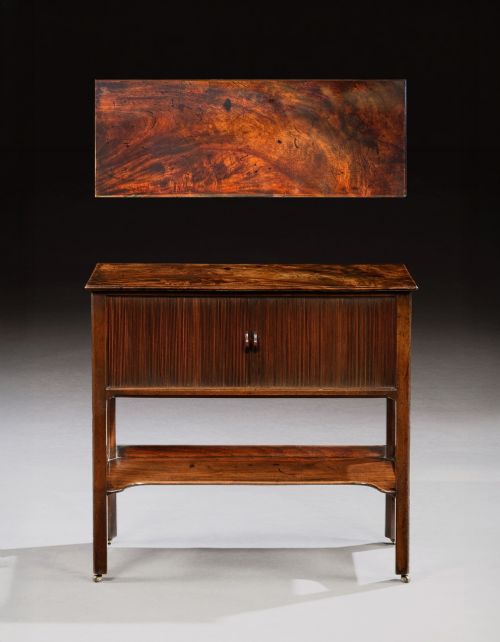
Cabinet makers utilised dense mahogany as the primary structural timber, often selecting figured flame veneers for principal visual surfaces to display striking grain patterns. Carcases relied on traditional joinery methods, housing drawers with dovetailed joints and mounting panelled doors within solid frames.
Decorative detailing frequently incorporated contrasting light woods such as satinwood, boxwood, and fruitwood to create delicate line inlays or elaborate floral marquetry panels. Brass hardware, including drop handles, escutcheons, and occasional cast feet, provided functional contrast to the dark polished timber.
Recorded materials span solid mahogany, brass fittings, satinwood and boxwood inlay, alongside fruitwood marquetry detailing across Georgian and Dutch styles.
Craftsmanship and Proportion
The distinction between tiers of manufacture rests upon the handling of the timber and the precision of the joinery. Superior examples display continuous grain matching across drawer fronts and doors, whereas simpler utility pieces utilise plain timber boards without figured veneers.
Proportion and execution of secondary details dictate the standing of a piece. Finer cabinets exhibit crisp moulding profiles, harmonious sightlines across serpentine or bow fronts, and intact period hardware rather than later replacements.
The 18th Century Mahogany Side Cabinet Glossary
- Commode
- A low cabinet or chest of drawers containing doors or drawers, often designed for bedroom use in the eighteenth century. These pieces frequently feature enclosed storage standing on slender legs.
- Marquetry
- The art of forming decorative patterns by fitting together thin veneers of different coloured woods. Dutch examples frequently employ this technique to depict floral and botanical motifs.
- Tambour
- A flexible sliding shutter formed of narrow vertical strips of wood glued to a canvas backing. This mechanism allows enclosed storage access within curved furniture shapes without swinging doors.
- Tray top
- A raised rim surrounding the upper surface of a small table or cabinet designed to prevent items from rolling off. This feature appears frequently on bedside commodes and night stands.
- Lowboy
- A small side table with drawers, standing on four legs, constructed primarily during the Georgian period. It served various domestic functions as a dressing or side table.
18th Century Mahogany Side Cabinet: Frequently Asked Questions
How were these cabinets used?
These pieces served practical storage roles in bedrooms, living spaces, and dining rooms across the household. Smaller bedside versions held chamber equipment or night necessities, while larger sideboards and commodes stored dining silver, linens, or documents.
Surface tops provided a convenient platform for lighting lamps, displaying decorative items, or serving food and drink during social gatherings.
How do I care for mahogany?
Protect the timber surface by placing the cabinet away from direct sunlight and heat sources, which can dry out and fade the wood polish. Maintain the finish by dusting with a dry lint-free cloth and applying occasional traditional wax.
Avoid using modern silicone sprays or placing damp items directly onto the unshielded wood to preserve the original patina and veneer integrity.
How to tell George III periods apart?
George III furniture spans a lengthy reign defined by evolving design tastes, moving from heavy architectural Chippendale forms towards lighter neoclassical proportions. Look for straight tapered legs, delicate string inlay, and symmetrical satinwood motifs characteristic of the later eighteenth century.
Earlier pieces often display more robust cabriole legs, heavy moulded cornices, and carved mahogany details without contrasting timber inlays.
Where should I place a side cabinet?
Position a compact bedside commode or night stand beside a bed to utilise its enclosed cupboard and drawer space for nighttime storage. Larger serpentine or breakfront cabinets suit living rooms, hallways, or dining spaces as focal storage furniture.
Ensure adequate floor clearance around doors and drawers to allow smooth operation of hinged panels and sliding tambour mechanisms.