
18th Century Mahogany Seat
An 18th century mahogany seat brings enduring British craftsmanship and rich timber grain to a room.
18th Century Mahogany Seat
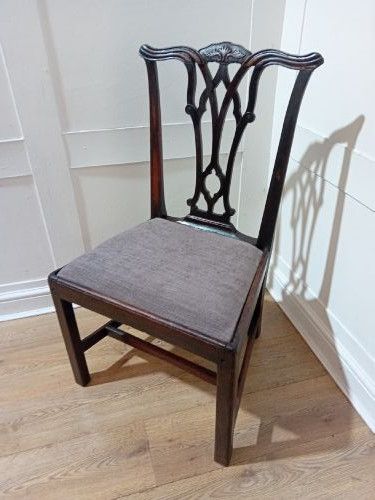
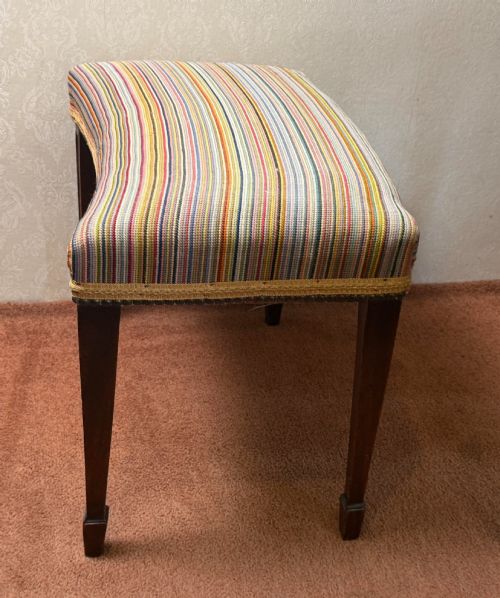
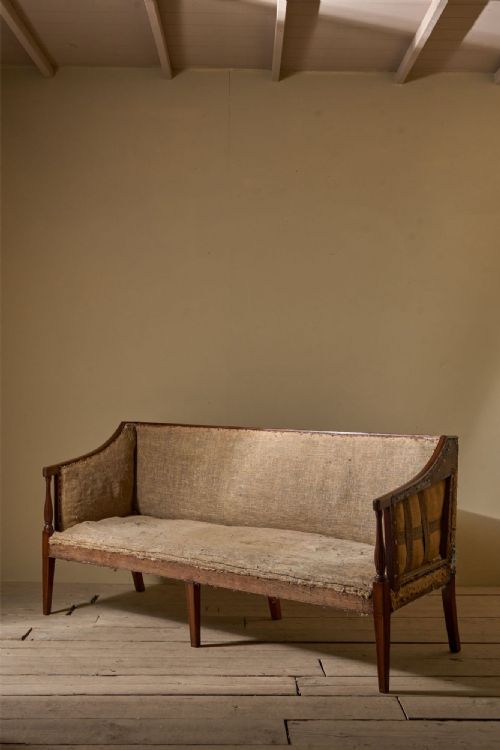
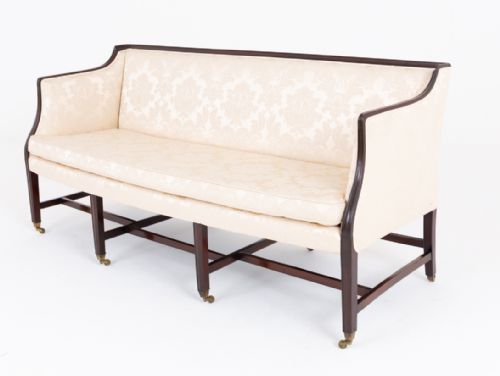
An 18th century mahogany seat encompasses everything from single dining chairs and library armchairs to upholstered settees and stools. These forms span the Georgian, George II, and George III periods, reflecting the shifting domestic fashions of the era.
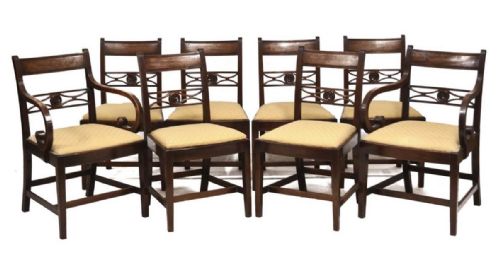
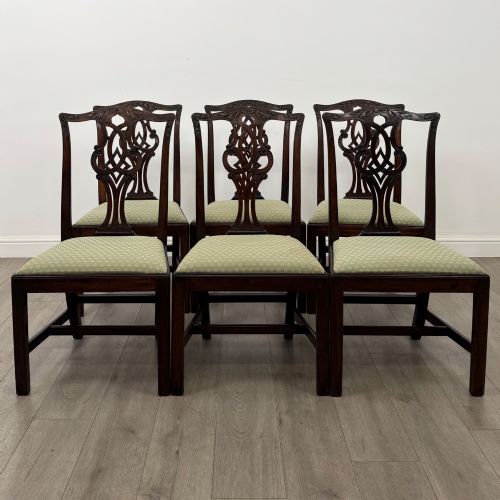
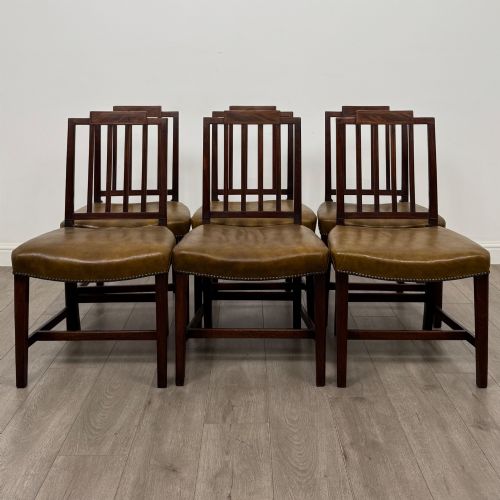
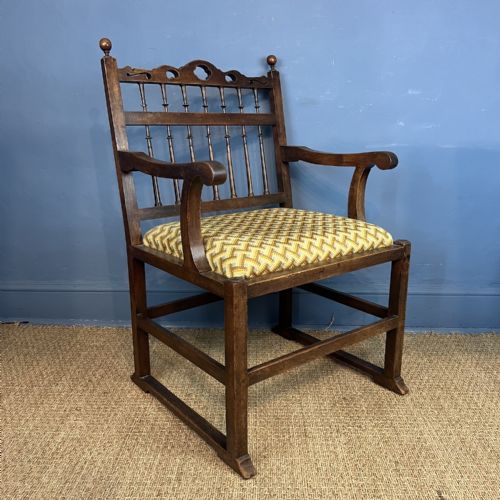
Dining chairs and hall chairs appear frequently, often surviving in sets of four, six, or eight. Alongside these sit larger library armchairs, Gainsborough chairs, and footstools designed for formal reception rooms and private chambers.
Originating largely from English and Irish workshops, these pieces utilise dense tropical hardwood shaped by cabinet makers working under regional stylistic influences.
How they were made
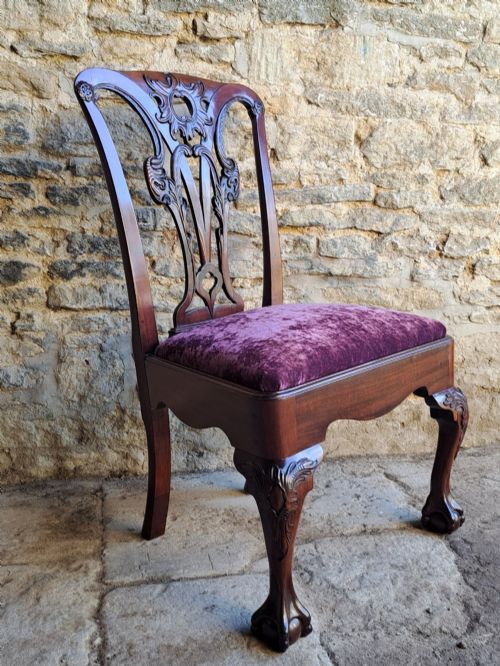
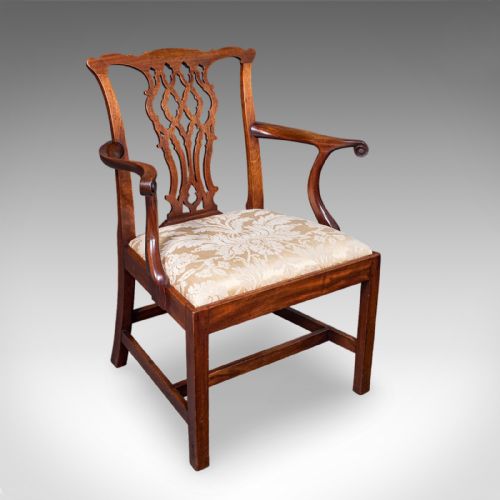
Makers shaped dense mahogany timber using hand saws, chisels, and planes to create sturdy frames joined by traditional mortise and tenon construction. Carved details such as claw and ball feet or pierced splats required precise hand work.
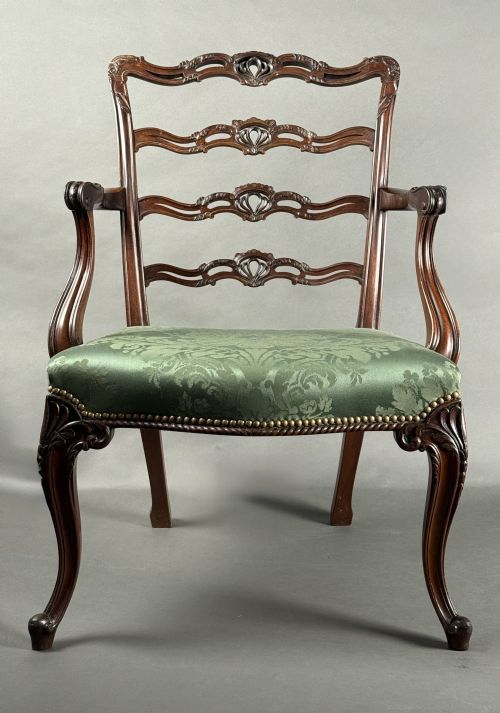
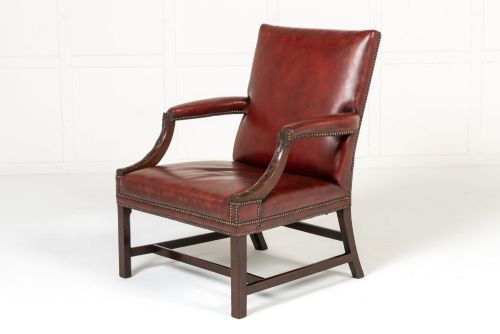
Upholstered items integrate webbing and stuffing secured beneath layers of fabric, velvet, leather, or damask. Brass tacks frequently edge the seating upholstery on library chairs and sofas.
Drunkards chairs feature unusually wide seats designed to accommodate gentlemen after an evening of heavy port.
What varies in quality
The density and figuring of the mahogany timber dictate the visual depth of the frame. Well-figured wood exhibits rich grain patterns that respond well to traditional polishing.
Structural integrity depends on the tightness of the original joinery and the restraint shown in any subsequent timber repairs. The crispness of carved ornament distinguishes standard output from finer workshop productions.
The 18th Century Mahogany Seat Glossary
- Splat
- The vertical wooden strip down the centre of a chair back. It often takes a shaped or pierced form in mid-century designs.
- Cabriole leg
- A furniture leg that curves out at the knee and tapers inward to an ankle, frequently ending in a claw and ball foot.
- Gainsborough chair
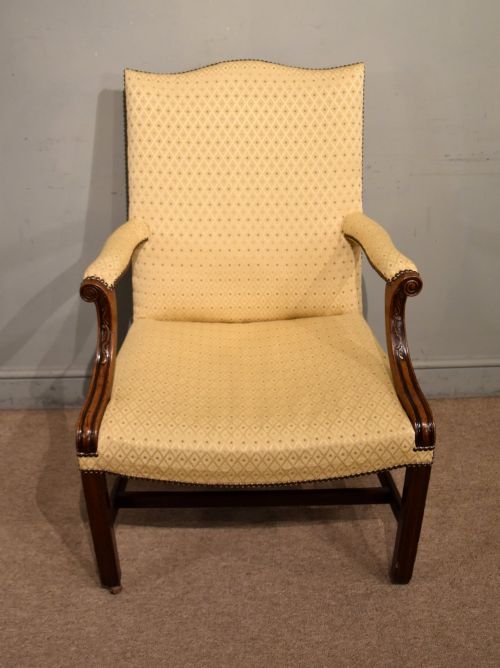
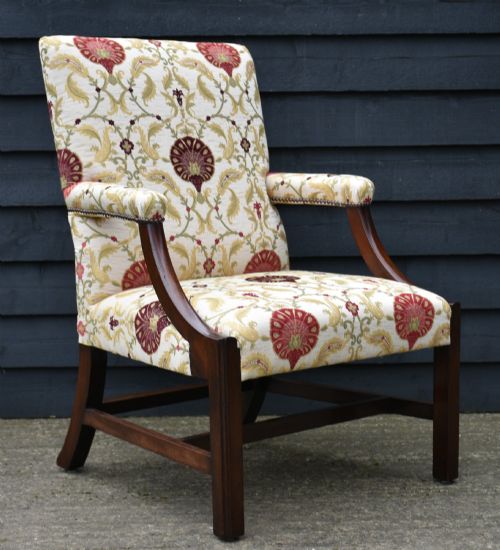
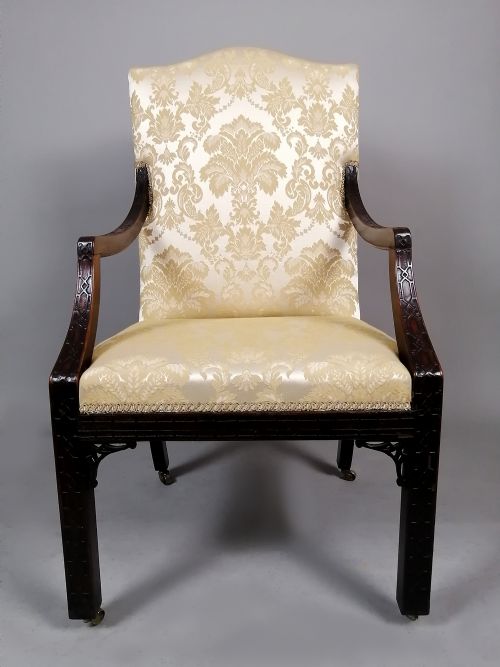
- A wide, open-armed armchair with a padded seat and back, standing on short legs designed for writing or reading.
- Damask
- A reversible figured fabric traditionally woven from silk, wool, or linen, utilised for period upholstery.
- Corner chair
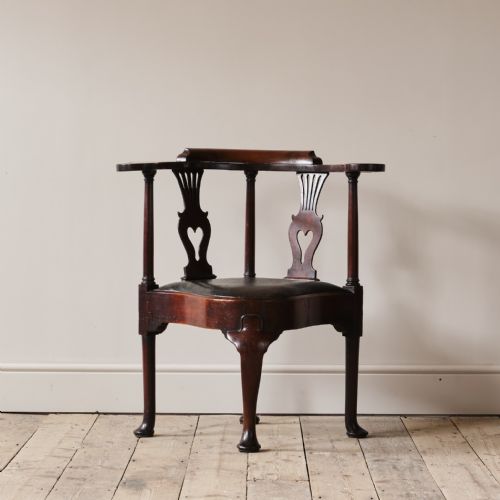
- A seat designed to fit into the corner of a room, featuring a curved back rail supported by three or four legs.
18th Century Mahogany Seat: Frequently Asked Questions
How do I identify a George III chair?
George III pieces typically date between 1760 and 1820, displaying straight or square-tapered legs rather than the curved cabriole forms of the preceding George II era. Details often include neoclassical motifs or shield-shaped backs associated with Hepplewhite designs.
Examination of the timber beneath and the joinery methods helps confirm the period. Original corner blocks and uncompromised tenons provide strong clues to authentic age.
How should I care for mahogany furniture?
Keep wooden surfaces away from direct heat sources and strong sunlight to prevent the timber and polish from drying out. Periodic application of traditional wax helps nourish the grain.
Avoid using modern silicone sprays, which can build up on the antique polish. Gentle dusting with a dry, soft cloth maintains the finish.
What is a Gainsborough armchair?
A Gainsborough chair is a wide, upholstered armchair with open wooden arms, designed during the mid-18th century. They were typically placed in libraries or dressing rooms for comfortable seating.
The low arms allowed individuals wearing wide skirts or heavy coats to sit easily. They often feature mahogany frames with brass nailhead trim around the upholstery.