
English Library Chair
An English library chair offers substantial proportions and supportive seating, designed for reading rooms and studies across multiple centuries.
English Library Chair
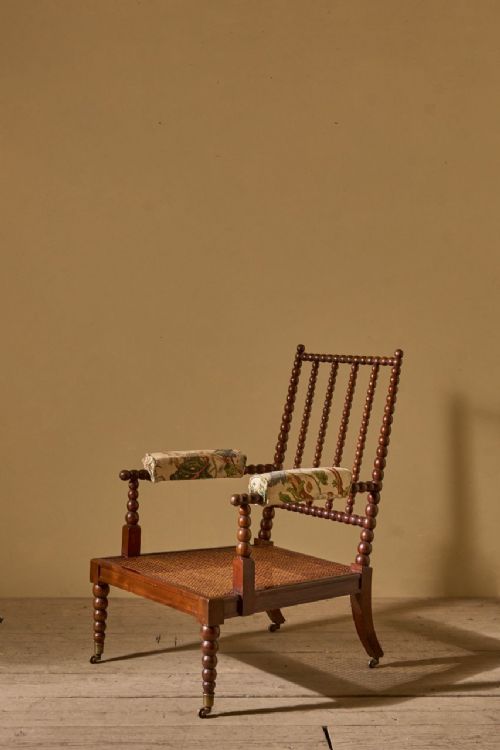
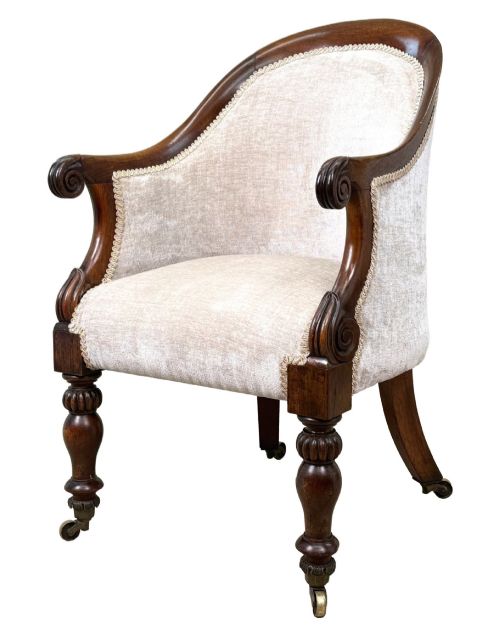
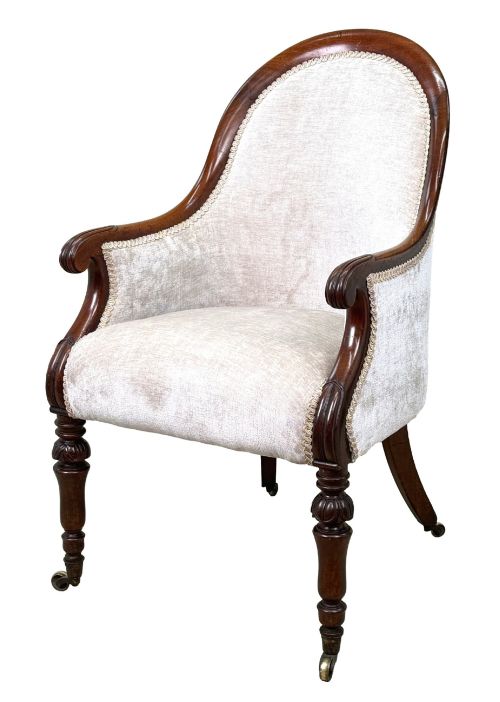
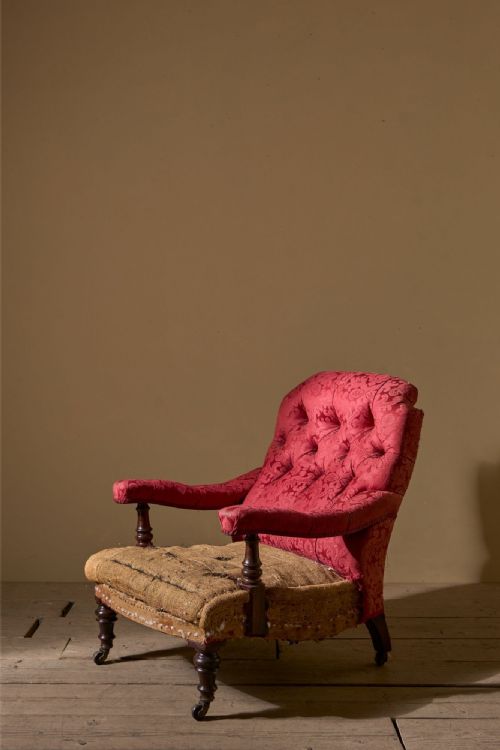
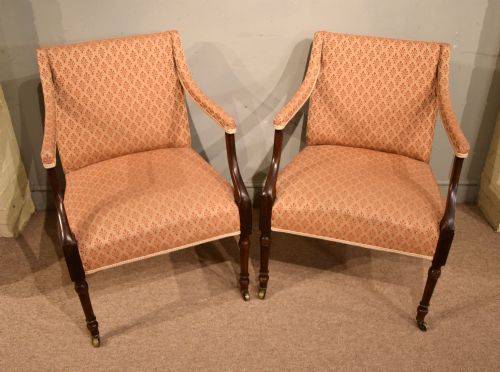
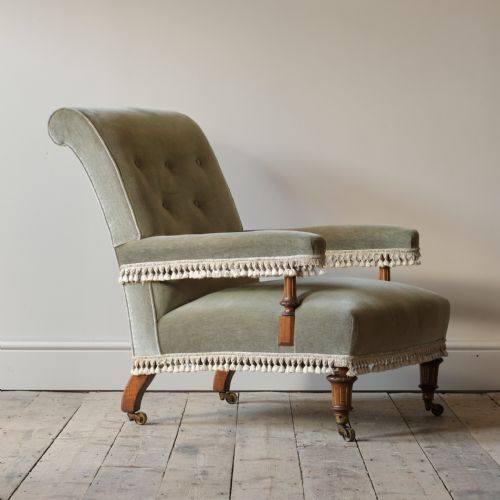
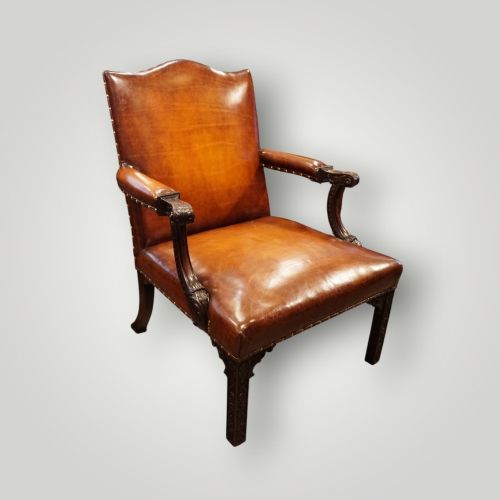
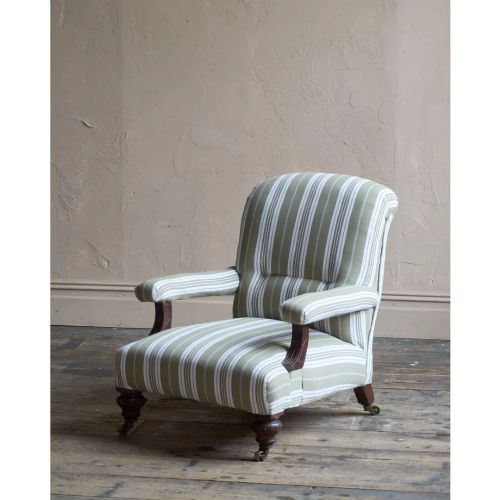
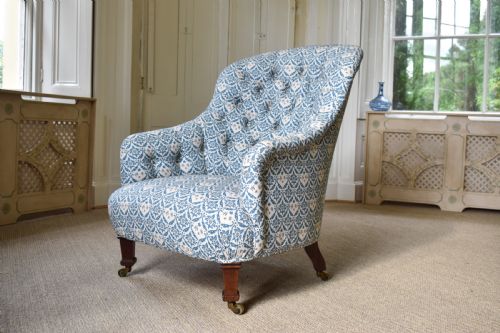
An English library chair encompasses sturdy reading armchairs, open armchairs, and tub chairs found in country houses and domestic studies.
The selections span the Georgian, Regency, and Victorian periods, extending into early twentieth-century club chairs and metamorphic forms.
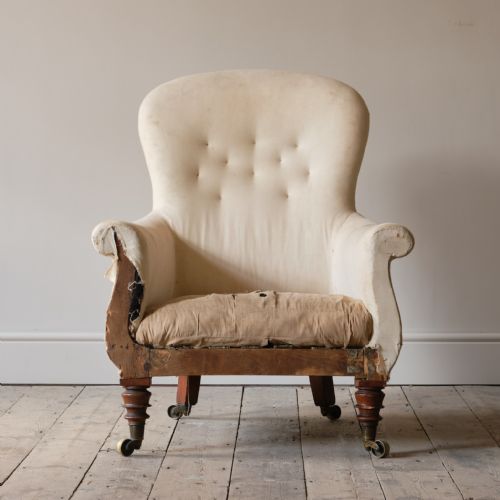
Makers produced these armchairs for long periods of reading and desk work, resulting in deep seats and substantial wooden frames.
Materials and Technique
Cabinet makers utilised dense hardwoods such as mahogany, walnut, oak, and rosewood for the structural frames of these armchairs.
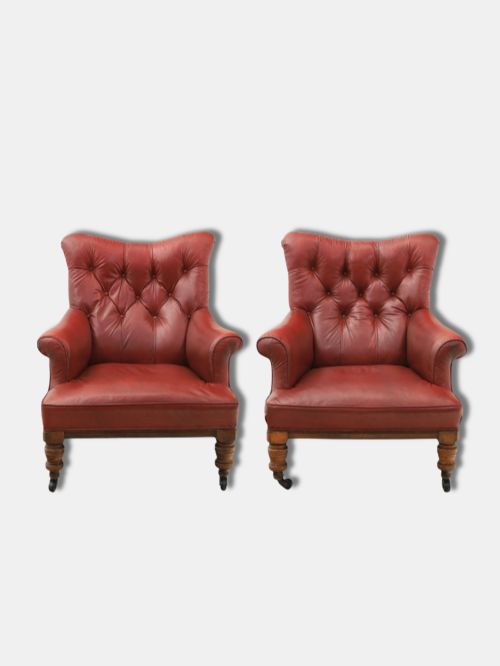
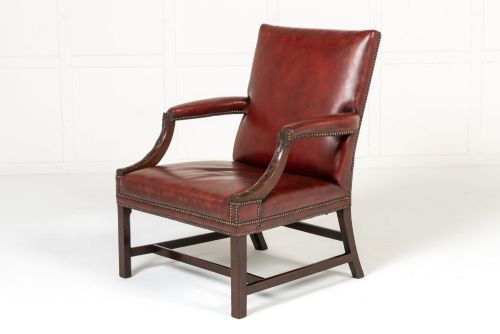
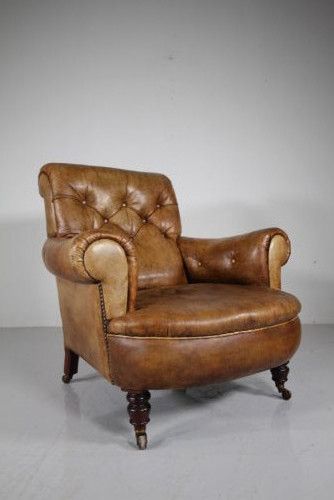
Upholstery methods incorporated traditional hide leather, hand-dyed English leather, fabric, velvet, and brass nail detailing.
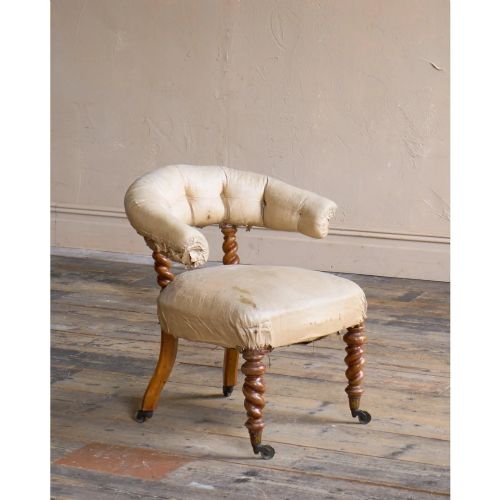
Turning, carving, and scrollwork defined the arms and show frames, while specialised joinery ensured stability in heavy use.
Some chairs cleverly double as library steps, proving that nineteenth-century readers appreciated furniture that could reach the top shelf.
Distinctions in Manufacture
Superior examples display crisp timber carving and thoughtful proportions, whereas simpler pieces rely on plain structural frames.
The execution of the show frame and the quality of the leather hide separate standard workshop production from high-end cabinet work.
C. Hindley & Sons·Howard & Sons·Gillows
The English Library Chair Glossary
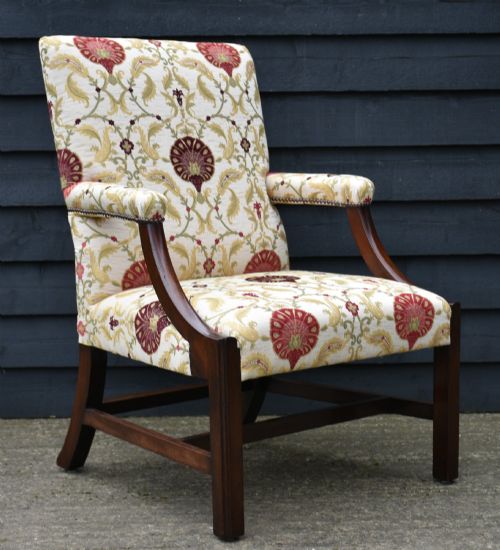
- Gainsborough
- A wide, upholstered armchair with open padded arms, originating in the mid-eighteenth century. These chairs usually stand on straight or carved legs.
- Metamorphic
- Describing furniture designed to transform into another object, such as an armchair converting into library steps. This mechanism combined seating with utility.
- Smoker's bow
- A low-backed wooden armchair with a turned spindle gallery, often associated with domestic and captain's seating. It shares lineage with Windsor chair construction.
English Library Chair: Frequently Asked Questions
How do I identify a Regency library chair?
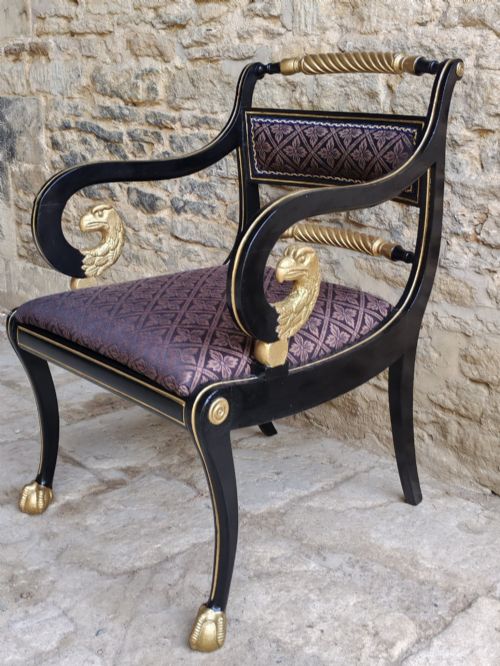
Regency library chairs typically exhibit classical influences, such as brass mounts, sabre legs, or scrolled arms in mahogany and rosewood. These pieces often date from the early nineteenth century and show refined joinery.
Makers of this era frequently utilised ebonised finishes or parcel-gilt details to mimic grander neoclassical furniture styles found in contemporary townhouses.
What is a metamorphic library chair?
A metamorphic library chair functions primarily as a comfortable seat while concealing a folding step mechanism within its frame. Owners deployed this dual-purpose design to reach high bookshelves in private studies.
Such items demonstrate clever nineteenth-century carpentry, allowing a standard piece of furniture to serve a practical domestic function.
How do leather club chairs differ from earlier library chairs?
Club chairs emerge from the late nineteenth and early twentieth centuries, offering deep-seated, heavily padded upholstery in oxblood or tan leather. They prioritize relaxed lounging over upright reading posture.
Earlier Georgian and Victorian library chairs maintain exposed mahogany or walnut wooden frames with more restrained padding and upright support.
Are these chairs suitable for daily use?
These armchairs were constructed from durable hardwoods like oak, mahogany, and walnut, making them robust enough for daily seating. Many examples feature supportive sprung or webbed bases beneath the leather or fabric.
Placing them in a study or living room allows you to utilise them just as their original owners did centuries ago.