
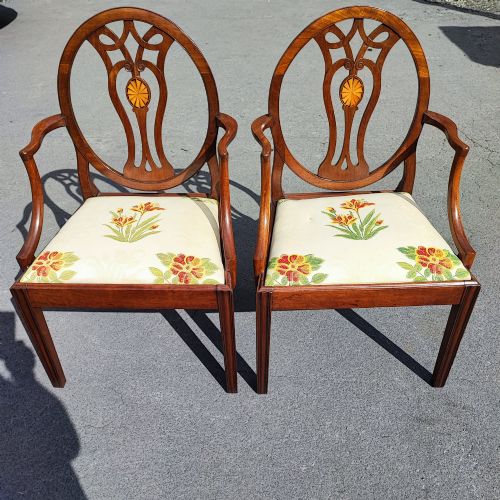
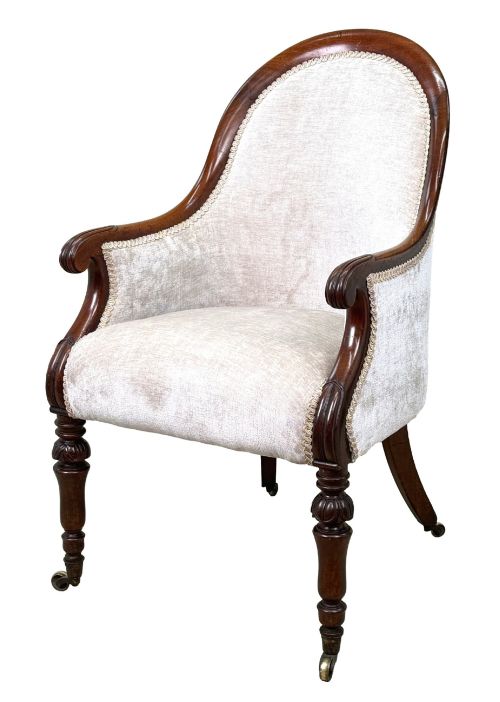
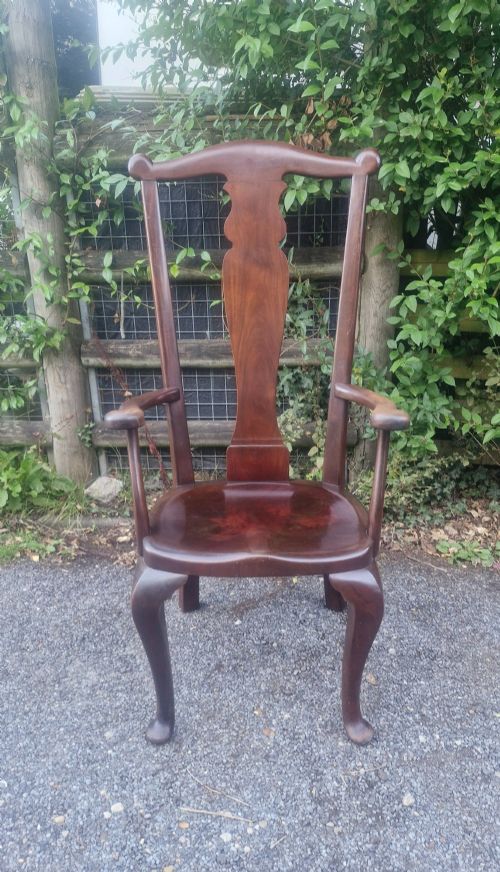
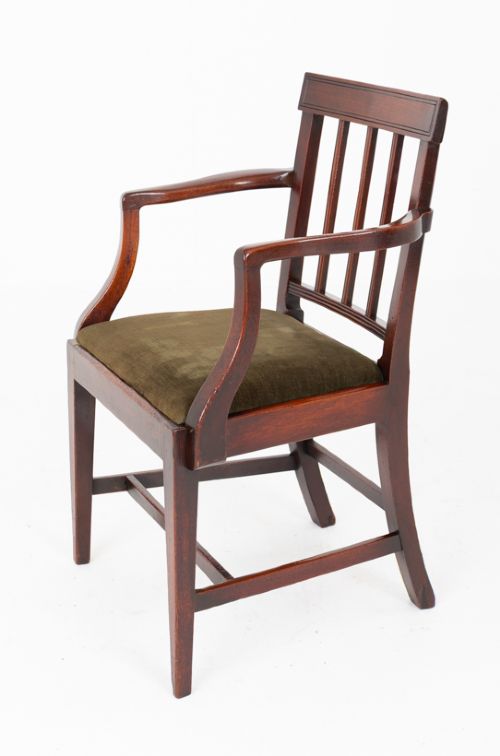
Georgian Mahogany Arm Chair
A georgian mahogany arm chair brings warmth and solid craftsmanship to a room, offering the structural elegance developed across the eighteenth and nineteenth centuries.
Materials and construction
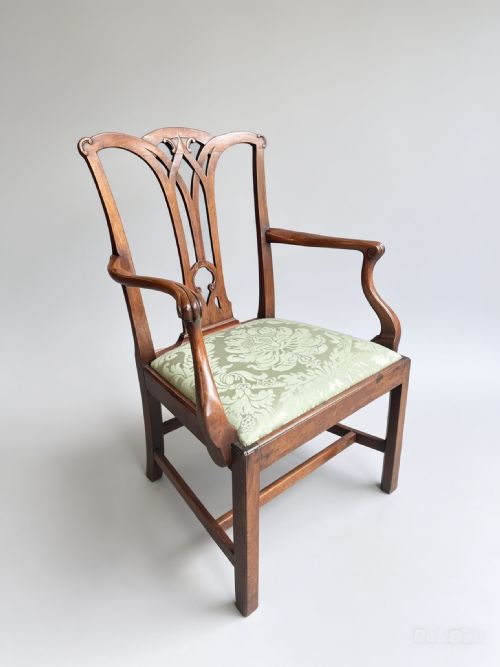
Makers utilised dense tropical timber for the primary structural frames, taking advantage of its strength and deep natural grain. Frames frequently incorporate mortise and tenon joinery to ensure long-term stability under daily use.
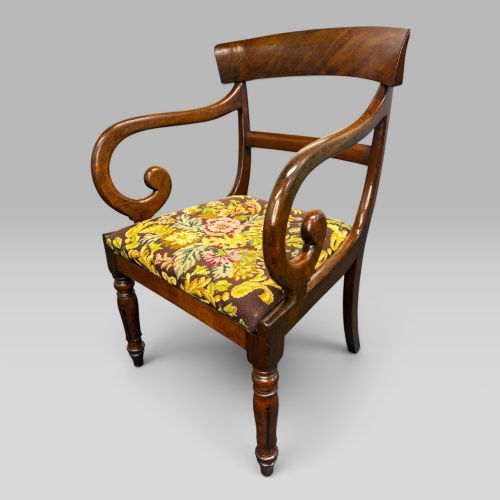
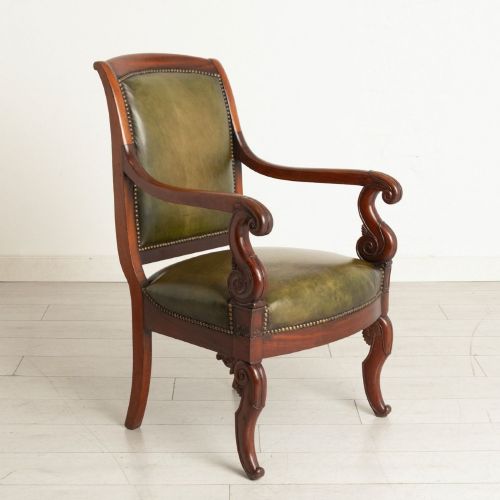
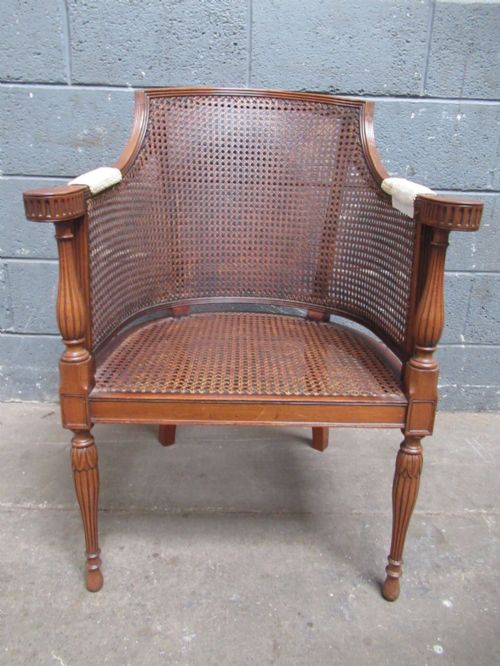
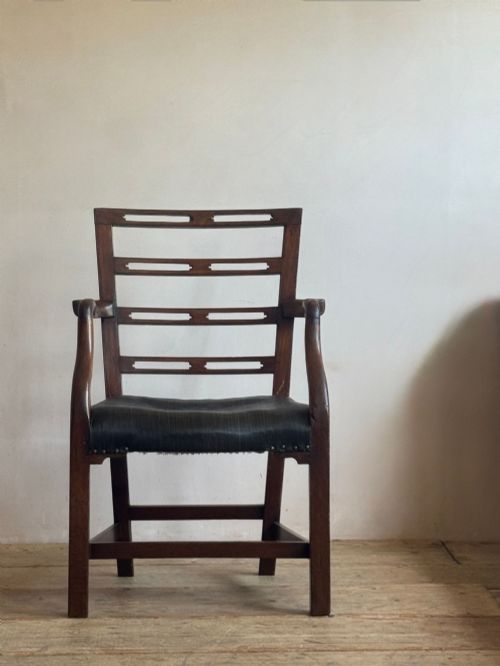
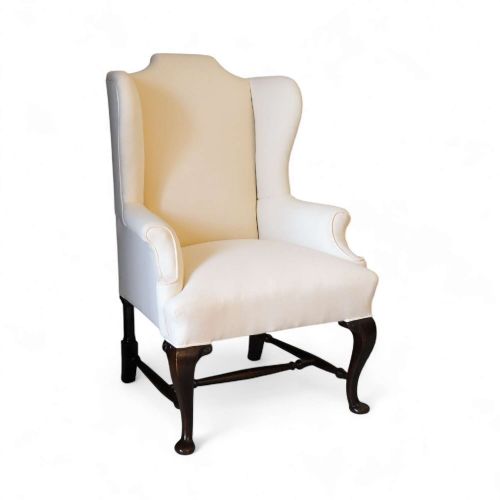
Seating surfaces rely on secondary support materials such as woven cane panels, drop-in webbing, or horsehair stuffing beneath outer coverings. Upholstery fabrics range from green leather and velvet to traditional tapestry and printed textiles.
Evaluating craftsmanship
The distinction between ordinary and exceptional examples rests upon the crispness of hand-carving and the proportional balance of the frame. Superior items display fluid lines in the arm supports and leg junctions without heavy-handed alterations.
Original surface patination and uncompromised timber integrity elevate a piece above examples that have undergone aggressive stripping or structural rebuilding. The refinement of secondary framing timbers inside the seat box further indicates the original maker's standard.
Several armchairs retain traces of historical ink splatters on their arms from generations of correspondents writing letters by candlelight.
Gillows·Waring and Gillow
The Georgian Mahogany Arm Chair Glossary
- Gainsborough chair
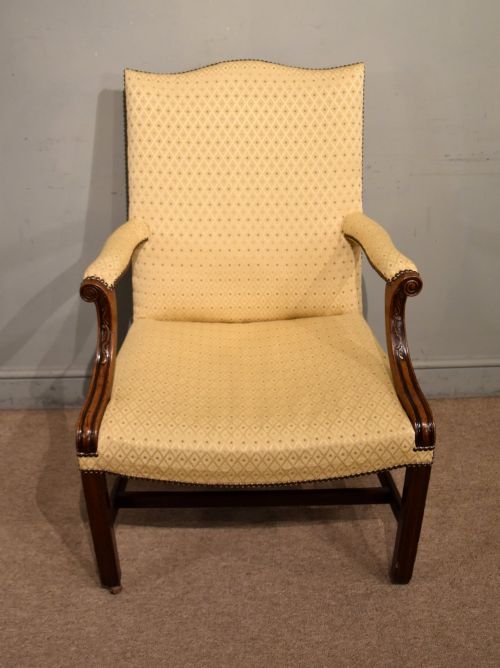
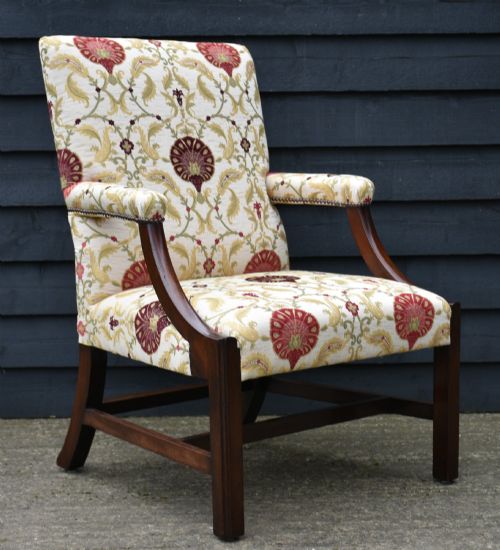
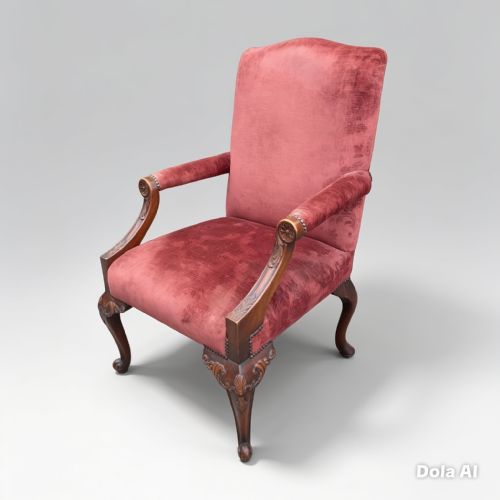
- An upholstered armchair with a padded back, open arms, and short legs, originating in the mid-eighteenth century. These seats typically feature brass nailhead trim along the upholstery borders.
- Carver chair
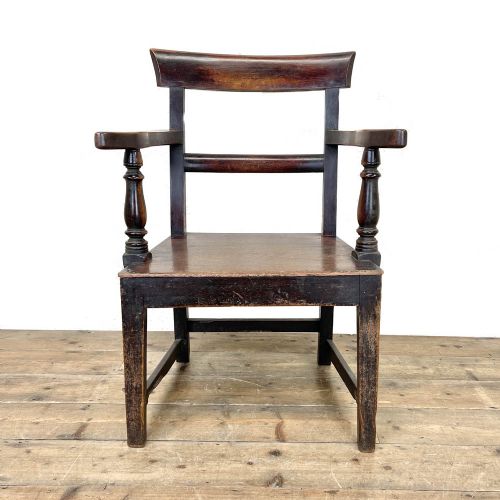
- An armchair designed to match a set of dining chairs, usually placed at the head of the table. They provide broader elbow support than standard side chairs.
- Bergère
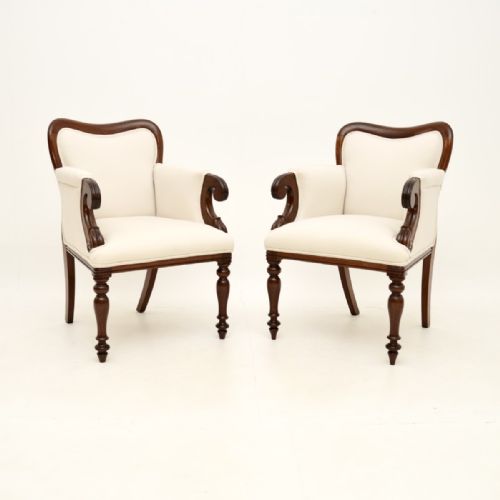
- An enclosed armchair with upholstered sides and a cane or padded back panel. This French-inspired form gained popularity in English drawing rooms during the Regency period.
- Sheraton style
- A neoclassical furniture design characterised by straight tapered legs, geometric inlay, and rectilinear proportions. Pieces in this manner date from the late eighteenth century onward.
- Chippendale style
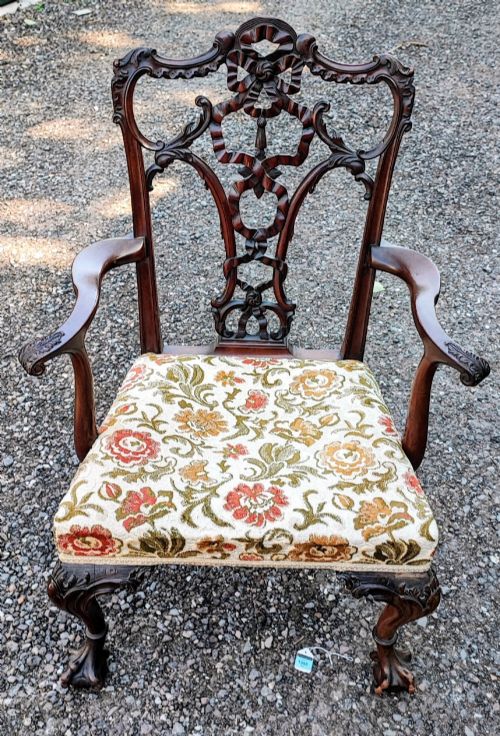
- A decorative manner featuring intricate ribbon-back or ladder-back splats, acanthus leaf carvings, and cabriole legs ending in ball-and-claw feet. The style draws inspiration from mid-eighteenth-century design pattern books.
Georgian Mahogany Arm Chair: Frequently Asked Questions
How do I identify a genuine period chair?
Examine the timber shrinkage, joinery methods, and tool marks visible on the interior and underside of the frame. Hand-cut joinery and consistent patination across the mahogany surfaces indicate genuine age.
Compare the carving depth and proportion against documented examples from the same stylistic era to confirm authenticity.
Can I use an antique armchair every day?
Solid timber frames withstand daily use provided the internal webbing and joints remain stable. Professional conservation ensures the structural integrity supports modern seating weights.
Avoid placing antique seating in direct sunlight or beside heat sources to prevent timber splitting and leather degradation.
What is the difference between a Gainsborough and a library chair?
A Gainsborough chair specifically denotes an eighteenth-century upholstered armchair with open padded arms intended for writing desks or parlour settings. Library chairs often encompass broader tub shapes or enclosed caned designs built for reading.
Both forms utilise high-grade mahogany frames but serve distinct domestic functions within historic floor plans.
How should I care for mahogany and leather?
Clean timber surfaces periodically with a soft, dry cloth to remove dust without applying silicone polishes. Nourish leather upholstery with specialised natural wax or balm to maintain suppleness.
Keep indoor humidity stable to protect both the wood structure and the underlying stuffing materials from environmental stress.