
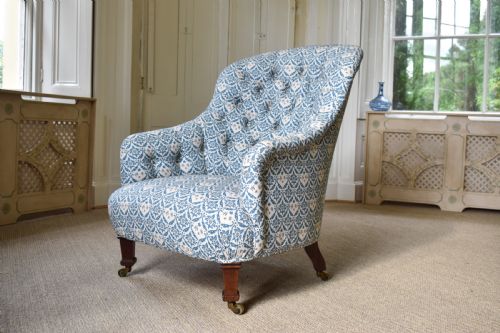
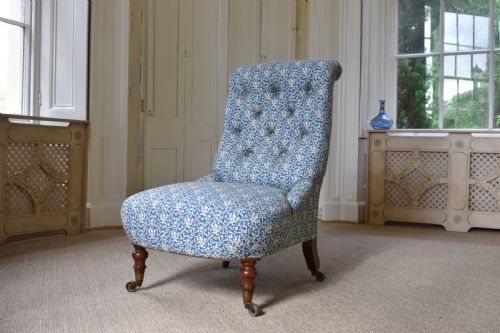
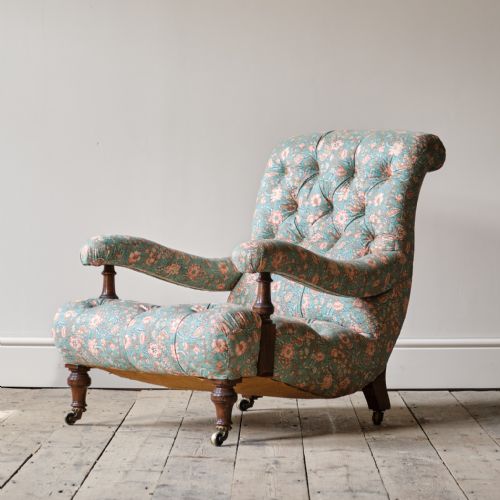
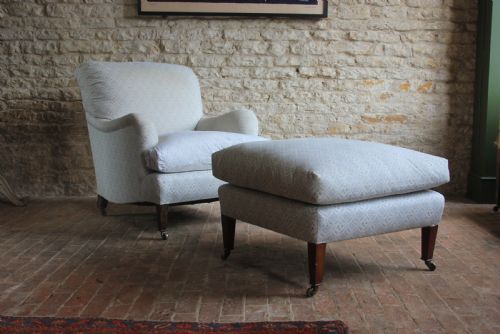
Patterned Mahogany Armchair
A patterned mahogany armchair brings centuries of cabinet-making skill and textile design into a room, offering both robust seating and historical presence.
Patterned Mahogany Armchair
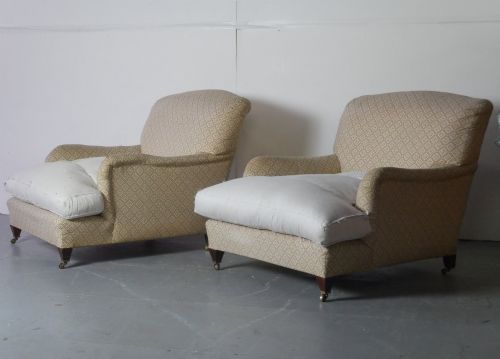
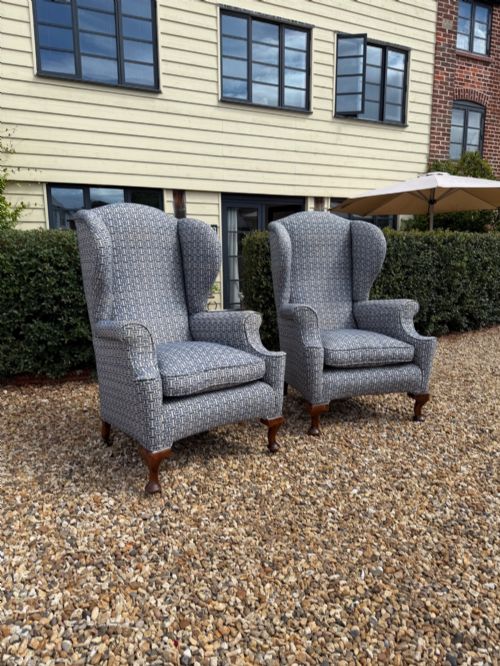
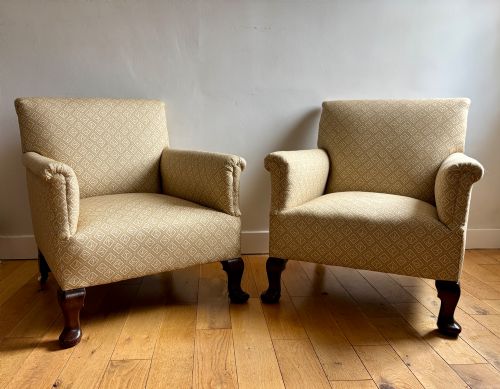
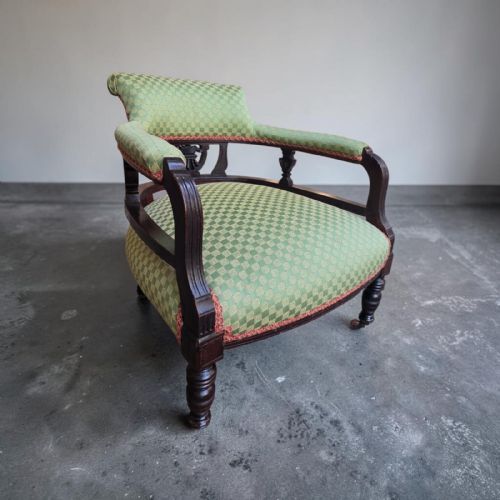
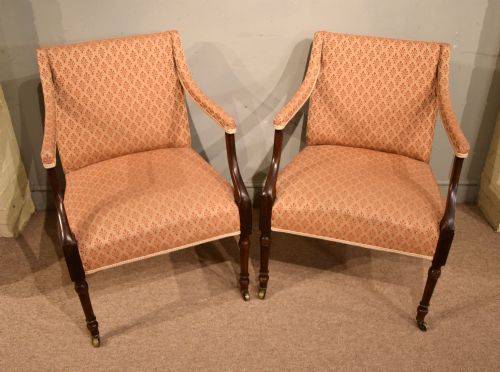
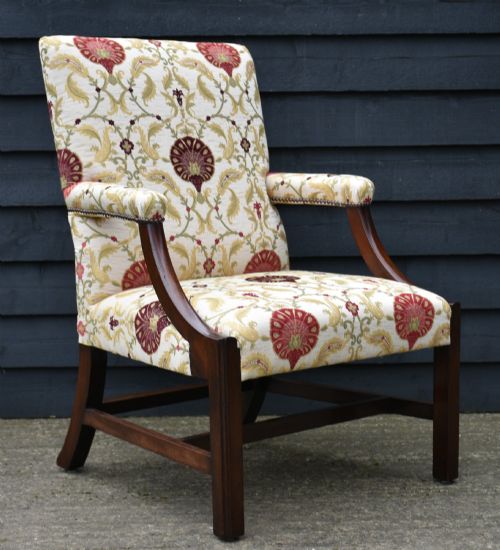
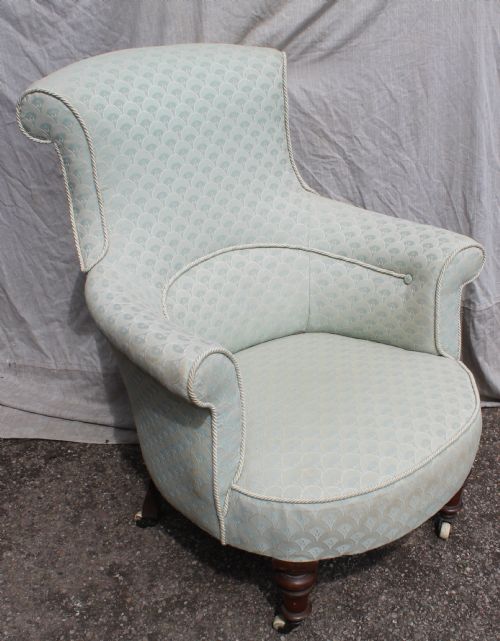
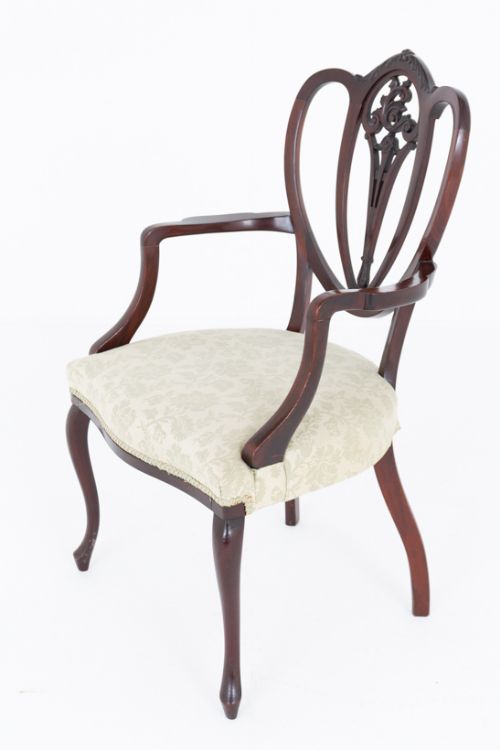
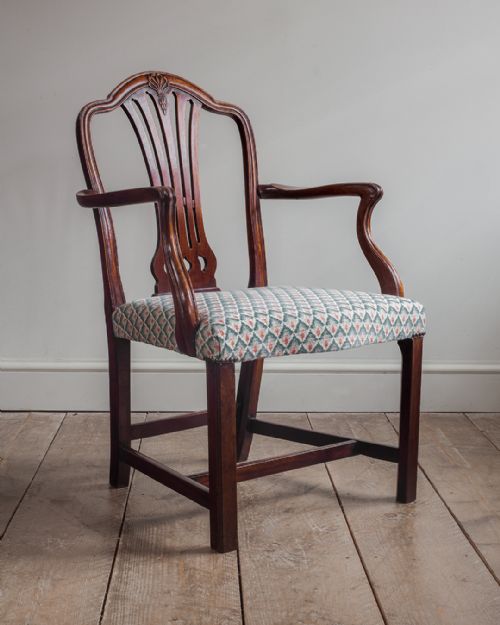
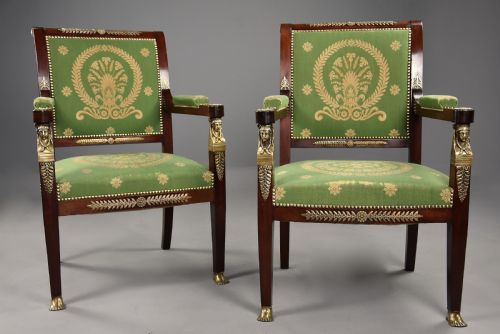
A patterned mahogany armchair spans several distinct periods, most frequently appearing in Victorian, Edwardian, and Georgian incarnations across this selection. These pieces include open armchairs, wing chairs, tub chairs, and library chairs constructed with visible mahogany frames.
The phrase encompasses specific stylistic revivals and design traditions, ranging from Chippendale style and Hepplewhite revival to English Regency and Queen Anne revival forms. Makers incorporate various upholstered finishes using cotton, damask, and textile covers to complement the dark wood framework.
Materials and construction methods
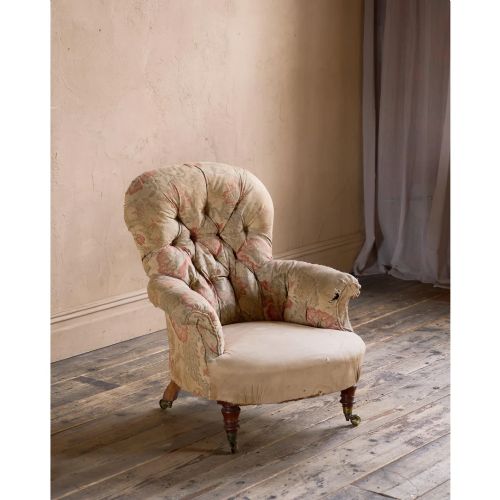
Cabinet makers utilised solid mahogany for the structural frames, often shaping the timber into scroll arms, fluted supports, or barley twist details. Brass castors frequently appear on the feet of nineteenth century seating to aid movement across floors.
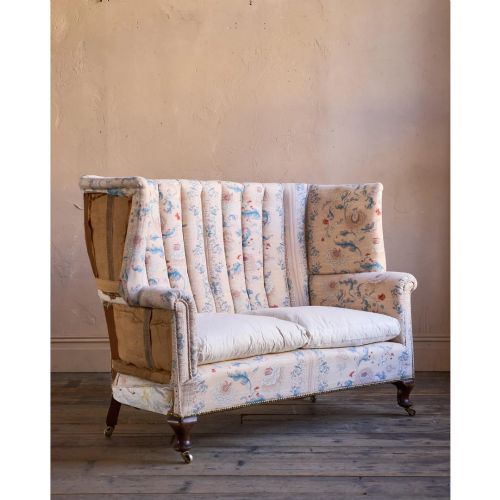
Upholstery techniques involve securing textiles like cotton, damask fabric, and traditional webbing over internal stuffing. Button-back padding and sprung seats emerge in the later Victorian and Edwardian examples to increase physical comfort.
Listings span the eighteenth, nineteenth, and early twentieth centuries, featuring wood frames paired with cotton, damask, and textile upholstery.
Distinctions in craftsmanship
Quality rests in the crispness of the mahogany carving, the proportion of the frame, and the integrity of the original joints. Pieces originating from renowned workshops display superior timber selection and more refined joinery.
The grade of the upholstery textile and the precision of the hand-tacking separate standard production from high-end commissions. Maker stamps on the wood or castors elevate the standing of individual examples.
Whytock & Reid·Holland & Sons·Howard & Sons·James Shoolbred·Gillows
The Patterned Mahogany Armchair Glossary
- Mahogany
- A dense, reddish-brown tropical hardwood prized for its stability and suitability for carving intricate furniture details. It forms the primary structural material for these armchairs.
- Bergère
- An enclosed upholstered armchair with exposed wooden framing and cane or upholstered sides. This French-inspired form gained popularity during the Edwardian period.
- Gainsborough chair
- A wide, low-seated armchair with an upholstered back and arms, dating originally from the mid eighteenth century. These typically feature open padded arms and mahogany legs.
- Tub chair
- An armchair characterised by a continuous curved back and arms forming a single circular enclosure. Victorian examples often incorporate button-back upholstery.
- Damask fabric
- A reversible figured textile with patterns woven flat into the cloth, frequently utilised for historical upholstery. It provides a subtle sheen that contrasts with the dark wood frame.
Patterned Mahogany Armchair: Frequently Asked Questions
What defines a Georgian armchair?
Georgian armchairs date from the eighteenth century and are distinguished by hand-carved mahogany components and classic proportions.
These pieces often reflect dominant design influences of the era, such as Chippendale or Hepplewhite styles, prioritising structural elegance.
How do I identify a Victorian piece?
Victorian armchairs typically exhibit heavier frames, darker mahogany tones, and more ornate turnings like barley twists.
Button-back padding and sprung upholstery became widespread during this nineteenth century period to enhance user comfort.
Where should I place a library chair?
Library chairs suit studies, reading corners, or living spaces where substantial seating and arm support are required.
Their deep proportions and upholstered frames make them practical for prolonged sitting.
What is a wingback chair used for?
Wingback chairs were traditionally designed to shield the sitter from draughts and retain heat from an open fire.
The prominent side panels direct warmth toward the person occupying the seat.