


18th Century Library Chair
An 18th century library chair brings heavy mahogany framing and tactile leather or fabric upholstery into a study to anchor the room.
18th Century Library Chair
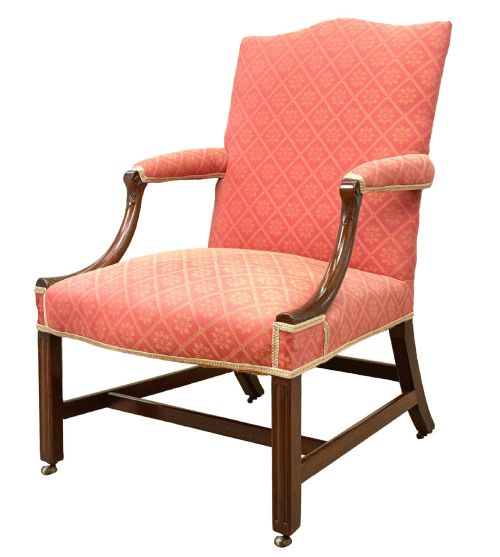
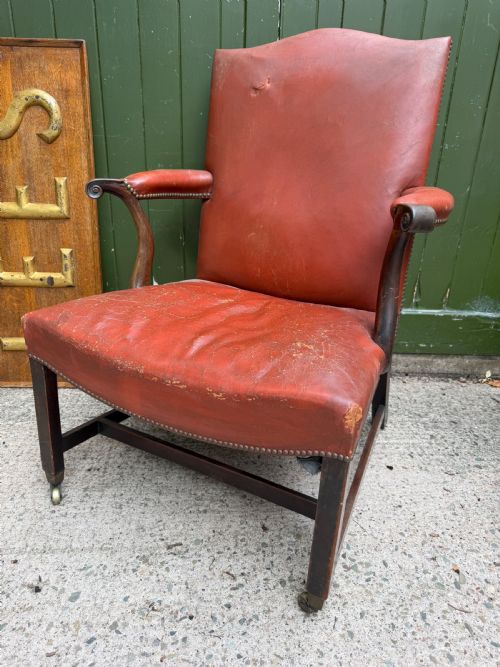
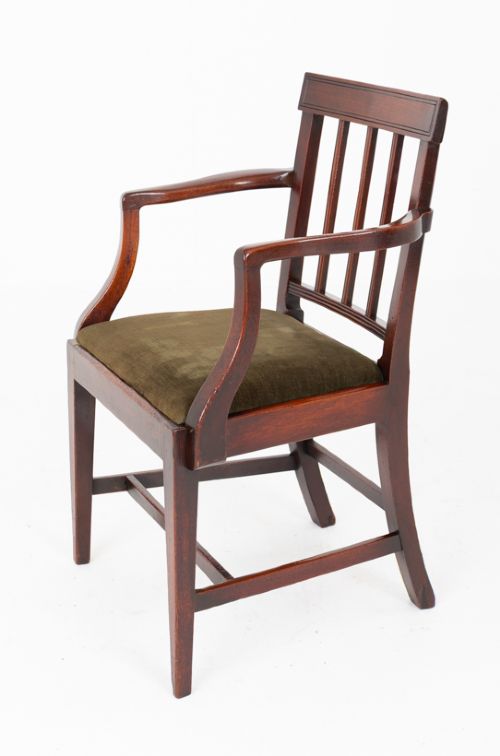
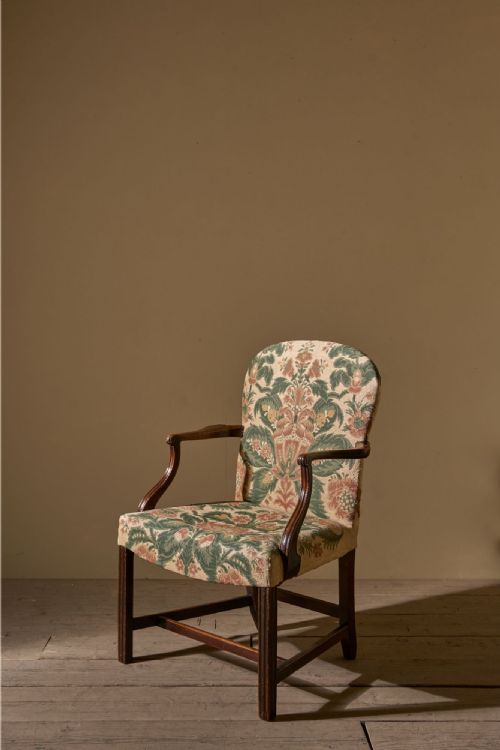
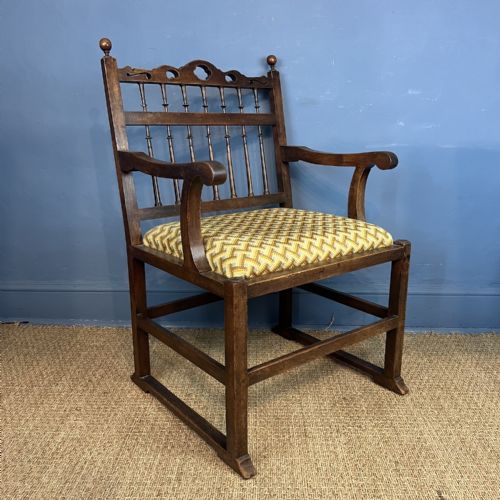
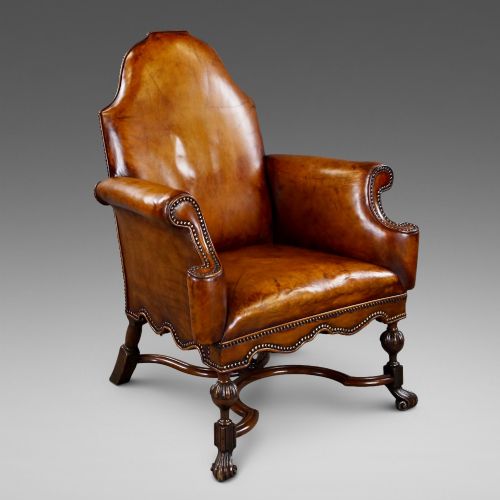
An 18th century library chair serves as a substantial seat designed for reading, writing, and prolonged study in domestic libraries or private studies. These pieces take the form of open armchairs, desk chairs, and high-backed wing chairs built to offer comfortable support during long hours among books.
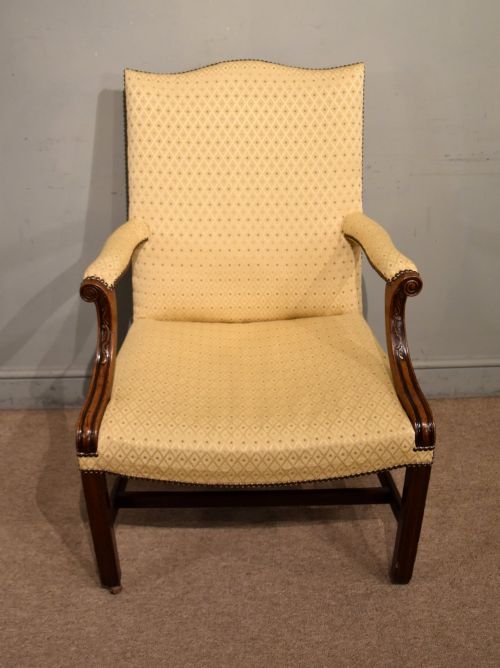
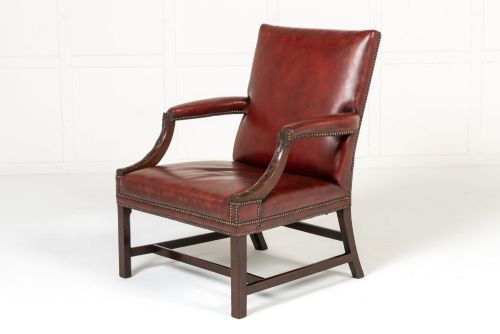
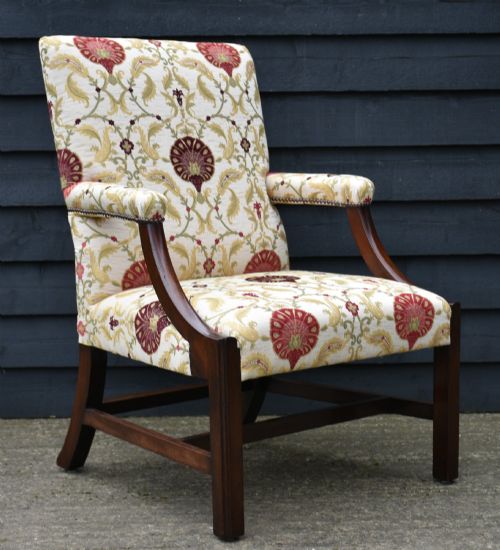
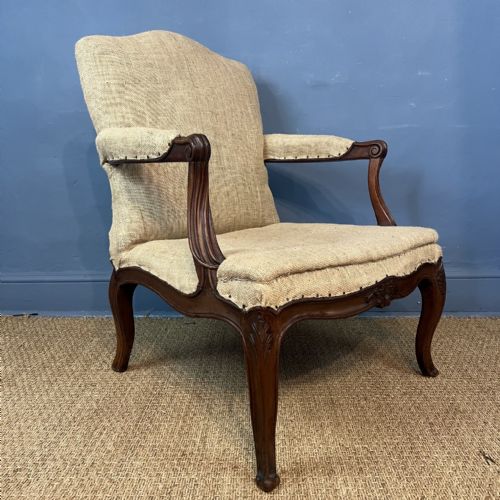
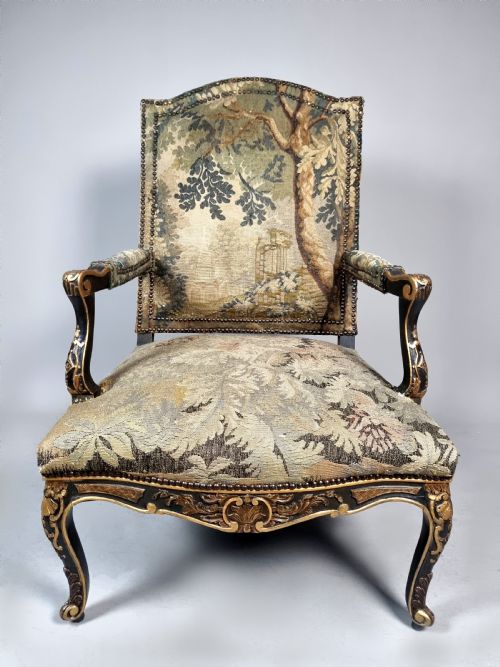
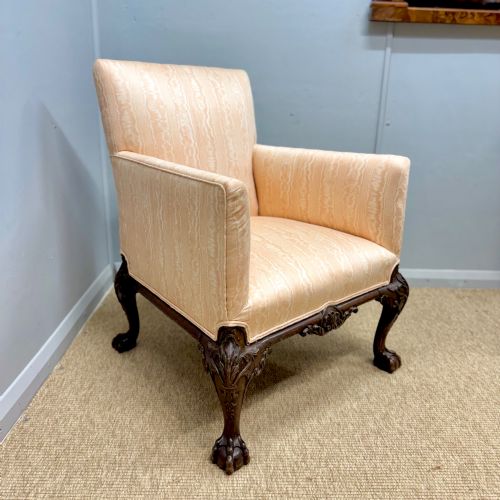
The version most commonly met on this page is the mahogany Gainsborough armchair, frequently featuring upholstered armrests and padded backrests set upon a sturdy wooden frame. Alongside these, buyers encounter walnut wing chairs and desk chairs originating from the Georgian, George II, and George III periods.
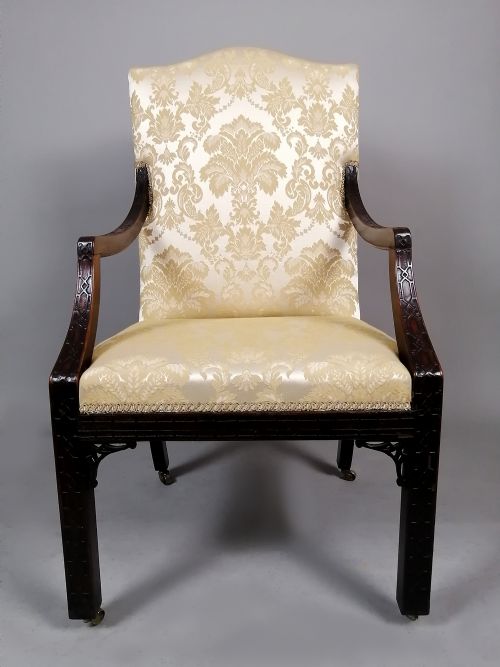
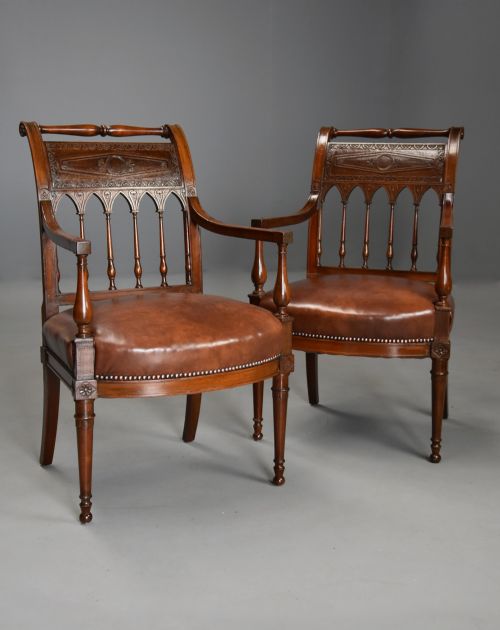
Makers of this era also produced Chinese Chippendale, Gothic Chippendale, and French Directoire styles, utilising rich timbers and traditional upholstery methods. Pieces range from standard proportions to large-scale examples designed for prominent gentlemen's libraries.
What varies in quality
The refinement of the carved woodwork dictates much of the distinction between standard examples and exceptional pieces. Crisp detailing on the cabriole legs, arms, and rails indicates superior craftsmanship by skilled cabinet-makers.
The selection of timber grain and the integrity of the original framing material also determine the standing of an armchair. Heavier proportions, cohesive matching pairs, and well-preserved period upholstery elements elevate certain pieces above routine study seating.
Several heavy reading chairs include specialised drunkards variants designed with low sides for relaxed reclining.
The 18th Century Library Chair Glossary
- Gainsborough chair
- An upholstered armchair with an open padded back, short arms, and straight or cabriole legs. This form originated in the mid 18th century for use in libraries and writing rooms.
- Wing chair
- An armchair featuring side panels or wings attached to the backrest designed to shield the occupant from drafts. These seats often appear with deep padding and mahogany framing.
- Cabriole leg
- A furniture leg that curves outward in a convex arc and tapers inward to a pad or claw foot. This design was popular during the Georgian and Queen Anne periods.
- Chippendale style
- A furniture style drawing from the design books of Thomas Chippendale, incorporating Gothic, Chinese, and Rococo decorative motifs. Pieces in this style frequently feature intricate fretwork and carved mahogany.
- Directoire style
- A transitional French furniture style characterised by neoclassical restraint, symmetrical lines, and walnut construction. It bridges the late 18th century and the early 19th century.
18th Century Library Chair: Frequently Asked Questions
What is a Gainsborough library chair?
A Gainsborough chair is a wide, upholstered armchair with open padded arms designed specifically for sitting at a desk or reading in a library.
These pieces feature wooden frames, often in mahogany, supported by four legs that may be cabriole or straight in form.
How do I use a library chair today?
An 18th century library chair functions well as an occasional reading seat in a living room, study, or home office.
Their substantial construction and upholstered backs provide comfortable support while maintaining a formal period aesthetic.
Are these chairs comfortable for daily use?
These seats were originally built for comfort during long hours of reading and writing.
Most examples feature upholstered backrests, padded arms, and sprung or stuffed seats suited to relaxed sitting.
How can I tell a George II chair from a George III piece?
George II seating often displays heavier proportions, prominent cabriole legs, and robust walnut or mahogany frames.
George III examples frequently exhibit straighter leg forms, lighter frames, and refined carving influenced by neoclassical or Chippendale designs.