
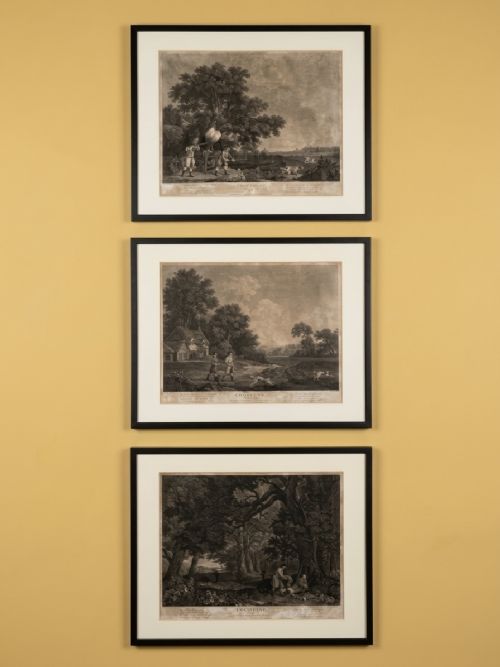
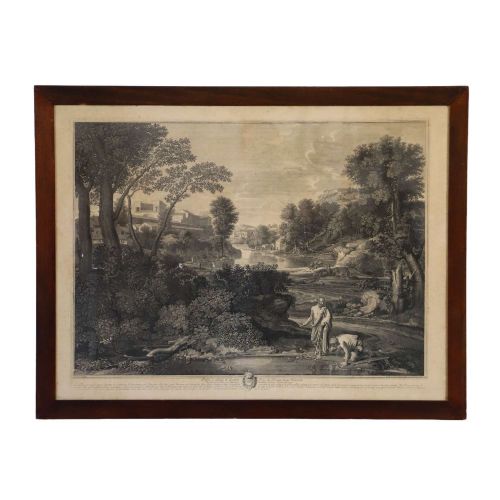


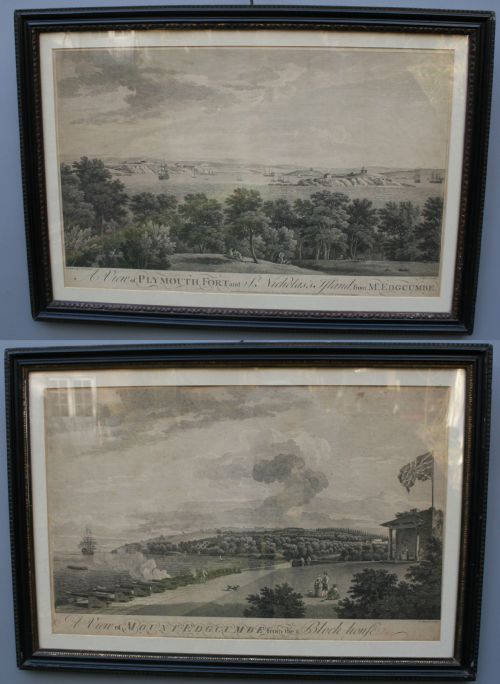

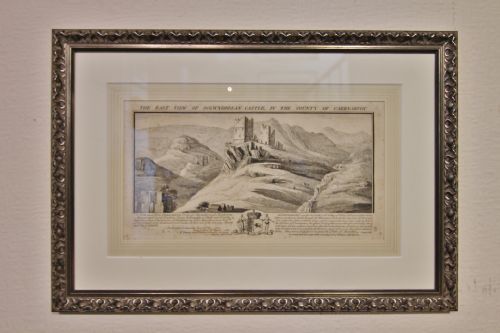


18th Century Landscape Print
An 18th century landscape print brings pastoral views and classical architecture into the home on genuine period paper.
18th Century Landscape Print
An 18th century landscape print offers framed wall art depicting pastoral scenes, architectural views, and historical subjects from the Georgian and 18th century periods.
Buyers will encounter French engravings, English aquatints, mezzotints, and lithographs, often housed in original wood or gilt wood frames.
The selections span English topography, French classical compositions, and Italian architectural subjects produced during the 1750s and around 1800.
Materials and Methods
These works utilise ink transferred onto paper sheets through engraving, aquatint, mezzotint, or lithographic printing techniques.
Certain examples feature hand-coloured ink or paint applications, while frames incorporate wood, gold leaf, and glass protection.
Framing materials recorded in the evidence include plain wood, gilt wood, and gold leaf protecting original paper surfaces.
Assessing Quality
Quality rests in the precision of the plate impression and the clarity of the ink upon the paper sheet.
The presence of an original frame or period gilt wood housing distinguishes superior examples from later mountings.
Étienne Baudet·Joseph Farrington·Joseph Constantime Stadler·Claude Lorrain·John Boydell·C de Falens·George Morland·W Ward·William Marlow
The 18th Century Landscape Print Glossary
- Engraving
- A printmaking process where an artist cuts a design into a metal plate with a sharp tool to hold ink. This method produces fine, precise lines characteristic of many period works.
- Aquatint
- An intaglio printmaking technique that creates areas of tone resembling watercolours or washes. It is frequently seen in Georgian landscape publications.
- Mezzotint
- A printmaking method that achieves rich tonal gradations by roughening a metal plate to hold ink. W Ward employed this technique for darker, atmospheric scenes.
- Gilt Wood
- Wood treated with a thin layer of gold leaf or gilt preparation. Frames utilising this material enhance the decorative presence of the artwork.
18th Century Landscape Print: Frequently Asked Questions
How should I hang an 18th century landscape print?
Position the artwork away from direct sunlight to protect the ink and paper from fading over time.
Ensure the room maintains stable humidity levels to preserve both the print and its original wood frame.
Are these prints hand-coloured?
Certain examples incorporate hand-coloured ink or paint applied directly to the printed paper surface.
Others rely entirely on monochrome ink tones such as sepia or black without additional pigment.
What frames typically accompany these prints?
Many pieces retain their original wood or gilt wood frames housing protective glass.
These period housings reflect the framing styles prevalent during the Georgian and 18th century eras.
How do I distinguish an engraving from a lithograph?
Engravings display crisp, recessed lines pressed into the paper surface from a metal plate.
Lithographs utilise a planographic surface process that creates smoother tonal transitions without plate marks.