

18th Century Kneehole Bureau
An 18th century kneehole bureau offers compact fitted workspace and elegant proportions, drawing collectors who value period craftsmanship and neat proportions.
18th Century Kneehole Bureau
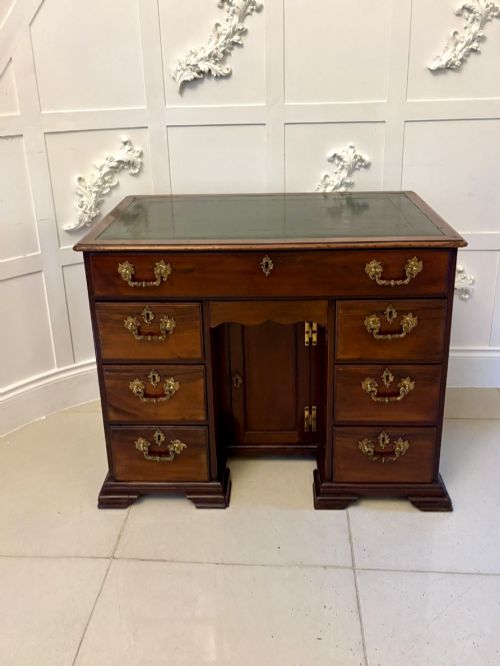
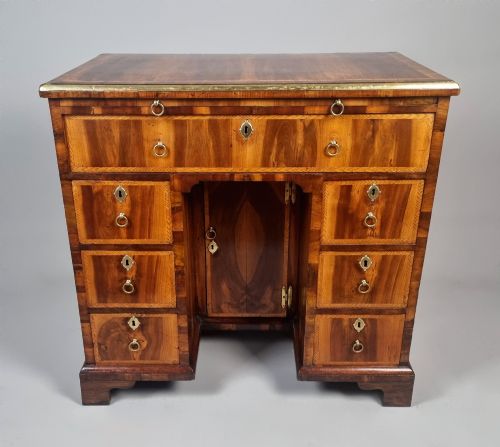
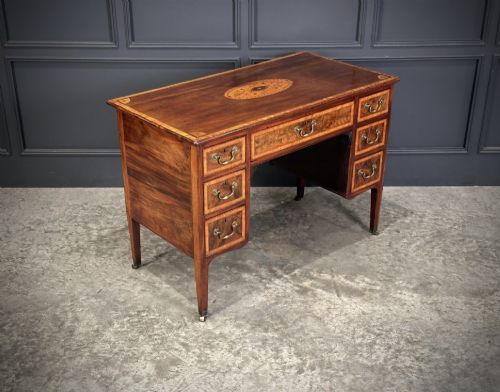
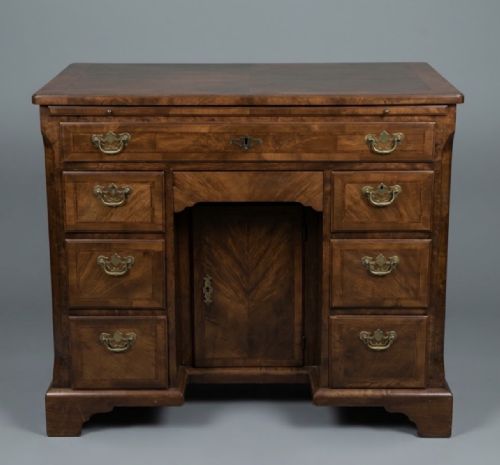
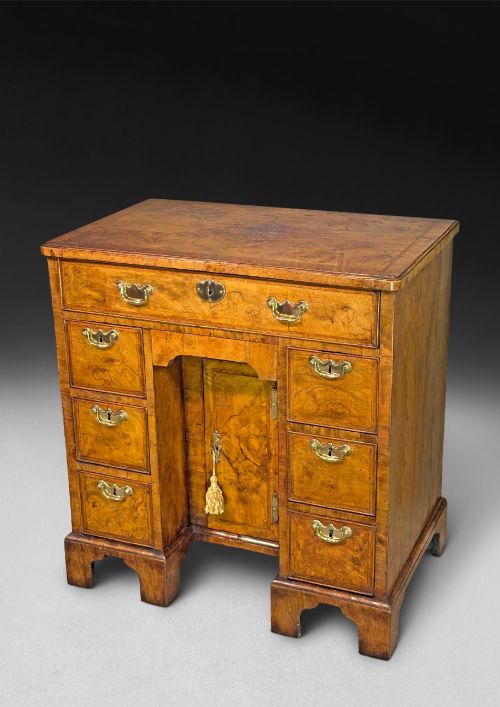
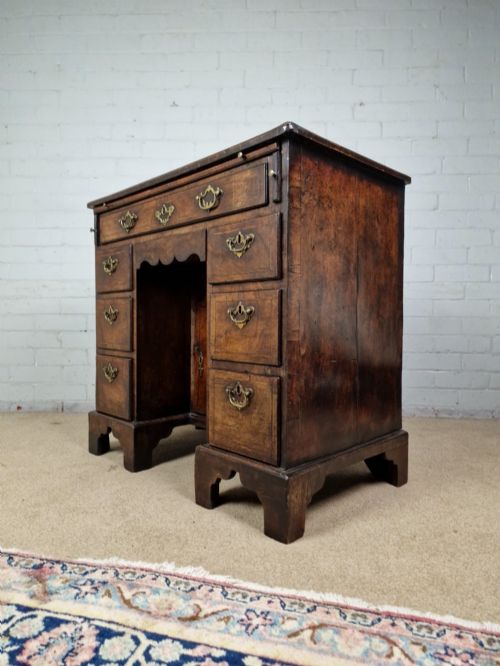
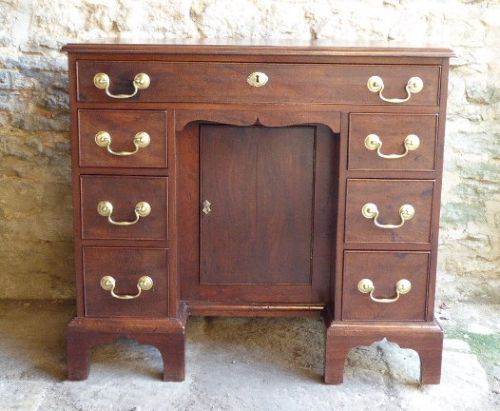
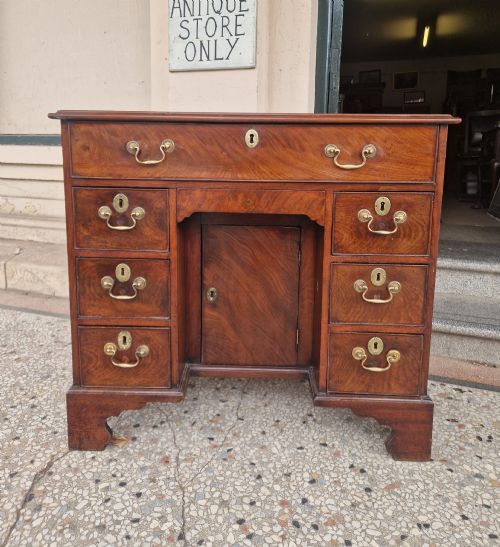
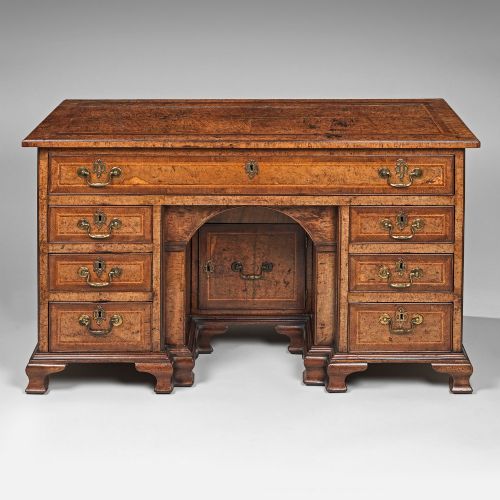
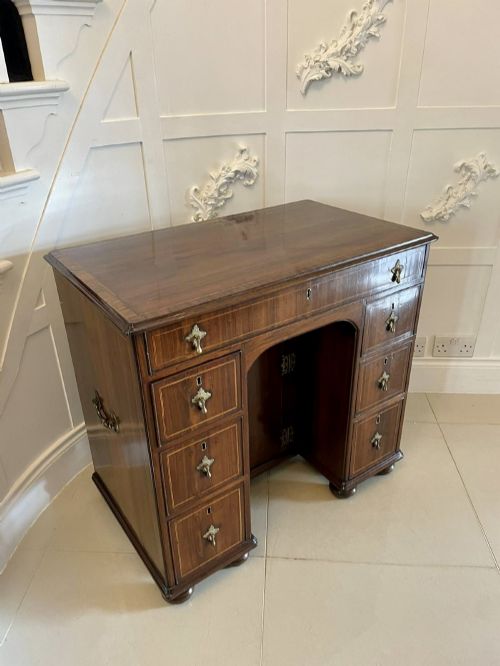
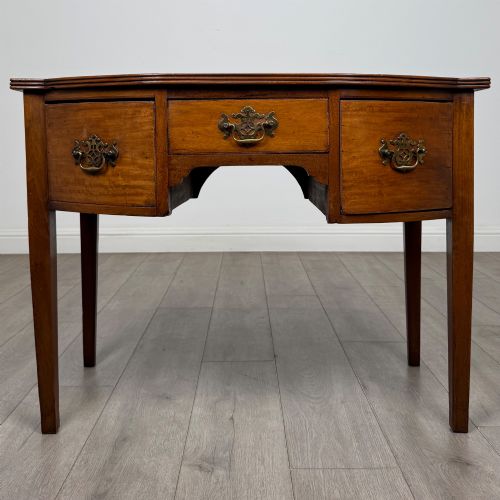
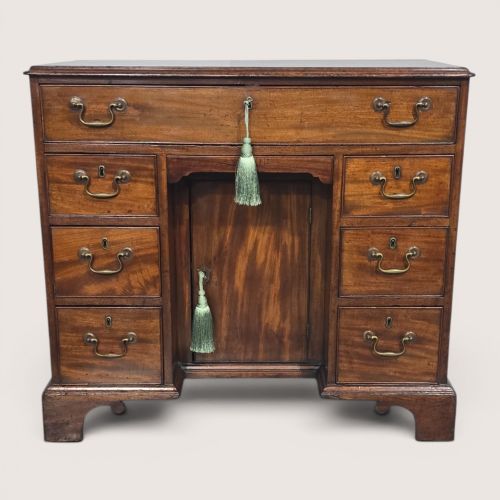
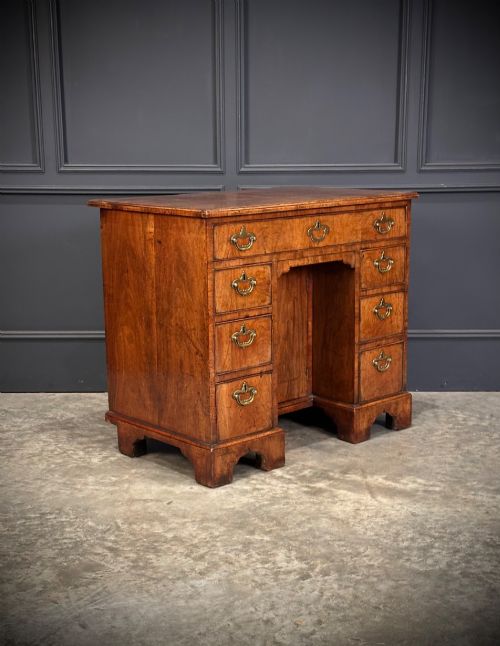
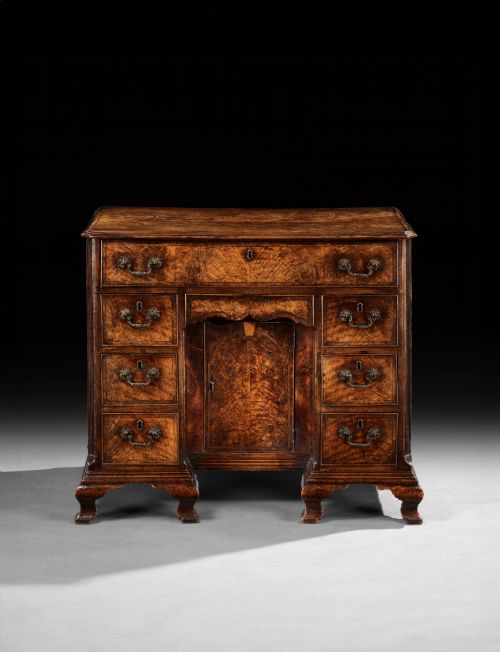
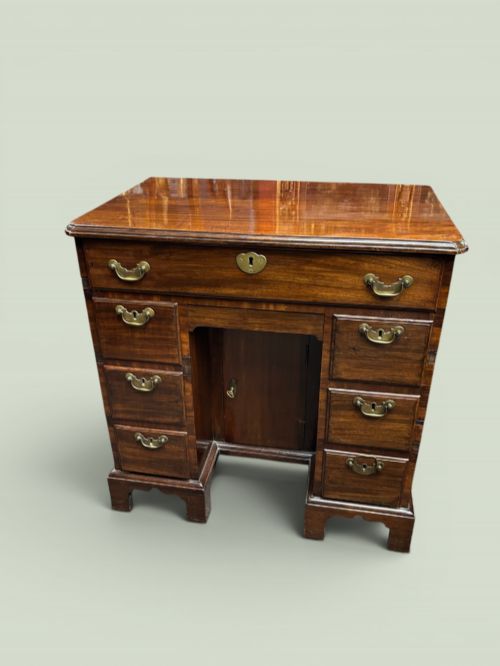
An 18th century kneehole bureau is a specialised form of writing furniture designed with a central recessed cupboard flanked by banks of small drawers. The pieces appearing on this page span the periods from William and Mary through George III, capturing the transition of domestic writing furniture over several decades.
Most examples found here emerge in mahogany or walnut, frequently utilising burr veneers, yew wood, or oak across varied forms including writing desks, dressing tables, and bureau bookcases. These compact items serve as functional writing desks while maintaining a decorative presence suitable for principal rooms.
The layout typically incorporates a long frieze drawer above the central kneehole, which often conceals a secret well or small compartment behind the inner door. Buyers encounter both rectangular and serpentine front outlines, reflecting the evolving tastes of the Georgian eras.
How they were made
Cabinetmakers constructed these pieces using solid timbers and decorative veneers applied to secondary woods like pine or oak, securing joints with traditional dovetailing on the drawer boxes. Figured walnut, burr elm, and mahogany veneers were chosen for their visual grain patterns and laid onto primary surfaces with animal glues.
Hardware such as drop handles and escutcheons were cast in brass and secured with pins or screws, while writing surfaces frequently incorporated inset leather panels. Drawer linings and internal dividers relied on meticulous hand-planing and sawing techniques characteristic of 18th-century workshops.
Listings feature mahogany, walnut, burr elm, and yew wood across periods spanning William and Mary to the Edwardian era.
What varies in quality
Integrity of construction, including original brass hardware and untouched secondary timbers inside the drawers, separates superior examples from those with extensive modern replacements. The subtlety of the cabinetmaker's proportions and the crispness of any inlaid details further define the upper tier of the range.
The 18th Century Kneehole Bureau Glossary
- Kneehole
- A recessed space beneath a desk or dressing table designed to accommodate the user's legs while seated.
- Frieze drawer
- The principal wide drawer positioned immediately beneath the top surface of the desk.
- Burr walnut
- A specialised wood cut from walnut tree growths, prized for its swirling and highly decorative grain patterns.
- Serpentine
- A curved outline featuring a convex centre flanked by concave wings, popular in mid-Georgian cabinetmaking.
- Escutcheon
- A protective brass plate surrounding a keyhole, often shaped to complement the hardware of the period.
18th Century Kneehole Bureau: Frequently Asked Questions
How were kneehole desks used originally?
These pieces served primarily as private writing desks or dressing tables for correspondence and personal grooming in wealthy households.
The central cupboard often held confidential papers, while the surrounding small drawers organised stationery, inkwells, and personal items.
Where should I place a kneehole bureau?
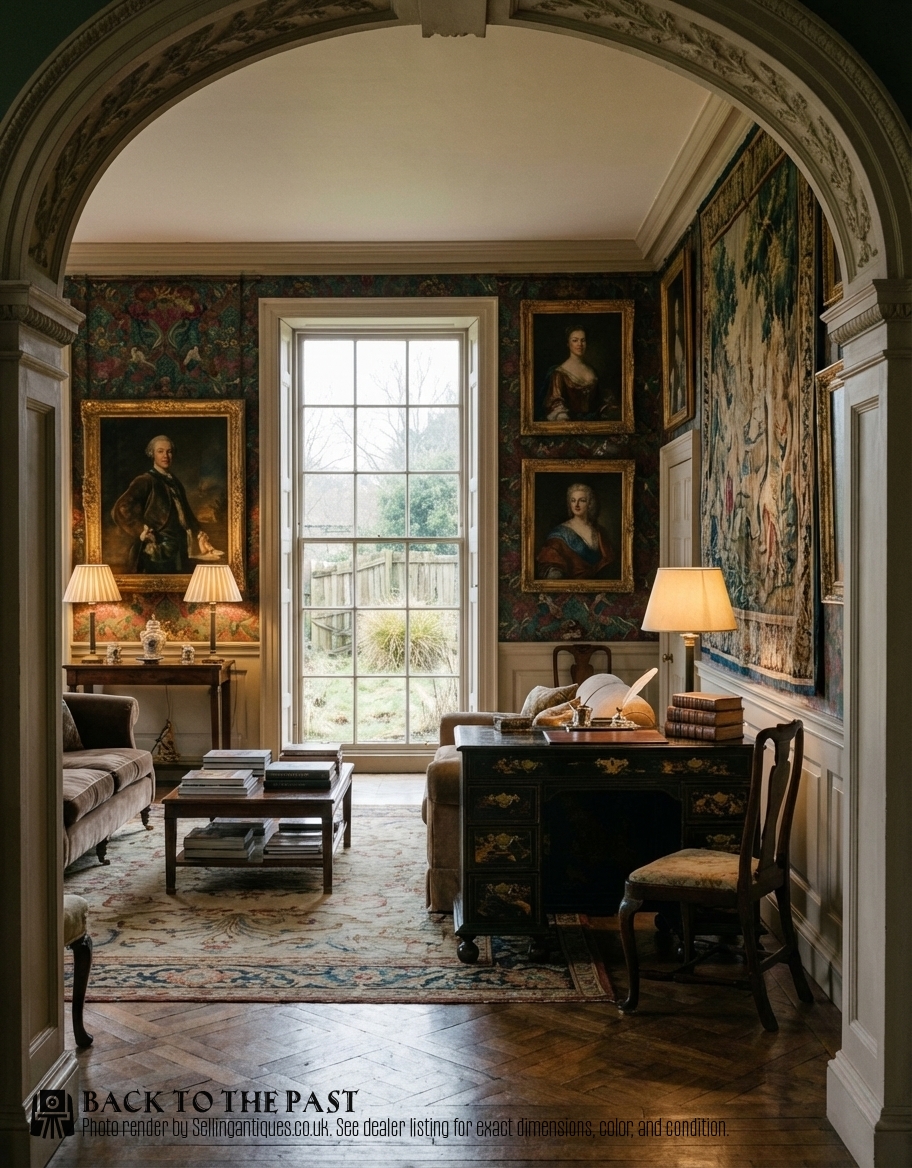
Their compact dimensions allow them to fit well in studies, drawing rooms, or hallways where larger partner desks would overwhelm the floor space.
Because many examples feature finished backs, they can stand away from the wall in the centre of a room.
How do I identify a Georgian piece?
Look for construction traits like hand-cut dovetails, timber shrinkage patterns, and period-appropriate brass hardware fixed with iron or brass pins.
Stylistic cues such as bracket feet, quarter-column corners, and restrained cock-beading around drawers help confirm the era.
What is the difference between walnut and mahogany eras?
Walnut dominated the earlier decades of the eighteenth century, particularly under Queen Anne and George I, featuring rich figured veneers and softer tones.
Mahogany rose to prominence by the mid-18th century during the George II and George III periods, offering greater structural strength and deep reddish-brown colouration.