
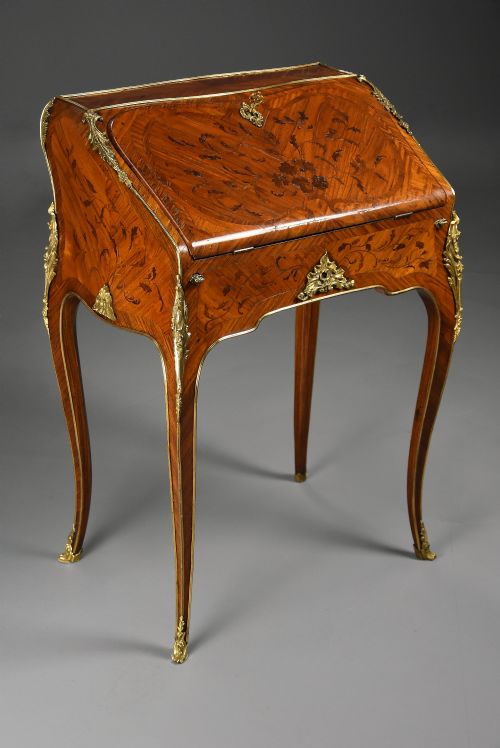
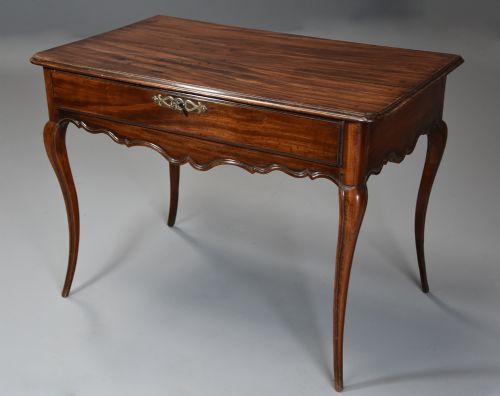


18th Century French Desk
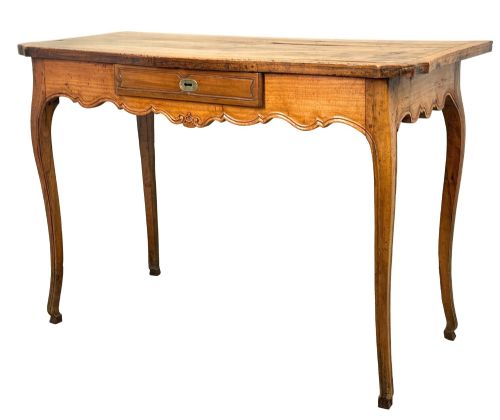
An 18th century french desk brings walnut, kingwood, and intricate parquetry together into a functional workspace.
18th Century French Desk
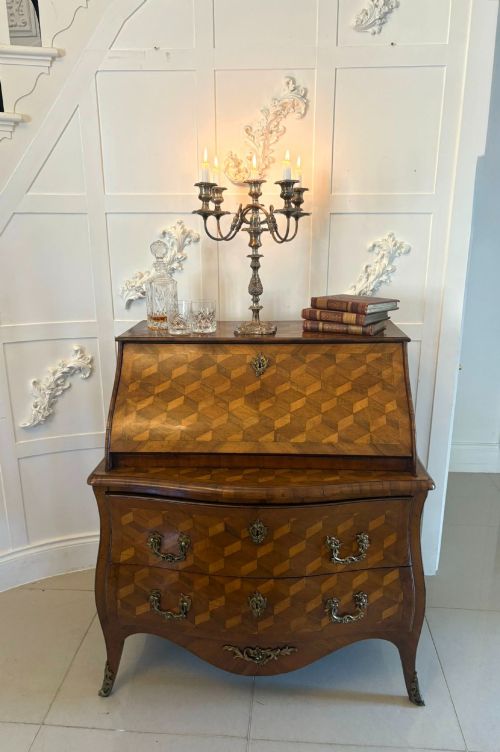
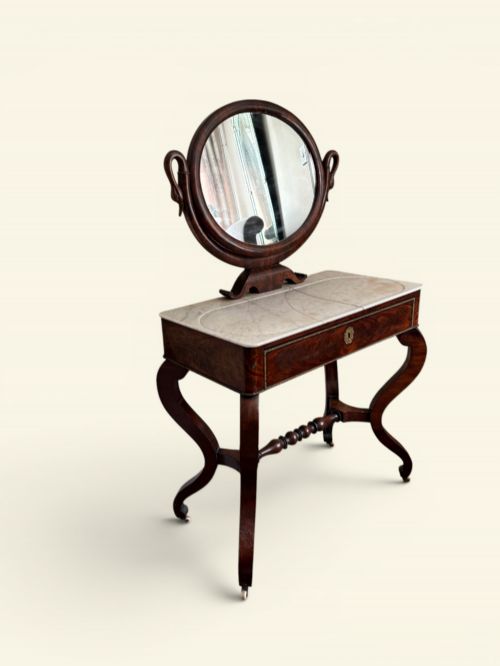
An 18th century french desk encompasses forms ranging from the bombe shaped bureau and bureau plat to the compact bonheur de jour and writing table.
The versions most commonly met on this page belong to the Louis XV and Louis XVI styles, alongside provincial walnut and fruitwood interpretations.
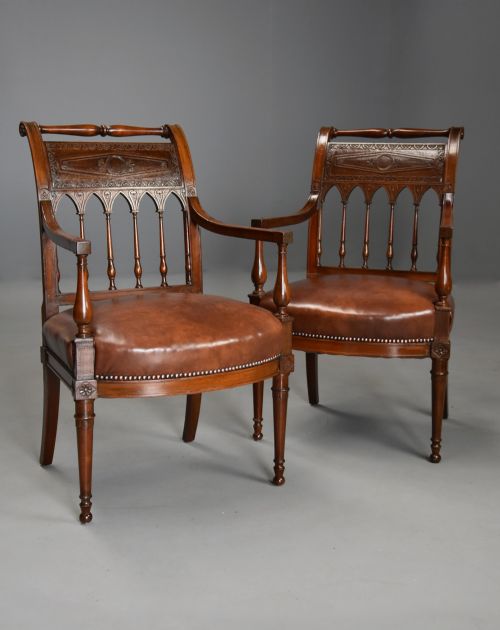
Makers and workshops constructed these writing surfaces for domestic chambers, utilising refined timbers suited to elite interiors.
How They Were Made
Cabinet makers built carcases in walnut, kingwood, mahogany, and oak, applying geometric parquetry and marquetry veneers across curved and flat planes.
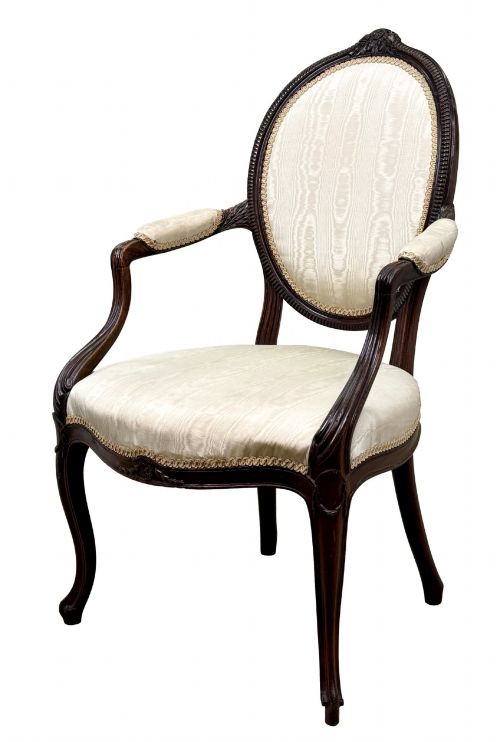
Mounts in cast ormolu and gilt bronze embellished corners and legs, paired with fitted marble tops on specific dressing and writing tables.
18th Century French Desk Retail Price Guide 2026
Typical asking prices for 18th century french desk among the pieces listed under this phrase on Sellingantiques today, from the lower quarter to the upper quarter. They describe what is for sale here now, not the wider market.
Listings feature woods like kingwood, walnut, and mahogany alongside ormolu and marble.
What Varies in Quality
The calibre of an 18th century french desk rests on the precision of its veneer work and the crispness of its cast ormolu mounts.
Subtlety of timber figuring and the preservation of original patination distinguish superior cabinet making from simpler provincial execution.
The 18th Century French Desk Glossary
- Parquetry
- Geometric wood veneer patterns arranged to form tiled designs across the surface. This technique creates visual depth on writing desks.
- Ormolu
- Gilt bronze mounts applied to furniture corners and feet. These decorative elements frame drawers and accentuate the silhouette.
- Bureau plat
- A flat-topped freestanding writing table fitted with drawers. It typically sits in the centre of a room rather than against a wall.
- Bonheur de jour
- A light lady's writing desk featuring a small tiered superstructure above the main writing surface. It became popular during the Louis XVI period.
18th Century French Desk: Frequently Asked Questions
How do I identify a Louis XV desk?
A Louis XV desk displays asymmetrical curves, cabriole legs, and flowing rococo contours executed in woods like kingwood and walnut.
Ormolu mounts on these pieces tend to follow organic scroll motifs rather than strict geometric lines.
What is a bureau plat?
A bureau plat is a rectangular writing table with a finished back designed to stand away from the wall in the middle of a room.
It usually contains three inset drawers across the frieze and stands on slender cabriole or tapered legs.
Where were these desks used?
These pieces served nobility and the upper classes in private studies, boudoirs, and salons for correspondence and keeping accounts.
Their finished backs allowed them to occupy prominent positions in reception rooms.
How do I care for antique wood?
Keep wooden surfaces away from direct sunlight and steady temperature fluctuations to prevent veneer from lifting or timber from splitting.
Apply traditional wax sparingly and buff gently with a soft cloth to maintain the surface sheen.