
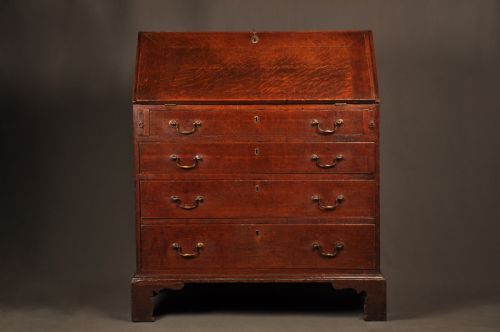

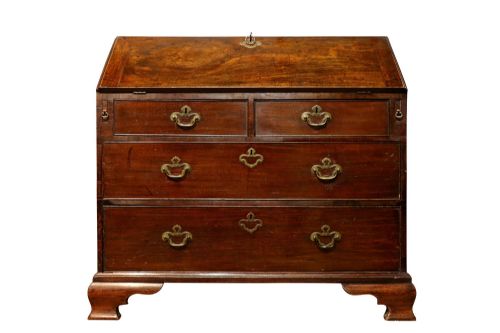
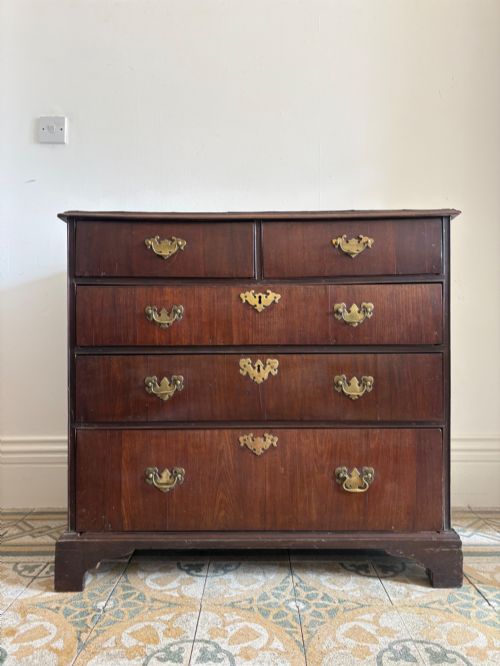


Mid 18th Century Bureau
A mid 18th century bureau brings serious writing timber into a room, offering clever pigeonholes and a sloped fall front that hides private papers.
Mid 18th Century Bureau
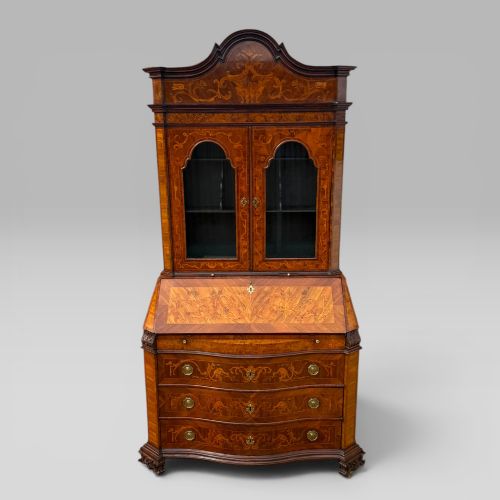
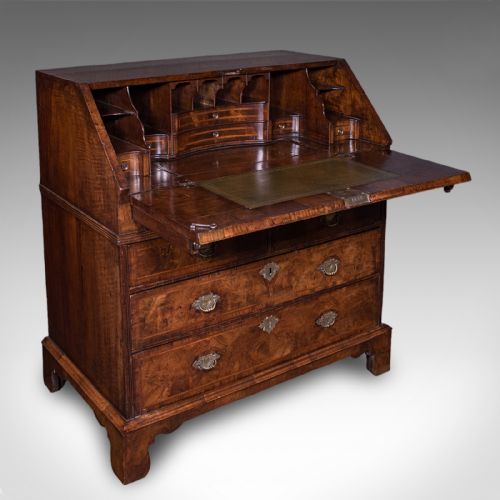
A mid 18th century bureau is a dedicated writing cabinet defined by a sloped fall front which opens to reveal an internal arrangement of small drawers and pigeonholes. The examples found here span English, French, and Italian origins, taking the form of standalone desks, bureau bookcases, and compact kneehole secretaires.
Makers working during the Georgian period and around seventeen fifty utilised native timbers like oak and mahogany alongside figured walnut and exotic accents such as tulipwood. Simpler provincial pieces in oak sit alongside sophisticated urban iterations featuring fitted cabinets and stepped interiors.
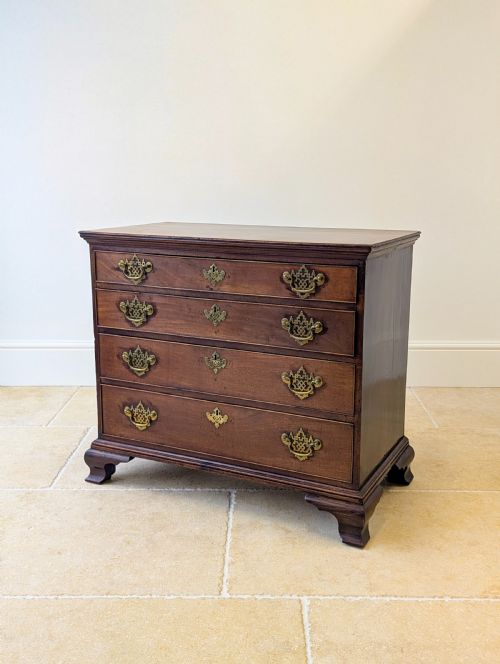
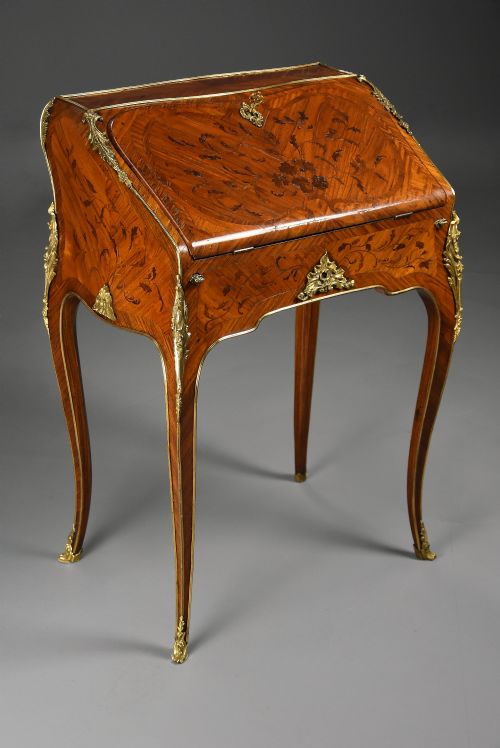
The dominant forms include slope-front desks resting on bracket feet, tall bureau bookcases with glazed upper sections, and petite slant-front writing desks designed for intimate chambers. Each piece balances utilitarian storage with domestic elegance characteristic of the mid eighteenth century.
Assessing quality in writing furniture
Quality rests upon the choice of timber figure, the crispness of internal drawer joinery, and the integrity of the secondary woods. Pieces displaying richly figured Cuban mahogany or burr walnut command attention through careful grain matching across the fall front and drawer facades.
The complexity of the interior fitments, such as secret compartments and sliding wells, distinguishes standard utility desks from high-status cabinet work. Furthermore, retention of original brass hardware and untouched bracket feet elevates the standing of any bureau.
The inventory encompasses diverse formats, ranging from simple oak slant-front desks to elaborate marquetry bureau bookcases and petite kneehole secretaires.
BVRB
The Mid 18th Century Bureau Glossary
- Fall front
- The hinged sloping writing flap that drops forward to provide a desk surface and conceals the interior compartments. This panel forms the primary visual feature of any standard bureau.
- Kneehole desk
- A compact writing table featuring a central recessed space for the legs, flanked by pedestals of small drawers. These pieces often incorporate a concealed central secretaire drawer.
- Marquetry
- The art of applying decorative veneer pieces in wood to form intricate geometric or floral patterns across a surface. It appears on Continental furniture from this period.
- Secretaire en pente
- A French term for a sloping fall-front desk of petite proportions. These pieces often showcase advanced veneering techniques associated with continental workshops.
Mid 18th Century Bureau: Frequently Asked Questions
What is a mid 18th century bureau?
A mid 18th century bureau is a writing cabinet featuring a sloping lid that opens to reveal internal drawers and compartments for correspondence.
These pieces date from the Georgian era and seventeen fifty, constructed predominantly in mahogany, walnut, and oak by period cabinetmakers.
How were bureaus used originally?
Owners used these desks for private correspondence, record-keeping, and the storage of important documents within the main living quarters or study.
The fall front provided a stable writing surface when lowered, while the internal pigeonholes kept papers and writing implements organised.
How do I distinguish walnut from mahogany pieces?
Walnut furniture from this era typically displays rich, swirling grain patterns and a warmer, softer brown tone often enhanced by burr figuring.
Mahogany exhibits a denser, darker reddish-brown appearance that became increasingly popular for British case furniture through the middle of the eighteenth century.
Where should I place a bureau at home?
A bureau suits studies, living rooms, or bedrooms where its compact footprint and practical writing surface can be utilised daily.
Ensure placement away from direct heat sources to protect the historic timber and delicate veneers from drying out.