



18th Century English Dresser
An 18th century english dresser anchors a room with generations of utility and solid timber construction.
18th Century English Dresser
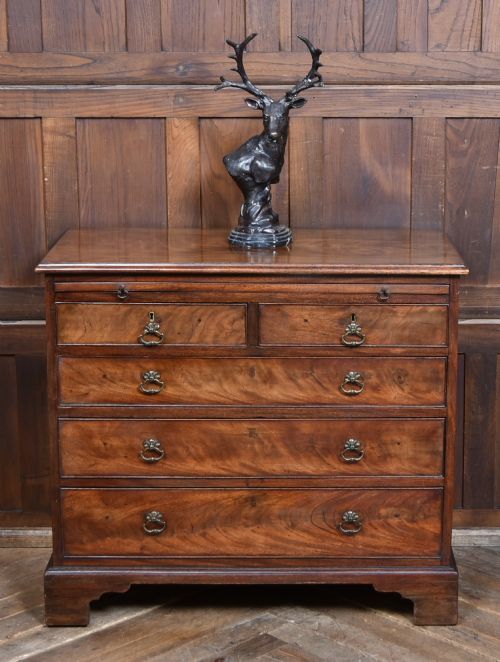
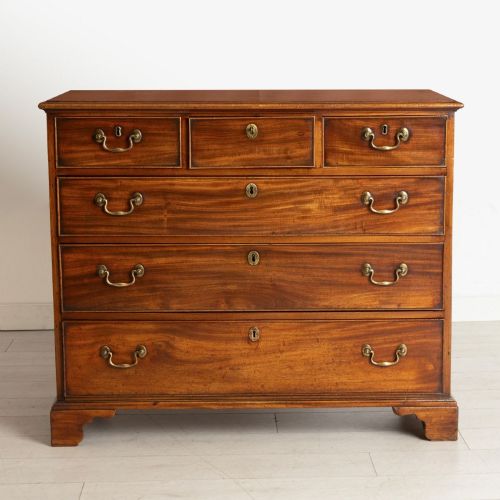
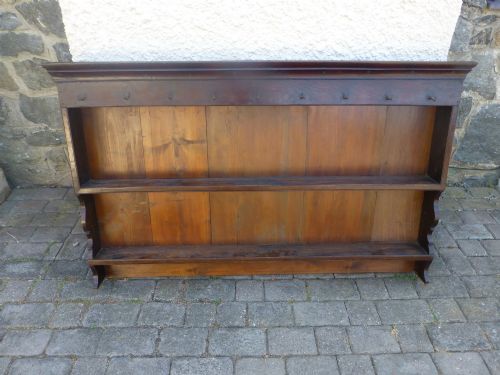
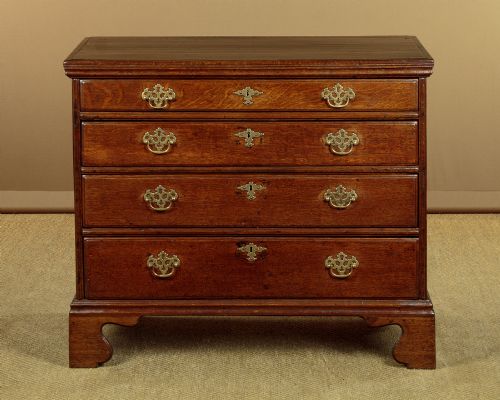
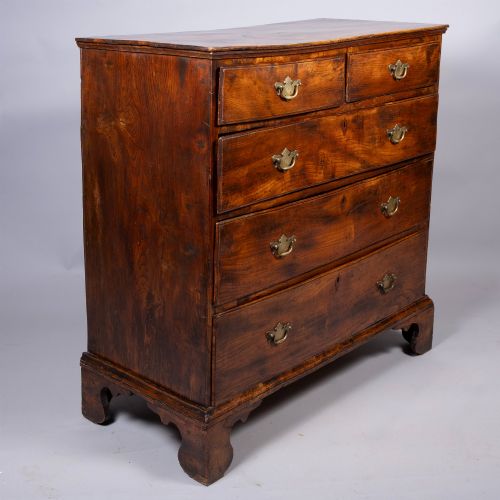
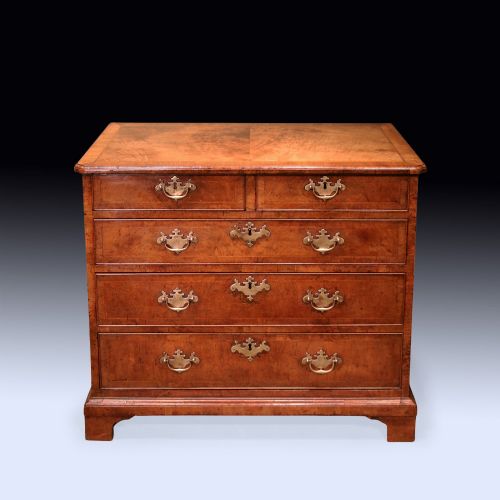
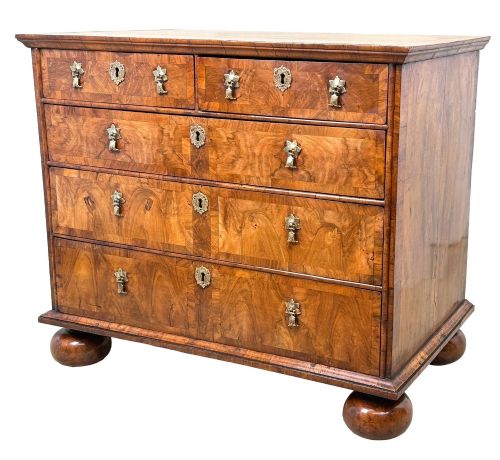
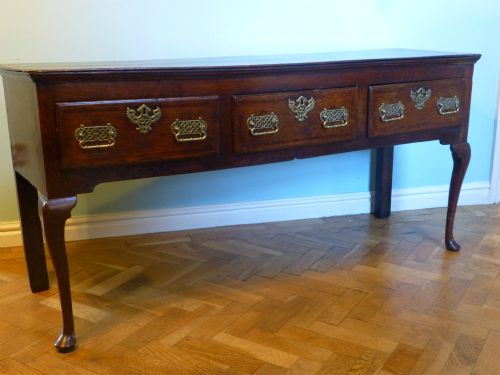
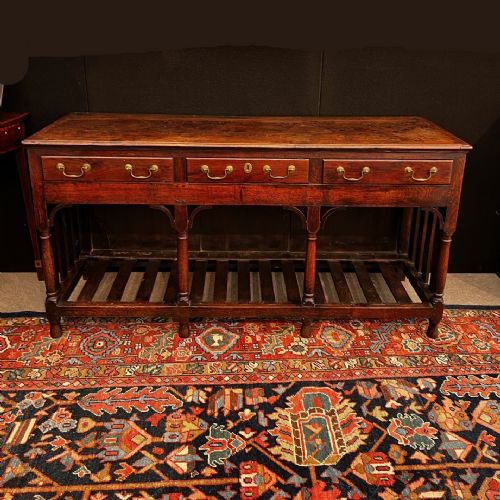
When searching for an 18th century english dresser, buyers encounter sturdy oak potboard bases, painted pine country surfaces, and formal mahogany dining room servers. These pieces combine lower storage cabinets or drawer banks with upper plate racks designed to display domestic ceramics.
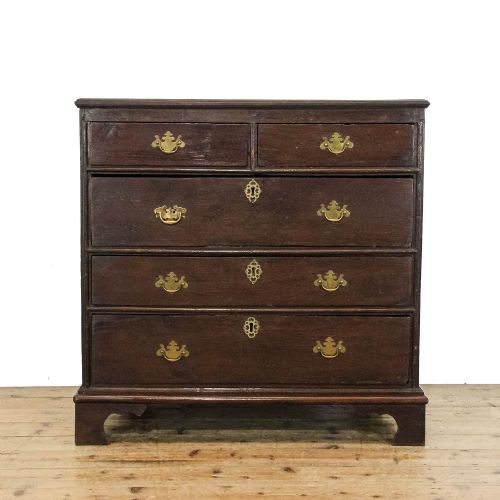
The most common examples on this page are oak and elm dresser bases originating from regional English farmhouses during the Georgian era. Many survive with their open potboard lower shelves or closed cupboards intended for heavy kitchen pewter.
How they were made
Cabinetmakers built these pieces using local timbers, selecting quarter-sawn oak for structural frame strength and elm for drawer linings or scrubbed table tops. Secondary woods like pine frequently appear in internal drawer bottoms and backboards.
Joinery relied on pegged mortise and tenon frames, hand-cut dovetails for drawer construction, and panelled doors. Surfaces were left natural, finished with wax, or occasionally painted.
Some provincial pieces reveal hidden drawer compartments built just deep enough for a single tavern receipt.
What varies in quality
Quality rests in the integrity of the timber selection, the crispness of hand-cut joints, and the retention of original surface patination. Pieces that retain their matched plate racks command greater interest than those separated from their upper sections over time.
Proportion and regional detailing distinguish fine urban cabinetwork from simpler country pieces, though both share utilitarian origins. Original brass hardware, uncompromised boards, and minimal timber replacement elevate an example above heavily restored alternatives.
The 18th Century English Dresser Glossary
- Potboard base
- An open lower shelf beneath a dresser base traditionally used for storing pots and pans. This open staging defines many regional English country pieces.
- Delft rack
- An upper set of wooden shelves affixed to a dresser to display ceramic plates and platters. These racks often feature plate grooves and shaped friezes.
- Brushing slide
- A pull-out veneered or solid timber board integrated into case furniture above the top drawer. It served as a temporary writing or serving surface.
- Feather-banded
- Inlaid decorative borders formed by cutting thin veneers across the grain to create a herringbone effect. It is frequently seen on walnut furniture from the early Georgian period.
18th Century English Dresser: Frequently Asked Questions
Did all dressers have plate racks?
Many dresser bases were manufactured as standalone items without upper plate racks. Surviving pieces frequently show whether an upper rack was attached originally through wall-fixing marks or dowel placements.
Matching base and rack combinations are considerably scarcer than bases found alone.
How do I care for an oak dresser?
Maintain old timber surfaces by applying natural beeswax sparingly and buffing with a soft cloth. Keep furniture away from direct heat sources and dramatic humidity fluctuations to prevent wood splitting.
Avoid modern silicone polishes that degrade historic wax finishes over time.
How do I distinguish walnut from mahogany?
Walnut grain typically exhibits rich golden-brown tones with darker figure patterns, prevalent during the Queen Anne and early George I periods. Mahogany displays a deeper reddish-brown hue that became dominant through the mid-to-late 18th century.
Weight and surface density also differ noticeably between the two hardwoods.