




18th Century Elm Seat
An 18th century elm seat offers robust vernacular character and warm grain, making these rustic chairs and settles essential for traditional interiors.
18th Century Elm Seat
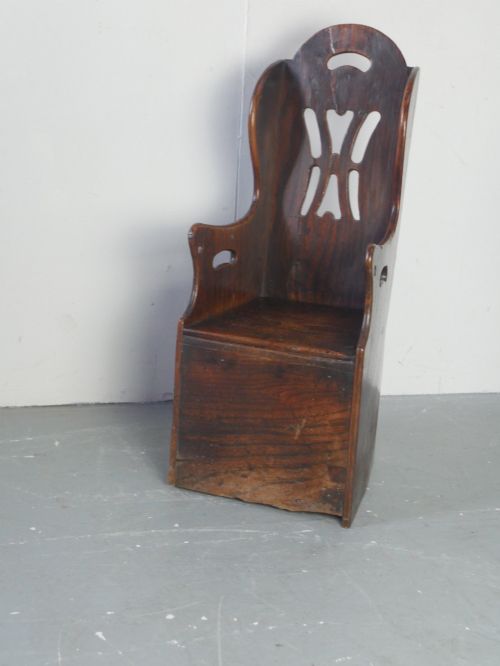
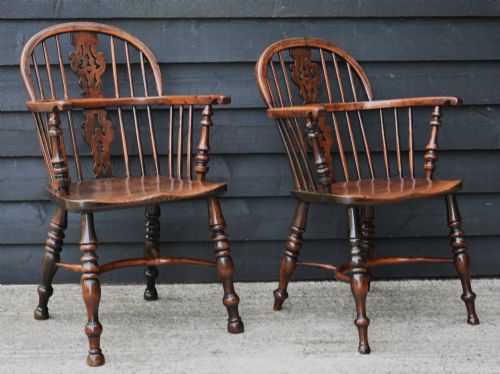
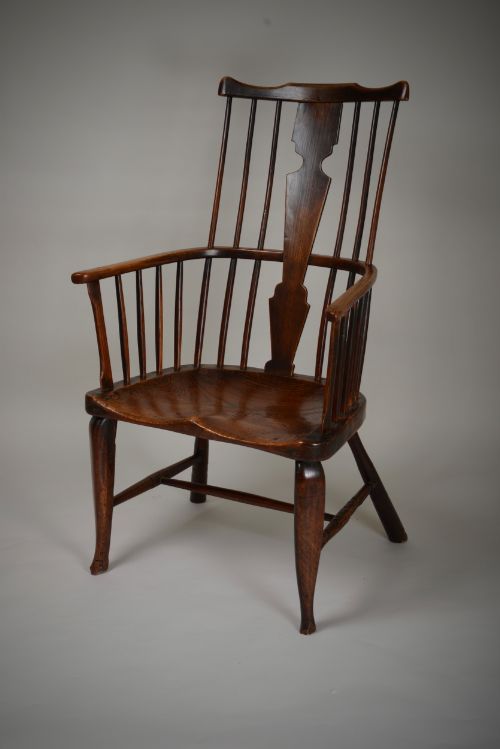
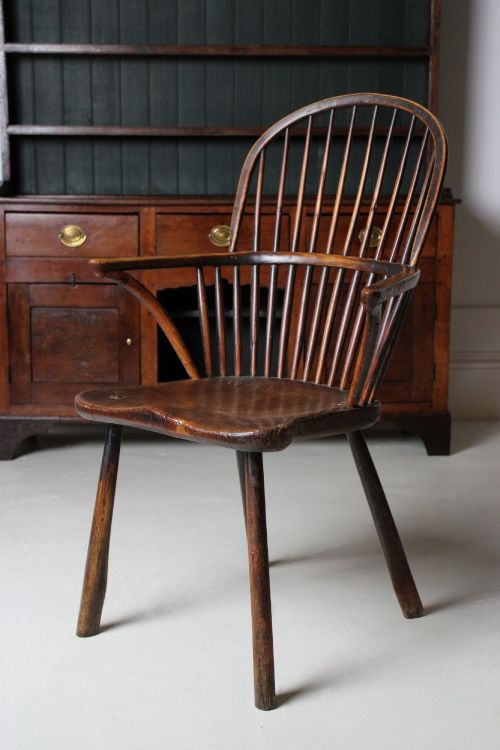
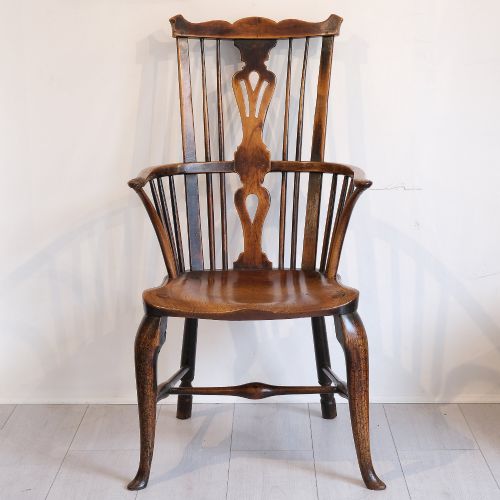
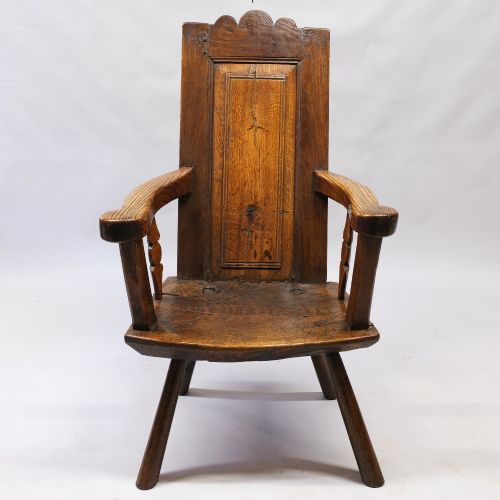
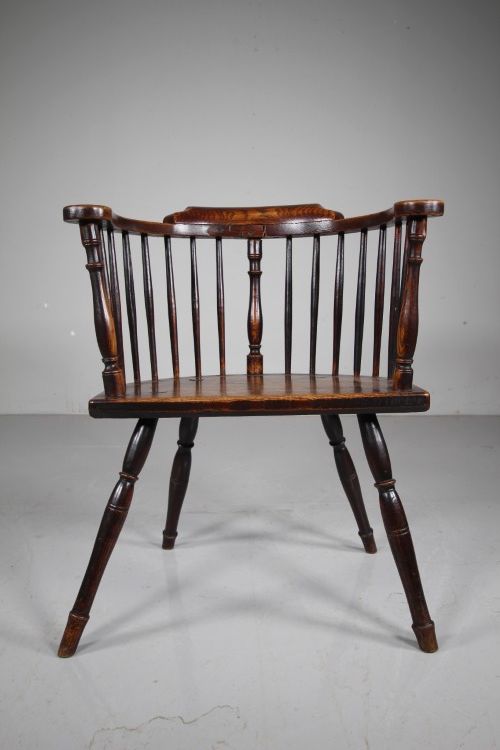
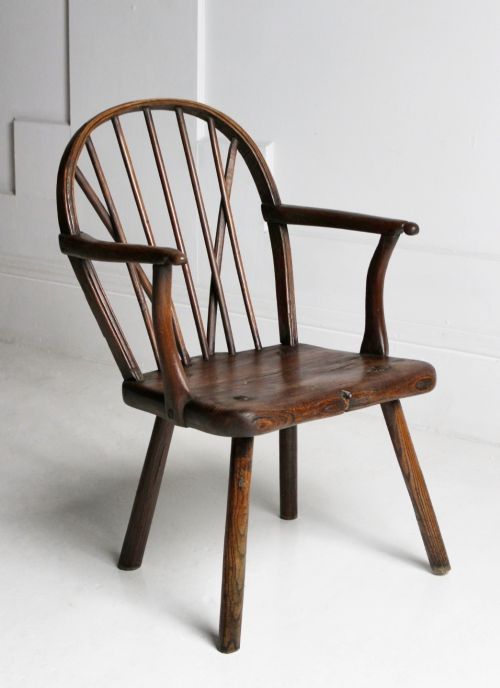
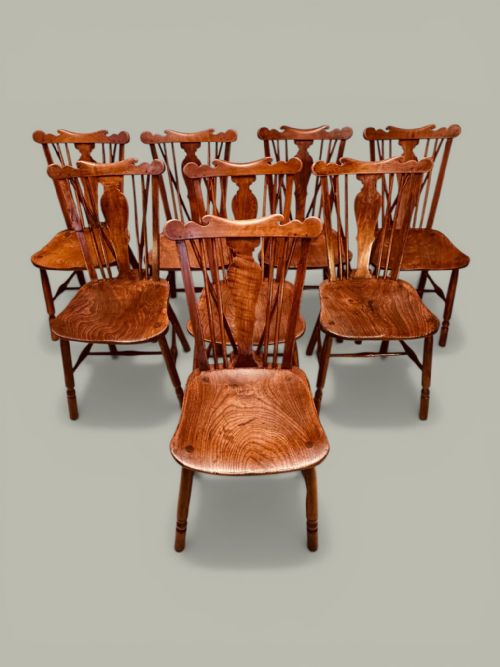
An 18th century elm seat encompasses a wide variety of regional country seating, ranging from Windsor armchairs and spindlebacks to settles, benches, and children's chairs. These pieces originate primarily from the Georgian period and embody domestic vernacular traditions across English and Welsh workshops.
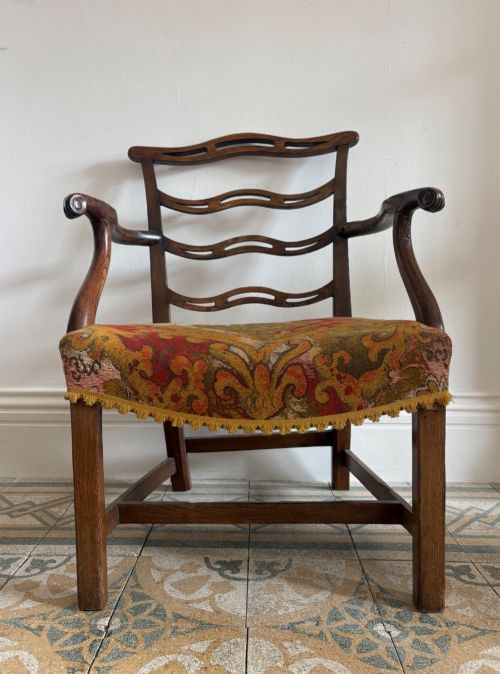
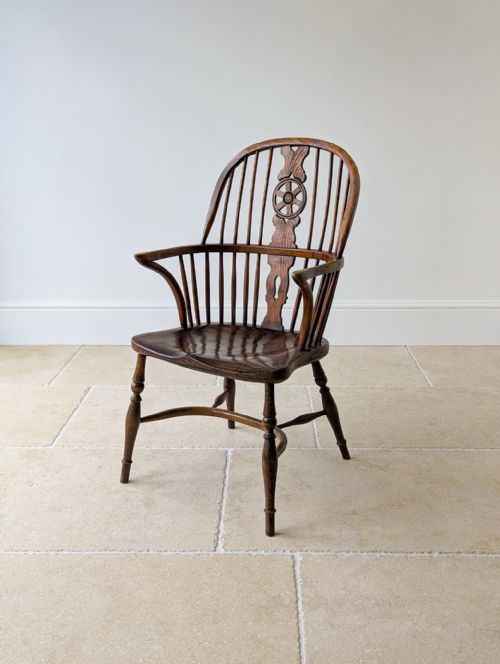
The selection on this page centres heavily on Windsor chairs featuring comb backs, wheelbacks, and stick backs, alongside solid benches and ladderback dining chairs. Elm frequently pairs with ash, yew, fruitwood, and oak to provide sturdy construction for everyday domestic use.
Buyers encounter everything from low stick-back armchairs and grandfather chairs to tavern box-panelled settles and milking stools. This furniture brings historical depth to modern rooms through honest, utilitarian forms shaped by provincial makers.
Materials and construction methods
Elm provides the primary timber for the thick plank seats, chosen for its interlocking grain that resists splitting when driven with heavy legs and spindles. Provincial makers combined this tough wood with ash for flexible bentwood bows and spindles, and yew for distinctive figured arms and backs.
Traditional construction relies on wedged tenon joints and socketed legs built directly into solid plank seats without complex framing. Secondary timbers such as oak, fruitwood, and rush or tapestry fabric appear in specific regional designs like ladderbacks and settles.
Listings feature elm combined with ash, oak, yew, and fruitwood across chair, bench, settle, and stool forms.
Evaluating quality and proportion
Quality in an 18th century elm seat rests on the balance of the proportions, the depth of the timber's figuring, and the integrity of the original joints. Superior examples display well-turned spindles, generous saddle seats sculpted from a single slab, and minimal replacement parts.
Lower tiers often show heavy structural fatigue, extensive timber replacement, or crude repairs to the legs and arms. The finest pieces retain their honest country surface patination and balanced regional form without excessive restoration.
The 18th Century Elm Seat Glossary
- Windsor chair
- A wooden chair featuring a solid carved saddle seat into which the legs and back spindles are directly dowelled. These forms rely on steam-bent elements for the crest and arms.
- Comb back
- A chair back design where the vertical spindles extend upward to support a horizontal headrest resembling a traditional hair comb. This style frequently appears on 18th century primitive armchairs.
- Settle
- A high-backed wooden bench with solid panel arms and storage or draught-excluding properties below the seat. They stood near hearths in Georgian country houses and taverns.
- Vernacular
- Objects built by local craftsmen following regional traditions rather than formal architectural patterns. These pieces prioritise practical utility and locally available materials.
- Wheelback
- A Windsor chair variation featuring a pierced splat carved in the circular shape of a spoked wheel. This decorative motif became popular during the Georgian period.
18th Century Elm Seat: Frequently Asked Questions
What rooms suit an 18th century elm seat?
These rustic seats fit naturally into dining spaces, hallways, and living rooms where their warm timber grain and tactile surfaces add historical weight. A Windsor armchair or low stick-back functions effectively as a reading chair.
Larger forms like settles and benches serve well along plain walls or in farmhouse kitchens. Their sturdy construction ensures they withstand daily domestic life.
How do I care for antique elm furniture?
Keep elm seating away from direct heat sources and rapid temperature shifts to prevent the solid plank seats from splitting or warping. Maintain the wood using occasional applications of traditional wax to preserve the surface patination.
Avoid excessive moisture and modern silicone polishes that damage historic finishes. Gentle dusting with a soft cloth keeps the timber in stable condition.
How can I tell a Georgian chair apart?
Georgian country seating displays honest tool marks, pegged joinery, and thick elm seat slabs shaped by hand adzes rather than modern machinery. Regional traits in the spindles and arm shapes often point to specific British districts.
Examination of the underside reveals the tool signatures and construction methods typical of 18th century provincial workshops. Genuine age shows through natural wear and consistent surface oxidation.
Why are different woods mixed in these chairs?
Country makers utilised specific timbers for their distinct mechanical properties within a single piece of furniture. Elm provided a tough, splitting-resistant seat slab that could anchor inserted legs firmly.
Ash offered the necessary flexibility for steam-bent bows and back spindles, while yew or fruitwood provided attractive contrast and strength for arms.