

18th Century Country Commode
An 18th century country commode offers sturdy domestic utility grounded in regional timber and unpretentious provincial craftsmanship.
18th Century Country Commode
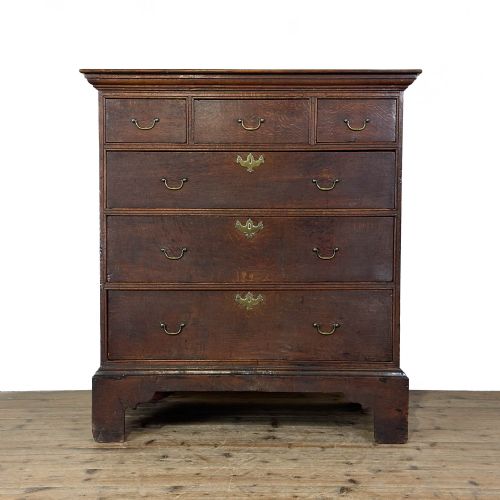
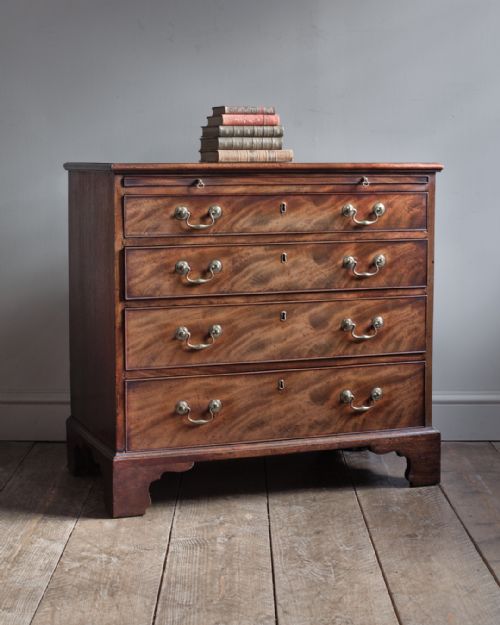
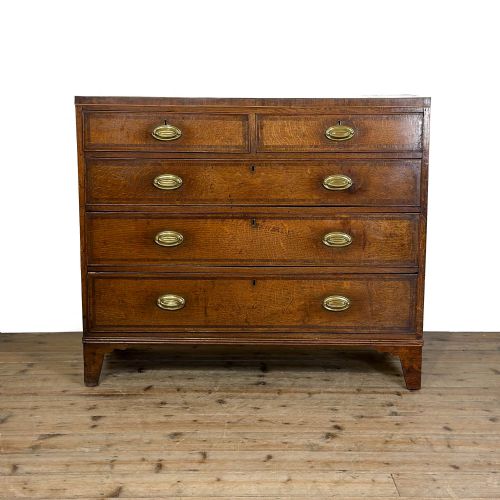
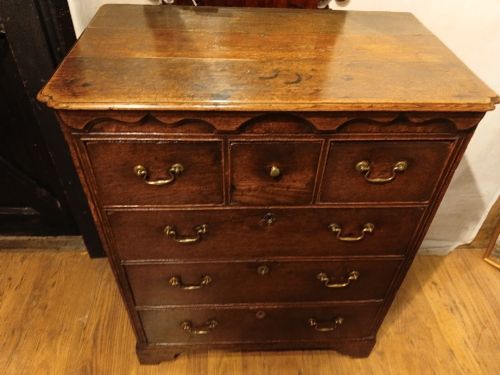
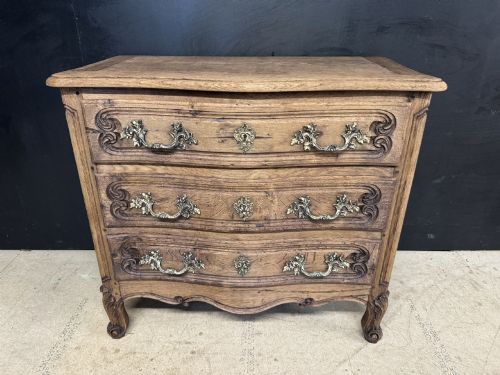
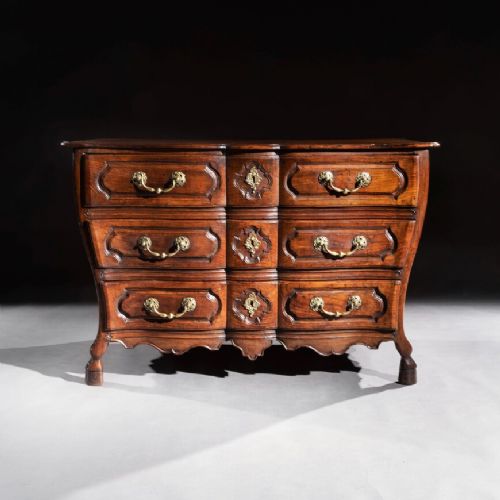
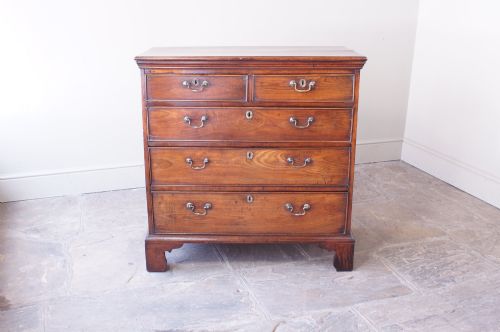
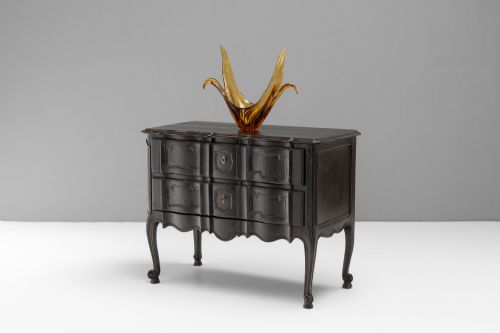
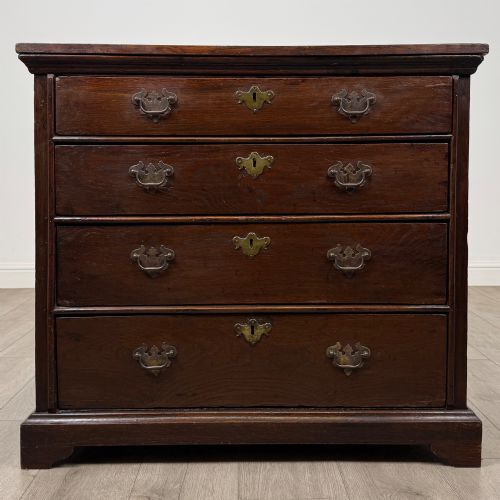
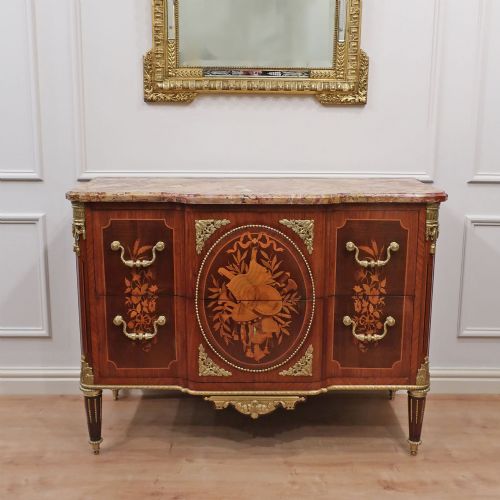
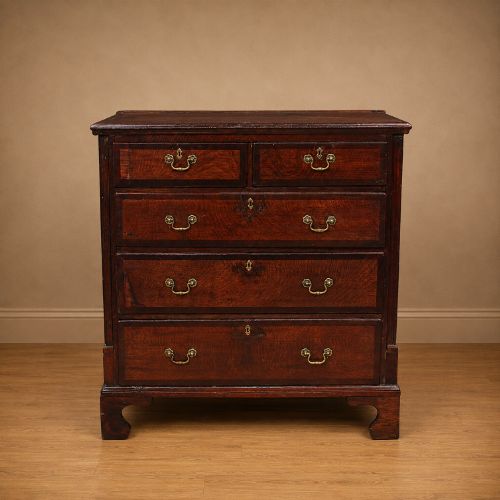
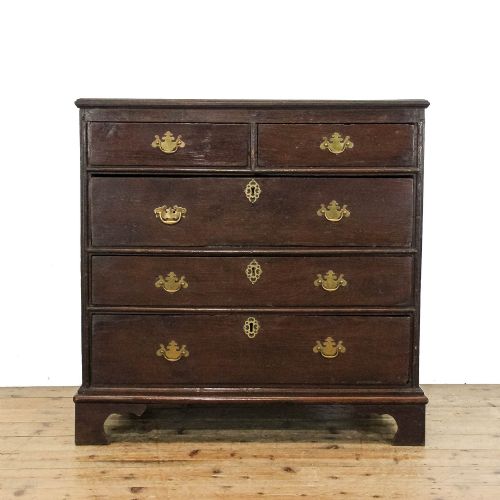
When you search for an 18th century country commode, you encounter a practical storage form spanning robust English oak chests to provincial French walnut and cherry commodes. These pieces served domestic bedchambers and parlours, providing deep drawer capacity for linens and personal belongings.
The selection on this page leans heavily towards regional chests of drawers rather than urban court furniture. Elm, fruitwood, and golden oak appear frequently, reflecting the local timber available to rural cabinetmakers across Britain and continental Europe.
Alongside standard drawer chests, the category encompasses regional seating forms with enclosed storage, including commode armchairs and childs potty rockers. These functional adaptations highlight the utilitarian focus of rural domestic workshops during the Georgian era.
Materials and construction methods
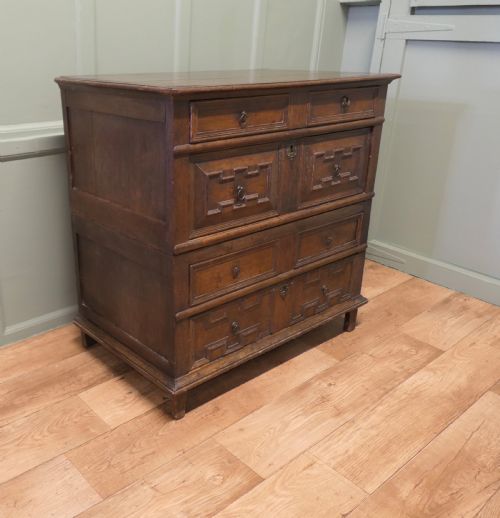
Makers constructed these pieces using solid regional hardwoods such as oak, elm, walnut, and cherry. Timber selection depended strictly on local woodland availability, leading to distinct grain patterns and colour variations between English and continental pieces.
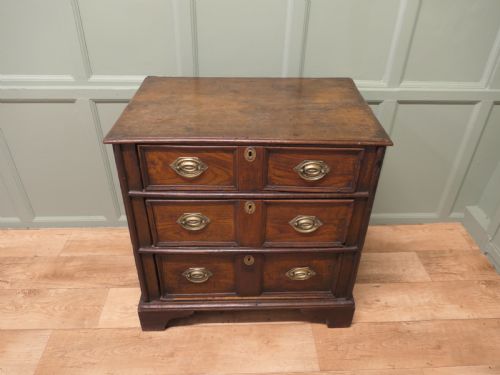
Joinery relied on sturdy pegged mortise and tenon frames, hand-cut dovetails for drawer construction, and panelled backs and sides. Master craftsmen utilised crossbanding in mahogany or walnut to frame primary drawer fronts on finer Georgian examples.
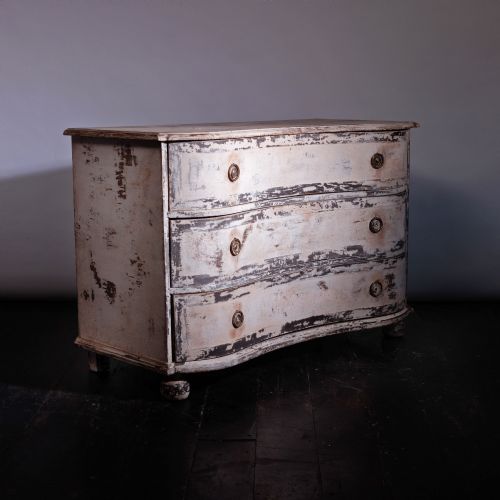
Surface treatments ranged from polished natural timber and limed finishes to traditional paint and gilt layers on French provincial items. Iron and brass hardware, including drop handles and bracket feet, completed the structural assembly.
18th Century Country Commode Retail Price Guide 2026
Typical asking prices for 18th century country commode among the pieces listed under this phrase on Sellingantiques today, from the lower quarter to the upper quarter. They describe what is for sale here now, not the wider market.
Object forms span standard chests of drawers, garret chests, bedside cabinets, and specialised seating including potty rockers.
Distinguishing quality in rural cabinetry
Quality separates through the selection and preparation of timber, distinguishing simple utility furniture from ambitious provincial output. Well-figured elm, quarter-sawn oak, and richly grained walnut elevate the visual presence of a basic storage chest.
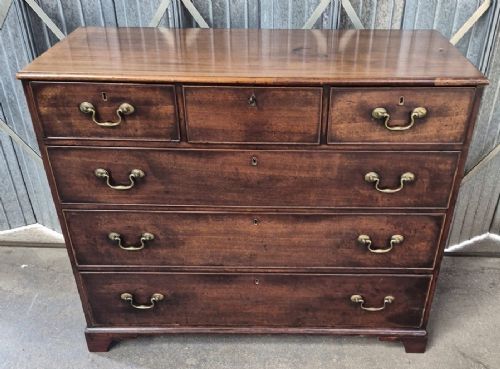
The refinement of the joinery and carved detail marks the upper tier of the range. Hand-cut dovetailing, crisply moulded drawer edges, and sophisticated serpentine or bow front profiles require superior skill compared to straight, plain-fronted carcases.
The original integrity of surface finishes and hardware dictates desirability. Pieces retaining undisturbed patination, period brass drop handles, and authentic bracket or plinth feet demonstrate greater surviving authenticity.
The 18th Century Country Commode Glossary
- Commode
- A low chest of drawers or cabinet originating from French furniture forms. In rural contexts, the term also applies to functional seating furniture with enclosed chamber pots.
- Crossbanding
- A decorative border technique where thin strips of veneer are laid with the grain running perpendicular to the main panel. This frames drawer fronts on finer Georgian pieces.
- Serpentine
- A curved furniture front characterised by a convex centre flanked by concave ends. It demands advanced woodworking skill found on provincial French commodes.
- Bracket foot
- A simple, sturdy foot shape resembling a bracket, commonly supporting the corners of Georgian chests of drawers. They vary from plain ogee profiles to simpler square cuts.
- Provincial
- Denoting furniture made in regional areas outside major capital cities. These pieces often display charming local interpretations of prevailing metropolitan styles.
18th Century Country Commode: Frequently Asked Questions
What is a country commode?
A country commode is a practical storage chest or functional seating piece made in regional workshops during the eighteenth century. These items utilised locally sourced timbers like oak, elm, and fruitwood to serve everyday domestic needs.
Unlike grand court furniture, country versions prioritize durability and straightforward utility over elaborate ornamentation. They reflect the distinct craftsmanship traditions of rural England and continental provinces.
How do I identify eighteenth century oak?
Eighteenth century oak displays distinct medullary rays, which appear as small flecks or flake patterns across the grain. This visual characteristic results from quarter-sawing the timber for stability.
Examining the construction reveals hand-cut dovetails, pegged joints, and uneven board widths rather than uniform modern machine milling. These physical traits confirm genuine period manufacture.
Where were these chests used?
These chests originally stood in farmhouses, country houses, and provincial bedchambers to store household linens, clothing, and personal items. Their deep drawers provided essential organisation for rural households.
Today, they adapt easily to modern living rooms, hallways, and bedrooms as functional storage surfaces that anchor a room with historic character.
How do English and French pieces differ?
English country pieces typically favour straight-fronted carcases in solid oak, elm, or mahogany crossbanding with simple bracket feet. They emphasise structural solidity and restrained regional styling.
French provincial commodes frequently employ walnut, cherry, or painted finishes with shaped serpentine or bow fronts and marble tops. They reflect continental Louis styles adapted by regional cabinetmakers.