


18th Century Copper Pitcher
These 18th century copper pitcher items bring heavy domestic metalwork into daily use, offering robust utility and deep metallic warmth for the modern interior.
18th Century Copper Pitcher
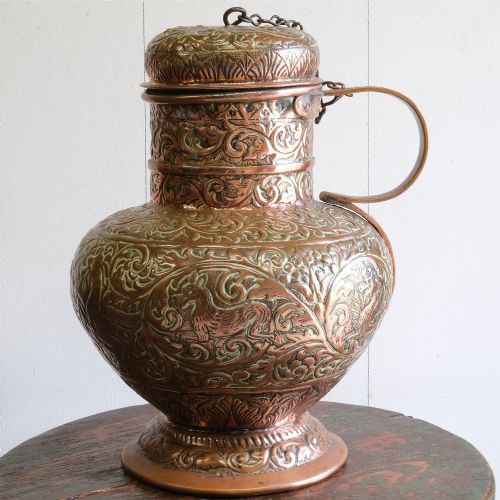
Buyers seeking an 18th century copper pitcher encounter substantial vessels designed for carrying liquids, measuring volume, or brewing coffee within domestic and commercial spaces.
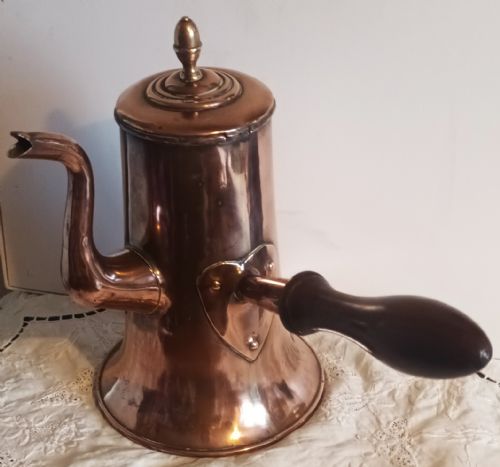
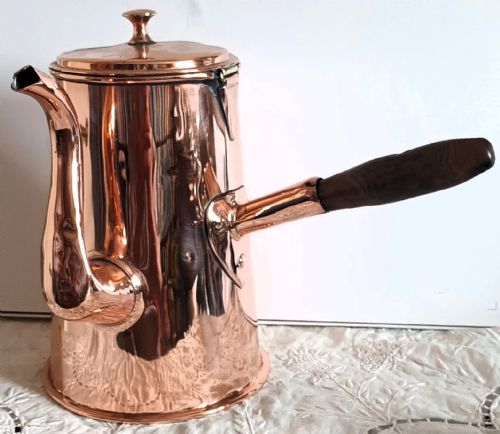
The selections span forms such as large lidded pitchers, tall coffee pots, and capacity-marked gallon measures originating from English Georgian workshops.
While bearing 18th century or Georgian style credentials, many surviving examples carry secondary period datings from the 19th century or the year 1800.
Materials and construction
Makers shaped these heavy vessels primarily from sheet copper, often incorporating brass for handles, spouts, or fittings, alongside occasional elements of tin, lead, and hardwood.
Construction relies on hand-beating and seaming techniques to handle high capacities, ranging from three-pint jugs up to colossal two-gallon measures.
Materials across these listings include copper, brass, wood, tin, hardwood, and lead.
Judging quality and proportion
Quality rests in the integrity of the heavy-gauge metalwork and the clean balance of spout, handle, and body proportions.
Superior vessels display confident hand-shaping and purposeful assembly rather than purely decorative execution, reflecting their original heavy-duty roles.
The 18th Century Copper Pitcher Glossary
- Georgian
- A design period spanning the reigns of the Hanoverian kings, noted for sturdy proportions and functional domestic metalware. Pieces from this era often show plain, practical surfaces.
- Coffee Pot
- A tall vessel featuring a long spout and a vertical handle, specifically designed for brewing and serving hot beverages. These objects typically incorporate fitted lids to retain heat.
- Gallon Measure
- A standardised vessel used for checking and dispensing liquid volumes in trade or large households. Such items bear capacity indicators and heavy-duty structural reinforcement.
- Lead
- A dense, soft metal utilised in period manufacturing for soldering seams and securing joints. Its presence ensures watertight integrity in heavy utility vessels.
18th Century Copper Pitcher: Frequently Asked Questions
How were these vessels used?
These pieces served practical roles in Georgian households and commercial settings for carrying water, brewing coffee, and measuring large quantities of liquid.
Their heavy construction allowed them to withstand daily domestic labour and commercial service without failure.
What metals are these items made from?
The primary material is heavy copper, frequently accented with brass for handles, collars, or spouts.
Some examples also incorporate internal tin linings, wooden insulators, and lead sealing at the joints.
How do I care for antique copper?
Keep the metal dry and clean it gently with appropriate non-abrasive polishes only when necessary to maintain the surface.
Allowing the copper to retain its natural environment builds a deeper historic character over time.
How can I tell the period?
Period identification relies on examining the weight of the metal, the form of the handle attachments, and the fabrication marks.
Stylistic cues align closely with Georgian manufacturing traditions and capacity standards of the era.