



18th Century Coat Arms
These 18th century coat arms pieces carry heraldic identity across porcelain, carved wood, glass and leather.
18th Century Coat Arms
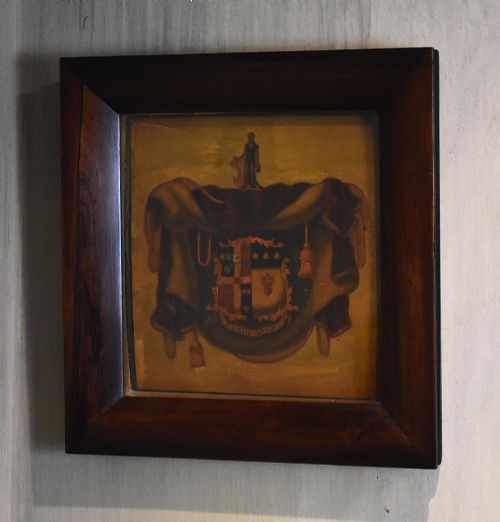
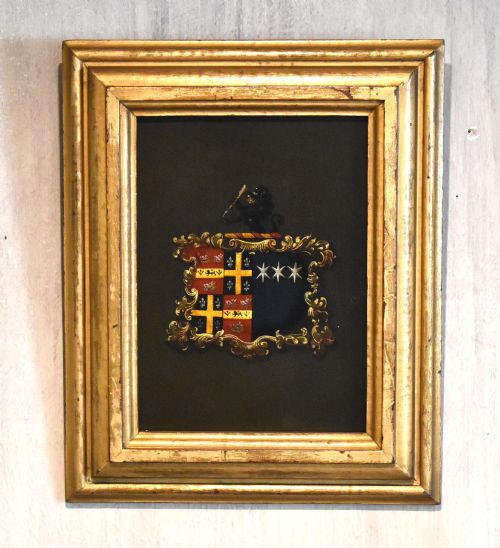
When you search for 18th century coat arms, you encounter armorial porcelain, painted wooden panels, engraved glass and heraldic metalwork made to display family allegiance.
The objects on this page range from Chinese export plates and sauce boats bearing specific family crests to carved polychrome wooden armorials and coach panels.
You also find framed prints, scrapbook pages with caricatures and armorials, leather fire buckets, and mirrors featuring papal or royal insignia.
Materials and techniques
Makers utilised porcelain painted in famille rose enamel palettes, glass engraved with armorial details, and oil paint on wood, canvas or leather.
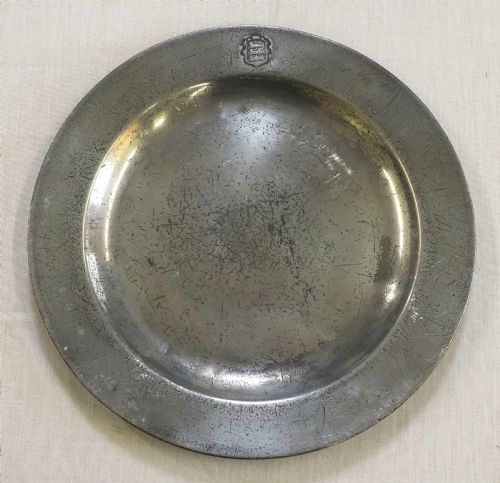
Carved pieces show polychrome paint and gilding applied to wood, while metal objects include pewter plates, cast iron firebacks and old Sheffield plate.
Listings feature 18th century materials including glass, porcelain, enamel, wood, giltwood, oil paint, pewter and paper.
What separates the fine from the ordinary
Quality rests in the precision of the heraldic painting or carving and the clarity with which the specific family lineage or arms can be identified.
Fine examples retain their original polychrome pigments, gilding and surface condition, while lesser pieces suffer from heavy wear, later overpainting or faded armorial details.
Wood and Michell
The 18th Century Coat Arms Glossary
- Armorial
- Bearing a coat of arms or heraldic insignia. This term applies frequently to Chinese export porcelain and painted panels.
- Famille rose
- A palette of opaque enamel colours dominated by pink, used extensively on Chinese export porcelain during the eighteenth century.
- Coach panel
- A wooden panel painted with a family crest or coat of arms, originally mounted upon a horse-drawn carriage.
- Old Sheffield plate
- A composite metal formed by fusing a sheet of silver to a thicker base of copper, used for serving trays and tableware.
18th Century Coat Arms: Frequently Asked Questions
What is an armorial plate?
An armorial plate is a piece of ceramic tableware painted with a specific family coat of arms or crest. These were usually commissioned by aristocratic families from European or Chinese export potteries.
They served both practical dining purposes and social display, advertising the lineage and status of the household during meals.
How were coach panels used?
Coach panels were decorative wooden sections painted with heraldic coats of arms and mounted onto the doors of private horse-drawn carriages. They displayed the social rank and identity of the vehicle's owner as they travelled.
When carriages fell out of use or were broken up, these painted panels were often removed and preserved as wall art.
Can you date these items accurately?
Dating relies on stylistic evidence, specific historical coats of arms, and material composition such as porcelain body types or glass engraving styles. Many pieces correspond to specific reigns or decades like the Qianlong period or the Georgian era.
Inscribed names or family histories on the objects provide further documentary proof to narrow down the date of manufacture.
How do I display these pieces?
Framed prints, paintings, mirrors and coach panels mount securely onto walls using standard picture-hanging hardware suited to their weight. Porcelain plates and serveware require stable plate hangers or dedicated display cabinets.
Keep them away from direct sunlight and damp environments to protect fragile enamels, leather surfaces and painted wooden finishes.