


18th Century Cellarette
An 18th century cellarette is a dedicated timber vessel built to cool and store wine at the dining table, prized for rich grain and precise cabinet work.
18th Century Cellarette
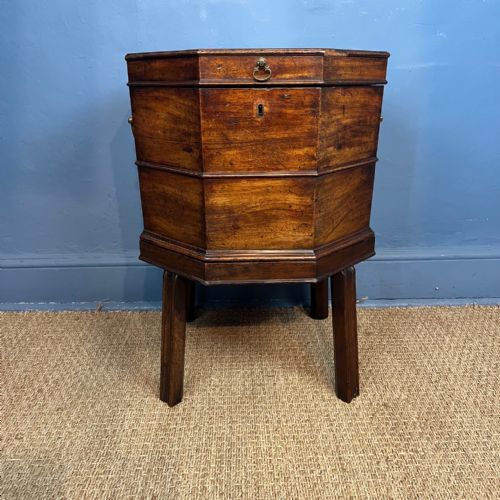
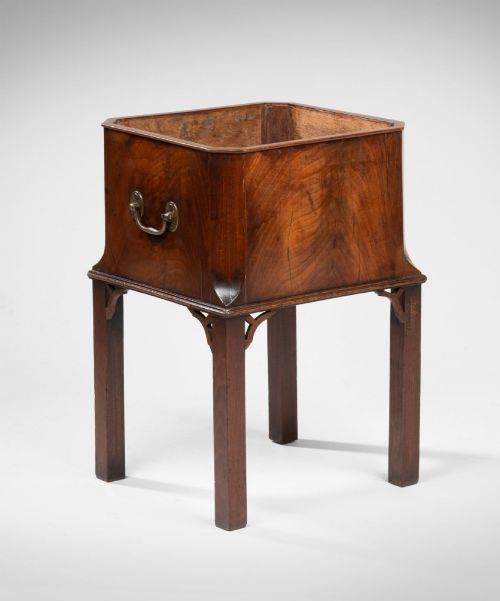
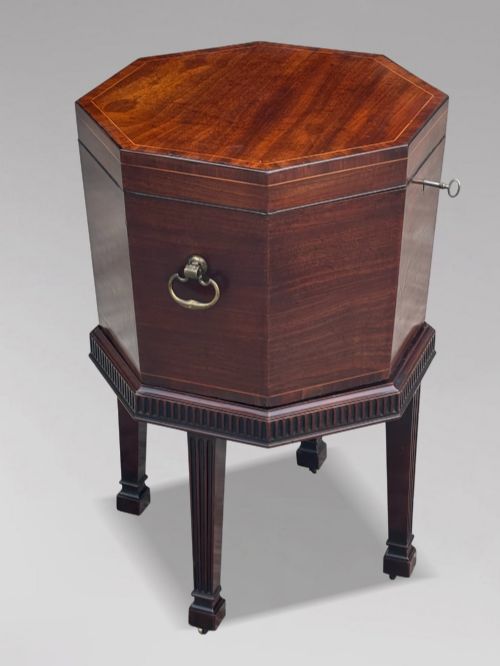
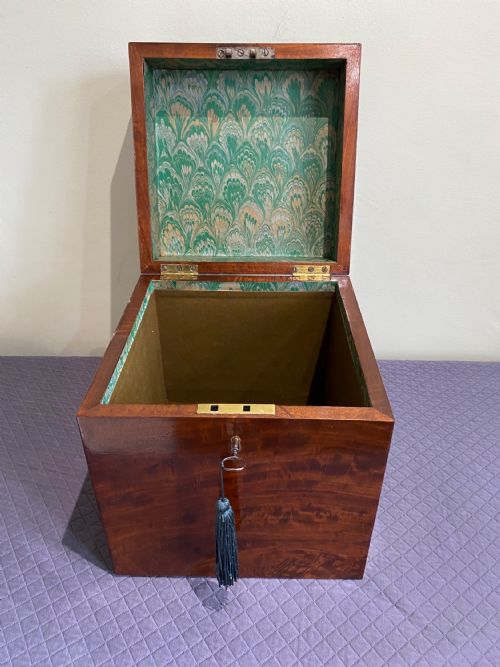
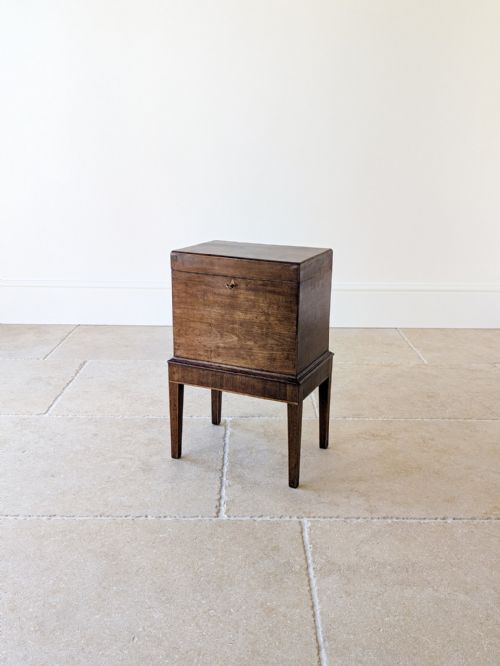
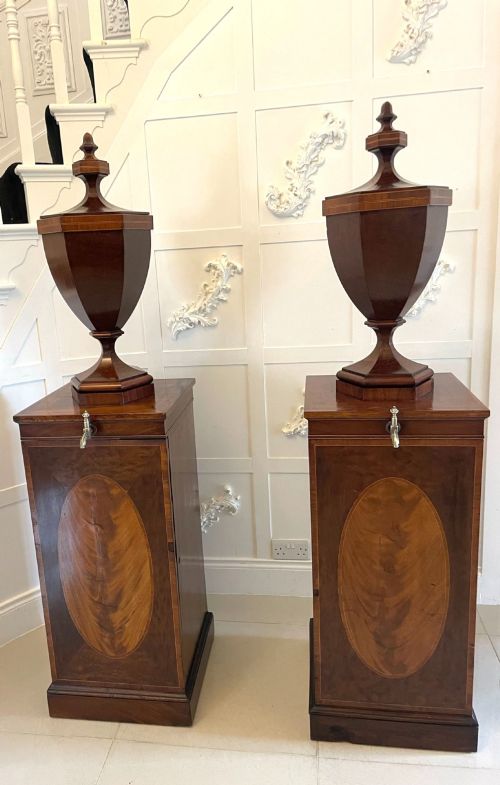
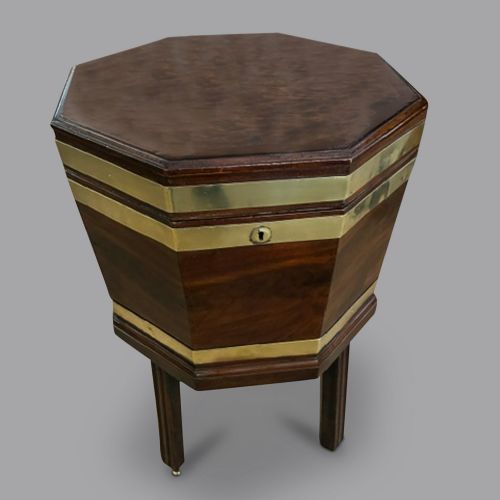
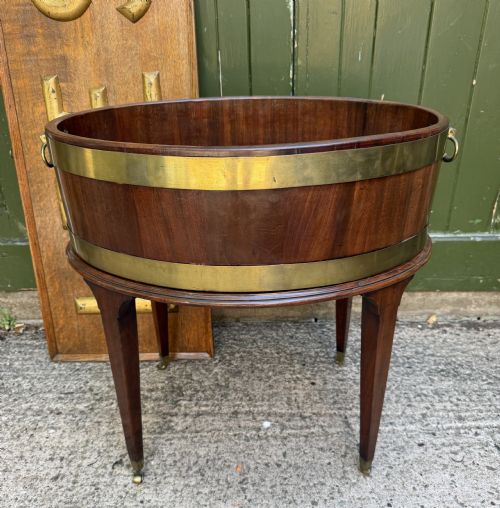
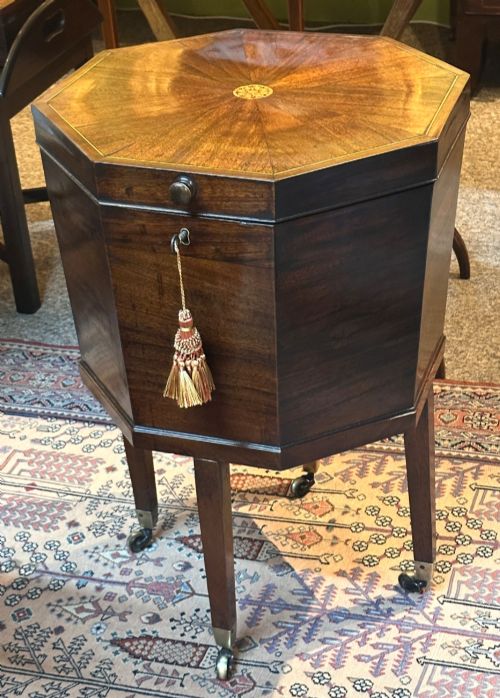
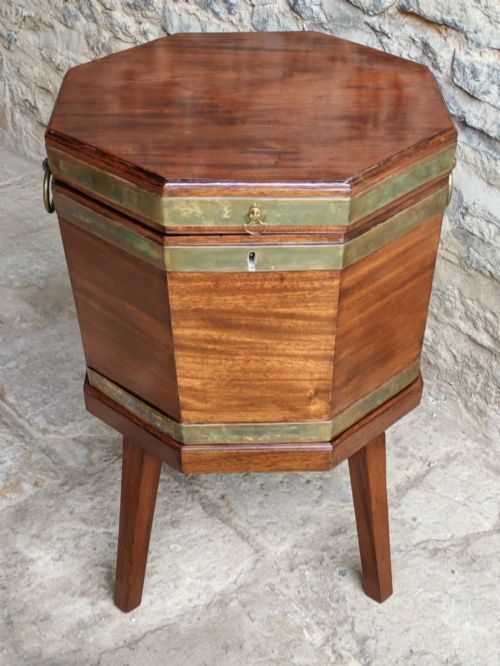
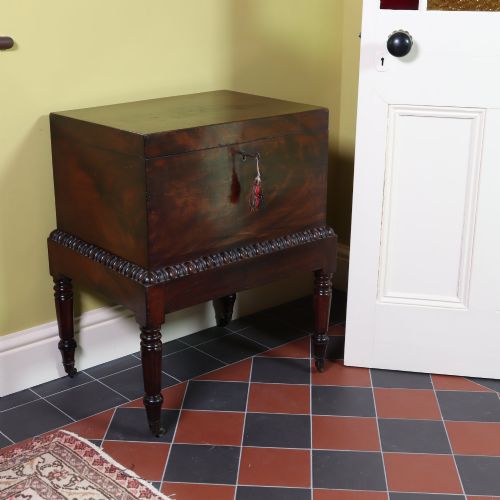
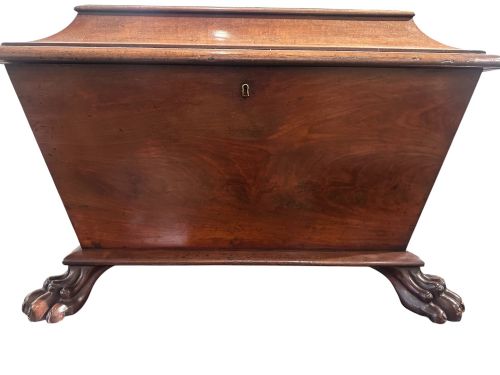
When you search for an 18th century cellarette, you encounter heavy timber receptacles designed to hold bottles and ice beneath the formal dining surface. The forms seen here span simple octagonal and oval wooden boxes to elaborate wine urns mounted on pedestals and occasional standing frames. Most examples belong to the Georgian and George III periods, executed in richly figured mahogany with occasional walnut, pollard oak or exotic satinwood.
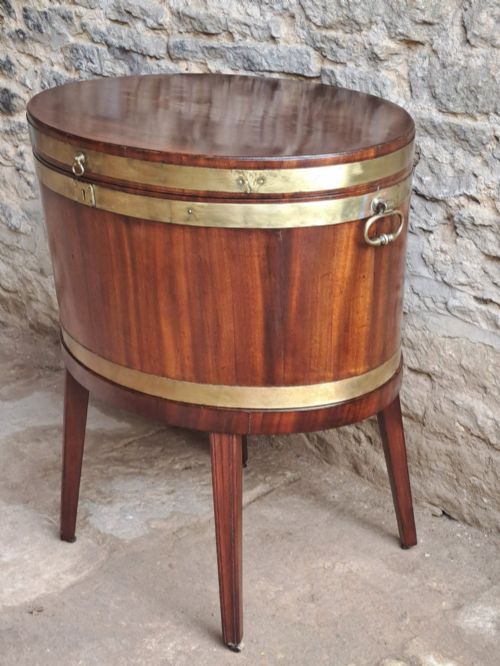
The objects frequently overlap with wine coolers, jardinières and bottle coasters in period terminology, sharing identical storage functions for the dining room. Many retain interior lead linings or zinc compartments meant to contain ice and water alongside glass bottles and decanters. You also find variants incorporating original stands, brass carrying handles and brass binding hoops that secure the stave construction.

Materials and construction methods
Cabinetmakers built these containers using dense tropical and domestic hardwoods, predominantly solid and veneered mahogany, supported by secondary timbers like oak and boxwood. Staves and panel frames were joined securely to withstand moisture from melting ice, often reinforced with structural brass bands and carrying handles. Decorative contrast came from delicate boxwood inlay, kingwood banding, and intricate marquetry details.
Interiors required specialised metalwork, utilising zinc or lead linings to protect the surrounding wooden structure from damp conditions during dinner service. Surface finishes relied on hand-rubbed wax applied over decades, producing the deep natural patina recorded across surviving pieces.
18th Century Cellarette Retail Price Guide 2026
Typical asking prices for 18th century cellarette among the pieces listed under this phrase on Sellingantiques today, from the lower quarter to the upper quarter. They describe what is for sale here now, not the wider market.
Listings demonstrate cabinet work spanning the Georgian, George III, and early nineteenth-century eras, executed in mahogany, walnut, and padouk.
Distinctions in quality and execution
The standard of an 18th century cellarette rests upon the selection of timber figure, such as flame or plum-pudding mahogany, matched carefully across lid and body panels. Superior examples display crisp, fine-scale inlay, original brass mounts, and intact internal dividers rather than later replacement components.
Structural integrity of the internal lining and the survival of matching stands or pedestals elevate the significance of individual pieces. Master cabinet work shows in the clean joinery of octagonal or curved staves and the retention of original locking mechanisms and hinges.
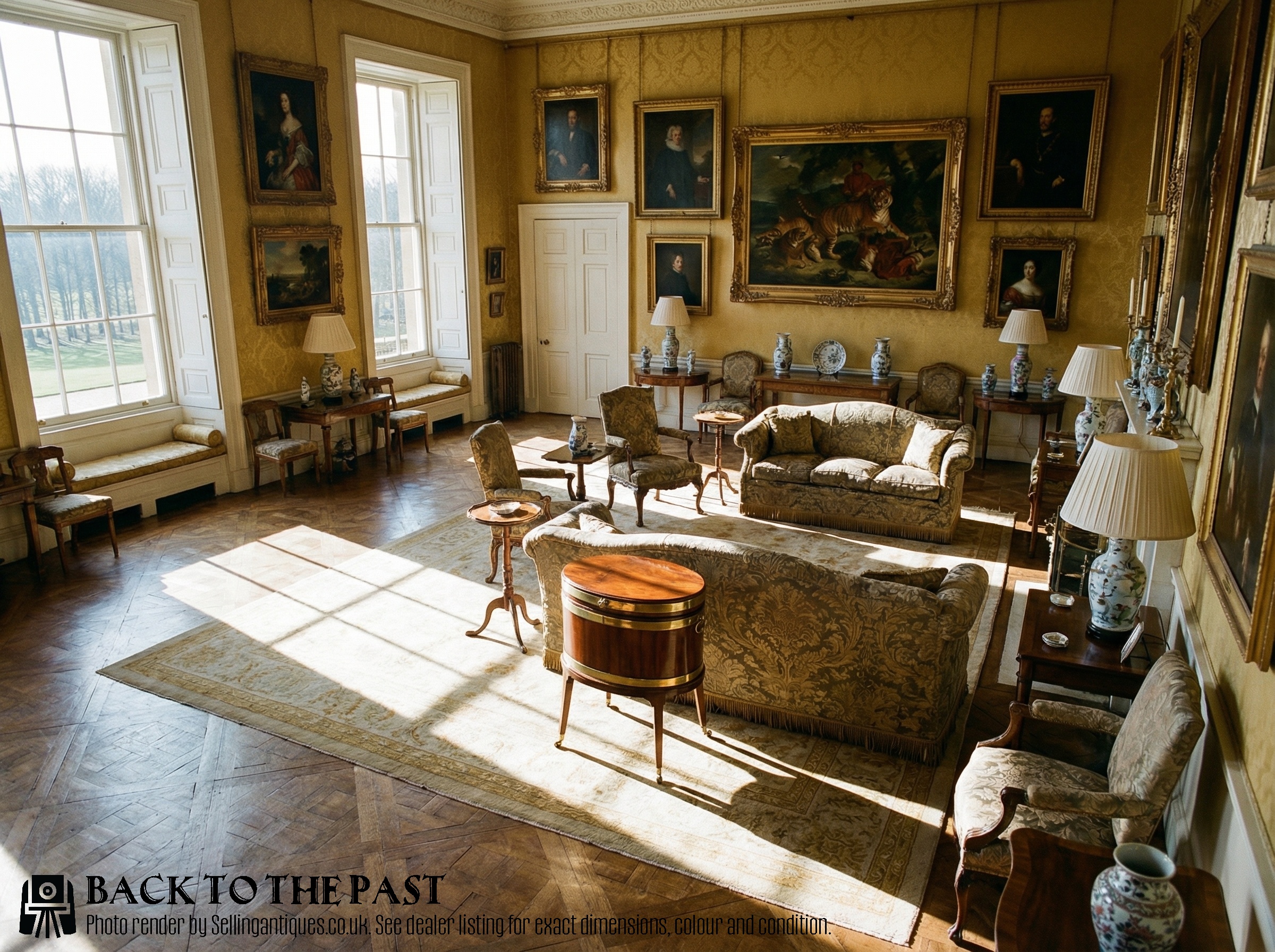
The 18th Century Cellarette Glossary
- Cellarette
- A lockable container used for storing wine bottles near the dining table. They frequently double as wine coolers when fitted with internal metal linings.
- Wine Cooler
- A vessel designed to hold ice and bottles during meals. Many share the structural form and materials of standard cellarettes.
- Brass Bound
- Construction reinforced with exterior metal hoops and tension bands. This technique secures wooden staves against movement caused by moisture and temperature changes.
- Marquetry
- Decorative patterns formed by fitted veneers of various coloured woods. It appears on selected decorative boxes and planters from the period.
- Pedestal
- A columnar support base carrying urn-form wine containers. These arrangements form grand architectural suites with matching cupboards.
18th Century Cellarette: Frequently Asked Questions
What is an 18th century cellarette?
An 18th century cellarette is a specialised wooden container designed to hold wine bottles and ice in the dining room.
Cabinetmakers constructed them in forms ranging from simple octagonal boxes to elaborate urns on stands, predominantly using mahogany.
How were these wine coolers used?
They sat beneath sideboard tables or beside the dining group to keep bottled wine chilled and secure during lengthy meals.
Servants filled the metal-lined interiors with ice and water to lower the temperature of glass decanters before serving guests.
How do I identify a George III cellarette?
George III pieces typically feature dense mahogany timber, characteristic brass binding bands, and sometimes inlaid boxwood stringing or fan motifs.
They reflect the neoclassical and Georgian design vocabularies popular during the later eighteenth century.
Did cellarettes come with stands?
Many examples rest upon dedicated wooden stands, carved legs, or complete pedestal cupboards designed to match the dining furniture.
Other variants were built as low floor-standing boxes fitted with castors or strong side handles for movement.