


18th Century Blue Glass
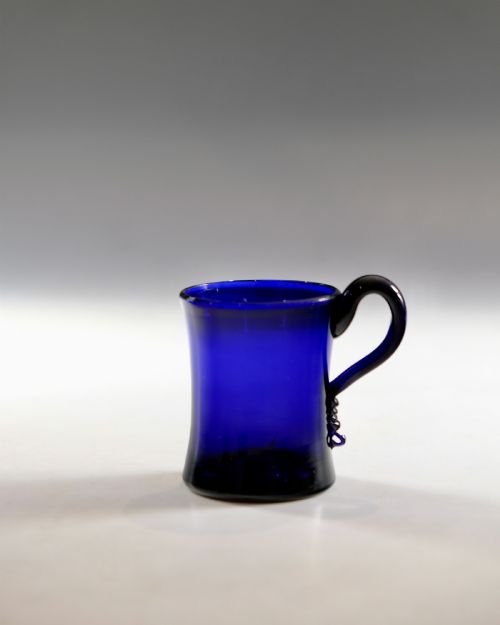
These 18th century blue glass pieces bring deep cobalt and turquoise colour to a table, offering genuine Georgian character for daily use.
18th Century Blue Glass
When you search for 18th century blue glass, you enter a field defined by Georgian tableware, drinking vessels, and decorative containers. The pieces appearing here span the eighteenth and early nineteenth centuries, encompassing domestic table glass and fitted silver vessels.
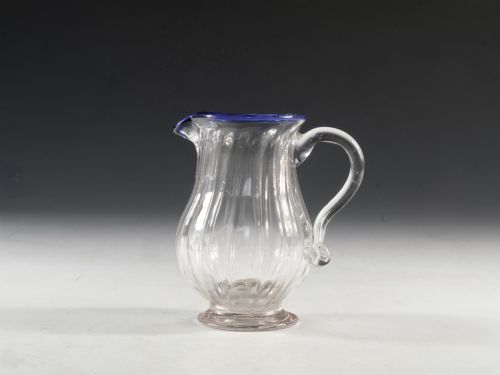
You are most likely to meet small serving forms on this page, particularly cream jugs, sugar baskets, sweetmeat glasses, and wine glasses. These objects often combine deep cobalt or turquoise glass with sterling silver wirework, pierced silver frames, or enamel decoration.
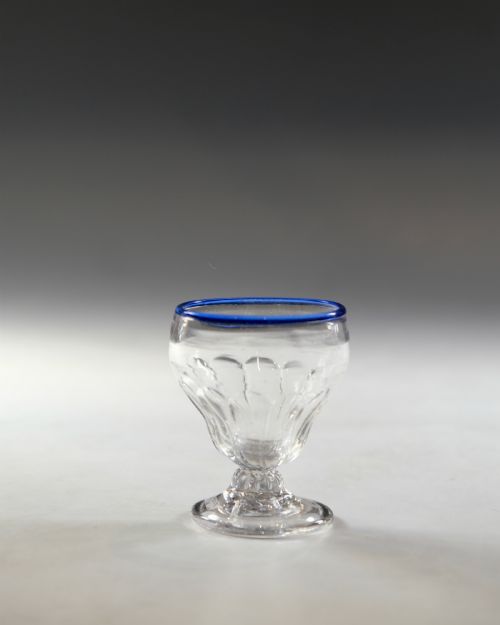
English and continental origins dominate the selection, with Bristol production sitting alongside Dutch and French examples. Forms range from plain double ogee bowls and wrythened egg cups to ribbed wine glasses and tankards.
How they were made
Glassmakers produced these vessels using lead glass and blown glass techniques, shaping molten material into ribbed, wrythened, or ogee profiles. Cobalt oxide provided the rich blue coloration seen in Bristol blue and general cobalt glass examples.
Henry Ricketts is recorded beginning his life as a Bristol glass maker while still just a young child.
What varies in quality
Depth and saturation of the blue colour set the visual standard across these vessels, with intense cobalt and turquoise marking out the finer examples. The clarity of the blown metal and the crispness of ribs or wrythen twisting also distinguish superior pieces.
The integration of precious materials elevates certain items, particularly where hand-painted decoration or substantial sterling silver mounts accompany the glass. Integration between glass inserts and pierced silver cream pails reflects the skill of contemporary silversmiths.
Aldridge and Green·Edward Bird
The 18th Century Blue Glass Glossary
- Bonnet glass
- A small glass vessel used for serving sweetmeats or fruit, often featuring an ogee bowl and a footed base.
- Wrythen
- A decorative spiral moulding twisted into the body of blown glass during formation.
- Sweetmeat glass
- A small pedestal glass designed for holding confections, nuts, or preserved fruits.
- Cream pail
- A small bucket-shaped vessel, frequently paired with silver wirework, used for serving cream at the tea table.
- Ogee
- A double-curved architectural profile forming an S-shape, commonly seen on eighteenth-century bowl rims.
18th Century Blue Glass: Frequently Asked Questions
What was 18th century blue glass used for?
These pieces served practical dining and domestic functions, holding cream, sugar, wine, and sweetmeats during formal meals and tea service.
Containers like patch boxes and tankards fulfilled personal and social roles, while decorative items like witches balls and reverse glass pictures decorated the interior.
How do I identify Georgian blue glass?
Look for characteristic eighteenth-century forms such as ogee bowls, rib-moulded bodies, and wrythen twists combined with deep cobalt coloration.
Matching materials such as sterling silver wirework, silver frames, and enamel decoration help confirm the period context.
Where was Bristol blue glass made?
Bristol glass production centred on the English city during the eighteenth century, associated with makers such as Henry Ricketts.
This glassware gained renown for its deep cobalt hue and frequent pairing with silver frames and hand-painted details.
How do I care for antique glass?
Wash these pieces by hand in warm water using mild soap, avoiding abrasive sponges or harsh chemicals that might harm the surface.
Dry them carefully with a soft cloth and protect silver mounts or enamel elements from prolonged moisture exposure.