




18th Century Beer Mug
An 18th century beer mug brings the heavy, substantial drinking vessels of the Georgian period straight to the table.
18th Century Beer Mug
An 18th century beer mug encompasses sturdy drinking vessels designed for ale, beer and stout during the Georgian era. Buyers searching this phrase encounter substantial forms built for daily tavern or domestic use, spanning the reigns of George II and George III.
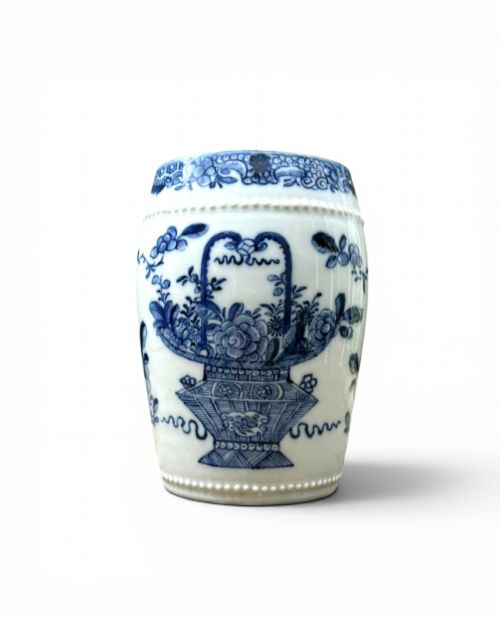
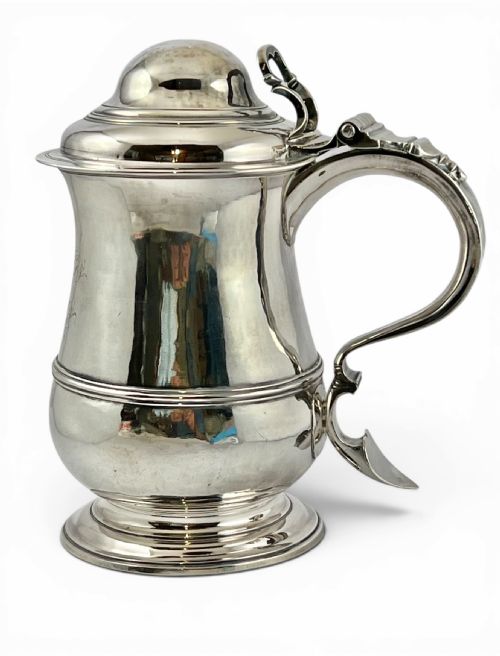
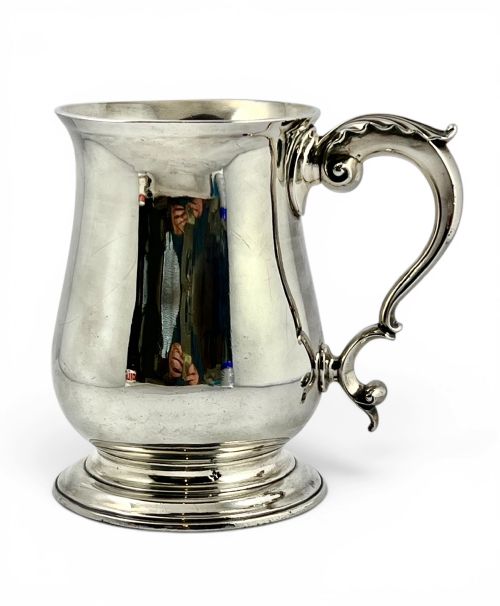
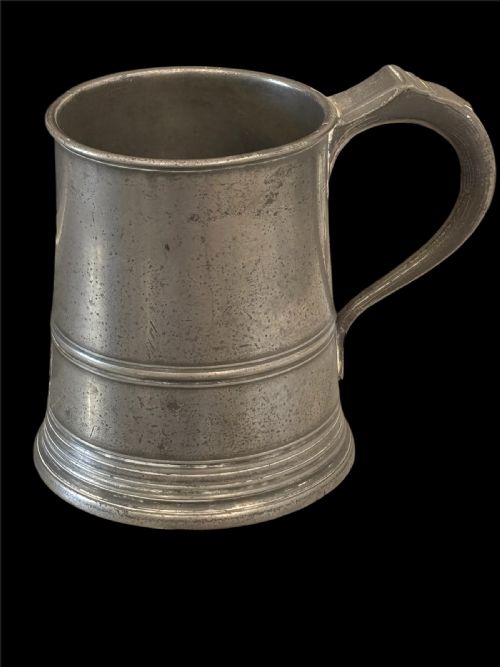
The selection here ranges widely across materials, featuring heavy solid silver tankards from London and Newcastle alongside Old Sheffield Plate, pewter, creamware and Chinese export porcelain. Pewter and silver pieces often include lidded forms, while porcelain and pottery examples appear as cylindrical or barrel-shaped mugs.
Origins stretch from English workshops to German kilns and Chinese export furnaces, reflecting global trade and local metalworking traditions of the 1750 to 1800 period.
How they were made
Silversmiths and pewterers shaped metal drinking vessels by hammering sheets of sterling silver, pewter, copper or nickel-plating into cylindrical bodies, often adding applied handles and hinged lids. Old Sheffield Plate combined a thin layer of silver fused to a copper base, creating durable vessels with the appearance of solid silver.
Potters threw clay on a wheel for creamware and earthenware mugs, or formed hard-paste porcelain for Chinese export pieces painted in Famille Rose, Famille Vert or Imari palettes. Salt-glazed stoneware traditions yielded Westerwald mugs, finished with incised cobalt blue decoration.
Georgian tavern patrons appreciated a heavy quart tankard that doubled as a sturdy defensive instrument after hours.
What varies in quality
Quality in metal vessels depends upon the crispness of maker marks, the weight of the silver or pewter, and the integrity of the soldered joints and hinged lids. Solid silver and high-grade pewter pieces demonstrate substantial heft and careful balance in the hand.
For plated and ceramic pieces, quality shows in the preservation of the surface, whether the retention of silver fusion over copper in Old Sheffield Plate or the vibrancy and clarity of hand-painted enamels on Chinese export porcelain.
John Payne London·William Grundy·Richard Morton·Burgum And Catcott Of Bristol
The 18th Century Beer Mug Glossary
- Tankard
- A tall, substantial drinking vessel featuring a single handle, frequently fitted with a hinged lid. They are commonly forged from silver, pewter or Old Sheffield Plate.
- Old Sheffield Plate
- A composite material created by fusing a thin sheet of silver to a thicker copper core. This technique predates electroplating and produces pieces with rich metallic warmth.
- Chinese Export
- Porcelain manufactured in China specifically for Western markets during the eighteenth century. These pieces often feature European armorial designs or vibrant polychrome enamels.
- Westerwald
- A German ceramic type known for grey salt-glazed stoneware decorated with cobalt blue incisions. These mugs represent continental potting traditions.
- Pewter
- A malleable alloy primarily composed of tin, used extensively for domestic tankards and mugs. It offers a soft, grey metallic lustre.
18th Century Beer Mug: Frequently Asked Questions
What is the difference between a mug and a tankard?
Tankards generally include a hinged lid and a sturdy handle, designed for public houses and formal dining where keeping ale covered was practical. Mugs are typically open-topped cylindrical or barrel-shaped drinking vessels.
Both forms appear across the eighteenth century in silver, pewter, ceramic and plated copper.
How can I tell silver from Old Sheffield Plate?
Solid silver pieces display clear hallmarks indicating the assay office, maker and date of creation. Old Sheffield Plate reveals a faint hint of copper showing through where the silver layer has worn along high friction points or edges.
Weight and tactile warmth also help distinguish solid metal from plated composites.
Were these mugs used for hot or cold drinks?
Eighteenth century mugs and tankards were primarily built for serving ale, beer, porter and stout during meals and tavern gatherings. Metal vessels conducted temperature quickly, while ceramic and stoneware versions helped insulate the contents.
They served as everyday utilitarian objects rather than decorative cabinet displays.
How do I date an unmarked pewter mug?
Dating unmarked pewter relies heavily on studying the typological evolution of the handle, base rim and thumbpiece design. Comparing the vessel shape to hallmarked silver equivalents from the same decade provides a reliable chronological guide.
Certain alloy compositions and touchmarks also point to specific regional manufacturing periods.