
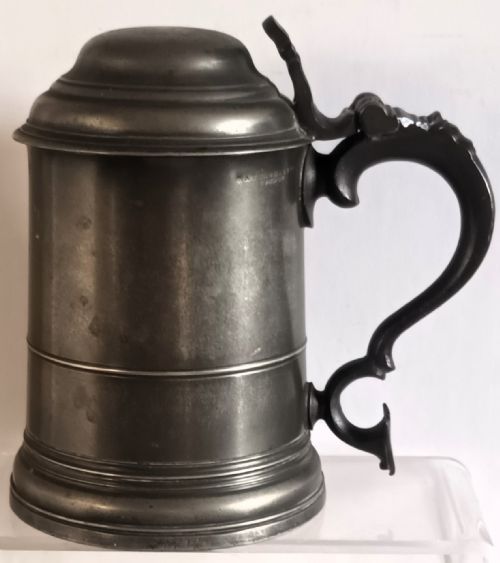


Pewter Lid Beer Mug
A pewter lid beer mug brings substantial historical weight to the table, offering tangible connections to centuries of drinking culture through sturdy metal and clay.
Pewter Lid Beer Mug
When you search for a pewter lid beer mug, you encounter drinkware designed to keep ale and beer secure beneath a hinged metal cover. These vessels take the form of tankards, flagons, and beer steins spanning the eighteenth and nineteenth centuries.
The English examples on this page typically feature heavy metal bodies or salt-glazed stoneware with hinged dome lids. Continental pieces bring tin-glazed earthenware and stoneware into the mix, often decorated with cobalt blue or polychrome painting.
You meet pieces originating from English workshops alongside German variants displaying historicism and baroque styling. The Arts and Crafts movement also leaves its mark through distinct Celtic ornamentation on Tudric metalwork.
Materials and construction
The body of a pewter lid beer mug relies on traditional materials such as stoneware, tin-glazed earthenware, glass, and copper alongside the dominant metal itself. Old Sheffield plate and silver plating also appear on select bodies.
Pewter forms the hinged lids, thumbpieces, and handle mounts, shaped through casting and hammering to seal the vessel securely. Salt-glazed stoneware and tin-glazed pottery provide the robust ceramic containers for the liquid contents.
Makers apply cobalt blue pigments and polychrome glazes directly to the ceramic bodies before firing, while metal components are soldered and fitted by hand.
The thumbpiece exists purely so drinkers could flip the lid open one-handed while holding a hearty ale.
Assessing the craftsmanship
The quality of a pewter lid beer mug rests in the crispness of the casting and the precise fit of the hinged lid against the rim. Heavier gauge metal and balanced proportions signal superior execution by the maker.
Decoration separates standard utility vessels from exceptional examples, whether through finely executed Celtic relief work or vibrant, hand-painted polychrome details on tin-glazed earthenware. Maker marks stamped into the metal add historical documentation that elevates a piece.
Watts and Harton·Archibald Knox for Liberty and Co·Burgum and Catcott of Bristol
The Pewter Lid Beer Mug Glossary
- Tankard
- A tall, cylindrical drinking vessel featuring a single handle and a hinged lid. Most examples in this category are built from pewter, silver plate, or stoneware.
- Westerwald
- A German ceramic region known for producing salt-glazed stoneware vessels adorned with cobalt blue designs. These pieces frequently date to the eighteenth century.
- Old Sheffield Plate
- A composite material made by fusing a thin layer of silver to a thicker copper base. It appears on select lidded tankards from the late eighteenth century.
- Tin-Glazed Earthenware
- Pottery covered with an opaque white glaze containing tin oxide, providing a smooth surface for painted decoration. It is commonly associated with Delft and faience production.
- Thumbpiece
- The small lever attached to the hinged lid of a tankard, allowing the drinker to open the cover with a single thumb movement. Its design often reflects the period of manufacture.
Pewter Lid Beer Mug: Frequently Asked Questions
What is a pewter lid beer mug used for?
These vessels served as drinking containers for beer, ale, and cider in homes, taverns, and ceremonial gatherings. The hinged lid kept insects and debris out of the beverage while retaining heat and carbonation.
Today, they function primarily as display pieces, collections of historic metalwork, or decorative objects for interior settings.
How do I tell an 18th-century piece from a Victorian one?
Eighteenth-century examples often display simpler lines, specific maker hallmarks, and traditional salt-glazed stoneware or plain metal forms. Burgum and Catcott pieces from the seventeen-seventies demonstrate characteristic flat or dome lids of that era.
Victorian and Edwardian items frequently incorporate heavier ornamentation, such as German historicism styles or Arts and Crafts Celtic motifs. The introduction of silver plating and different manufacturing techniques also points to nineteenth-century production.
Are these mugs safe for drinking today?
Many older pewter items contained lead, and historical glazes can include various minerals, making modern consumption inadvisable. Historic vessels are best preserved as collector pieces rather than daily tableware.
Displaying them on shelves or in cabinets protects the fragile metal and ceramic surfaces from accidental damage.
What is Westerwald stoneware?
Westerwald stoneware originates from a German ceramic manufacturing region known for producing salt-glazed vessels. These items typically feature grey bodies decorated with incised patterns and cobalt blue highlights.
Eighteenth-century Westerwald tankards with hinged lids represent a distinct tradition separate from English pewter forms.