



17th Century Writing Desk
A 17th century writing desk provides a tangible link to early domestic literacy, offering practical surface space housed within period cabinetry.
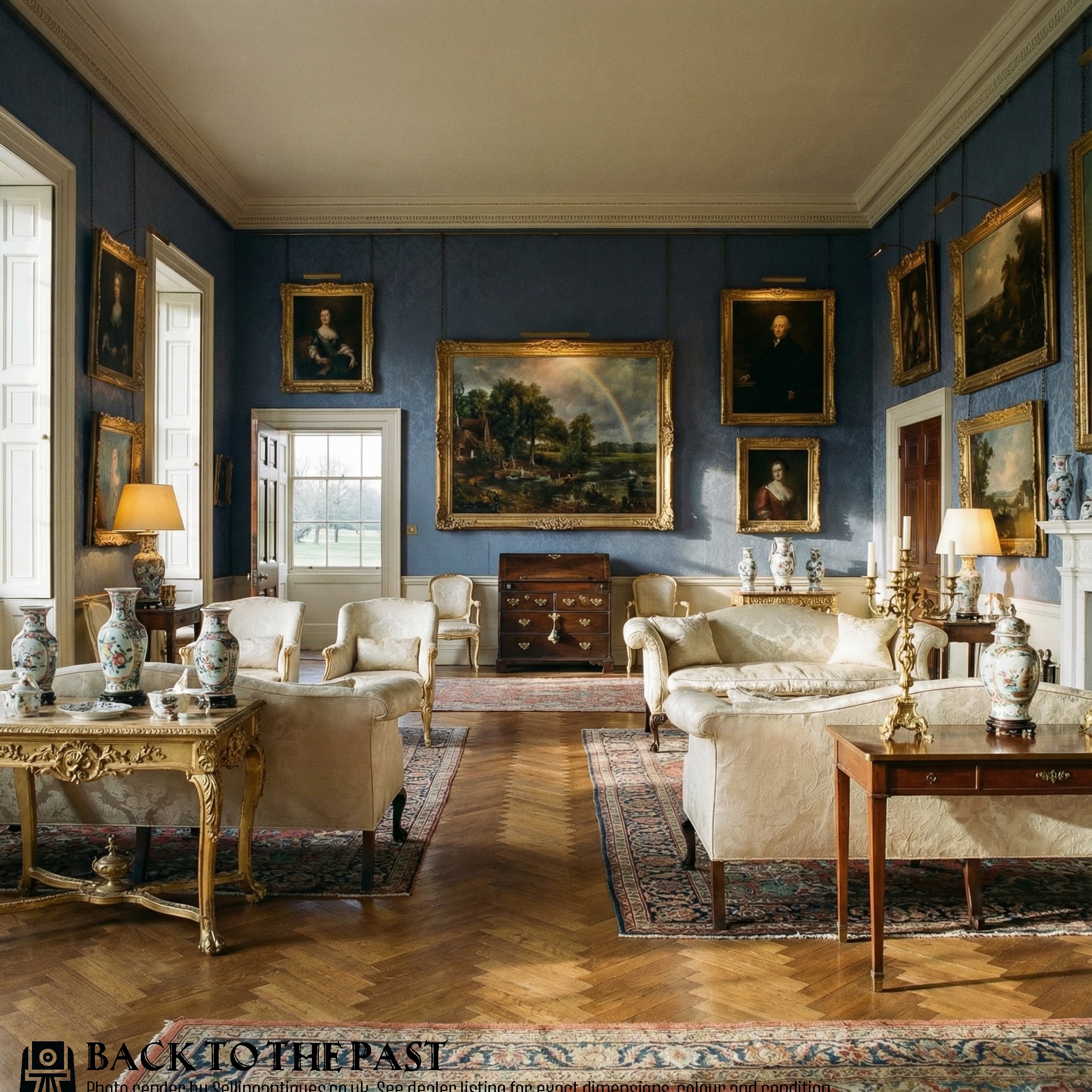
17th Century Writing Desk
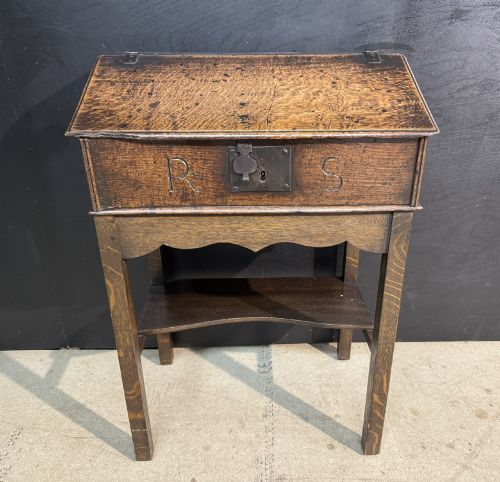
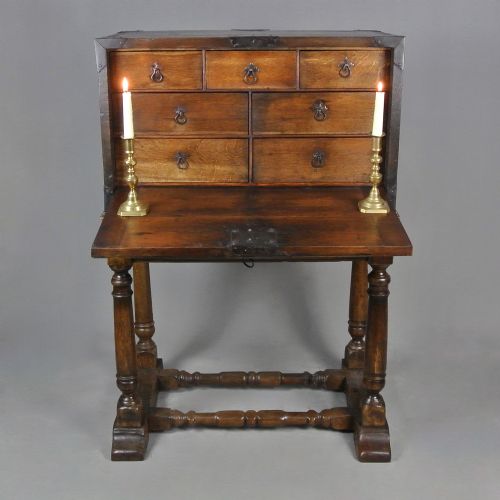
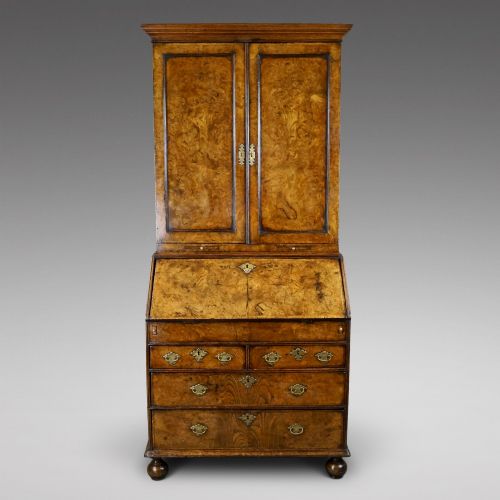
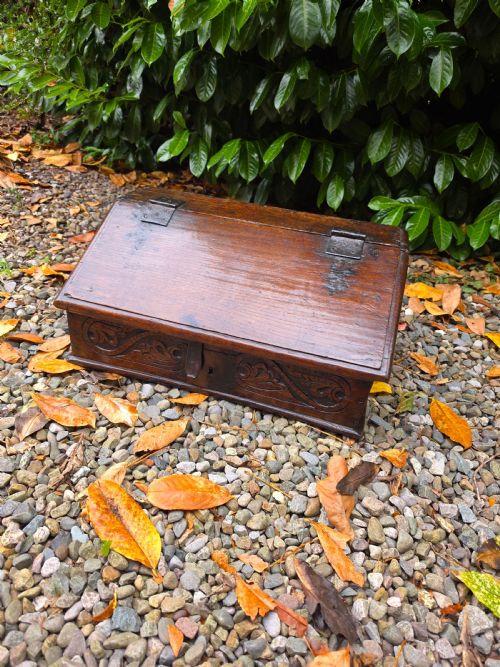
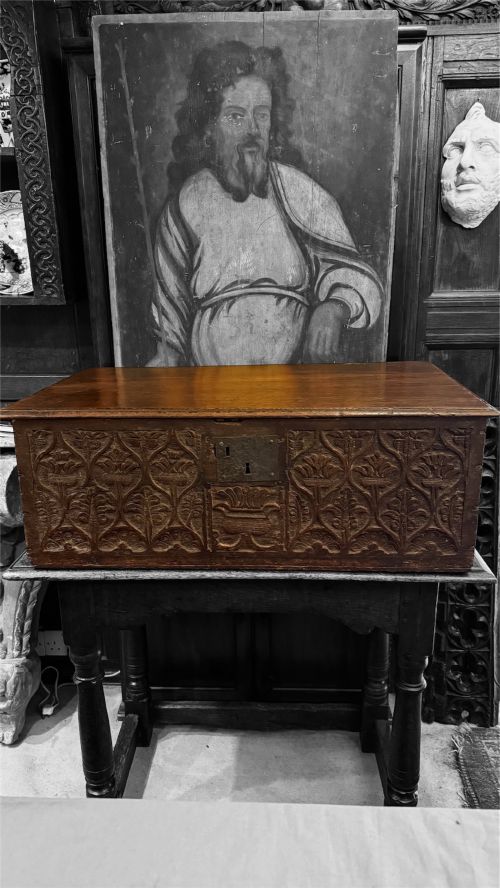
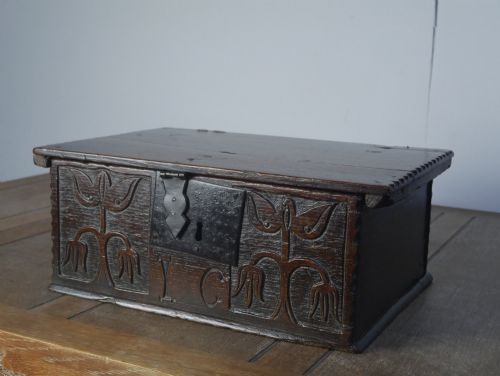
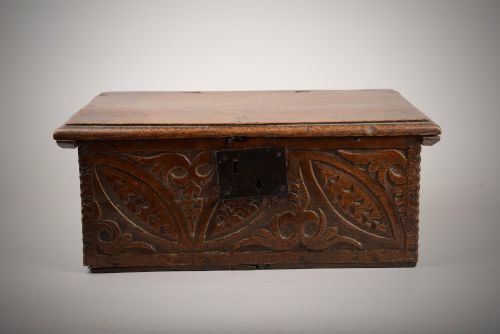
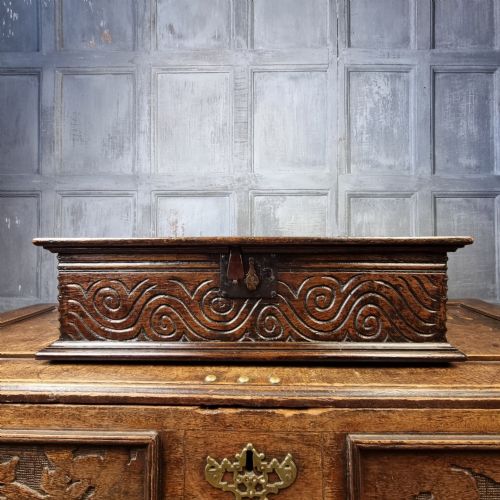
A 17th century writing desk typically manifests in earlier iterations as compact desk boxes, Bible boxes, and slant-front writing slopes designed to sit upon existing tables. These portable repositories evolved into more permanent forms such as bureaux, escritoires, and bureau bookcases as the century progressed and the need for dedicated writing storage grew.
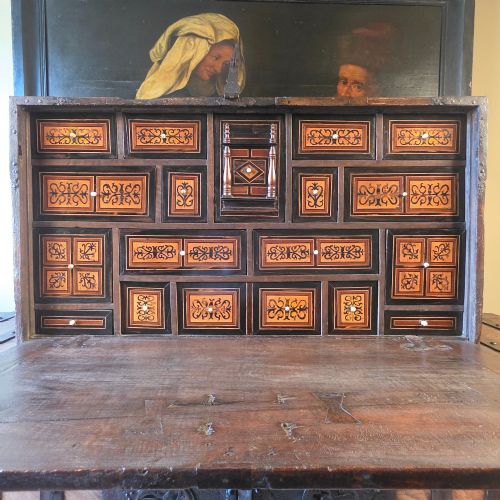
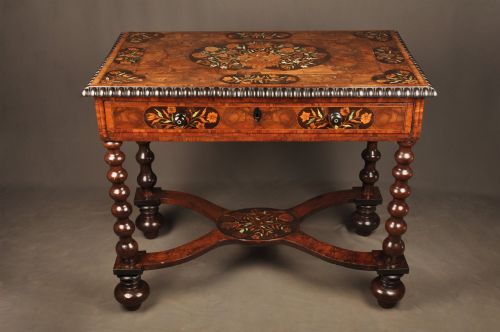
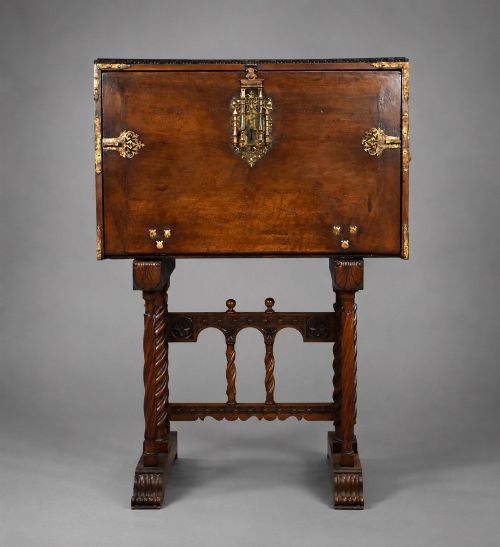
The pieces appearing on this page span robust English vernacular oak examples alongside more ornate walnut, burr walnut, and marquetry pieces influenced by William and Mary styles. Continental variations, including Spanish walnut vargueno cabinets and bargueño cabinets, also surface, bringing distinct regional construction methods and decorative schemes to the selection.
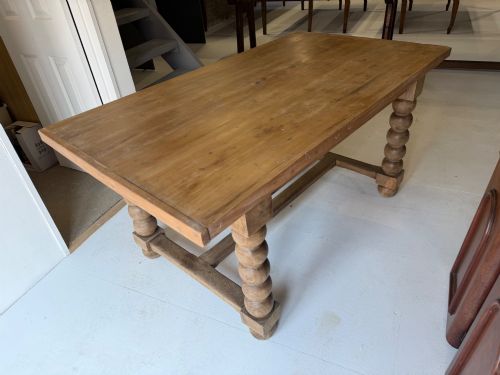
Buyers are most likely to encounter sturdy oak bible boxes or slant-front bureaux, reflecting the domestic and administrative requirements of the period. Alongside these, side tables and centre tables equipped with drawers offer related surfaces associated with contemporary writing habits.
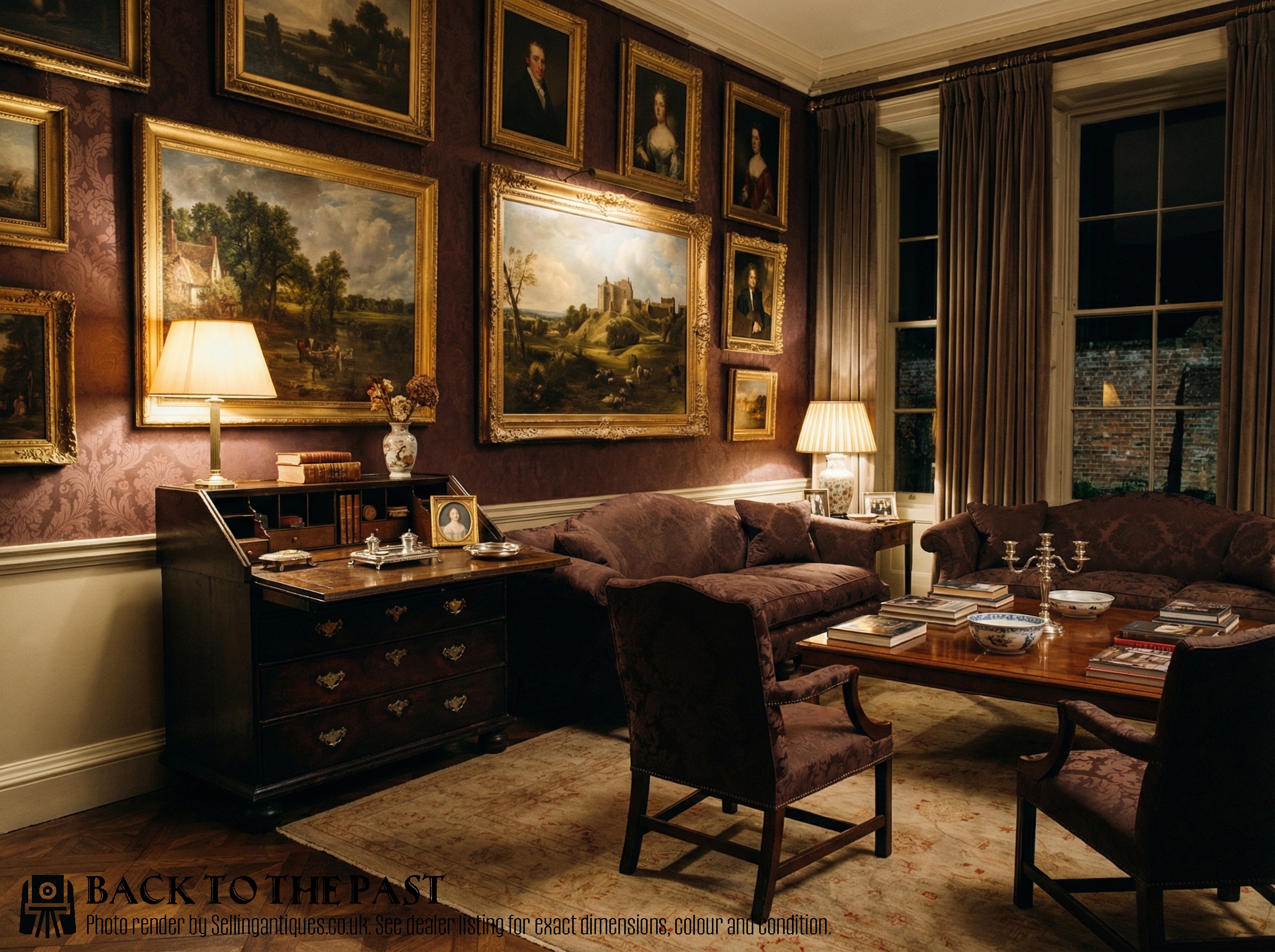
Materials and Technique
Makers relied heavily on solid timber construction, employing native oak for English vernacular pieces and rich walnut, burr walnut, and mulberry for high-status cabinet work. Surfaces frequently feature decorative techniques such as marquetry, parquetry, and oyster veneering to create complex geometric patterns across the exterior.
Secret compartments hidden within internal drawers allowed writers to safeguard private letters and hidden coins.
Evaluating Construction
Quality rests upon the integrity of the timber selection and the precision of the cabinet work, particularly in veneered and marquetry surfaces where grain matching matters. The survival of original internal fittings, such as secret drawers, pigeonholes, and writing surfaces, elevates the integrity of a bureau or desk box.
The crispness of hand-carved details, whether geometric panels on an oak box or floral marquetry on a walnut escritoire, distinguishes standard workshop production from finer examples. Structural coherence, including the original relationship between a cabinet and its supporting stand or base, governs the standing of the piece.
Coxed and Woster
The 17th Century Writing Desk Glossary
- Bible Box
- A small wooden chest with a sloping or flat lid, originally built to store a family Bible or important documents. These boxes often sat upon larger tables before dedicated desks became common.
- Escritoire
- A tall cabinet featuring a fall-front writing flap that conceals an arrangement of small drawers and pigeonholes. This form gained popularity during the William and Mary period.
- Vargueno
- A traditional Spanish cabinet featuring a drop-front that opens to reveal numerous small drawers and compartments, frequently mounted upon a decorative stand. They showcase elaborate internal architectural detailing.
- Slant Front
- An angled lid hinged at the top or bottom that pulls down or lifts to provide a writing surface. It conceals the internal compartments of a bureau or desk box.
- Oyster Veneer
- Slices cut transversely from small branches or roots to produce circular or oval patterns resembling oyster shells. This technique decorated high-end walnut furniture.
17th Century Writing Desk: Frequently Asked Questions
What is a 17th century writing desk?
A 17th century writing desk encompasses portable desk boxes, slant-front Bible boxes, and early bureaux designed for storing writing materials and documents.
These pieces reflect the furniture styles of the Jacobean and William and Mary periods, constructed primarily in oak or walnut.
How were these desks used?
Owners used these pieces to store paper, ink, and correspondence while providing a firm surface for handwriting.
Portable boxes sat on tables for use, while later standing bureaux offered integrated storage for papers and ledgers.
How do I tell periods apart?
Earlier pieces typically utilise solid oak with simple mouldings, geometric carvings, and iron hardware characteristic of the Jacobean era.
Later pieces often feature walnut timbers, veneering, marquetry, and brass hardware influenced by William and Mary designs.
How do I live with one?
These pieces function well as compact writing surfaces or display consoles in studies and living spaces.
Their historical materials benefit from stable indoor humidity away from direct heat sources to preserve the wood and finishes.