





17th Century Style Lamp
These 17th century style lamps bring heavy carved timber, twist turnings and dark patinated metals to a room.
17th Century Style Lamp
A 17th century style lamp draws on the heavy timber and cast metal traditions of the Jacobean, Charles II and Baroque periods. Buyers search for this phrase to find lighting and furniture adapted for modern electric use from older aesthetics.
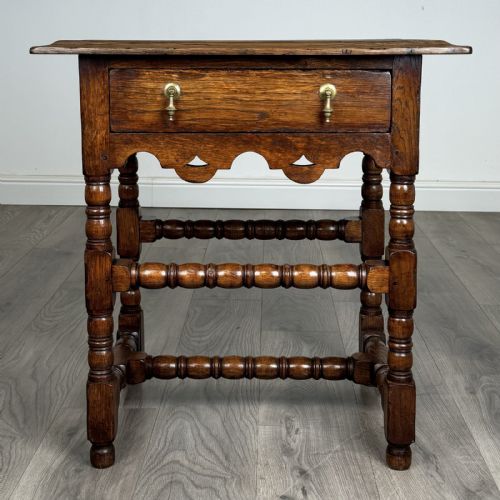
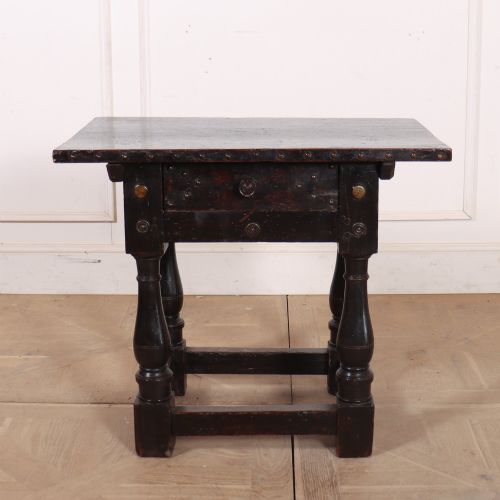
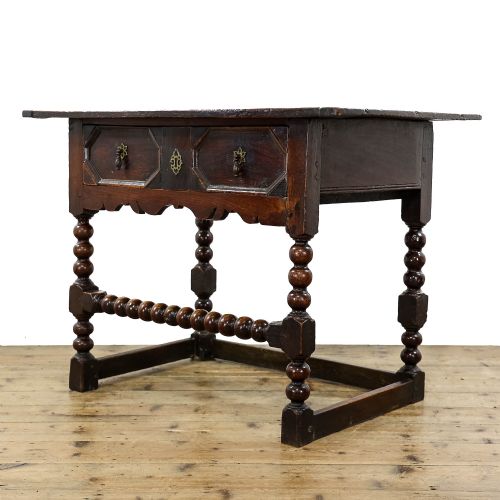
The selections range from genuine period oak and walnut tables wired for light to revival pieces from the eighteenth, nineteenth and early twentieth centuries. Side tables and standard floor lamps dominate the inventory.
Italian walnut and English oak pieces reflect the dark, rich interiors characteristic of seventeenth century design. Revival pieces from 1900 and 1920 sit alongside items dating back to seventeen-fifty.
How they were made
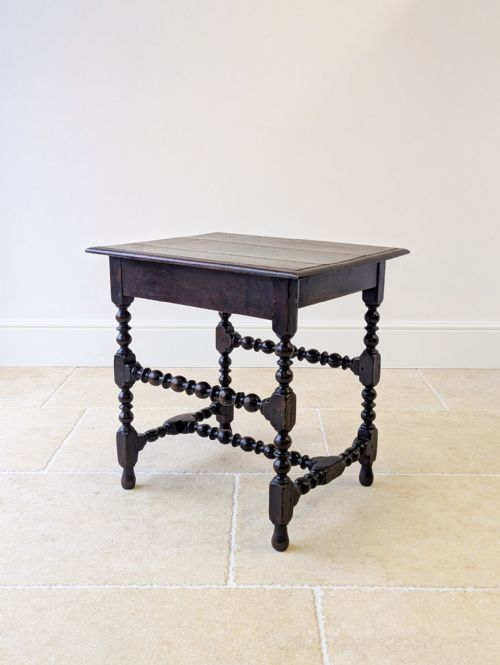
Carpenters utilised solid oak, walnut, yew wood and heavy iron, shaping timber with hand tools to build sturdy side tables and lamp bases. Bobbin-turning and elaborate carving defined the woodwork of the era.
Metalworkers cast brass and silver plating for ecclesiastical and standard floor lamps, while gilders applied gold leaf and red paint to carved wood. These traditional methods created durable frames designed to support heavy weights.
Church floor lamps intended for silent chapels now illuminate living rooms.
What varies in quality
The calibre of a piece rests upon the crispness of the hand-carved detail and the depth of the timber grain. Finer examples show careful joinery and authentic patination accumulated over centuries.
Subtlety in the bobbin-turnings and the weight of the cast brass distinguish superior items from simpler utilitarian furniture. Material choice dictates the overall heft and stability of the table or lamp.
The 17th Century Style Lamp Glossary
- Bobbin-turned
- A style of woodturning featuring a series of rounded, spool-like shapes carved along the length of a table leg or support. This decorative technique appears frequently on seventeenth century oak furniture.
- Jacobean Revival
- A nineteenth and early twentieth century design movement that copied the dark woods and heavy proportions of the early seventeenth century. It explains why many solid oak tables date from later eras.
- Giltwood
- Timber coated with a thin layer of gold leaf, often applied over a base of gesso. It provides a bright, reflective finish seen on decorative Italian floor lamps.
- Ecclesiastical
- Relating to the Christian church, describing items originally made for use in religious buildings. These heavy brass floor lamps often find new life in domestic spaces.
17th Century Style Lamp: Frequently Asked Questions
Are these lamps actually from the seventeenth century?
Most pieces carry dates from the eighteenth, nineteenth and early twentieth centuries, echoing seventeenth century styles rather than originating in that era.
True period items appear alongside later revivals, so checking the listed date for each item remains essential.
What woods were used for these tables?
English oak, Italian walnut and yew wood form the primary timber choices for these dark, sturdy tables and lamp bases.
Craftsters selected these hard timbers for their durability and rich grain patterns.
What is bobbin turning?
Bobbin turning is a lathe-working method that creates repeating spherical shapes resembling spools of thread along a furniture leg.
This technique gives seventeenth century oak tables their distinctive textured appearance.