


17th Century Seating
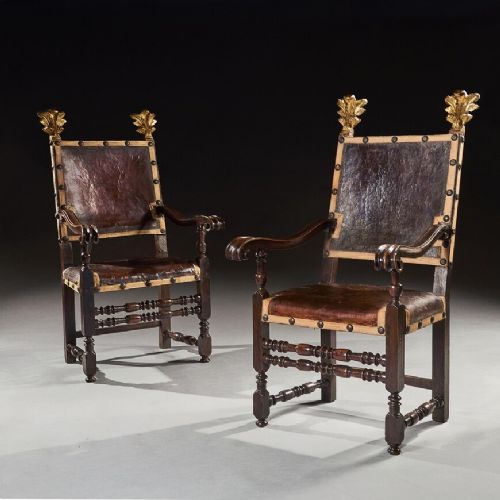
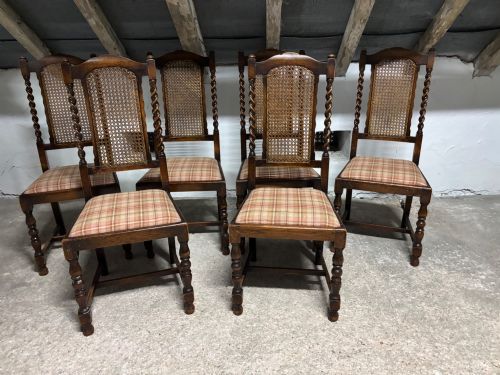
17th century seating comprises sturdy oak wainscot chairs, cane dining seats, and carved walnut armchairs built for durability and status.
17th Century Seating
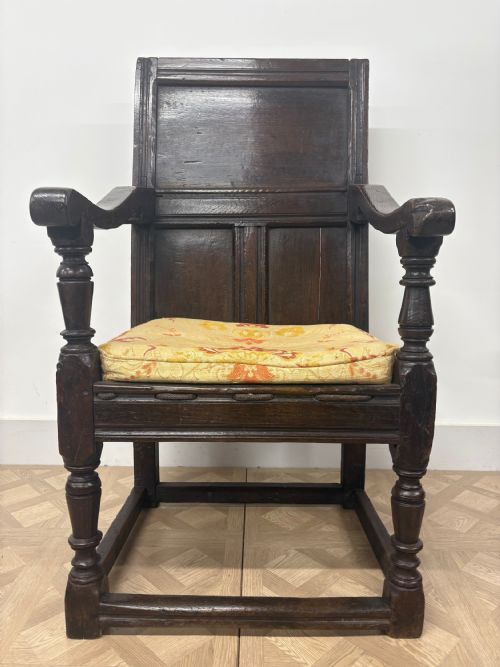
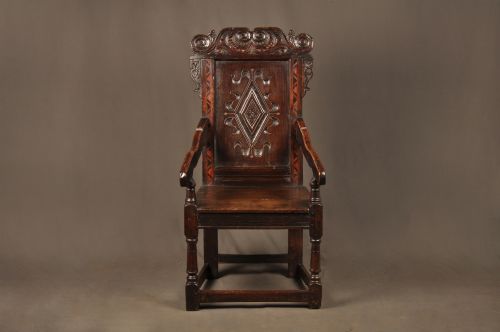
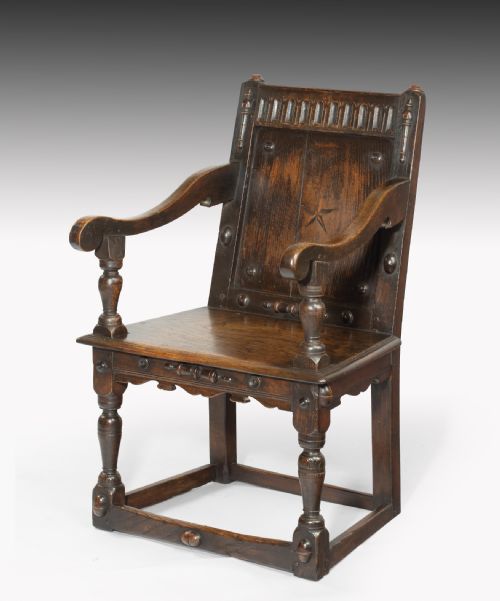
The most common survival from this period is the heavy oak chair, often featuring high panelled backs, solid wooden seats, and turned supports. Alongside these sturdy domestic pieces, buyers frequently meet later revival interpretations dating to the nineteenth and early twentieth centuries that emulate the earlier vernacular styles.
Materials and construction methods
Makers relied heavily on native timber, predominantly utilising solid oak, walnut, and fruitwood, joined together using traditional mortise and tenon joints secured with wooden pegs. Carving was executed by hand using gouges and chisels to produce geometric strapwork, scrolling foliage, and heraldic motifs directly onto the structural members.
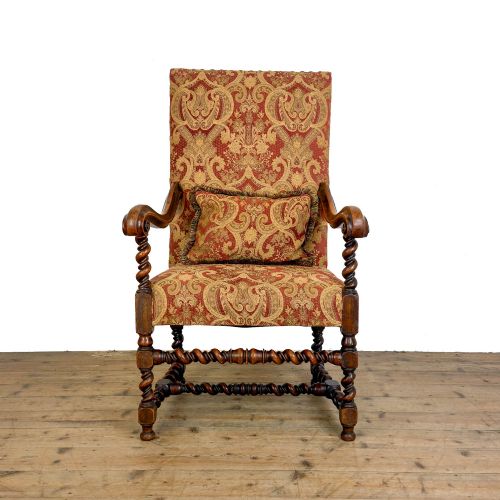
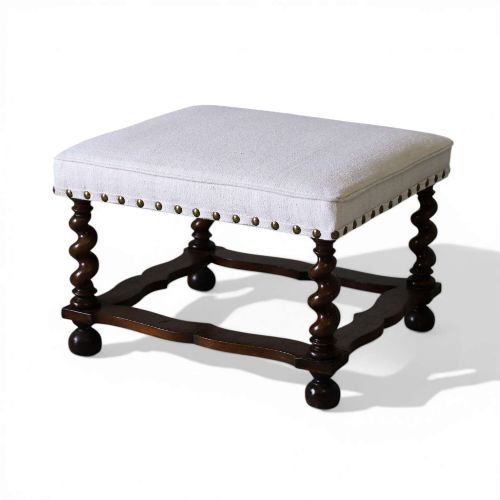
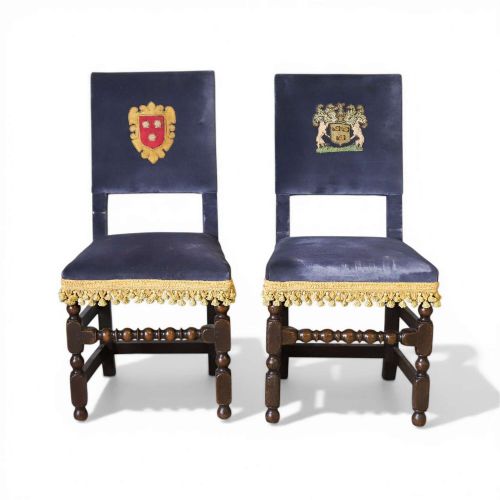
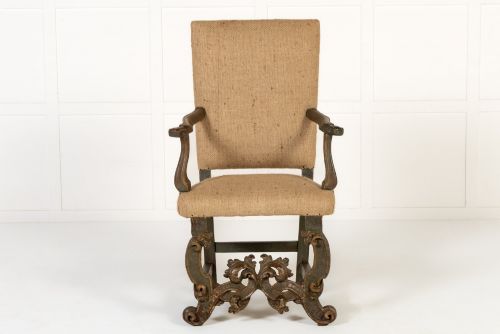
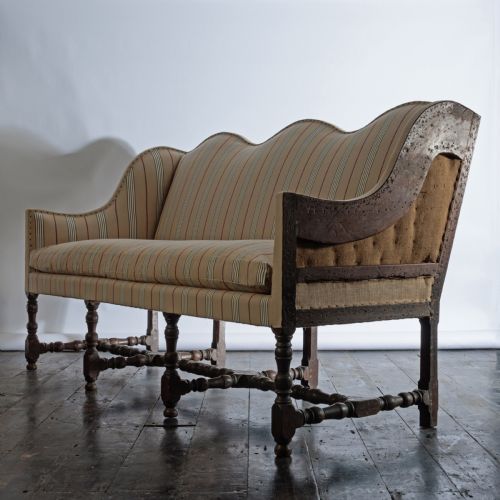
Flexibility and comfort in seating were introduced through woven cane panels set into chair backs, as well as upholstered elements utilising leather, fabric, and velvet secured with brass tacks. Structural reinforcement was achieved through heavy under-framing, incorporating barley-sugar turned legs and low stretchers designed to keep the joints rigid.
Materials recorded across the inventory include solid oak, walnut, fruitwood, elm, and exotic ebony paired with cane and leather.
Distinctions in quality and survival
Quality in these pieces is dictated by the integrity of the original timber and the crispness of the hand-carved ornamentation, where deeper relief and confident tool marks distinguish superior regional workshops from plainer production. The proportion of original material remaining against later repairs or replaced stretchers fundamentally dictates the standing of a piece.
Sophistication of turning and joinery defines the upper tier of the range, seen in complex barley-sugar supports and oyster-veneer accents rather than simple pegged construction. Pieces retaining their original finish, surface patination, and uncompromised structural frames command greater appreciation than heavily restored examples.
The 17th Century Seating Glossary
- Wainscot chair
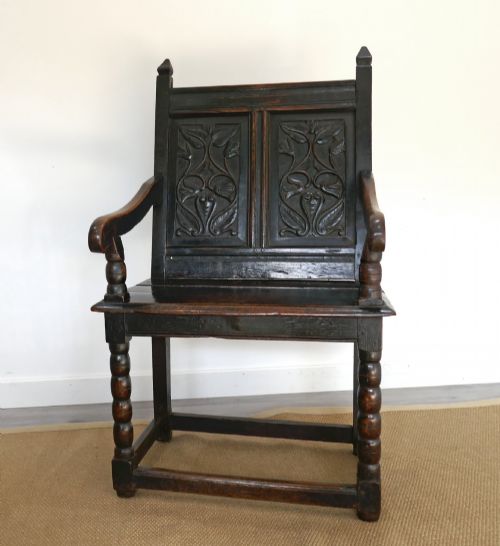
- A heavy wooden armchair constructed with panelled backs and solid seats, typical of seventeenth-century domestic interiors. These pieces often display carved ornamentation on the top rail.
- Joint stool
- A sturdy wooden stool built with mortise and tenon joints rather than turned legs inserted into a seat block. They were utilised for general seating or as small tables.
- Settle
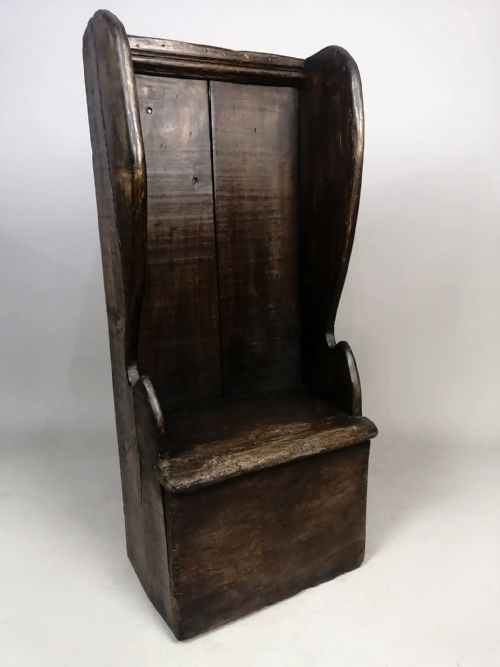
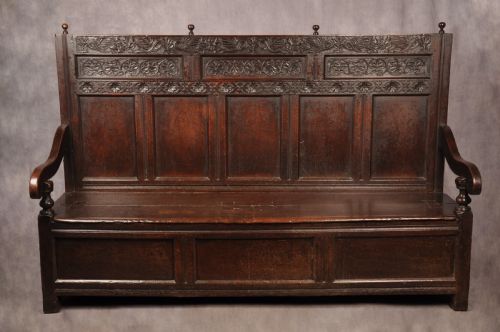
- A high-backed wooden bench featuring solid arms and a storage box built beneath the seat. They were positioned near hearths to block draughts in large rooms.
- Barley-sugar twist
- A spiral turning technique applied to table legs and chair supports during the mid to late seventeenth century. This decorative lathe work added vertical movement to heavy frames.
- Cane
- Strips of rattan woven into an open mesh pattern to form lightweight backrests and seats. This technique gained popularity following continental trade expansion.
17th Century Seating: Frequently Asked Questions
How do I spot a true seventeenth century chair?
Authentic pieces display hand-carved details, pegged mortise and tenon joints, and native timbers showing deep natural patination from centuries of use. Tool marks and structural wear patterns should align with the period of manufacture rather than later replication.
Revival pieces made in the nineteenth or twentieth centuries often utilise machine-cut elements, lighter secondary woods, and standardised turning that lacks the irregular hand-finished charm of genuine early examples.
Were these chairs comfortable for daily use?
Original seventeenth century seating was designed primarily for posture, status, and durability rather than lounging, resulting in upright wooden backs and firm seats. Many examples relied on loose cushions or upholstered inserts covered in leather or velvet to provide adequate padding.
Over centuries of survival, surviving cushions have invariably been replaced, while the rigid wooden frames require careful placement to protect historic joints from modern floor levels.
What is a wainscot chair?
A wainscot chair is a heavy, panelled oak armchair that represents one of the most prestigious forms of domestic seating from the seventeenth century. They take their name from fine imported oak panels previously used in wall panelling.
These chairs feature high backs, solid wooden seats, and broad armrests, often embellished with carved strapwork, scrolling foliage, and regional heraldic motifs.
How should I care for antique oak seating?
Preserving historic wood requires maintaining stable indoor humidity levels away from direct heat sources and sunlight to prevent the timber from splitting or warping. Dusting with a soft dry cloth is sufficient to protect the aged surface without stripping the natural wax patination.
Applied feeds or modern polishes should be avoided unless recommended by a conservator, as they can build up a residue and darken the original seventeenth century finish.