

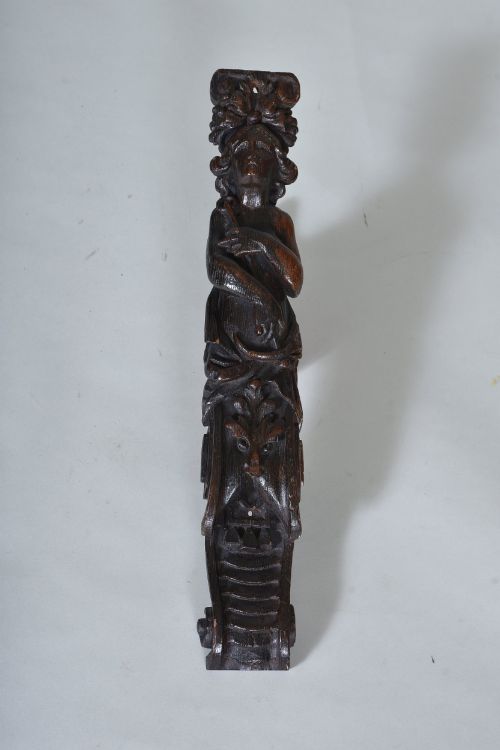
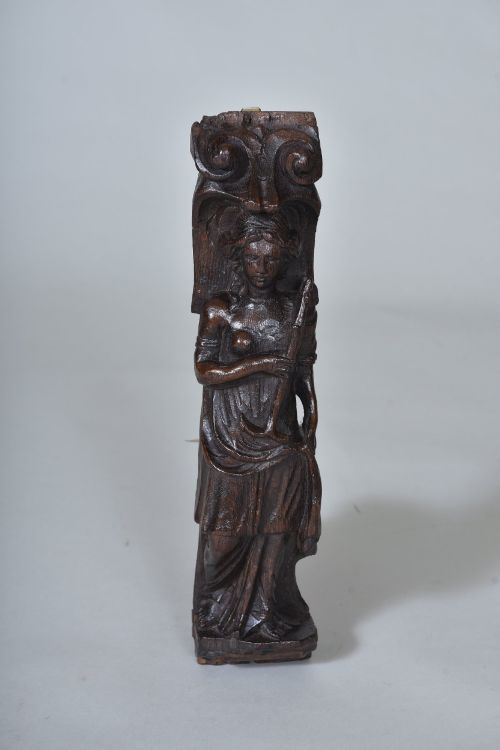
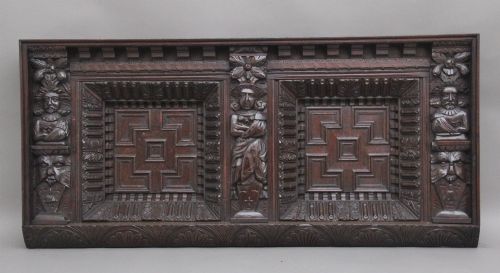


17th Century Oak Caryatid
These carved 17th century oak caryatid figures bring sculptural architecture and rich period character into any interior.
17th Century Oak Caryatid
A 17th century oak caryatid is a sculpted human or figurative architectural support, most frequently encountered in this selection as wood carvings, architectural salvage, wall reliefs, pilasters, or integrated into panels and side cabinets. These pieces originate predominantly from the seventeenth century, with occasional Victorian interpretations and Flemish Baroque or Jacobean stylistic influences.
The subjects depicted in these carvings range from single female figures and ladies with folded arms to cherubs, angels, saints, and mythological representations complete with fishtails or bagpipes. Buyers often find single figures as well as pairs, mounted on panels or configured as decorative pilasters and architectural fragments.
Originating from British and continental workshops, these timber sculptures embody the robust aesthetic of the period. They serve both structural and decorative roles, shifting between standalone wall art and components of larger antique furnishings.
Assessing quality in antique caryatids
The historical integrity of the timber also defines the tier of the piece, distinguishing untouched seventeenth-century woodwork from later Victorian revivals or heavily restored architectural salvage. Complete figures and matched pairs command distinct interest compared to isolated fragments.
17th Century Oak Caryatid Retail Price Guide 2026
Typical asking prices for 17th century oak caryatid among the pieces listed under this phrase on Sellingantiques today, from the lower quarter to the upper quarter. They describe what is for sale here now, not the wider market.
Object types range from single architectural carvings and wall reliefs to side cabinets and table lamps.
The 17th Century Oak Caryatid Glossary
- Caryatid
- A sculpted female figure serving as an architectural support in place of a column or pilaster. This term also extends in period contexts to similar male figures and herms.
- Jacobean
- The style of English architecture and decorative arts prevalent during the early seventeenth century, marked by heavy oak construction and geometric panels. It heavily influences many carvings from this era.
- Flemish Baroque
- An ornate artistic style originating in Flanders during the seventeenth century, characterised by dramatic movement, rich ornamentation, and exuberant figurative carving. Pieces in this style often display high relief and complex drapery.
- Overmantle
- A decorative structure or panel positioned above a fireplace opening. Surviving examples from the seventeenth century occasionally incorporate carved caryatids into their architectural framework.
- Pilaster
- A rectangular column engaged in or applied to a wall surface, functioning as a decorative element. Caryatids frequently form the upper or central portion of these architectural supports.
17th Century Oak Caryatid: Frequently Asked Questions
How were caryatids used in seventeenth-century buildings?
These figures functioned as structural and decorative supports within grand interiors, appearing on chimney pieces, doorways, and large cabinetry. They bridged the gap between architecture and sculpture.
Craftsmen integrated them into oak overmantles, wall panels, and side cabinets to elevate the status of the room and demonstrate fine craftsmanship.
Can I mount an antique caryatid on a wall?
Many surviving examples function successfully as wall reliefs or architectural salvage. Proper backing and secure fixings ensure safe display for heavier timber pieces.
Consulting a professional framer or restorer provides the safest method for mounting carved wood panels and pilasters.
How do I tell seventeenth-century oak from Victorian revivals?
Seventeenth-century oak displays natural oxidation, dry timber density, and tool marks consistent with period hand-carving techniques. Wear patterns develop organically over centuries of handling.
Victorian copies in the Jacobean style often utilise denser patination techniques and mechanical saw marks that reveal a later nineteenth-century origin.