


17th Century Oak Bench
These robust pieces deliver solid utility and enduring craftsmanship, making a 17th century oak bench a steadfast anchor for any interior.
17th Century Oak Bench
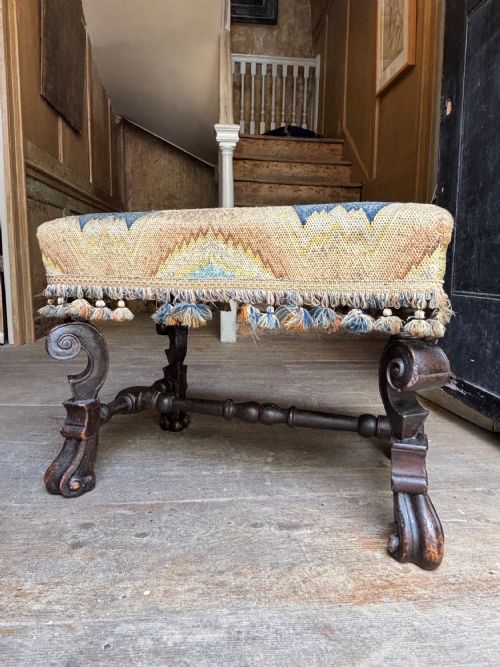
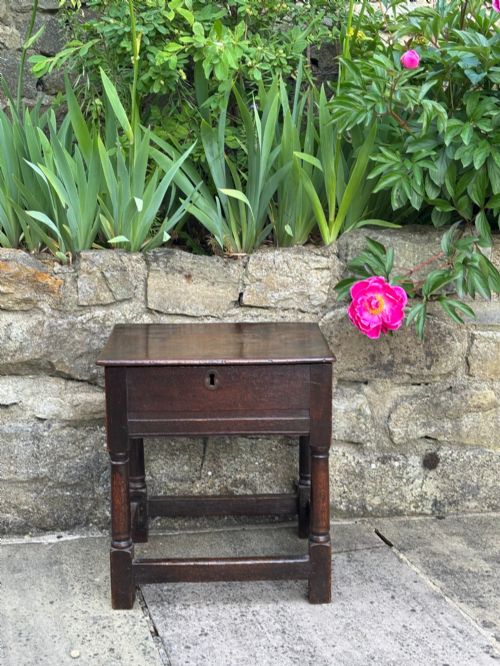
A 17th century oak bench encompasses functional seating forms ranging from joined benches and joint stools to high-back settles and chair-tables. These sturdy items originate predominantly from English workshops, reflecting the domestic needs of their era through practical design.
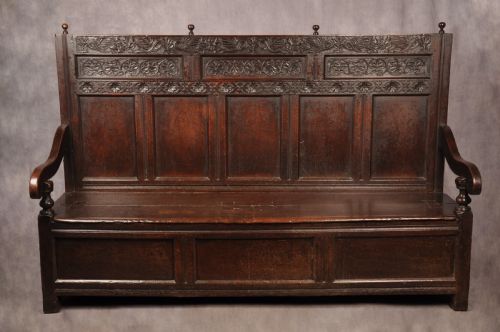
The selections available here frequently include box settles with storage compartments, monks benches that convert into tables, and long joined forms intended for halls or kitchens. Alongside authentic period examples, revival pieces from later centuries appear, mirroring the enduring aesthetic of the original eras.
How they were made
Makers utilised solid oak as the primary timber, often supplemented by fruitwood and walnut in specific elements. Joinery relied on traditional pegged mortise and tenon construction, creating rigid frames designed to endure heavy daily use.
Surface ornamentation involved hand carving, panel moulding, and occasional turning on legs and stretchers. Iron hardware, cane, and textile elements such as tapestry occasionally provided functional reinforcement or upholstered comfort.
Some settles doubled as indoor windbreaks, featuring high panelled backs to keep medieval drafts away from the family shins.
What varies in quality
The standard of a piece depends heavily on the integrity of its original timber and the preservation of its primary joinery. Retaining original pegging and minimal timber replacement elevates an item above examples with extensive later repairs.
Carving depth, sharpness of detail, and surface patination distinguish finer examples. Pieces displaying crisp, period-appropriate ornamentation demonstrate superior craftsmanship compared to simpler or heavily restored variants.
The 17th Century Oak Bench Glossary
- Joint stool
- A sturdy wooden stool constructed with tight mortise and tenon joints rather than turned legs driven into a seat. These functional items provided movable seating in early households.
- Settle
- A high-backed wooden bench featuring solid sides and a storage box or enclosed base to block drafts. They stood near hearths in 17th century homes.
- Jacobean
- The style prevalent during the reign of James I, characterised by sturdy proportions and geometric carved decoration. Furniture from this period exhibits solid construction and formal symmetry.
- Carolean
- The period spanning the reign of Charles II, associated with baroque influences and more exuberant carved ornamentation. Pieces from this era often display enriched surface detail and turned supports.
- Wainscot
- A term describing sturdy panelled construction, often applied to chairs and benches with solid wooden backs. This method utilised framed panelling derived from wall construction techniques.
17th Century Oak Bench: Frequently Asked Questions
What is a 17th century oak bench?
A 17th century oak bench is a solid wood seating item built for daily domestic life in early homes. These pieces range from simple joined forms to high-back settles with integrated storage.
Craftsmen built them to withstand heavy use in halls, kitchens, and beside hearths. Their enduring construction allows them to function practically in modern interiors today.
How do I tell a period piece from a revival piece?
Distinguishing period items from later revival examples involves examining timber maturity, construction methods, and wear patterns. Seventeenth-century originals display hand-cut joinery marks and centuries of natural patination.
Revival pieces, such as those from the nineteenth century, often utilise machine-sawn timber or show different distressing techniques. Comparing joint construction and surface ageing clarifies the date of manufacture.
How were these benches used originally?
These benches served primary seating roles in the main rooms of early houses. High-back settles protected occupants from cold drafts near open fires.
Many designs incorporated storage boxes beneath the seat or converted into tables, maximising utility in compact spaces. Their multi-functional nature suited the demands of seventeenth-century domestic routines.
How do I care for an oak bench?
Caring for historic oak involves maintaining stable humidity levels and avoiding direct heat sources. Sudden temperature shifts can cause the timber to split or joints to loosen.
Applying occasional appropriate wax preserves the surface sheen without sealing moisture into the wood. Gentle dusting maintains the finish accumulated over centuries.