



17th Century Delft Pottery
These 17th century delft pottery pieces bring tangible domestic history to a room through tin-glazed earthenware shaped by Dutch and English potters.
17th Century Delft Pottery
Buyers seeking 17th century delft pottery encounter tin-glazed earthenware forms ranging from chargers and vases to posset pots and tiles. The pieces span Dutch and English origins, capturing the decorative output of the seventeenth century alongside later nineteenth-century revivals.
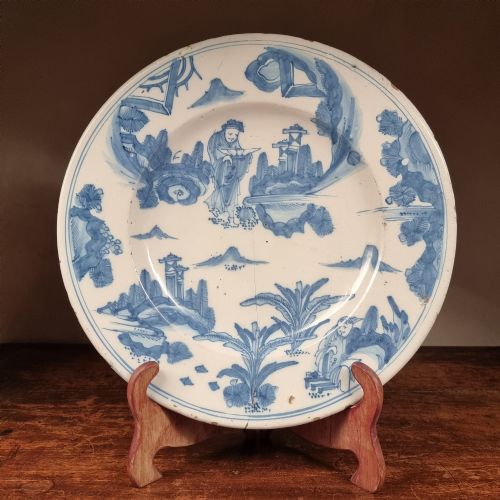
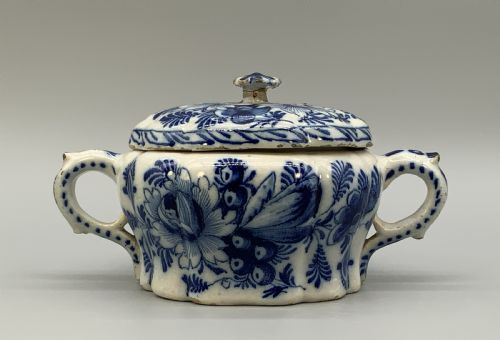
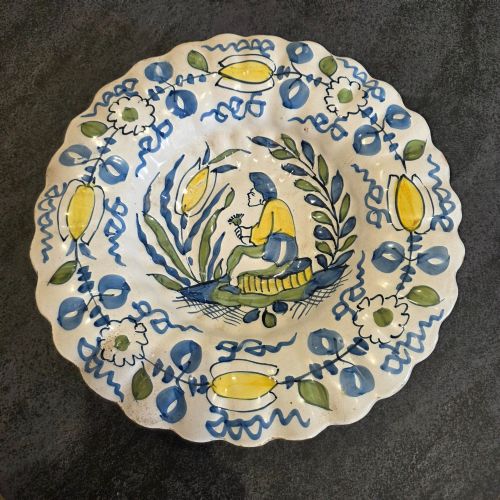
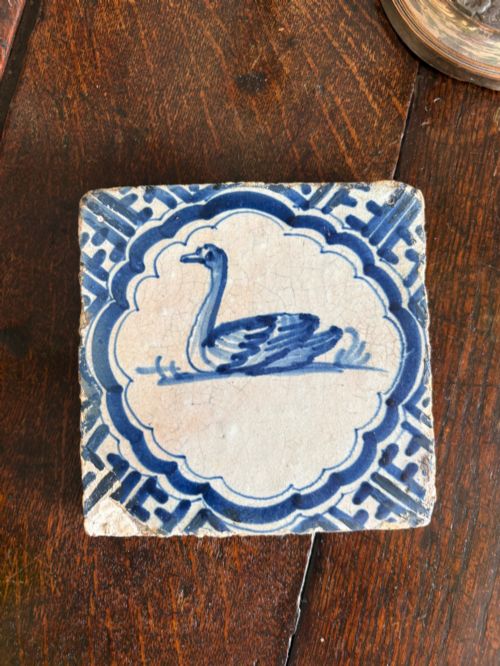
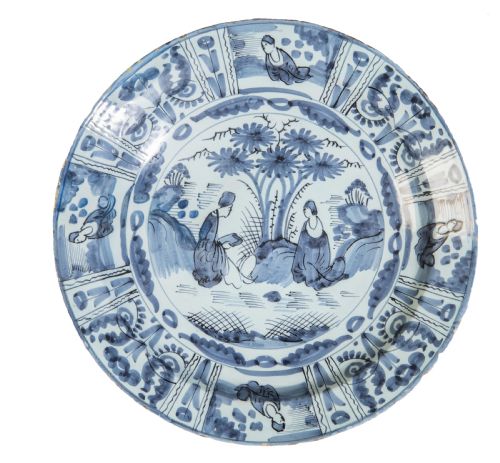
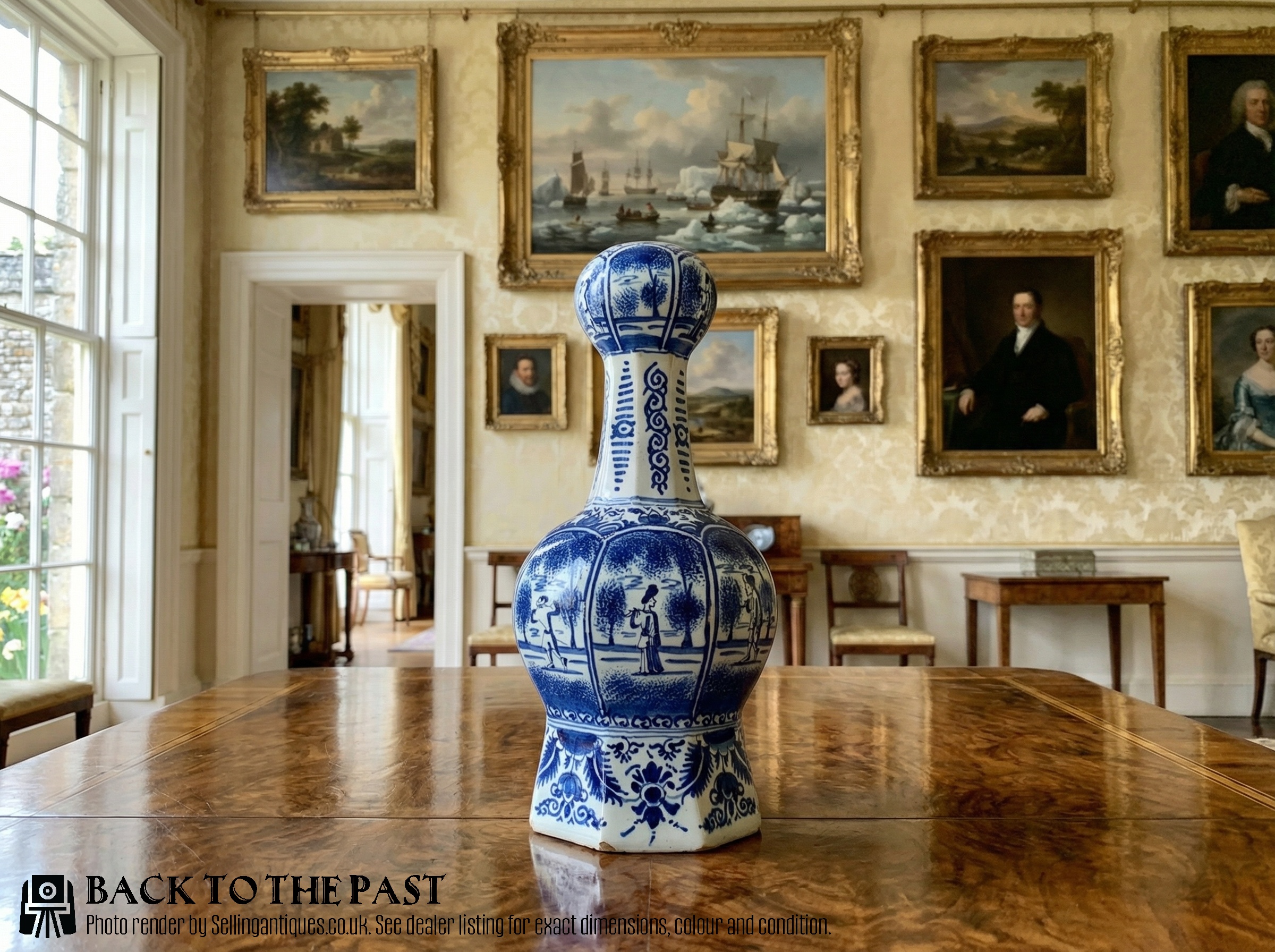
The selection on this page centres on chargers, lobed dishes, and blue and white or polychrome vases featuring floral and Chinoiserie motifs. Objects such as kraak plates and pictorial tiles demonstrate the breadth of domestic ceramics produced during this period.
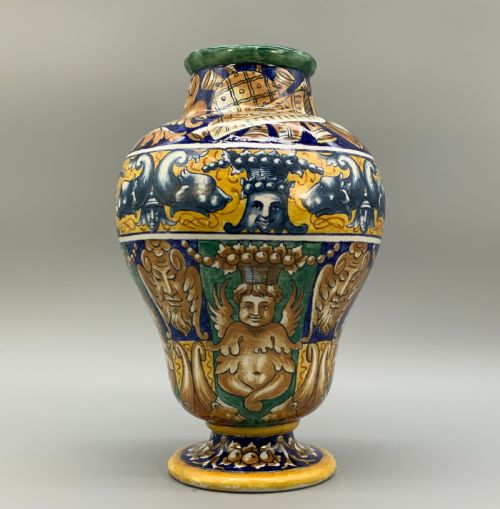
Collectors most frequently meet examples finished in cobalt pigment on tin glaze, alongside polychrome decorations and Renaissance revival interpretations. These earthenware items survive as decorative plates, jugs, pitchers, and gourde vases from the period.
What Varies in Quality
Quality rests in the crispness of the hand-painted cobalt pigment against the white tin glaze, distinguishing confident brushwork from hesitant execution. The complexity of the Chinoiserie or floral motifs further separates standard domestic wares from ambitious chargers and vases.
The survival of the original earthenware body and tin glaze surface dictates the visual integrity of each piece. Purity of form in lobed dishes, chargers, and vessels demonstrates the potter's skill during the shaping process.
Listings feature tin-glazed earthenware objects spanning the 17th century alongside 19th-century Renaissance revival pieces.
Louis Victor
The 17th Century Delft Pottery Glossary
- Tin-Glazed Earthenware
- Pottery fired from clay and coated with an opaque white glaze containing tin oxide. This technique provides the smooth canvas necessary for painted decoration.
- Cobalt Pigment
- A blue metallic colourant used extensively under the glaze to paint intricate scenes and patterns. It remains stable at high ceramic firing temperatures.
- Faience
- A European term for tin-glazed earthenware, particularly wares produced in France, Italy, and other continental centres. The style parallels developments in Dutch delftware.
- Chinoiserie
- European decorative style reflecting Chinese artistic influences, popular on ceramics during the seventeenth century. Painters adapted these motifs onto chargers, vases, and plates.
- Posset Pot
- A two-handled vessel used for serving a traditional hot drink made of milk curdled with wine or ale. These pots often feature spout attachments and detailed floral painting.
- Charger
- A large decorative plate intended for display on walls or sideboards rather than dining use. Potters often painted these large surfaces with pictorial or heraldic designs.
17th Century Delft Pottery: Frequently Asked Questions
What is 17th century delft pottery?
It is tin-glazed earthenware produced in workshops across the Netherlands and England during the seventeenth century. Potters utilised white tin glazes decorated with cobalt blue or polychrome pigments.
The resulting objects include chargers, vases, tiles, and posset pots that reflect domestic use and decorative arts of the period.
How were these ceramics used?
Many large chargers and plates served as wall decorations or sideboard displays in prosperous seventeenth-century homes. Vessels like posset pots and jugs functioned during communal dining and drinking rituals.
Smaller items such as painted tiles were integrated directly into interior walls and fireplace surrounds.
How do I live with antique delftware?
Display these earthenware pieces away from direct sunlight and high moisture areas to protect the historic tin glaze. Support chargers securely on stable plate stands if placed on flat surfaces.
Gentle dusting with a dry cloth is sufficient for routine care of these ceramic items.
How do you distinguish periods and styles?
Examine the palette and brushwork, noting whether the piece employs early Dutch Baroque designs or later Chinoiserie interpretations. Material composition and glaze characteristics help separate original seventeenth-century pieces from nineteenth-century revivals.
Motifs such as kraak borders and swan illustrations point to specific decorative traditions within Dutch production.