




16th Century Oak Carving
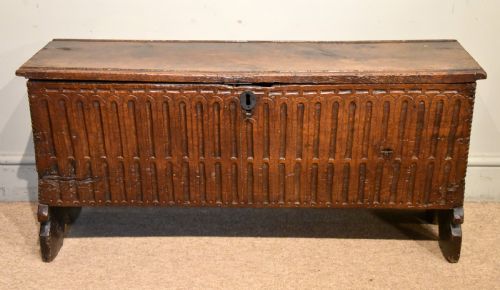
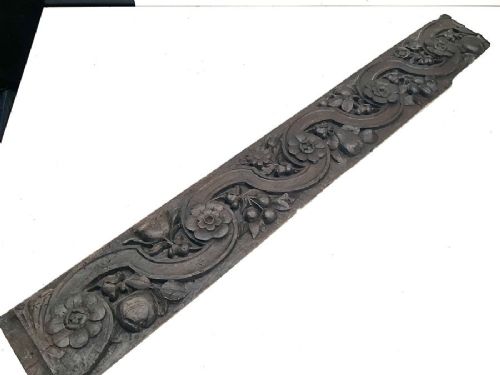
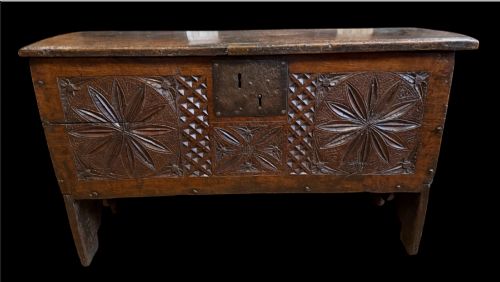
These heavy timber fragments and coffers embody 16th century oak carving, collected for their profound historical texture and enduring structural weight.
16th Century Oak Carving
When you search for 16th century oak carving, you encounter structural woodwork, wall panels, and devotional figures spanning the Tudor, Elizabethan, Gothic, and Renaissance styles.
The objects most frequently met on this page include sturdy coffers, chests, architectural fragments, and relief panels intended for domestic interiors or ecclesiastical settings.
Originating across England, Wales, France, Flanders, Italy, and Spain, these pieces demonstrate the widespread dissemination of Northern and Southern Renaissance motifs within domestic furniture and architectural salvage.
Materials and Techniques
Carpenters and carvers relied primarily on indigenous timber, shaping oak and occasionally walnut with hand axes, adzes, and gouges to produce deep, high-relief panels and solid plank coffers.
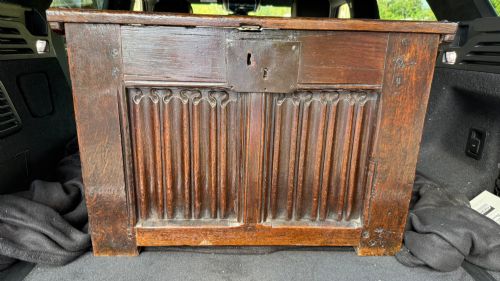
Assembly often utilised pegged mortise and tenon joints, complemented by wrought iron hardware such as hinges and straps on larger chests and storage boxes.
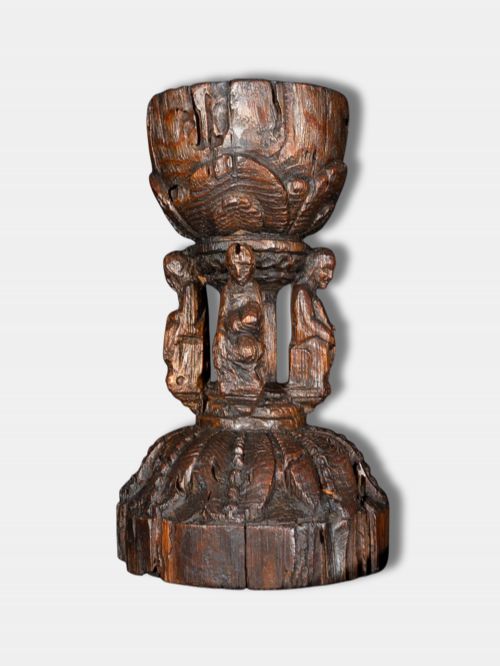
Certain figurative sculptures and architectural elements retain traces of polychrome paint, highlighting the original decorative scheme applied to the carved wood.
Listed object types range from functional coffers and storage chests to architectural fragments, wall reliefs, and devotional sculptures.
Judging Quality and Execution
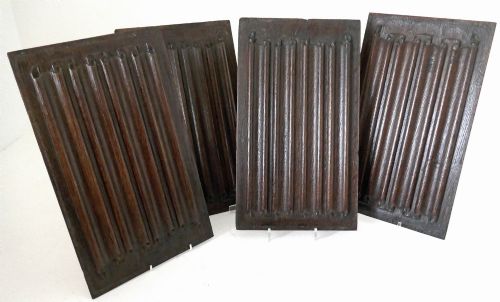
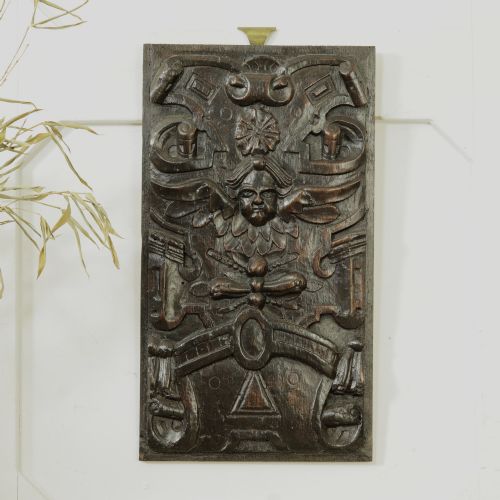
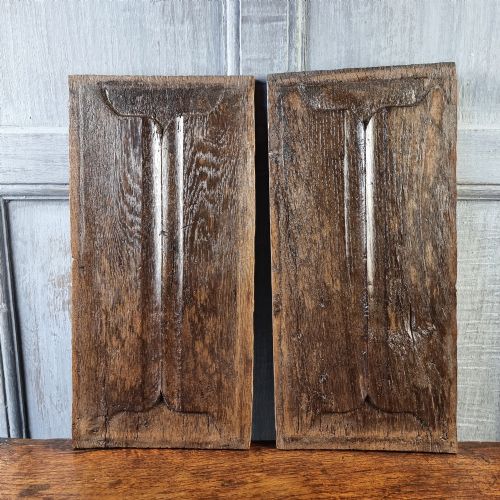
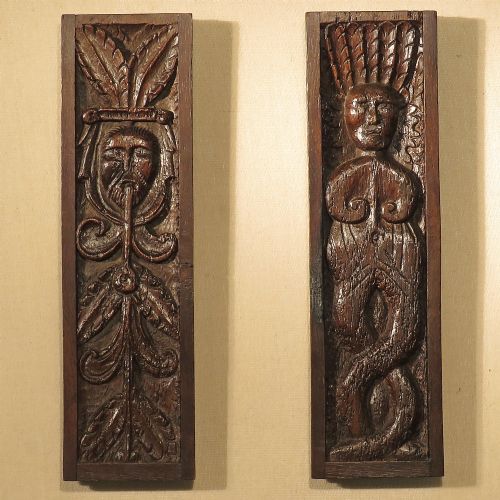
The distinction between ordinary utility work and superior execution rests on the crispness of the chisel work and the depth of the relief, particularly on linenfold panels and figural carvings such as saints, green men, and donor figures.
Proportion and the integrity of the original timber define the upper range, where panels retain their historic framing and surfaces display honest patination rather than excessive later intervention.
The 16th Century Oak Carving Glossary
- Linenfold
- A style of carved wooden panelling resembling folded parchment or linen, commonly found on Tudor chests. This motif dominated domestic joinery during the sixteenth century.
- Coffer
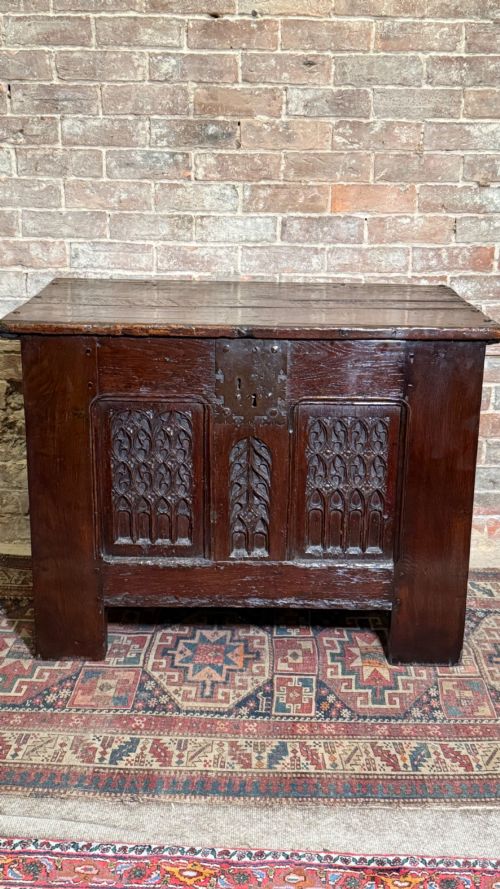
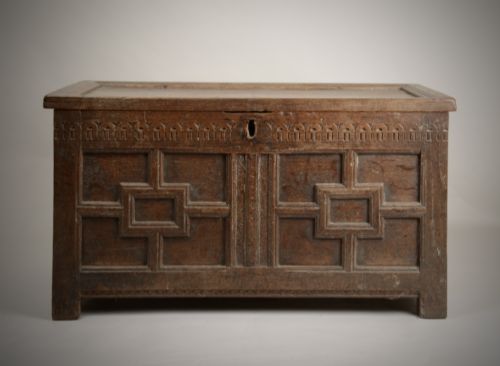
- A heavy wooden chest used for storage, constructed with thick timber planks or framed panels. They often served dual purposes as benches or occasional tables in early interiors.
- High-Relief
- A sculptural technique where figures project significantly from the background plane. This method creates strong shadow lines and dramatic depth on architectural panels.
- Architectural Salvage
- Building fragments rescued from demolished structures, including carved building brackets, friezes, and figurative panels. These pieces preserve historic joinery and stone-cutting or wood-carving techniques.
- Green Man
- A decorative architectural motif depicting a face carved from or entwined with leaves and vines. It symbolises rebirth and appears frequently on ecclesiastical and domestic woodwork.
16th Century Oak Carving: Frequently Asked Questions
How were oak coffers used?
Sixteenth-century coffers served primarily as secure storage for valuables, documents, and textiles in domestic households. Their robust construction also allowed them to function as seating benches or tables.
Over time, these chests became central fixtures in great halls and chambers, reflecting the status and wealth of the household through their carved decoration.
How do I identify period panels?
Period panels display tool marks consistent with hand-cleaving and chiselling, alongside traditional joinery methods like pegged mortise and tenon frames. The timber should exhibit dense grain structure and dry, historic patination.
Stylistic indicators such as linenfold motifs, Gothic tracery, or early Renaissance strapwork help anchor pieces to sixteenth-century workshops.
Where were these carvings displayed?
Carved panels and figures originated in both secular and ecclesiastical environments, adorning church screens, timber-framed houses, and furniture frontages. Architectural fragments often came from structural beams, brackets, and wall friezes.
In modern settings, collectors mount wall panels directly onto plaster or display sculptural fragments on dedicated stands to highlight their relief work.
What distinguishes regional styles?
English and Welsh pieces often feature sturdy linenfold patterns and plain plank construction associated with the Tudor and Elizabethan periods. Flemish and French examples frequently incorporate intricate Renaissance foliage and detailed figural sculpture.
Italian and Spanish works showcase classical motifs and high-relief mythological or religious iconography, reflecting distinct continental carving traditions of the era.