


15ct Gold Pearl Pin
These pieces of 15ct gold pearl pin jewellery bring together rich goldwork and lustrous pearls in enduring Victorian, Edwardian, and later forms.
15ct Gold Pearl Pin
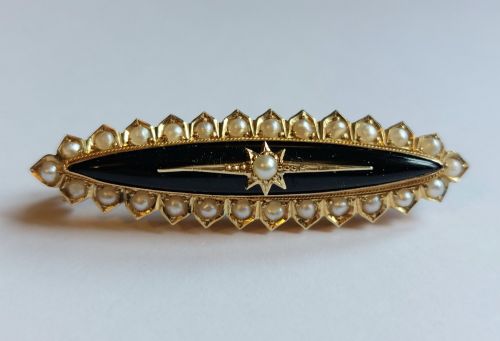
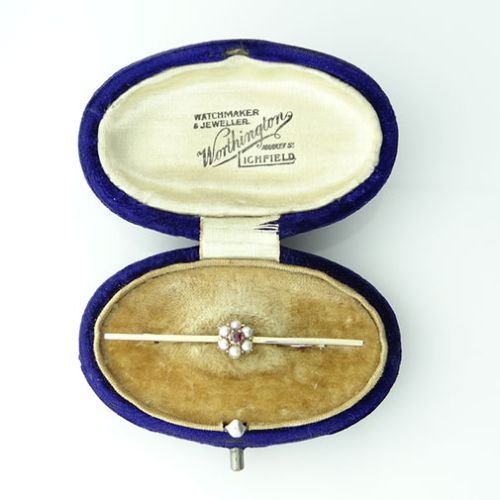
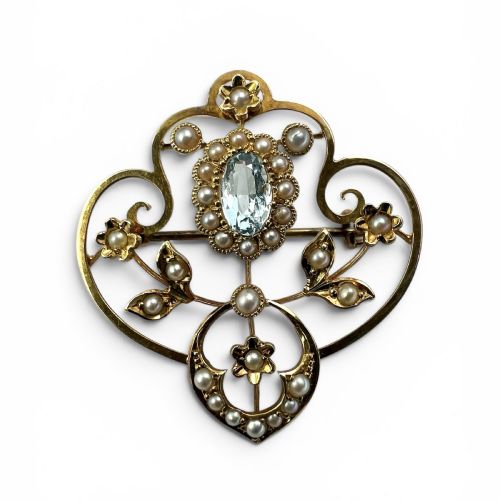
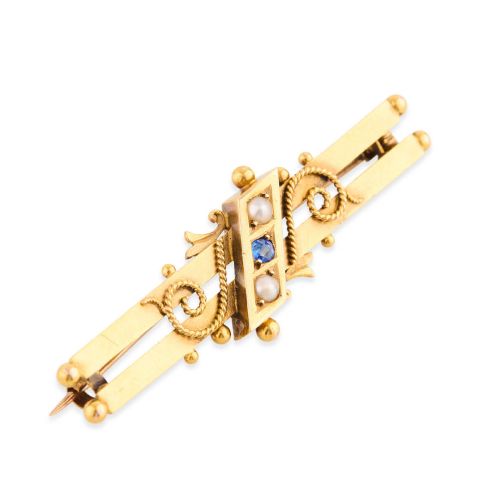
A 15ct gold pearl pin is a refined piece of antique jewellery designed to fasten garments or adorn lapels, typically taking the form of a brooch, bar brooch, stick pin, or jabot pin. When searching for this phrase, a buyer encounters refined goldwork combined with pearls and various gemstones.
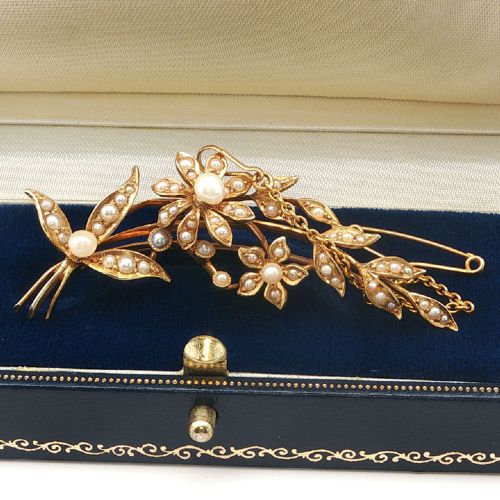
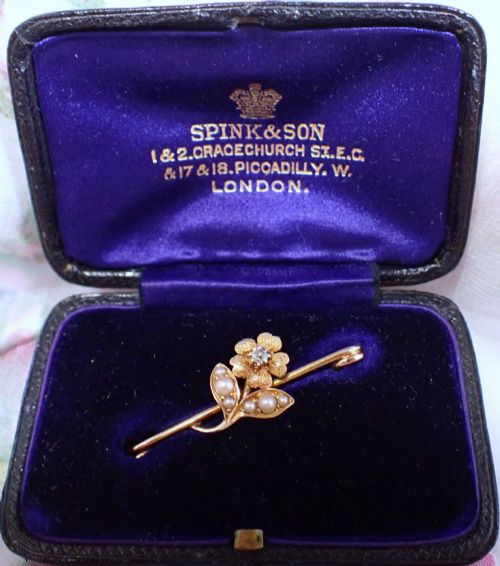
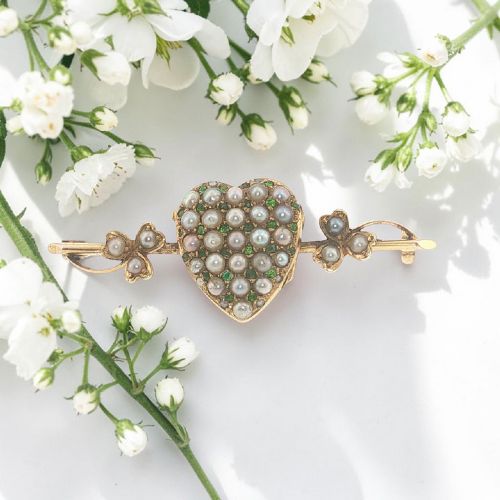
The pieces on this page are most commonly Victorian and Edwardian brooches or stick pins fashioned from a distinctive 15ct gold alloy. They frequently incorporate seed pearls alongside diamonds, turquoise, garnets, and sapphires in symbolic or naturalistic motifs such as horseshoes, crescents, hearts, and floral sprays.
How They Were Made
Makers utilised 15ct yellow or rose gold, a distinctive British alloy standard that provides a deep, warm hue unlike later 9ct or 18ct metals. Goldsmiths shaped the metal through casting, wire-drawing, and intricate hand-fabrication to create sturdy bar pins and delicate settings.
Pearls and seed pearls were meticulously set by hand, often secured with fine bezels, seed pearls threaded on silk or wire, or held within claw settings alongside rose-cut diamonds and cabochon gemstones.
Gemstones paired with pearls across the inventory include turquoise, almandine garnet, green garnet, pink sapphire, peridot, and aquamarine.
What Varies in Quality
Quality rests in the precision of the metalwork and the uniformity of the pearls. Superior examples display crisp chasing, secure stone settings, and matched pearls with strong lustre.
Design complexity also elevates a piece, as seen in multi-gem clusters, articulated swallows, or combined pendant-brooch fittings that demand advanced goldsmithing.
Marius Hammer
The 15ct Gold Pearl Pin Glossary
- 15ct Gold
- A British gold standard comprising 15 parts pure gold to 9 parts alloy, providing a characteristic rich tone used extensively during the Victorian and Edwardian eras.
- Seed Pearl
- A very small, naturally formed or cultured pearl, often used in clusters or pavé settings in antique jewellery.
- Bar Brooch
- A long, slender pin brooch popular in the nineteenth and early twentieth centuries, frequently mounted with gems across the centre.
- Jabot Pin
- A decorative pin originally used to secure a jabot or necktie, featuring an ornamental terminal at both ends or a secure locking pin.
- Rose-Cut Diamond
- An antique diamond cut featuring a flat base and a domed crown with triangular facets, creating a soft, subtle sparkle.
15ct Gold Pearl Pin: Frequently Asked Questions
How do I wear an antique pin safely?
Secure the pin using a properly fitted safety catch or safety chain, particularly on heavier fabrics. Modern silicone stoppers can also be added to stick pin points when worn on delicate silk or wool.
Store the jewellery flat in a lined box away from hard items to prevent the pearls from scratching against other metals.
Are these pins made of solid gold?
Yes, these items are fabricated from solid 15ct gold rather than plated or filled metal. This specific gold standard was legally hallmarked in Britain during the Victorian and Edwardian periods.
The substantial metal content gives each piece a reassuring weight and durability suited to daily wear.
How do I clean seed pearls?
Pearls are organic gems that require gentle care, avoiding harsh chemical dips, ultrasonic cleaners, and abrasive cloths. Wipe them gently with a soft, damp cloth after wearing to remove oils.
Keep them away from perfumes, hairsprays, and cosmetics which can dull the natural lustre of the nacre over time.