It was listed by Artware Fineart. Sold pieces stay on Sellingantiques as a record of what has passed through, and the next one is rarely far away.
Artware Fineart has dated this piece to the 19th Century.
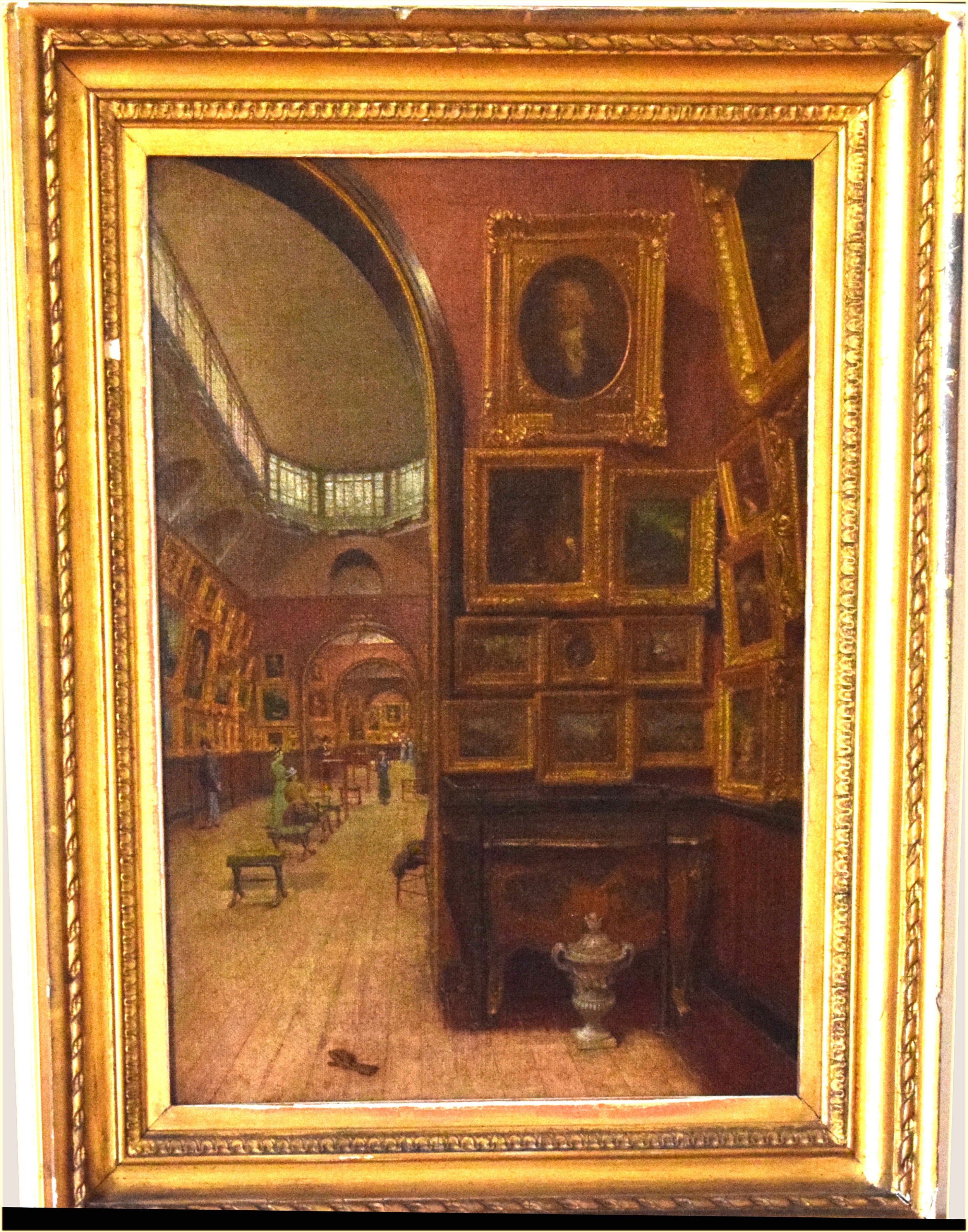
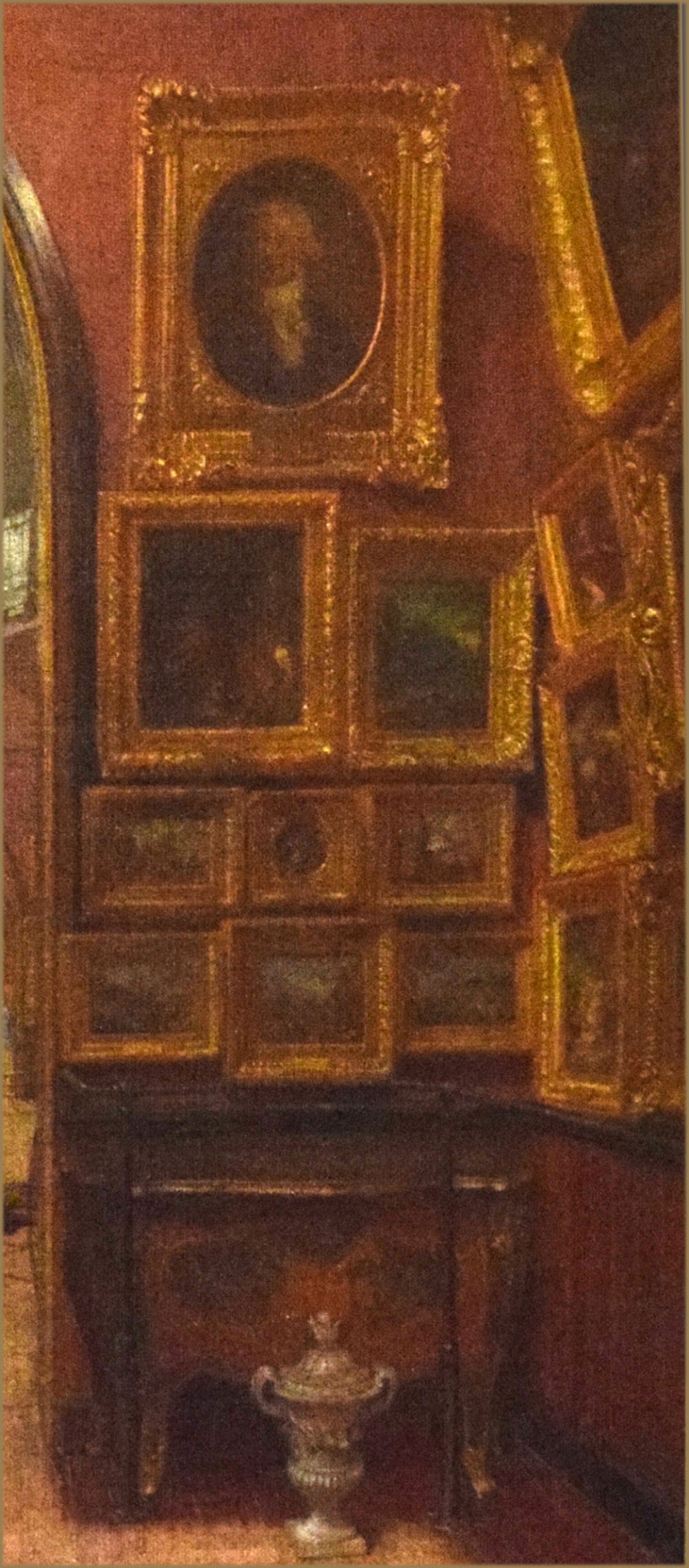
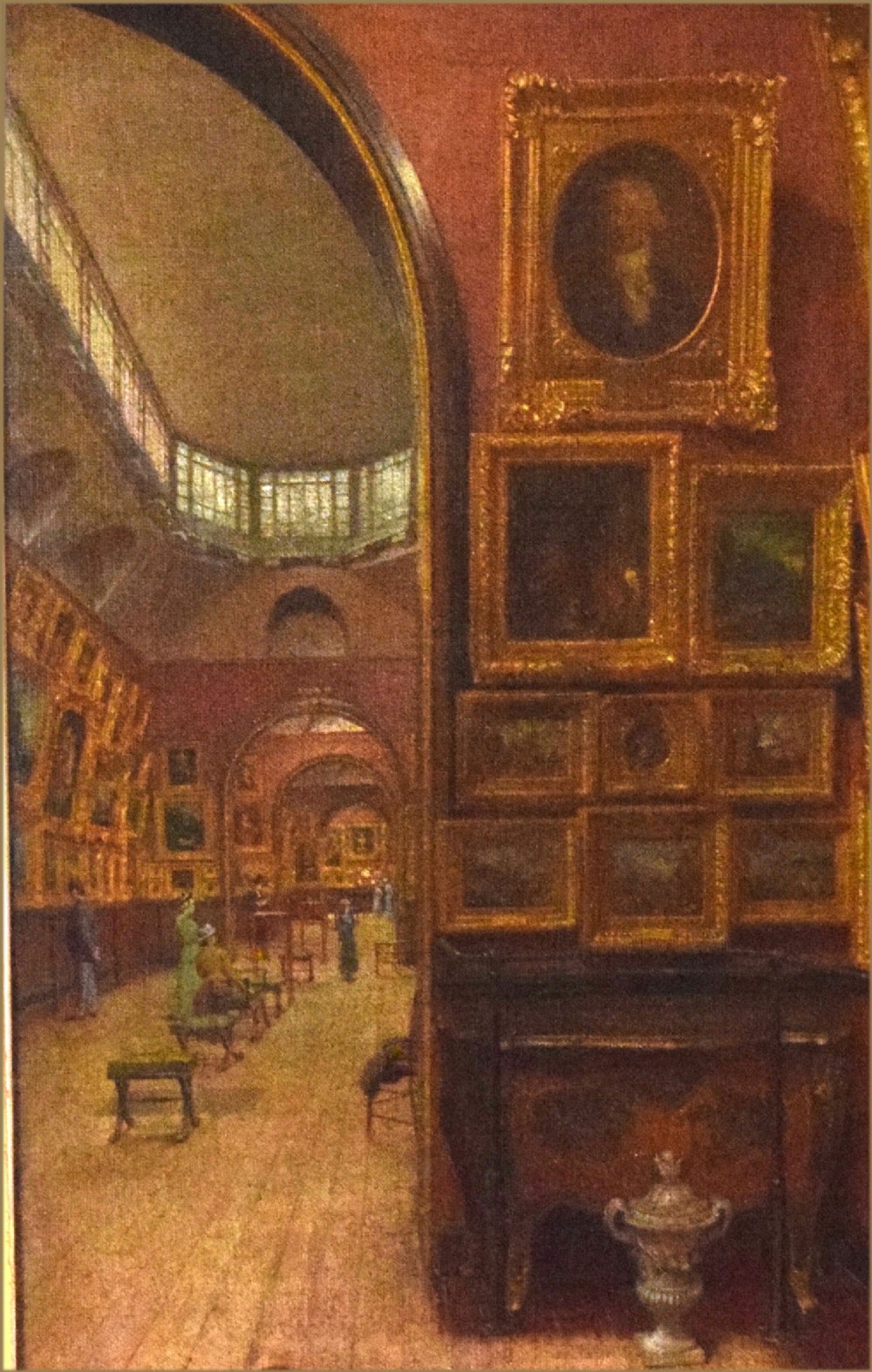
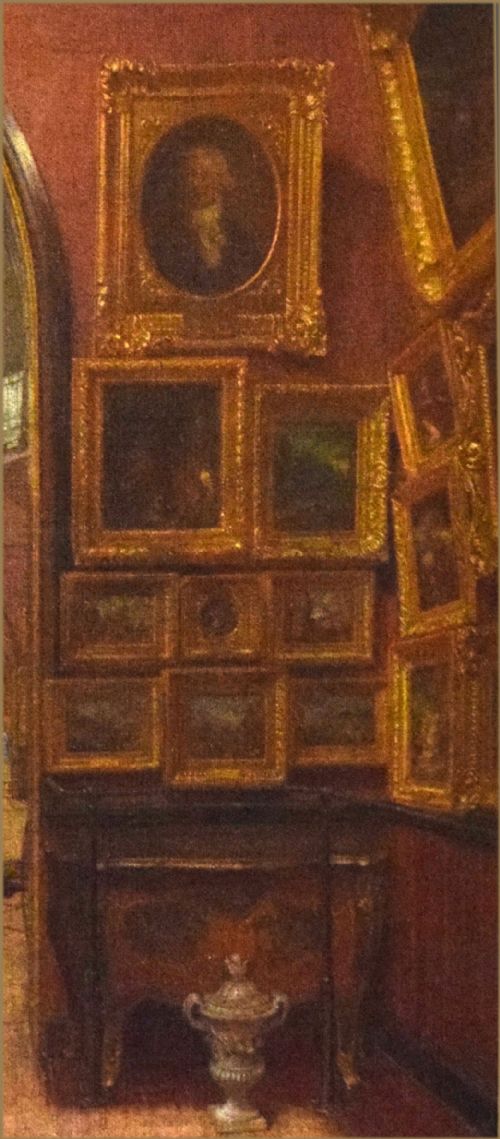
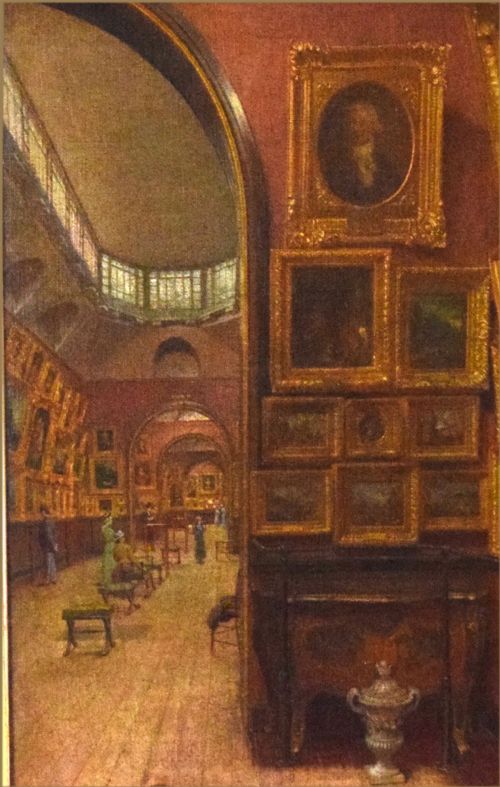
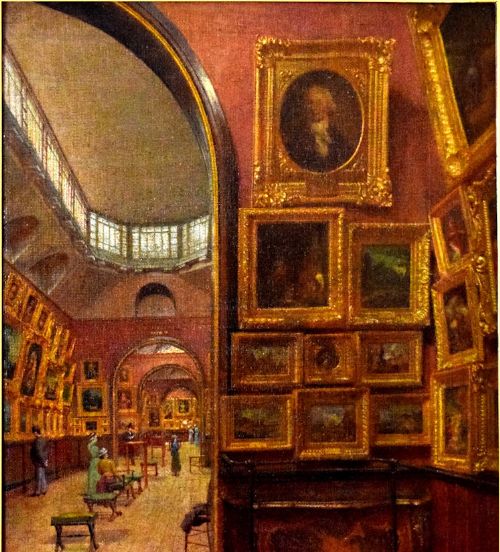
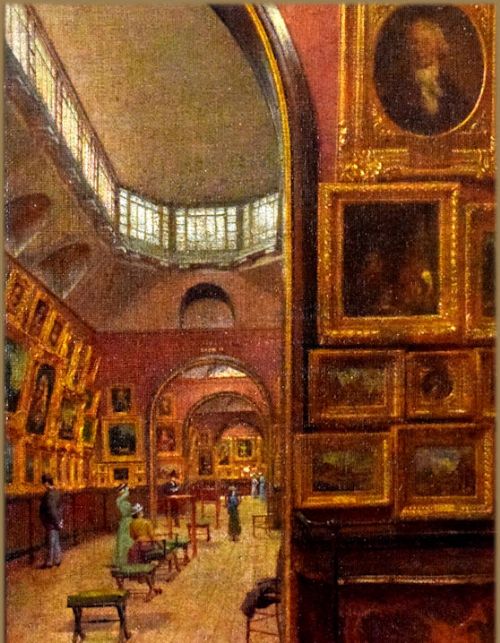
The Main Gallery in Sir John Soane's Dulwich Picture Gallery, circa 1890
oil on canvas
36 x 26 cm. (14.1/4 x 10.1/4 in.)
Dulwich Picture Gallery is an art gallery in Dulwich, South London.
It is the oldest public art gallery in England and was made an independent charitable trust in 1994. Until this time the gallery was part of Alleyn's College of God's Gift, a charitable foundation established by the actor, entrepreneur and philanthropist Edward Alleyn in the early-17th century. The acquisition of artworks by its founders and bequests from its many patrons resulted in Dulwich Picture Gallery housing one of the country's finest collections of Old Masters, especially rich in French, Italian and Spanish Baroque paintings and in British portraits from Tudor times to the 19th century.
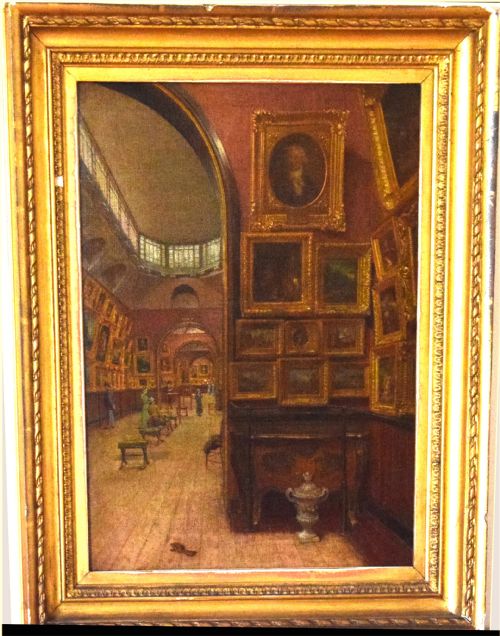
The Dulwich Picture Gallery and its mausoleum are listed Grade II* on the National Heritage List for England.
Edward Alleyn (1566–1626) was an actor who became an entrepreneur in Elizabethan theatre. His commercial interests in the Rose and Fortune Theatres (a major competitor to the Globe Theatre), gave him sufficient wealth to acquire the Manor of Dulwich in 1605.[2] He founded a college at Dulwich, 'the College of God's Gift', and endowed it with his estate. It was a school for boys and next to it were almshouses for the local poor. The college became three separate beneficiary schools – Dulwich College, Alleyn's School, and James Allen's Girls' School, named after an early 18th-century headmaster.[3] The college, the attached almshouses and chapel survive next to the gallery on Gallery Road, although its exterior has undergone extensive renovation.
Alleyn bequeathed the college of a collection of works including portraits of the kings and queens of England. The college retained connections with the theatre and in 1686, the actor William Cartwright (1606–1686) bequeathed a collection of 239 pictures, of which 80 are now identifiable at Dulwich.
In the 18th century, the collection was displayed on the first floor of the wing of the Old College. It attracted few additions during this period, and recorded descriptions of the gallery suggest disappointment and apathy from its visitors. The art historian and Whig politician Horace Walpole wrote that he saw "a hundred mouldy portraits among apostles sibyls and kings of England".
The Dulwich collection was improved in size and quality by Sir Francis Bourgeois (1753–1811), originally from Switzerland, and his business partner, Frenchman Noël Desenfans (1744–1807). Their involvement saw the Gallery make significant steps towards its present state, and they are credited as founders of Dulwich Picture Gallery. They ran an art dealership in London and in 1790 were commissioned by the King of the Polish–Lithuanian Commonwealth, Stanislaus Augustus, to assemble a national collection for Poland to encourage fine arts in his country. Desenfans had lobbied the British Government to create a similar British national collection and offered to contribute to it, but was unenthusiastically received. Touring around Europe buying fine art, Bourgeois and Desenfans took five years to assemble the collection, but by 1795 the Polish–Lithuanian Commonwealth had been partitioned and no longer existed.
Bourgeois and Desenfans attempted to sell the collection but were unsuccessful. Instead, they sold small pieces to fund the purchase of other important works and kept the collection in Desenfans' house in Charlotte Street. After the death of Desenfans in 1807, Bourgeois inherited the collection. He commissioned Sir John Soane to design and construct a mausoleum at Desenfans' house, but was unable to secu
Artware Fineart has dated this piece to the 19th Century.
You can view the stock and full dealer information on the Artware Fineart Profile Page
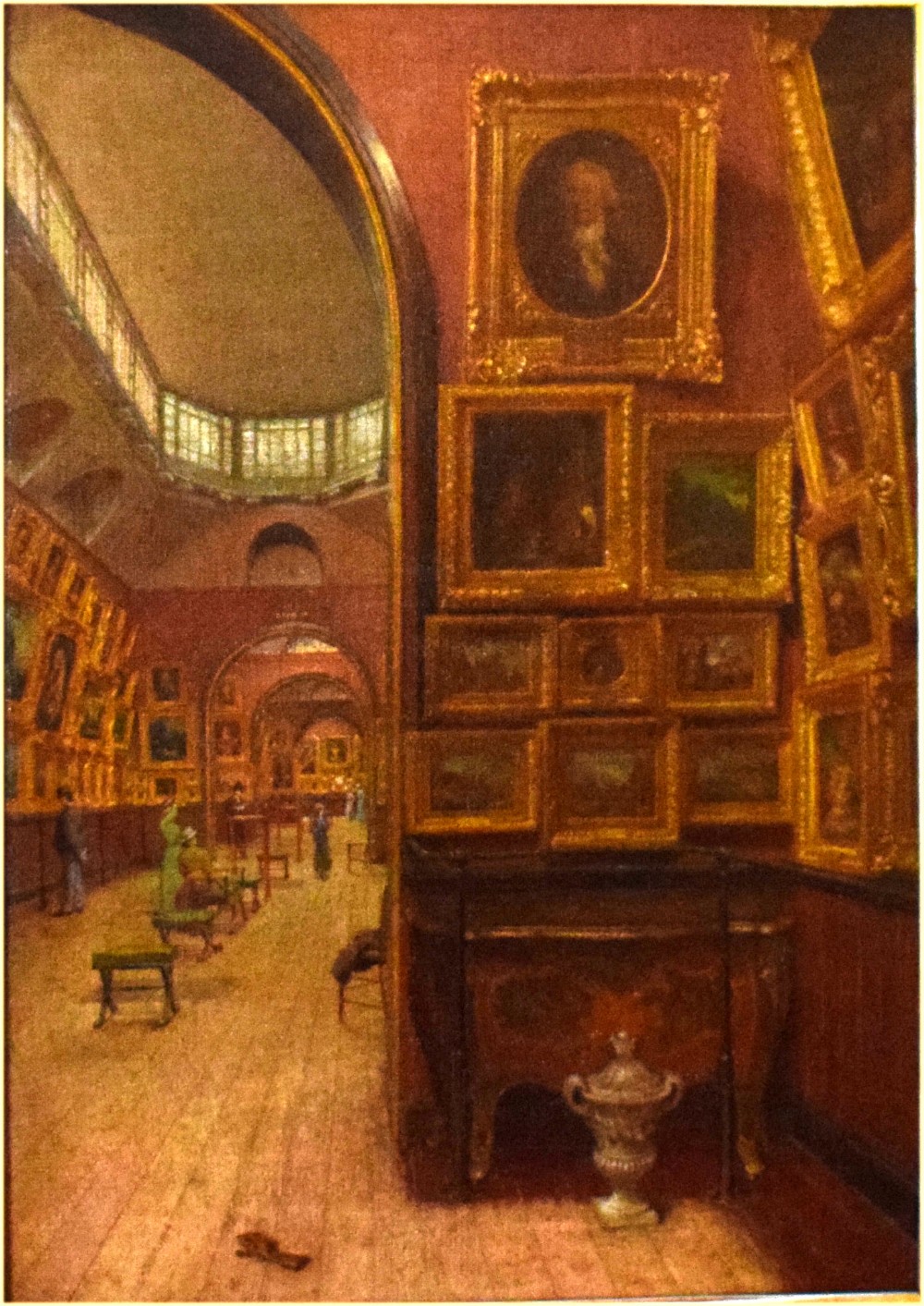
Attributed to Giuseppe Gabrielli, Fl. 1850-1900 The Main Gallery in Sir John Soane's Dulwich Picture Gallery, Circa 1890