5,506  PAGES BROWSED TODAY PAGES TODAY • 0 ANTIQUES UPLOADED TODAYNEW ARRIVALS
GIFTS
LATEST STOCK
Sort Order
Items Per Page
Browse Categories
Sort order
Items per page
ID #SA575132
SOLD
Email Phone
Save
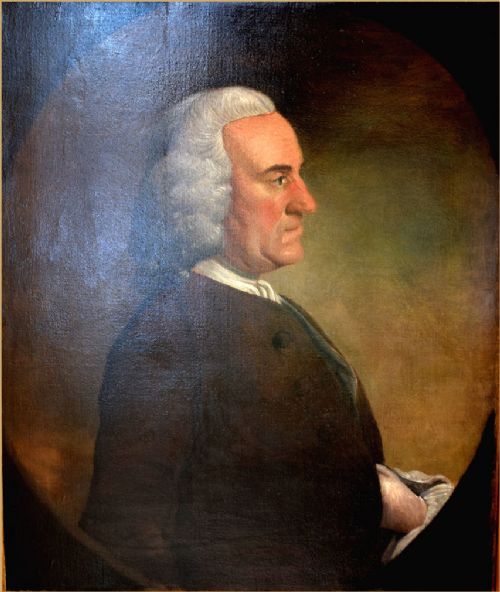
Circle of Allan Ramsay, 1713 - 1784 Portrait of William Dodd, [Nicknamed the Macaroni Parson] (1729–1777)
Sold by Artware Fineart
sold SA575132
Sorry, but this item has been sold.

Artware Fineart

Sellingantiques Verified Since Sep 2008
Browse dealers 243 items
Id #SA575132
PDF SHARE
SAVE

Circle of Allan Ramsay, 1713 - 1784 Portrait of William Dodd, [Nicknamed the Macaroni Parson] (1729–1777)

18th century
Sold 15 July 2020 · Artware Fineart
This “Circle of Allan Ramsay, 1713 - 1784 Portrait of William Dodd, [Nicknamed the Macaroni Parson] (1729–1777)” found a buyer.

It was listed by Artware Fineart. Sold pieces stay on Sellingantiques as a record of what has passed through, and the next one is rarely far away.

Description

Circle of Allan Ramsay, 1713 - 1784

Portrait of William Dodd, [nicknamed the Macaroni Parson] (1729–1777)

oil on canvas

30 x 25in. (76 x 64 cm.)

William Dodd, [nicknamed the Macaroni Parson] (1729–1777), Church of England clergyman and forger, was born in Bourne, Lincolnshire, the eldest of the six children of the Revd William Dodd (1703?–1757), vicar of Bourne. He was probably born on 29 May 1729 (Howson), though the parish register for Bourne shows that a William Dodd, son of William Dodd, was baptized at Bourne on 23 May 1728 (IGI). His mother was possibly Elizabeth Dickson or Dixon, who married a William Dodd on 3 April 1726, perhaps at Bourne (or at Norton Disney or Surfleet in the same county).

Dodd entered Clare College, Cambridge, in 1746 as a sizar, and in 1749 he was entered in the first tripos list as a wrangler. He was made MA in 1759. On leaving Cambridge in 1749 he went to London, where he lived for the rest of his life. There he sought to pursue a literary career which had begun at Cambridge with Diggon Davy's Resolution on the Death of his Last Cow (1747), a poem on foot-and-mouth disease. In London he rapidly produced a co-authored student crammer of philosophical texts and wrote both a farce on Sir Roger de Coverley, which was apparently never staged, and A New Book of the Dunciad. In 1751 he married Mary Perkins (d. 1784), the daughter of a verger of Durham Cathedral, and his initial literary success encouraged him to lease an expensive house in Wardour Street. The fatal pattern was thus established of over-extending his limited financial resources in pursuit of advancement. It quickly became clear that his writings would not support him so he returned to Cambridge, he was ordained at Gonville and Caius College on 19 October 1752, and he became curate at All Saints', West Ham. He continued to write and, while his talent for originality was limited, he did have a facility for extracting from the work of others, most successfully in The Beauties of Shakespeare (1752), a collection of quotations which stayed in print well into the twentieth century. This book proved a boon to those who wished to demonstrate erudition without the inconvenience of actually having to read the plays, although it did provide Goethe with his first exposure to Shakespeare. Dodd also tried his hand at fiction and published The Sisters (1754), a novel whose dullness at least conceals its limp eroticism. During the 1760s he concentrated on theological writing; he published a Commentary of the Bible in monthly parts from 1764 and became almost solely responsible for the Christian Magazine (1760–67), some articles from which were collected in Dodd on Death.

Meanwhile Dodd's reputation as a preacher was growing. He was appointed to a lectureship at All Saints' in 1752; this was followed by lectureships in the City of London at St James Garlickhythe, in May 1753, and St Olave, Hart Street, in April 1754. He also delivered the Lady Moyer lectures at St Paul's Cathedral from 1754. In 1764 he attacked John Wesley for allegedly claiming that Methodists were perfect and for failing to control his followers. Wesley at first ignored the attack but then silenced his opponent with a fierce response in Lloyd's Evening Post (3 April 1767). In 1765 Dodd became tutor to the heir of Philip Dormer Stanhope, earl of Chesterfield, so he reluctantly turned schoolmaster and opened a small private school; he also graduated LLD in 1766 in the hope of attracting other wealthy pupils. His precarious finances received a boost when his wife received an inheritance and a lottery prize. With the money he opened Charlotte (or Pimlico) Chapel in Charlotte Street, behind Buckingham House, in July 1767. The aim was to attract royalty and thereby the cream of London society through his reputation as a preacher. Initially aristocracy joined his congregation

Date of Manufacture

Artware Fineart has dated this piece to the 18th Century.

Physical Dimensions
Height
76cm (29.92")
Width
64cm (25.20")
Depth
2cm (0.79")
Reference Numbers
Sellingantiques Reference
SA575132
Dealers Internal Reference
3947
Description
Circle of Allan Ramsay, 1713 - 1784

Portrait of William Dodd, [nicknamed the Macaroni Parson] (1729–1777)

oil on canvas

30 x 25in. (76 x 64 cm.)

William Dodd, [nicknamed the Macaroni Parson] (1729–1777), Church of England clergyman and forger, was born in Bourne, Lincolnshire, the eldest of the six children of the Revd William Dodd (1703?–1757), vicar of Bourne.

“
He was probably born on 29 May 1729 (Howson), though the parish register for Bourne shows that a William Dodd, son of William Dodd, was baptized at Bourne on 23 May 1728 (IGI).
Artware Fineart

His mother was possibly Elizabeth Dickson or Dixon, who married a William Dodd on 3 April 1726, perhaps at Bourne (or at Norton Disney or Surfleet in the same county).

fig 1. Circle of  Allan Ramsay, 1713 - 1784
Portrait of William Dodd, [nicknamed the Macaroni Parson] (1729–1777)
fig 1. Circle of Allan Ramsay, 1713 - 1784 Portrait of William Dodd, [Nicknamed the Macaroni Parson] (1729–1777)

Dodd entered Clare College, Cambridge, in 1746 as a sizar, and in 1749 he was entered in the first tripos list as a wrangler. He was made MA in 1759. On leaving Cambridge in 1749 he went to London, where he lived for the rest of his life. There he sought to pursue a literary career which had begun at Cambridge with Diggon Davy's Resolution on the Death of his Last Cow (1747), a poem on foot-and-mouth disease. In London he rapidly produced a co-authored student crammer of philosophical texts and wrote both a farce on Sir Roger de Coverley, which was apparently never staged, and A New Book of the Dunciad. In 1751 he married Mary Perkins (d. 1784), the daughter of a verger of Durham Cathedral, and his initial literary success encouraged him to lease an expensive house in Wardour Street. The fatal pattern was thus established of over-extending his limited financial resources in pursuit of advancement. It quickly became clear that his writings would not support him so he returned to Cambridge, he was ordained at Gonville and Caius College on 19 October 1752, and he became curate at All Saints', West Ham. He continued to write and, while his talent for originality was limited, he did have a facility for extracting from the work of others, most successfully in The Beauties of Shakespeare (1752), a collection of quotations which stayed in print well into the twentieth century. This book proved a boon to those who wished to demonstrate erudition without the inconvenience of actually having to read the plays, although it did provide Goethe with his first exposure to Shakespeare. Dodd also tried his hand at fiction and published The Sisters (1754), a novel whose dullness at least conceals its limp eroticism. During the 1760s he concentrated on theological writing; he published a Commentary of the Bible in monthly parts from 1764 and became almost solely responsible for the Christian Magazine (1760–67), some articles from which were collected in Dodd on Death.

Meanwhile Dodd's reputation as a preacher was growing. He was appointed to a lectureship at All Saints' in 1752; this was followed by lectureships in the City of London at St James Garlickhythe, in May 1753, and St Olave, Hart Street, in April 1754. He also delivered the Lady Moyer lectures at St Paul's Cathedral from 1754. In 1764 he attacked John Wesley for allegedly claiming that Methodists were perfect and for failing to control his followers. Wesley at first ignored the attack but then silenced his opponent with a fierce response in Lloyd's Evening Post (3 April 1767). In 1765 Dodd became tutor to the heir of Philip Dormer Stanhope, earl of Chesterfield, so he reluctantly turned schoolmaster and opened a small private school; he also graduated LLD in 1766 in the hope of attracting other wealthy pupils. His precarious finances received a boost when his wife received an inheritance and a lottery prize. With the money he opened Charlotte (or Pimlico) Chapel in Charlotte Street, behind Buckingham House, in July 1767. The aim was to attract royalty and thereby the cream of London society through his reputation as a preacher. Initially aristocracy joined his congregation

Date of Manufacture

Artware Fineart has dated this piece to the 18th Century.

Height
76cm (29.92")
Width
64cm (25.20")
Depth
2cm (0.79")
Reference Numbers
Sellingantiques Ref
SA575132
Dealers Internal Ref
3947
Artware Fineart
Sellingantiques verified Since Sep 2008
Dealer Profile

You can view the stock and full dealer information on the Artware Fineart Profile Page
PDF SHARE
SAVE
Circle of  Allan Ramsay, 1713 - 1784
Portrait of William Dodd, [nicknamed the Macaroni Parson] (1729–1777) SOLD6+ MONTHS AGO
1 / 2
Archive I Circle of  Allan Ramsay, 1713 - 1784
Portrait of William Dodd, [nicknamed the Macaroni Parson] (1729–1777) SOLD6+ MONTHS AGO

Circle of Allan Ramsay, 1713 - 1784 Portrait of William Dodd, [Nicknamed the Macaroni Parson] (1729–1777)

Archive II Circle of  Allan Ramsay, 1713 - 1784
Portrait of William Dodd, [nicknamed the Macaroni Parson] (1729–1777) View II
Enlarged Archival View
Telephone 07958 699 645
Location
18 La Gare
51 Surrey Row
London
SE1 0BZ
United Kingdom
Verified Since Sep 2008
Items For Sale 243
Items Sold 223
Artware Fineart
Verified Since Sep 2008
View Dealer Info
Location: 18 La Gare , 51 Surrey Row , London , SE1 0BZ , United Kingdom
Verified
Sep 2008
For Sale
243
Sold
223
Circle of  Allan Ramsay, 1713 - 1784
Portrait of William Dodd, [nicknamed the Macaroni Parson] (1729–1777)
Circle of Allan Ramsay, 1713 - 1784 Portrait of William Dodd, [nicknamed the Macaroni Parson] (1729–1777)
Ref: SA575132
Circle of  Allan Ramsay, 1713 - 1784
Portrait of William Dodd, [nicknamed the Macaroni Parson] (1729–1777)
Detail View 1
Archival Detail
Every single antique dealer on our platform is individually approved by our internal team. We verify their professional trade history, ethical standards, and photographic quality to ensure a secure, high-standard buying environment. Upon joining, every dealer agrees to a strict 9-point code of conduct. While issues can occasionally arise, our dealers typically resolve them swiftly and directly with the buyer. In fact, since our founding in 2002, Sellingantiques has only had to step in to help resolve an issue on roughly five occasions—a true testament to the quality of our dealers and their dedication to your happiness.
Our dealers are highly experienced in packing and shipping fragile, high-value antiques. Because you are in direct contact with the dealer, you will be able to easily go through all available shipping and insurance options together to ensure your item arrives safely.
Antiques are the ultimate green purchase. By choosing historical pieces over newly manufactured goods, you completely eliminate the carbon footprint of modern mass production while preserving exceptional, timeless craftsmanship.
Written by Sellingantiques from the dealer’s photographs and listing
  • Period18th century
  • SizeH 76 cm (30 in) x W 64 cm (25 in) x D 2 cm (1 in)
items
Add keywords to the filter
Price
£100
£250000
Era
Period
Style
Material
Origin
Stock Location
Recently Added
Online Payments
Categories