5,506  PAGES BROWSED TODAY PAGES TODAY • 0 ANTIQUES UPLOADED TODAYNEW ARRIVALS
GIFTS
LATEST STOCK
Sort Order
Items Per Page
Browse Categories
Sort order
Items per page
ID #SA557093
SOLD
Email Phone
Save
French School 18th, Century maria Theresa Walburga Amalia Christina , Empress Marie-thérèse of Austria 1717 – 1780 Portrait of Empress Marie-thérèse of Austria
Sold by Artware Fineart
sold SA557093
Sorry, but this item has been sold.

Artware Fineart

Sellingantiques Verified Since Sep 2008
Browse dealers 243 items
Id #SA557093
PDF SHARE
SAVE

French School 18th, Century maria Theresa Walburga Amalia Christina , Empress Marie-thérèse of Austria 1717 – 1780 Portrait of Empress Marie-thérèse of Austria

18th century
Sold 7 January 2019 · Artware Fineart
This “French School 18th, Century maria Theresa Walburga Amalia Christina , Empress Marie-thérèse of Austria 1717 – 1780 Portrait of Empress Marie-thérèse of Austria ” found a buyer.

It was listed by Artware Fineart. Sold pieces stay on Sellingantiques as a record of what has passed through, and the next one is rarely far away.

Description

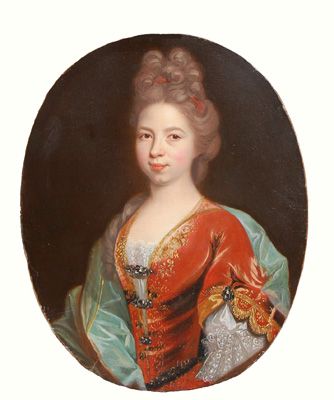
French School 18th, Century

Maria Theresa Walburga Amalia Christina , Empress Marie-Thérèse of Austria 1717 – 1780

Portrait of Empress Marie-Thérèse of Austria

1st April 1750

oil on canvas

76.20 x 63.50 cm. (30 x 25 in.)

Maria Theresa Walburga Amalia Christina 1717 – 1780 was the only female ruler of the Habsburg dominions and the last of the House of Habsburg. She was the sovereign of Austria, Hungary, Croatia, Bohemia, Transylvania, Mantua, Milan, Lodomeria and Galicia, the Austrian Netherlands and Parma. By marriage, she was Duchess of Lorraine, Grand Duchess of Tuscany and Holy Roman Empress.
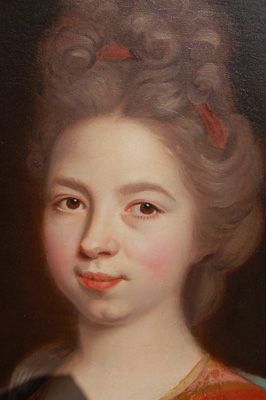
She started her 40-year reign when her father, Emperor Charles VI, died in October 1740. Charles VI paved the way for her accession with the Pragmatic Sanction of 1713 and spent his entire reign securing it. Upon the death of her father, Saxony, Prussia, Bavaria, and France all repudiated the sanction they had recognised during his lifetime. Frederick II of Prussia (who became Maria Theresa's greatest rival for most of her reign) promptly invaded and took the affluent Habsburg province of Silesiain the seven-year conflict known as the War of the Austrian Succession. Over the course of the war, despite the loss of Silesia and a few minor territories in Italy, Maria Theresa successfully defended her rule over most of the Habsburg empire. Maria Theresa later unsuccessfully tried to reconquer Silesia during the Seven Years' War.
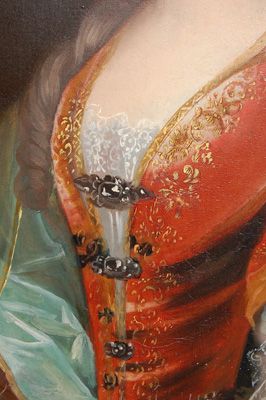
Maria Theresa and her husband, Francis I, Holy Roman Emperor, had eleven daughters, including the Queen of France, the Queen of Naples and Sicily, the Duchess of Parma, and five sons, including two Holy Roman Emperors, Joseph II and Leopold II. Of the sixteen children, ten survived to adulthood. Though she was expected to cede power to Francis and Joseph, both of whom were officially her co-rulers in Austria and Bohemia, Maria Theresa was the absolute sovereign who ruled with the counsel of her advisers. She criticised and disapproved of many of Joseph's actions. Maria Theresa understood the importance of her public persona and was able to simultaneously evoke both esteem and affection from her subjects.
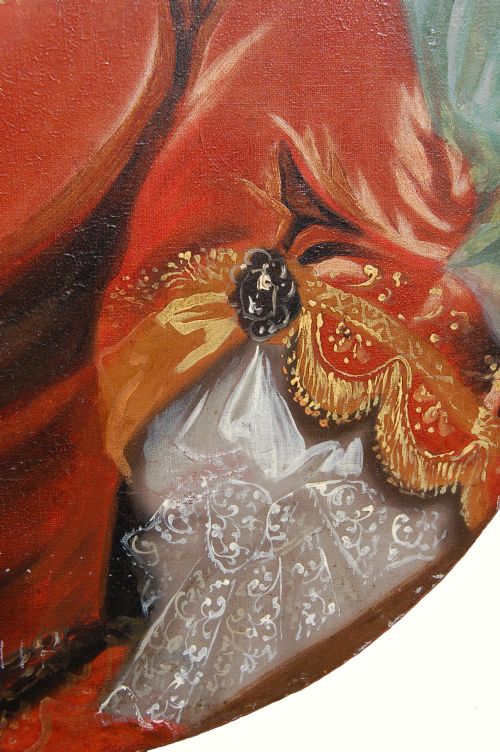
Maria Theresa promulgated financial and educational reforms, with the assistance of Count Friedrich Wilhelm von Haugwitz and Gerard van Swieten, promoted commerce and the development of agriculture, and reorganised Austria's ramshackle military, all of which strengthened Austria's international standing. However, she refused to allow religious pluralism and advocated for the state church and contemporary adversary travelers criticized her regime as bigoted and superstitious.

Birth and background

Three-year-old Maria Theresa in the gardens of Hofburg Palace

The second and eldest surviving child of Holy Roman Emperor Charles VI and Elisabeth Christine of Brunswick-Wolfenbüttel, Archduchess Maria Theresa was born early in the morning of 13 May 1717, at the Hofburg Palace, Vienna, shortly after the death of her elder brother, Archduke Leopold, and was baptised on that same evening. The dowagerempresses, her aunt Wilhelmine Amalia of Brunswick-Lüneburg and grandmother Eleonor Magdalene of the Palatinate-Neuburg, were her godmothers. Most descriptions of her baptism stress that the infant was carried ahead of her cousins, Maria Josepha and Maria Amalia, the daughters of Charles VI's elder brother and predecessor, Joseph I, before the eyes of their mother, Wilhelmine Amalia. It was clear that Maria Theresa would outrank them, even though their grandfather, Holy Roman Emperor Leopold I, had his sons sign the Mutual Pact of Succession, which gave precedence to the daughters of the elder brother.Her father was the only surviving male member of the House of Habsburg and hoped for a son who would prevent the extinction of his dynasty and succeed him. Thus, the birth of Maria Theresa was a great

Date of Manufacture

Artware Fineart has dated this piece to the 18th Century.

Physical Dimensions
Height
76cm (29.92")
Width
64cm (25.20")
Depth
2cm (0.79")
Reference Numbers
Sellingantiques Reference
SA557093
Description
French School 18th, Century

Maria Theresa Walburga Amalia Christina , Empress Marie-Thérèse of Austria 1717 – 1780

Portrait of Empress Marie-Thérèse of Austria

1st April 1750

oil on canvas

76.20 x 63.50 cm. (30 x 25 in.)

“
Maria Theresa Walburga Amalia Christina 1717 – 1780 was the only female ruler of the Habsburg dominions and the last of the House of Habsburg.
Artware Fineart

She was the sovereign of Austria, Hungary, Croatia, Bohemia, Transylvania, Mantua, Milan, Lodomeria and Galicia, the Austrian Netherlands and Parma. By marriage, she was Duchess of Lorraine, Grand Duchess of Tuscany and Holy Roman Empress.

fig 1. French School 18th, Century
Maria Theresa Walburga Amalia Christina , Empress Marie-Thérèse of Austria 1717 – 1780
Portrait of Empress Marie-Thérèse of Austria
fig 1. French School 18th, Century maria Theresa Walburga Amalia Christina , Empress Marie-thérèse of Austria 1717 – 1780 Portrait of Empress Marie-thérèse of Austria

She started her 40-year reign when her father, Emperor Charles VI, died in October 1740. Charles VI paved the way for her accession with the Pragmatic Sanction of 1713 and spent his entire reign securing it. Upon the death of her father, Saxony, Prussia, Bavaria, and France all repudiated the sanction they had recognised during his lifetime. Frederick II of Prussia (who became Maria Theresa's greatest rival for most of her reign) promptly invaded and took the affluent Habsburg province of Silesiain the seven-year conflict known as the War of the Austrian Succession. Over the course of the war, despite the loss of Silesia and a few minor territories in Italy, Maria Theresa successfully defended her rule over most of the Habsburg empire. Maria Theresa later unsuccessfully tried to reconquer Silesia during the Seven Years' War.

fig 2. French School 18th, Century
Maria Theresa Walburga Amalia Christina , Empress Marie-Thérèse of Austria 1717 – 1780
Portrait of Empress Marie-Thérèse of Austria
fig 2. French School 18th, Century maria Theresa Walburga Amalia Christina , Empress Marie-thérèse of Austria 1717 – 1780 Portrait of Empress Marie-thérèse of Austria

Maria Theresa and her husband, Francis I, Holy Roman Emperor, had eleven daughters, including the Queen of France, the Queen of Naples and Sicily, the Duchess of Parma, and five sons, including two Holy Roman Emperors, Joseph II and Leopold II. Of the sixteen children, ten survived to adulthood. Though she was expected to cede power to Francis and Joseph, both of whom were officially her co-rulers in Austria and Bohemia, Maria Theresa was the absolute sovereign who ruled with the counsel of her advisers. She criticised and disapproved of many of Joseph's actions. Maria Theresa understood the importance of her public persona and was able to simultaneously evoke both esteem and affection from her subjects.

fig 3. French School 18th, Century
Maria Theresa Walburga Amalia Christina , Empress Marie-Thérèse of Austria 1717 – 1780
Portrait of Empress Marie-Thérèse of Austria
fig 3. French School 18th, Century maria Theresa Walburga Amalia Christina , Empress Marie-thérèse of Austria 1717 – 1780 Portrait of Empress Marie-thérèse of Austria

Maria Theresa promulgated financial and educational reforms, with the assistance of Count Friedrich Wilhelm von Haugwitz and Gerard van Swieten, promoted commerce and the development of agriculture, and reorganised Austria's ramshackle military, all of which strengthened Austria's international standing. However, she refused to allow religious pluralism and advocated for the state church and contemporary adversary travelers criticized her regime as bigoted and superstitious.

Birth and background

Three-year-old Maria Theresa in the gardens of Hofburg Palace

The second and eldest surviving child of Holy Roman Emperor Charles VI and Elisabeth Christine of Brunswick-Wolfenbüttel, Archduchess Maria Theresa was born early in the morning of 13 May 1717, at the Hofburg Palace, Vienna, shortly after the death of her elder brother, Archduke Leopold, and was baptised on that same evening. The dowagerempresses, her aunt Wilhelmine Amalia of Brunswick-Lüneburg and grandmother Eleonor Magdalene of the Palatinate-Neuburg, were her godmothers. Most descriptions of her baptism stress that the infant was carried ahead of her cousins, Maria Josepha and Maria Amalia, the daughters of Charles VI's elder brother and predecessor, Joseph I, before the eyes of their mother, Wilhelmine Amalia. It was clear that Maria Theresa would outrank them, even though their grandfather, Holy Roman Emperor Leopold I, had his sons sign the Mutual Pact of Succession, which gave precedence to the daughters of the elder brother.Her father was the only surviving male member of the House of Habsburg and hoped for a son who would prevent the extinction of his dynasty and succeed him. Thus, the birth of Maria Theresa was a great

Date of Manufacture

Artware Fineart has dated this piece to the 18th Century.

Height
76cm (29.92")
Width
64cm (25.20")
Depth
2cm (0.79")
Reference Numbers
Sellingantiques Ref
SA557093
Artware Fineart
Sellingantiques verified Since Sep 2008
Dealer Profile

You can view the stock and full dealer information on the Artware Fineart Profile Page
PDF SHARE
SAVE
French School 18th, Century
Maria Theresa Walburga Amalia Christina , Empress Marie-Thérèse of Austria 1717 – 1780
Portrait of Empress Marie-Thérèse of Austria
SOLD6+ MONTHS AGO
1 / 4
Archive I French School 18th, Century
Maria Theresa Walburga Amalia Christina , Empress Marie-Thérèse of Austria 1717 – 1780
Portrait of Empress Marie-Thérèse of Austria
SOLD6+ MONTHS AGO

French School 18th, Century maria Theresa Walburga Amalia Christina , Empress Marie-thérèse of Austria 1717 – 1780 Portrait of Empress Marie-thérèse of Austria
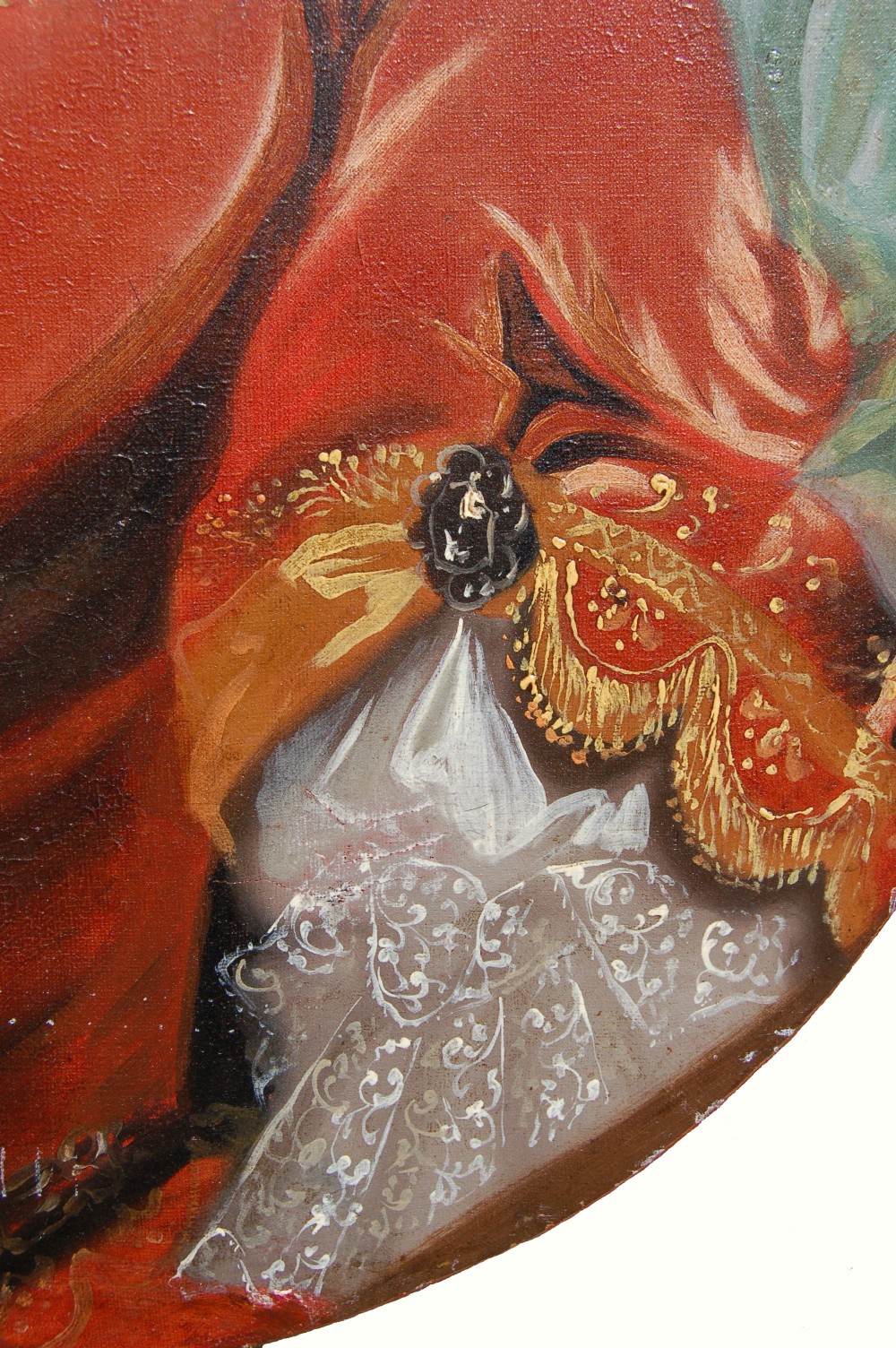
Archive II French School 18th, Century
Maria Theresa Walburga Amalia Christina , Empress Marie-Thérèse of Austria 1717 – 1780
Portrait of Empress Marie-Thérèse of Austria
 View II
Archive III French School 18th, Century
Maria Theresa Walburga Amalia Christina , Empress Marie-Thérèse of Austria 1717 – 1780
Portrait of Empress Marie-Thérèse of Austria
 View III
Archive IV French School 18th, Century
Maria Theresa Walburga Amalia Christina , Empress Marie-Thérèse of Austria 1717 – 1780
Portrait of Empress Marie-Thérèse of Austria
 View IV
Enlarged Archival View
Telephone 07958 699 645
Location
18 La Gare
51 Surrey Row
London
SE1 0BZ
United Kingdom
Verified Since Sep 2008
Items For Sale 243
Items Sold 223
Artware Fineart
Verified Since Sep 2008
View Dealer Info
Location: 18 La Gare , 51 Surrey Row , London , SE1 0BZ , United Kingdom
Verified
Sep 2008
For Sale
243
Sold
223
French School 18th, Century
Maria Theresa Walburga Amalia Christina , Empress Marie-Thérèse of Austria 1717 – 1780
Portrait of Empress Marie-Thérèse of Austria
French School 18th, Century Maria Theresa Walburga Amalia Christina , Empress Marie-Thérèse of Austria 1717 – 1780 Portrait of Empress Marie-Thérèse of Austria
Ref: SA557093
French School 18th, Century
Maria Theresa Walburga Amalia Christina , Empress Marie-Thérèse of Austria 1717 – 1780
Portrait of Empress Marie-Thérèse of Austria
Detail View 1
Detail View 2
Detail View 3
Archival Detail
Every single antique dealer on our platform is individually approved by our internal team. We verify their professional trade history, ethical standards, and photographic quality to ensure a secure, high-standard buying environment. Upon joining, every dealer agrees to a strict 9-point code of conduct. While issues can occasionally arise, our dealers typically resolve them swiftly and directly with the buyer. In fact, since our founding in 2002, Sellingantiques has only had to step in to help resolve an issue on roughly five occasions—a true testament to the quality of our dealers and their dedication to your happiness.
Our dealers are highly experienced in packing and shipping fragile, high-value antiques. Because you are in direct contact with the dealer, you will be able to easily go through all available shipping and insurance options together to ensure your item arrives safely.
Antiques are the ultimate green purchase. By choosing historical pieces over newly manufactured goods, you completely eliminate the carbon footprint of modern mass production while preserving exceptional, timeless craftsmanship.
Written by Sellingantiques from the dealer’s photographs and listing
  • Period18th century
  • SizeH 76 cm (30 in) x W 64 cm (25 in) x D 2 cm (1 in)
items
Add keywords to the filter
Price
£100
£250000
Era
Period
Style
Material
Origin
Stock Location
Recently Added
Online Payments
Categories