

It was listed by Artware Fineart. Sold pieces stay on Sellingantiques as a record of what has passed through, and the next one is rarely far away.
Artware Fineart has dated this piece to the 1800s.
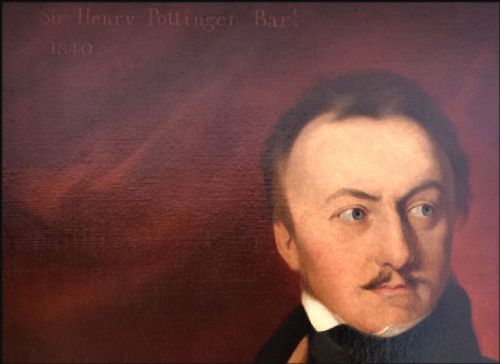
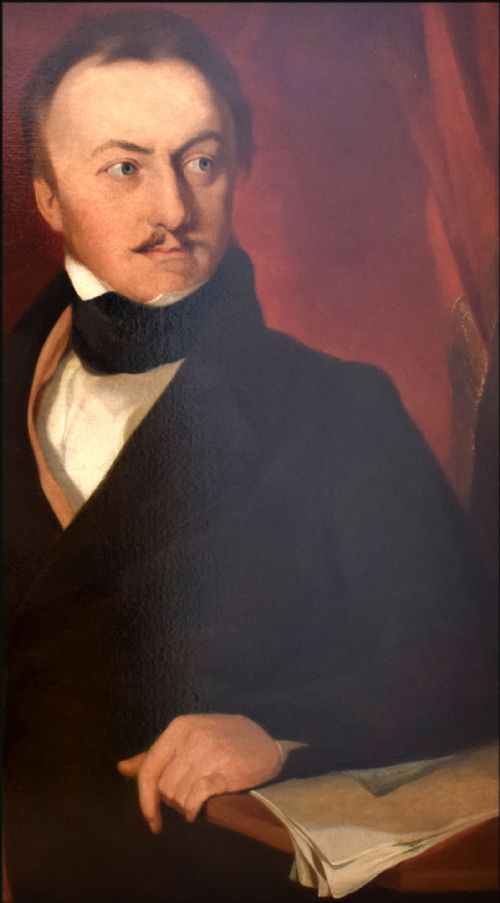
Sir Henry Pottinger, first Baronet (1789–1856) First Governor of Hong Kong
Sir Henry Pottinger, 1789–1856
Signed/Inscribed:
" Sir Henry Pottinger Bart"
oil on canvas
36 x 28in. (91.44 x 71.12 cm.)
Provenance
Literature
Engraved by Joseph Brown BM (British Museum) 1920,1211.1101 and Miss Lowes Dickinson, BM 1852,1009.655
Notes
Sir Henry Pottinger, first baronet (1789–1856), army officer in the East India Company and colonial governor, was born at Mount Pottinger, co. Down, Ireland, on 3 October 1789, the fifth son of Eldred Curwen Pottinger, a descendant of the Pottingers of Berkshire, and his wife, Anne, daughter of Robert Gordon of Florida Manor, co. Down. He was educated at Belfast Academy, which he left when twelve years old, and went to sea. In 1803 he travelled to India to join the marine service there, but friends persuaded Lord Castlereagh in 1804 to substitute a cadetship in the East India Company's army. Meanwhile he studied in Bombay, and acquired a knowledge of Indian languages. He worked well, became an assistant teacher, and on 18 September 1806 was made an ensign, and promoted lieutenant on 16 July 1809.
In 1808 Pottinger was sent on a mission to Sind under Nicholas Hankey Smith, the British political agent at Bushehr. In 1809, when Sir John Malcolm's mission to Persia was postponed, Pottinger and a friend, Captain Charles Christie, offered to explore the area between India and Persia in order to acquire information lacking to the government, which accepted the offer. The travellers, disguised as Indians, and accompanied by a local horse dealer and two servants, left Bombay on 2 January 1810, journeying by sea to Sind, and from there by land to Kalat. They were immediately recognized as Europeans, and even as having belonged to the embassy at Sind, but safely reached Nushki, near the boundary between Afghanistan and Baluchistan; here Christie diverged northwards to Herat, and proceeded thence by Yazd to Esfahan, while Pottinger, keeping in a westerly direction, travelled through Kerman to Shiraz, and joined Christie at Esfahan. Christie was directed to remain there, and was killed in a Russian attack on the Persians in 1812. Pottinger, returning via Baghdad and Basrah, reached Bombay in February 1811. He reported the results of his journey, published as Travels in Beloochistan and Sinde (1816). Pottinger married, in 1820, Susanna Maria (1800–1886), daughter of Captain Richard Cooke of Dublin, whose family was a branch of the Cookes of Cookesborough, co. Westmeath. They had a daughter and three sons; the eldest son died in infancy.
Pottinger was next appointed to the staff of Sir Evan Nepean, governor of Bombay, by whom he was sent as assistant to Mountstuart Elphinstone, the British resident at Poona. On 15 October 1821 he was made captain. He served during the Anglo-Maratha War, and at its close became collector of Ahmednagar. He was promoted major on 1 May 1825, and in the same year was made resident in Cutch. He was promoted lieutenant-colonel on 17 March 1829, and brevet colonel on 23 January 1834. While resident in Cutch he conducted a mission to Sind in 1831, successfully negotiating a commercial treaty. He conducted further missions in 1833–4 and 1836–7, being appointed political agent there in 1836, negotiating the treaty of 1839 which achieved domination of Sind. Out of sympathy with what he saw as Auckland's excessively coercive approach, Pottinger left India in 1840, ill health being given as the reason for his return. He was created a baronet on 27 April 1840.
Pottinger accepted Lord Palmerston's offer of the post of envoy and plenipotentiary in China and superinte
Artware Fineart has dated this piece to the 1800s.
You can view the stock and full dealer information on the Artware Fineart Profile Page
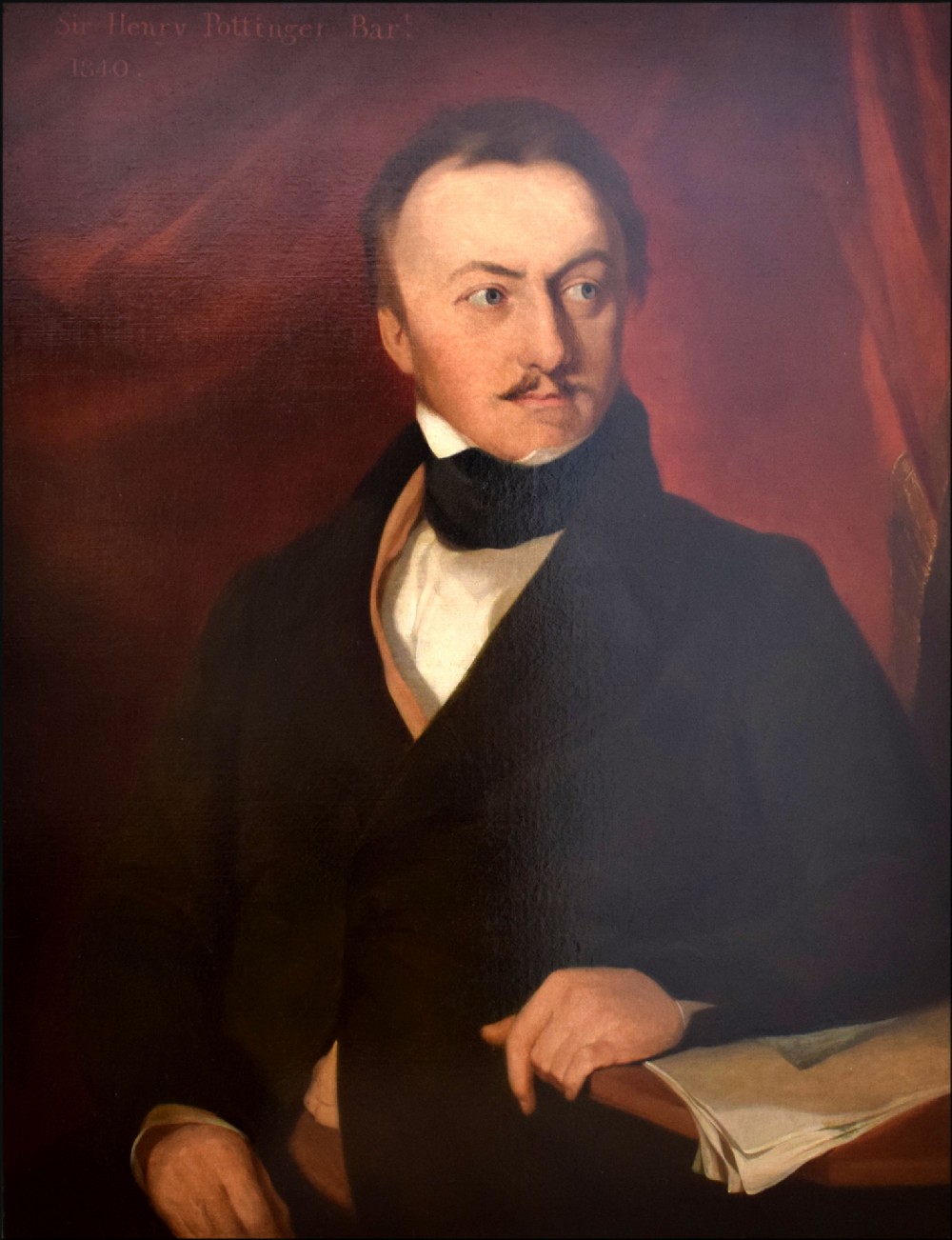
Samuel Laurence, 1812–1884 Sir Henry Pottinger, First Baronet (1789–1856) First Governor of Hong Kong sir Henry Pottinger, 1789–1856


