2,408  PAGES BROWSED TODAY PAGES TODAY • 0 ANTIQUES UPLOADED TODAYNEW ARRIVALS
GIFTS
LATEST STOCK
Sort Order
Items Per Page
Browse Categories
Sort order
Items per page
ID #SA398385
SOLD
Email Phone
Save
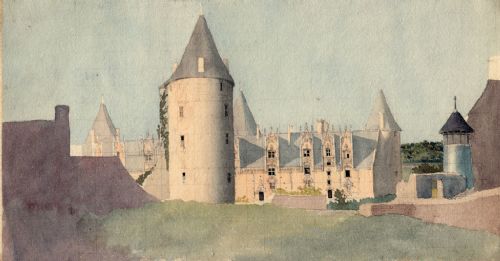
Attributed Thomas Shotter Boys, 1803–1874 Château De Josselin, Brittany
Sold by Artware Fineart
sold SA398385
Sorry, but this item has been sold.

Artware Fineart

Sellingantiques Verified Since Sep 2008
Browse dealers 243 items
Id #SA398385
PDF SHARE
SAVE

Attributed Thomas Shotter Boys, 1803–1874 Château De Josselin, Brittany

19th century
Sold 12 November 2020 · Artware Fineart
This “Attributed Thomas Shotter Boys, 1803–1874 Château De Josselin, Brittany” found a buyer.

It was listed by Artware Fineart. Sold pieces stay on Sellingantiques as a record of what has passed through, and the next one is rarely far away.

Description

Attributed Thomas Shotter Boys, 1803–1874

Château de Josselin, Brittany

pencil and watercolour

6 x 4 in (15.24 x 10.16cm.)

Josselin Castle is a medieval castle at Josselin, in the Morbihan department of Brittany, France, first built in the 11th century and rebuilt at various times since. It has been designated as a monument historique since 1928. Guéthénoc, vicomte of Porhoët, Rohan and Guéméné, began to build the first castle on the site around the year 1008, choosing a rocky promontory overlooking the valley of the Oust. The new fortress was named after Guéthénoc's son, Goscelinus. The name is recorded in the Cartulary of Redon Abbey (1080) as castellum et castrum Goscelini, but already by 1108 it was appearing as Castellum Joscelini.

The site chosen for the castle was excellent from both the commercial and the military points of view, and since the 9th century there had also existed an annual pilgrimage in September to the Basilica of Our Lady of the Bramble (Notre-Dame du Roncier), which added greatly to the wealth of the lords and people of Josselin. In 1154, Odo, Viscount of Porhoet, step-father, guardian and regent of the young Conan IV, Duke of Brittany, collected the Breton lords to deprive Conan of his inheritance, but was defeated by Henry II of England, who was also Duke of Anjou, whose protection Conan had sought. Henry married his fourth son, Geoffrey, to Conan's only child, Constance, Duchess of Brittany, and Henry and his son pulled Josselin Castle down in 1168 and 1175.[5] Henry II himself led the demolition and sowed salt into the ruins.

During the Breton War of Succession (1341–1364), the garrison of Josselin fought inconclusively the defenders of the nearby Castle of Ploërmel. To break the impasse, the Battle of the Thirty was arranged, contested by thirty knights from each side, and took place on 26 March 1351 half-way between the two places. The men of Josselin defeated the champions of Ploërmel, who consisted of four Bretons, six Germans, and twenty Englishmen. In 1370 the Breton soldier Olivier de Clisson (1336–1407), later Constable of France, acquired the lordship of Josselin and built an imposing new fortress with eight towers and a keep one hundred yards across.[2] He married his daughter Beatrice to Alain VIII of Rohan, heir to the viscounts of Rohan, whose own castle was not far away. The castle now boasts an equestrian statue of Olivier de Clisson.

In 1488 Francis II, Duke of Brittany, took the castle and partially demolished it. His daughter, Anne of Brittany, restored it to Jean II of Rohan, a great-grandson of Olivier de Clisson, who transformed the property and built a noble new house with a fine granite facade, an early example of Renaissance architecture, importing Italian artists and artisans. In recognition of his patroness Anne, sovereign Duchess of Brittany and Queen Consort of France, Rohan added to the facade at several points the sculpted letter A beneath a cord, her badge.

Banned from Josselin due to their Protestantism, René II, Viscount of Rohan and the other Rohan men could not prevent the Duke of Mercœur, then Governor of Brittany, from turning their castle into a base for the Catholic League in its struggles against Henry IV of France. In 1603, after being advanced by Henry IV to a dukedom, Henry, Duke of Rohan, one of the leaders of the insurgent Huguenots, transferred his military headquarters to his Castle of Pontivy. In 1629, Cardinal Richelieu dismantled the keep and four of the towers at Josselin and announced to Duke Henry: "My lord, into your game of skittles I have just thrown rather a good ball!" In the 18th century, the castle was no longer occupied as a seat of power, and during the years of the French Revolution and the First French Empire it became a prison and warehouse. In 1822, Caroline, Duchess of Berry, persuaded the then Duke of Rohan, Lo

Date of Manufacture

Artware Fineart has dated this piece to the 1800s.

Reference Numbers
Sellingantiques Reference
SA398385
Dealers Internal Reference
3788
Description
Attributed Thomas Shotter Boys, 1803–1874

Château de Josselin, Brittany

pencil and watercolour

6 x 4 in (15.24 x 10.16cm.)

“
Josselin Castle is a medieval castle at Josselin, in the Morbihan department of Brittany, France, first built in the 11th century and rebuilt at various times since.
Artware Fineart

It has been designated as a monument historique since 1928. Guéthénoc, vicomte of Porhoët, Rohan and Guéméné, began to build the first castle on the site around the year 1008, choosing a rocky promontory overlooking the valley of the Oust. The new fortress was named after Guéthénoc's son, Goscelinus. The name is recorded in the Cartulary of Redon Abbey (1080) as castellum et castrum Goscelini, but already by 1108 it was appearing as Castellum Joscelini.

The site chosen for the castle was excellent from both the commercial and the military points of view, and since the 9th century there had also existed an annual pilgrimage in September to the Basilica of Our Lady of the Bramble (Notre-Dame du Roncier), which added greatly to the wealth of the lords and people of Josselin. In 1154, Odo, Viscount of Porhoet, step-father, guardian and regent of the young Conan IV, Duke of Brittany, collected the Breton lords to deprive Conan of his inheritance, but was defeated by Henry II of England, who was also Duke of Anjou, whose protection Conan had sought. Henry married his fourth son, Geoffrey, to Conan's only child, Constance, Duchess of Brittany, and Henry and his son pulled Josselin Castle down in 1168 and 1175.[5] Henry II himself led the demolition and sowed salt into the ruins.

During the Breton War of Succession (1341–1364), the garrison of Josselin fought inconclusively the defenders of the nearby Castle of Ploërmel. To break the impasse, the Battle of the Thirty was arranged, contested by thirty knights from each side, and took place on 26 March 1351 half-way between the two places. The men of Josselin defeated the champions of Ploërmel, who consisted of four Bretons, six Germans, and twenty Englishmen. In 1370 the Breton soldier Olivier de Clisson (1336–1407), later Constable of France, acquired the lordship of Josselin and built an imposing new fortress with eight towers and a keep one hundred yards across.[2] He married his daughter Beatrice to Alain VIII of Rohan, heir to the viscounts of Rohan, whose own castle was not far away. The castle now boasts an equestrian statue of Olivier de Clisson.

In 1488 Francis II, Duke of Brittany, took the castle and partially demolished it. His daughter, Anne of Brittany, restored it to Jean II of Rohan, a great-grandson of Olivier de Clisson, who transformed the property and built a noble new house with a fine granite facade, an early example of Renaissance architecture, importing Italian artists and artisans. In recognition of his patroness Anne, sovereign Duchess of Brittany and Queen Consort of France, Rohan added to the facade at several points the sculpted letter A beneath a cord, her badge.

Banned from Josselin due to their Protestantism, René II, Viscount of Rohan and the other Rohan men could not prevent the Duke of Mercœur, then Governor of Brittany, from turning their castle into a base for the Catholic League in its struggles against Henry IV of France. In 1603, after being advanced by Henry IV to a dukedom, Henry, Duke of Rohan, one of the leaders of the insurgent Huguenots, transferred his military headquarters to his Castle of Pontivy. In 1629, Cardinal Richelieu dismantled the keep and four of the towers at Josselin and announced to Duke Henry: "My lord, into your game of skittles I have just thrown rather a good ball!" In the 18th century, the castle was no longer occupied as a seat of power, and during the years of the French Revolution and the First French Empire it became a prison and warehouse. In 1822, Caroline, Duchess of Berry, persuaded the then Duke of Rohan, Lo

Date of Manufacture

Artware Fineart has dated this piece to the 1800s.

Reference Numbers
Sellingantiques Ref
SA398385
Dealers Internal Ref
3788
Artware Fineart
Sellingantiques verified Since Sep 2008
Dealer Profile

You can view the stock and full dealer information on the Artware Fineart Profile Page
PDF SHARE
SAVE
Attributed Thomas Shotter Boys, 1803–1874
Château de Josselin, Brittany SOLD6+ MONTHS AGO
1 / 1
Archive I Attributed Thomas Shotter Boys, 1803–1874
Château de Josselin, Brittany SOLD6+ MONTHS AGO

Attributed Thomas Shotter Boys, 1803–1874 Château De Josselin, Brittany

Enlarged Archival View
Telephone 07958 699 645
Location
18 La Gare
51 Surrey Row
London
SE1 0BZ
United Kingdom
Verified Since Sep 2008
Items For Sale 243
Items Sold 223
Artware Fineart
Verified Since Sep 2008
View Dealer Info
Location: 18 La Gare , 51 Surrey Row , London , SE1 0BZ , United Kingdom
Verified
Sep 2008
For Sale
243
Sold
223
Attributed Thomas Shotter Boys, 1803–1874
Château de Josselin, Brittany
Attributed Thomas Shotter Boys, 1803–1874 Château de Josselin, Brittany
Ref: SA398385
Attributed Thomas Shotter Boys, 1803–1874
Château de Josselin, Brittany
Archival Detail
Every single antique dealer on our platform is individually approved by our internal team. We verify their professional trade history, ethical standards, and photographic quality to ensure a secure, high-standard buying environment. Upon joining, every dealer agrees to a strict 9-point code of conduct. While issues can occasionally arise, our dealers typically resolve them swiftly and directly with the buyer. In fact, since our founding in 2002, Sellingantiques has only had to step in to help resolve an issue on roughly five occasions—a true testament to the quality of our dealers and their dedication to your happiness.
Our dealers are highly experienced in packing and shipping fragile, high-value antiques. Because you are in direct contact with the dealer, you will be able to easily go through all available shipping and insurance options together to ensure your item arrives safely.
Antiques are the ultimate green purchase. By choosing historical pieces over newly manufactured goods, you completely eliminate the carbon footprint of modern mass production while preserving exceptional, timeless craftsmanship.
Written by Sellingantiques from the dealer’s photographs and listing
  • Period19th century
items
Add keywords to the filter
Price
£100
£250000
Era
Period
Style
Material
Origin
Stock Location
Recently Added
Online Payments
Categories