2,408  PAGES BROWSED TODAY PAGES TODAY • 0 ANTIQUES UPLOADED TODAYNEW ARRIVALS
GIFTS
LATEST STOCK
Sort Order
Items Per Page
Browse Categories
Sort order
Items per page
ID #SA398382
SOLD
Email Phone
Save
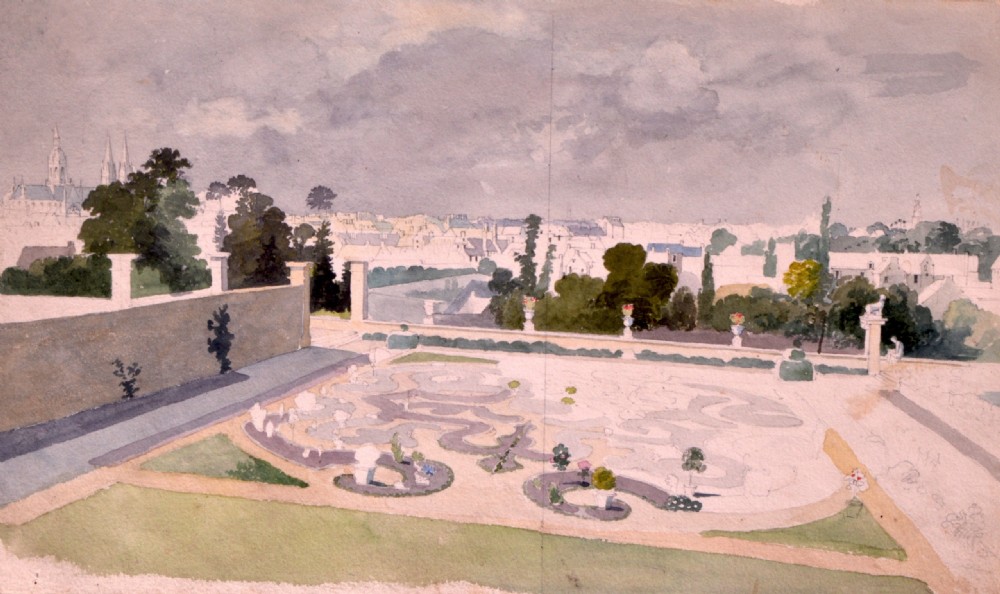
Attributed Thomas Shotter Boys, 1803–1874 A Formal Walled Garden in Bayeux with Bayeux Cathedral Beyond
Sold by Artware Fineart
sold SA398382
Sorry, but this item has been sold.

Artware Fineart

Sellingantiques Verified Since Sep 2008
Browse dealers 243 items
Id #SA398382
PDF SHARE
SAVE

Attributed Thomas Shotter Boys, 1803–1874 A Formal Walled Garden in Bayeux with Bayeux Cathedral Beyond

19th century
Sold 12 November 2020 · Artware Fineart
This “Attributed Thomas Shotter Boys, 1803–1874 A Formal Walled Garden in Bayeux with Bayeux Cathedral Beyond ” found a buyer.

It was listed by Artware Fineart. Sold pieces stay on Sellingantiques as a record of what has passed through, and the next one is rarely far away.

Description

Attributed Thomas Shotter Boys, 1803–1874

A Formal walled Garden in Bayeux with Bayeux Cathedral beyond

pencil and watercolour

6 x 4 in (15.24 x 10.16cm.)

Bayeux is a commune in the Calvados department in Normandy in northwestern France. Bayeux is located 7 kilometres (4 miles) from the coast of the English Channel and 30 km (19 mi) north-west of Caen. The city, with elevations varying from 32 to 67 metres (105 to 220 feet) above sea level – with an average of 46 metres (151 feet) – is bisected by the River Aure. Bayeux is located at the crossroads of RN 13 and the train route Paris-Caen-Cherbourg. The city is the capital of the Bessin, which extends north-west of Calvados. The city was known as Augustodurum in the Roman Empire. It means the durum (Celtic word duro- 'door', 'gate', Welsh dor, Breton dor 'door', 'gate') dedicated to Augustus, Roman Emperor. The Celtic word duron, Latinised as durum, was probably used to translate the Latin word forum (Compare Fréjus Forum Julii, dedicated to Julius (Caesar)).

In the Late Empire it took the name of the Celtic tribe who lived here : the Bodiocassi, Latinized in Bajocassi, Bajocasses, and this word explains the place-names Bayeux and Bessin. Bodiocassi has been compared with Old Irish Buidechass 'with blond locks'. Founded as a Gallo-Roman settlement in the 1st century BC under the name Augustodurum, Bayeux is the capital of the former territory of the Bodiocassi people of Gaul, whose name appears in the writings of Pliny the Elder. Evidence of earlier human occupation of the territory comes from fortified Celtic camps, but there is no evidence of any major pre-existing Celtic town before the organization of Gaul in Roman civitates. Any settlement was more likely confined to scattered Druid huts along the banks of the Aure and Drome rivers or on Mount Phaunus where they worshiped. Cemeteries have been found on the nearby Mount Phaunus indicating the area as a Druid centre. Titus Sabinus, a lieutenant of Julius Caesar, subjected the Bessin region to Roman domination.

The town is mentioned by Ptolemy, writing in the reign of Antoninus Pius under the name Noemagus Biducassium (for *Noviomagus Badiocassium 'New market of the Badiocassi') and remained so until the time of the Roman Empire. The main street was already the heart of the city. A pair of spas under the Church of St. Lawrence and the Dairy Street Post Office and a sculpted head of the goddess Minvera have been found attesting to the adoption of Roman culture. In 1990 a closer examination of huge blocks discovered in the cathedral in the 19th century indicated the presence of an old Roman building. Bayeux was built on a crossroads between Lisieux and Valognes, developing first on the west bank of the river. By the end of the 3rd century a walled enclosure surrounded the city until it was removed in the 18th century. Its layout is still visible and can be followed today. The citadel of the city was located in the southwest corner and the cathedral the southeast. An important city in Normandy, Bayeux was part of the coastal defence of the Roman Empire against the pirates of the region and a Roman Legion was stationed there. The city was largely destroyed during the Viking raids of the late 9th century but was rebuilt in the early 10th century under the reign of Bothon. The 11th century saw the creation of five villages beyond the walls to the north east evidence of its growth during Ducal Normandy. William the Conqueror's half brother Odo, Earl of Kent completed the cathedral in the city and it was dedicated in 1077. However the city began to lose prominence when William placed his capital at Caen. When King Henry I of England defeated his brother Robert Curthose for the rule of Normandy, the city was burned to set an example to the rest of the duchy. Under Richard the Lionheart, Bayeux was wealthy enou

Date of Manufacture

Artware Fineart has dated this piece to the 1800s.

Reference Numbers
Sellingantiques Reference
SA398382
Dealers Internal Reference
3798
Description
Attributed Thomas Shotter Boys, 1803–1874

A Formal walled Garden in Bayeux with Bayeux Cathedral beyond

pencil and watercolour

6 x 4 in (15.24 x 10.16cm.)

Bayeux is a commune in the Calvados department in Normandy in northwestern France.

“
Bayeux is located 7 kilometres (4 miles) from the coast of the English Channel and 30 km (19 mi) north-west of Caen.
Artware Fineart

The city, with elevations varying from 32 to 67 metres (105 to 220 feet) above sea level – with an average of 46 metres (151 feet) – is bisected by the River Aure. Bayeux is located at the crossroads of RN 13 and the train route Paris-Caen-Cherbourg. The city is the capital of the Bessin, which extends north-west of Calvados. The city was known as Augustodurum in the Roman Empire. It means the durum (Celtic word duro- 'door', 'gate', Welsh dor, Breton dor 'door', 'gate') dedicated to Augustus, Roman Emperor. The Celtic word duron, Latinised as durum, was probably used to translate the Latin word forum (Compare Fréjus Forum Julii, dedicated to Julius (Caesar)).

In the Late Empire it took the name of the Celtic tribe who lived here : the Bodiocassi, Latinized in Bajocassi, Bajocasses, and this word explains the place-names Bayeux and Bessin. Bodiocassi has been compared with Old Irish Buidechass 'with blond locks'. Founded as a Gallo-Roman settlement in the 1st century BC under the name Augustodurum, Bayeux is the capital of the former territory of the Bodiocassi people of Gaul, whose name appears in the writings of Pliny the Elder. Evidence of earlier human occupation of the territory comes from fortified Celtic camps, but there is no evidence of any major pre-existing Celtic town before the organization of Gaul in Roman civitates. Any settlement was more likely confined to scattered Druid huts along the banks of the Aure and Drome rivers or on Mount Phaunus where they worshiped. Cemeteries have been found on the nearby Mount Phaunus indicating the area as a Druid centre. Titus Sabinus, a lieutenant of Julius Caesar, subjected the Bessin region to Roman domination.

The town is mentioned by Ptolemy, writing in the reign of Antoninus Pius under the name Noemagus Biducassium (for *Noviomagus Badiocassium 'New market of the Badiocassi') and remained so until the time of the Roman Empire. The main street was already the heart of the city. A pair of spas under the Church of St. Lawrence and the Dairy Street Post Office and a sculpted head of the goddess Minvera have been found attesting to the adoption of Roman culture. In 1990 a closer examination of huge blocks discovered in the cathedral in the 19th century indicated the presence of an old Roman building. Bayeux was built on a crossroads between Lisieux and Valognes, developing first on the west bank of the river. By the end of the 3rd century a walled enclosure surrounded the city until it was removed in the 18th century. Its layout is still visible and can be followed today. The citadel of the city was located in the southwest corner and the cathedral the southeast. An important city in Normandy, Bayeux was part of the coastal defence of the Roman Empire against the pirates of the region and a Roman Legion was stationed there. The city was largely destroyed during the Viking raids of the late 9th century but was rebuilt in the early 10th century under the reign of Bothon. The 11th century saw the creation of five villages beyond the walls to the north east evidence of its growth during Ducal Normandy. William the Conqueror's half brother Odo, Earl of Kent completed the cathedral in the city and it was dedicated in 1077. However the city began to lose prominence when William placed his capital at Caen. When King Henry I of England defeated his brother Robert Curthose for the rule of Normandy, the city was burned to set an example to the rest of the duchy. Under Richard the Lionheart, Bayeux was wealthy enou

Date of Manufacture

Artware Fineart has dated this piece to the 1800s.

Reference Numbers
Sellingantiques Ref
SA398382
Dealers Internal Ref
3798
Artware Fineart
Sellingantiques verified Since Sep 2008
Dealer Profile

You can view the stock and full dealer information on the Artware Fineart Profile Page
PDF SHARE
SAVE
Attributed Thomas Shotter Boys, 1803–1874
A Formal walled Garden in Bayeux with Bayeux Cathedral beyond
SOLD6+ MONTHS AGO
1 / 1
Archive I Attributed Thomas Shotter Boys, 1803–1874
A Formal walled Garden in Bayeux with Bayeux Cathedral beyond
SOLD6+ MONTHS AGO

Attributed Thomas Shotter Boys, 1803–1874 A Formal Walled Garden in Bayeux with Bayeux Cathedral Beyond

Enlarged Archival View
Telephone 07958 699 645
Location
18 La Gare
51 Surrey Row
London
SE1 0BZ
United Kingdom
Verified Since Sep 2008
Items For Sale 243
Items Sold 223
Artware Fineart
Verified Since Sep 2008
View Dealer Info
Location: 18 La Gare , 51 Surrey Row , London , SE1 0BZ , United Kingdom
Verified
Sep 2008
For Sale
243
Sold
223
Attributed Thomas Shotter Boys, 1803–1874
A Formal walled Garden in Bayeux with Bayeux Cathedral beyond
Attributed Thomas Shotter Boys, 1803–1874 A Formal walled Garden in Bayeux with Bayeux Cathedral beyond
Ref: SA398382
Attributed Thomas Shotter Boys, 1803–1874
A Formal walled Garden in Bayeux with Bayeux Cathedral beyond
Archival Detail
Every single antique dealer on our platform is individually approved by our internal team. We verify their professional trade history, ethical standards, and photographic quality to ensure a secure, high-standard buying environment. Upon joining, every dealer agrees to a strict 9-point code of conduct. While issues can occasionally arise, our dealers typically resolve them swiftly and directly with the buyer. In fact, since our founding in 2002, Sellingantiques has only had to step in to help resolve an issue on roughly five occasions—a true testament to the quality of our dealers and their dedication to your happiness.
Our dealers are highly experienced in packing and shipping fragile, high-value antiques. Because you are in direct contact with the dealer, you will be able to easily go through all available shipping and insurance options together to ensure your item arrives safely.
Antiques are the ultimate green purchase. By choosing historical pieces over newly manufactured goods, you completely eliminate the carbon footprint of modern mass production while preserving exceptional, timeless craftsmanship.
Written by Sellingantiques from the dealer’s photographs and listing
  • Period19th century
items
Add keywords to the filter
Price
£100
£250000
Era
Period
Style
Material
Origin
Stock Location
Recently Added
Online Payments
Categories