3,244  PAGES BROWSED TODAY PAGES TODAY • 0 ANTIQUES UPLOADED TODAYNEW ARRIVALS
GIFTS
LATEST STOCK
Sort Order
Items Per Page
Browse Categories
Sort order
Items per page
ID #SA398163
SOLD
Email Phone
Save
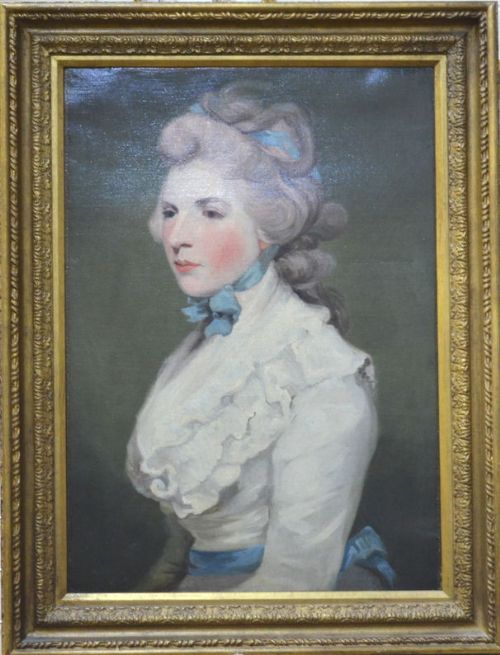
John Downman, 1750 - 1824 Portrait of an Elegant Lady in a White Dress with a Blue Neck Bow and Her Hair Tied with Blue Ribbon
Sold by Artware Fineart
sold SA398163
Sorry, but this item has been sold.

Artware Fineart

Sellingantiques Verified Since Sep 2008
Browse dealers 243 items
Id #SA398163
PDF SHARE
SAVE

John Downman, 1750 - 1824 Portrait of an Elegant Lady in a White Dress with a Blue Neck Bow and Her Hair Tied with Blue Ribbon

18th century
Sold 4 July 2018 · Artware Fineart
This “John Downman, 1750 - 1824 Portrait of an Elegant Lady in a White Dress with a Blue Neck Bow and Her Hair Tied with Blue Ribbon” found a buyer.

It was listed by Artware Fineart. Sold pieces stay on Sellingantiques as a record of what has passed through, and the next one is rarely far away.

Description

John Downman, 1750 - 1824

Portrait of an Elegant Lady in a White Dress with a Blue Neck Bow and her Hair tied with Blue Ribbon

oil on canvas

28 x 19 in. (71 x 48 cm.)

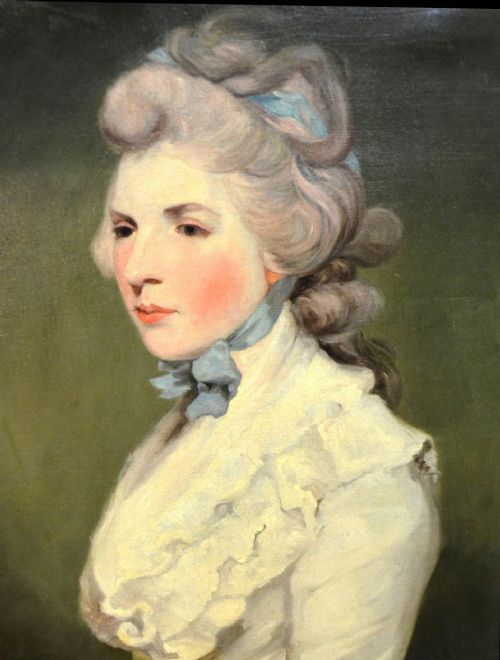
The date of the hairstyle and clothing looks to be about 1785-1790. The ornate hair styles of this decade incorporated ribbons and it was fashionable to wear a ribbon around the neck, sometimes with a brooch pinned to it. With thanks to Dr Susan North with her help in dating that clothing.
John Downman, (1750–1824), portrait and subject painter, was born in Ruabon, Wales, the son of Francis Downman, attorney, and Charlotte Goodsend, eldest daughter of George I's private secretary. Downman studied briefly in Liverpool, then, from 1769, under Benjamin West, president of the Royal Academy, whom he referred to as his ‘most beloved teacher’ (Munro, 8, 19). In 1773 he travelled to Italy with Joseph Wright of Derby, remaining there until 1775. Before 1773 he married his first wife, Elizabeth, who seems to have died or disappeared by 1804. They had three children: one daughter, Isabella Chloë, who was baptized at St Anne, Soho, London, on 2 July 1787, and two sons.
From 1776 to 1777 Downman worked in Cambridge, where he established himself as a portrait painter. In 1778 he was in London and the west country, to which he returned periodically over the next thirty years. Within a few years of his return to London in 1779, he gained a reputation as one of the most fashionable portraitists of the day, and was patronized by the royal family, as well as such fashion icons as the duchess of Devonshire, the duchess of Richmond, and Mrs Siddons. His popularity was largely dependent on his ability to work quickly and in quantity. In order to do so he gave up portraits in oil and devised a technique of working in chalks on a lightweight wove paper that allowed him to reproduce up to ten or twelve versions of the same portrait (for example, his portraits of the countess of Tyrconnel, 1792, and Mrs Thornhill, 1786: Munro, 13). Downman exhibited 148 works at the Royal Academy between 1770 and 1819. A small number of these were history paintings (for example, Edward IVth on a Visit to the Duchess of Bedford, exh. RA, 1797, and A Late Princess Personifying Peace Crowning the Glory of England Reflected on Europe, 1815, exh. RA, 1819; National Museum and Gallery of Wales, Cardiff); however, his treatment of the subject is often muddled and on the whole these were badly received. In some cases, such as The Return of Orestes (1782; Hinton Ampner, Hampshire), these so-called ‘historical’ paintings were in fact a form of group portrait of amateur thespians among the gentry and nobility, including Charles James Fox, depicted in theatrical performance. His closest involvement with amateur theatricals came in 1787, when he was engaged by the duke of Richmond to paint the portraits of those who acted in the highly fashionable performances at Richmond House, including Richard, second earl of Mount Edgcumbe, the Hon. Mrs Bruce, and Major Arabin (Fitzwilliam Museum, Cambridge). Downman became an associate of the Royal Academy in 1795, but never gained full membership. His reputation as snobbish, undemocratic, and slow-witted may have lost him the essential support of his peers. In the 1790s his critical popularity began to flag, and towards the end of that decade he developed a style of chalk portraiture which was larger in scale, bolder in execution, and more penetrating in the description of personality. The majority of these later portraits are in the British Museum. After 1800 his career was itinerant. From about 1804 to 1806 he lived at West Malling in Kent and from 1806 to 1807 lived in Exeter during the year of his brief second marriage. His second wife, whom he married in St Peter's Cathedral, Exeter, on 20 October 1806, was Mary Jackson (d. 1807), daughter of William Jackson,

Date of Manufacture

Artware Fineart has dated this piece to the 1750s.

Reference Numbers
Sellingantiques Reference
SA398163
Dealers Internal Reference
3872
Description
John Downman, 1750 - 1824
“
Portrait of an Elegant Lady in a White Dress with a Blue Neck Bow and her Hair tied with Blue Ribbon.
Artware Fineart

oil on canvas

28 x 19 in. (71 x 48 cm.)

The date of the hairstyle and clothing looks to be about 1785-1790. The ornate hair styles of this decade incorporated ribbons and it was fashionable to wear a ribbon around the neck, sometimes with a brooch pinned to it. With thanks to Dr Susan North with her help in dating that clothing.

fig 1. John Downman, 1750 - 1824
Portrait of an Elegant Lady in a White Dress with a Blue Neck Bow and her Hair tied with Blue Ribbon
fig 1. John Downman, 1750 - 1824 Portrait of an Elegant Lady in a White Dress with a Blue Neck Bow and Her Hair Tied with Blue Ribbon

John Downman, (1750–1824), portrait and subject painter, was born in Ruabon, Wales, the son of Francis Downman, attorney, and Charlotte Goodsend, eldest daughter of George I's private secretary. Downman studied briefly in Liverpool, then, from 1769, under Benjamin West, president of the Royal Academy, whom he referred to as his ‘most beloved teacher’ (Munro, 8, 19). In 1773 he travelled to Italy with Joseph Wright of Derby, remaining there until 1775. Before 1773 he married his first wife, Elizabeth, who seems to have died or disappeared by 1804. They had three children: one daughter, Isabella Chloë, who was baptized at St Anne, Soho, London, on 2 July 1787, and two sons.

fig 2. John Downman, 1750 - 1824
Portrait of an Elegant Lady in a White Dress with a Blue Neck Bow and her Hair tied with Blue Ribbon
fig 2. John Downman, 1750 - 1824 Portrait of an Elegant Lady in a White Dress with a Blue Neck Bow and Her Hair Tied with Blue Ribbon

From 1776 to 1777 Downman worked in Cambridge, where he established himself as a portrait painter. In 1778 he was in London and the west country, to which he returned periodically over the next thirty years. Within a few years of his return to London in 1779, he gained a reputation as one of the most fashionable portraitists of the day, and was patronized by the royal family, as well as such fashion icons as the duchess of Devonshire, the duchess of Richmond, and Mrs Siddons. His popularity was largely dependent on his ability to work quickly and in quantity. In order to do so he gave up portraits in oil and devised a technique of working in chalks on a lightweight wove paper that allowed him to reproduce up to ten or twelve versions of the same portrait (for example, his portraits of the countess of Tyrconnel, 1792, and Mrs Thornhill, 1786: Munro, 13). Downman exhibited 148 works at the Royal Academy between 1770 and 1819. A small number of these were history paintings (for example, Edward IVth on a Visit to the Duchess of Bedford, exh. RA, 1797, and A Late Princess Personifying Peace Crowning the Glory of England Reflected on Europe, 1815, exh. RA, 1819; National Museum and Gallery of Wales, Cardiff); however, his treatment of the subject is often muddled and on the whole these were badly received. In some cases, such as The Return of Orestes (1782; Hinton Ampner, Hampshire), these so-called ‘historical’ paintings were in fact a form of group portrait of amateur thespians among the gentry and nobility, including Charles James Fox, depicted in theatrical performance. His closest involvement with amateur theatricals came in 1787, when he was engaged by the duke of Richmond to paint the portraits of those who acted in the highly fashionable performances at Richmond House, including Richard, second earl of Mount Edgcumbe, the Hon. Mrs Bruce, and Major Arabin (Fitzwilliam Museum, Cambridge). Downman became an associate of the Royal Academy in 1795, but never gained full membership. His reputation as snobbish, undemocratic, and slow-witted may have lost him the essential support of his peers. In the 1790s his critical popularity began to flag, and towards the end of that decade he developed a style of chalk portraiture which was larger in scale, bolder in execution, and more penetrating in the description of personality. The majority of these later portraits are in the British Museum. After 1800 his career was itinerant. From about 1804 to 1806 he lived at West Malling in Kent and from 1806 to 1807 lived in Exeter during the year of his brief second marriage. His second wife, whom he married in St Peter's Cathedral, Exeter, on 20 October 1806, was Mary Jackson (d. 1807), daughter of William Jackson,

Date of Manufacture

Artware Fineart has dated this piece to the 1750s.

Reference Numbers
Sellingantiques Ref
SA398163
Dealers Internal Ref
3872
Artware Fineart
Sellingantiques verified Since Sep 2008
Dealer Profile

You can view the stock and full dealer information on the Artware Fineart Profile Page
PDF SHARE
SAVE
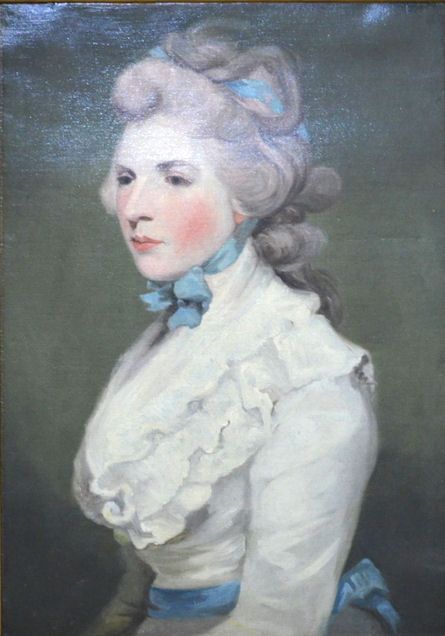
John Downman, 1750 - 1824
Portrait of an Elegant Lady in a White Dress with a Blue Neck Bow and her Hair tied with Blue Ribbon SOLD6+ MONTHS AGO
1 / 4
Archive I John Downman, 1750 - 1824
Portrait of an Elegant Lady in a White Dress with a Blue Neck Bow and her Hair tied with Blue Ribbon SOLD6+ MONTHS AGO

John Downman, 1750 - 1824 Portrait of an Elegant Lady in a White Dress with a Blue Neck Bow and Her Hair Tied with Blue Ribbon
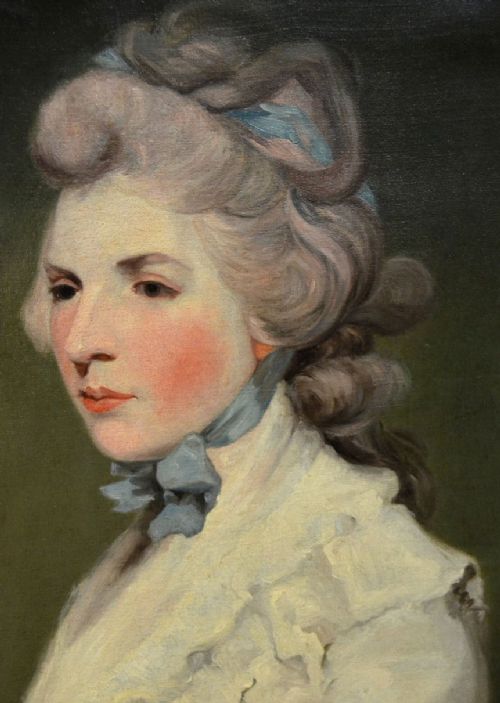
Archive II John Downman, 1750 - 1824
Portrait of an Elegant Lady in a White Dress with a Blue Neck Bow and her Hair tied with Blue Ribbon View II
Archive III John Downman, 1750 - 1824
Portrait of an Elegant Lady in a White Dress with a Blue Neck Bow and her Hair tied with Blue Ribbon View III
Archive IV John Downman, 1750 - 1824
Portrait of an Elegant Lady in a White Dress with a Blue Neck Bow and her Hair tied with Blue Ribbon View IV
Enlarged Archival View
Telephone 07958 699 645
Location
18 La Gare
51 Surrey Row
London
SE1 0BZ
United Kingdom
Verified Since Sep 2008
Items For Sale 243
Items Sold 223
Artware Fineart
Verified Since Sep 2008
View Dealer Info
Location: 18 La Gare , 51 Surrey Row , London , SE1 0BZ , United Kingdom
Verified
Sep 2008
For Sale
243
Sold
223
John Downman, 1750 - 1824
Portrait of an Elegant Lady in a White Dress with a Blue Neck Bow and her Hair tied with Blue Ribbon
John Downman, 1750 - 1824 Portrait of an Elegant Lady in a White Dress with a Blue Neck Bow and her Hair tied with Blue Ribbon
Ref: SA398163
John Downman, 1750 - 1824
Portrait of an Elegant Lady in a White Dress with a Blue Neck Bow and her Hair tied with Blue Ribbon
Detail View 1
Detail View 2
Detail View 3
Archival Detail
Every single antique dealer on our platform is individually approved by our internal team. We verify their professional trade history, ethical standards, and photographic quality to ensure a secure, high-standard buying environment. Upon joining, every dealer agrees to a strict 9-point code of conduct. While issues can occasionally arise, our dealers typically resolve them swiftly and directly with the buyer. In fact, since our founding in 2002, Sellingantiques has only had to step in to help resolve an issue on roughly five occasions—a true testament to the quality of our dealers and their dedication to your happiness.
Our dealers are highly experienced in packing and shipping fragile, high-value antiques. Because you are in direct contact with the dealer, you will be able to easily go through all available shipping and insurance options together to ensure your item arrives safely.
Antiques are the ultimate green purchase. By choosing historical pieces over newly manufactured goods, you completely eliminate the carbon footprint of modern mass production while preserving exceptional, timeless craftsmanship.
Written by Sellingantiques from the dealer’s photographs and listing
  • Period18th century
items
Add keywords to the filter
Price
£100
£250000
Era
Period
Style
Material
Origin
Stock Location
Recently Added
Online Payments
Categories