4,604  PAGES BROWSED TODAY PAGES TODAY • 0 ANTIQUES UPLOADED TODAYNEW ARRIVALS
GIFTS
LATEST STOCK
Sort Order
Items Per Page
Browse Categories
Sort order
Items per page
ID #SA256705
SOLD
Email Phone
Save
John Lewthwaite of Cockermouth 1806 - 1866 Portrait of John Christian Curwen, Mp, 1756-1828
Sold by Artware Fineart
sold SA256705
Sorry, but this item has been sold.

Artware Fineart

Sellingantiques Verified Since Sep 2008
Browse dealers 243 items
Id #SA256705
PDF SHARE
SAVE

John Lewthwaite of Cockermouth 1806 - 1866 Portrait of John Christian Curwen, Mp, 1756-1828

19th century
Sold 2 June 2017 · Artware Fineart
This “John Lewthwaite of Cockermouth 1806 - 1866 Portrait of John Christian Curwen, Mp, 1756-1828” found a buyer.

It was listed by Artware Fineart. Sold pieces stay on Sellingantiques as a record of what has passed through, and the next one is rarely far away.

Description

John Lewthwaite of Cockermouth 1806 - 1866

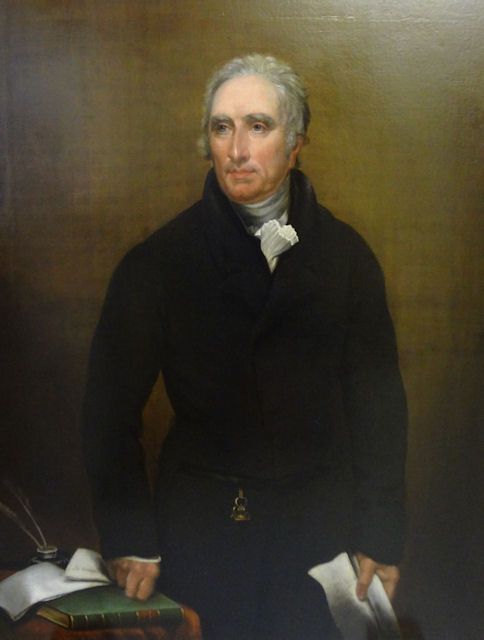
Portrait of John Christian Curwen, MP, 1756-1828

Oil on Canvas

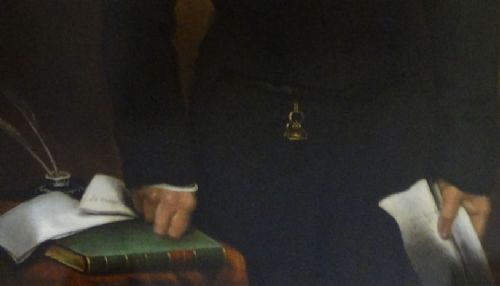
sitters hand resting on a document bearing his name and a book entitled "Agricultural Report", the document held in his left hand inscribed " Elected for the county of Cumbd and City of Carlisle March 1820".
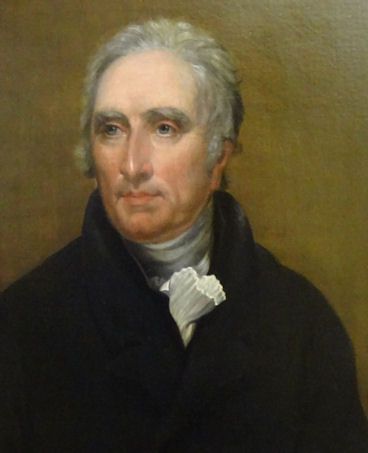
45 x 35 in. (114 x 89 cm.)

Curwen, John Christian (1756–1828), agriculturist and politician, was born on 12 July 1756 at Ewanrigg, Dearham, Cumberland, the eldest to survive infancy of the sons of John Christian of Ewanrigg, and his wife, Jane, eldest daughter of Eldred Curwen of Workington Hall, Cumberland. He was educated at Peterhouse, Cambridge; he left the university without a degree about 1774. On 10 September 1775 he married Margaret, daughter of John Taubman of Castletown, Isle of Man. She died in 1778, leaving a son, also John Christian. He remarried on 5 October 1782 at Edinburgh; his second wife was his cousin Isabella, daughter of his uncle and guardian, Henry Curwen of Workington. She brought him £5000 p.a. and her family's support in the career in Cumberland politics which he subsequently began. They had five sons and three daughters. He took on the surname Curwen in 1790 [see Curwen family (per. c.1500–c.1725)]. A whig in politics, Curwen was returned to the House of Commons for Carlisle in 1786, was defeated for that constituency in 1790, regained it in 1791, held it until 1812, and held it again from 1816 to 1820. He then represented Cumberland from 1820 until his death. He was an active parliamentarian who supported Catholic emancipation, parliamentary reform, and the repeal of the corn laws. To emphasize his concern for his constituents he once appeared in the House of Commons dressed like a Cumberland labourer and carrying a loaf and a cheese under his arms. In 1796 he made an ineffectual bid to reform and virtually abolish the game laws. Politically, he is best known for Curwen's Act, which was passed in 1809. The act was one of the very few significant reforms of the pre-1832 system; it attempted to reduce the sale of seats and the number of government placemen in the Commons, but was less successful than contemporaries initially feared. Curwen's interest in agriculture probably dated from a long journey through Europe following the death of his first wife in 1778. He was a friend of Arthur Young and knew the leaders of progressive agricultural opinion in Scotland. In Cumberland he embarked on an improvement programme on his estates at Workington Hall. In 1805 he inaugurated the Workington Agricultural Society, which had a profound impact on local agriculture in the first half of the nineteenth century. In 1807 he received the gold medal of the Society of Arts, Commerce, and Manufactures, for his agricultural innovations. Many of his ideas were published in Hints on Agricultural Subjects (1809), and his views on Ireland, where he spent time between 1813 and 1816, appeared in Observations on the state of Ireland, principally directed to its agriculture and rural population (1818). Part, at least, of his motive in studying agriculture was to improve the lot of the labouring poor. To the latter end he was also responsible for establishing a savings bank at Workington, and for various friendly societies. Curwen's estates lay on the west Cumberland coalfield, and he took a particular interest in the collieries inherited from his father and his second wife, as well as in others which he purchased and leased in the area. However, he was hit by the trade depression after the Napoleonic wars, and by the 1820s Workington colliery was in decline. Increasing costs and declining profits forced him to borrow, and from 1819 until 1827 Curwen owed more than £120,000. Consequently he was not able to invest in improved mining techniques in the later years of his life. Curwen was sheriff of Cumberland

Date of Manufacture

Artware Fineart has dated this piece to the 1800s.

Physical Dimensions
Height
122cm (48.03")
Width
97cm (38.19")
Depth
4cm (1.57")
Reference Numbers
Sellingantiques Reference
SA256705
Dealers Internal Reference
3618
Description
John Lewthwaite of Cockermouth 1806 - 1866

Portrait of John Christian Curwen, MP, 1756-1828

Oil on Canvas

sitters hand resting on a document bearing his name and a book entitled "Agricultural Report", the document held in his left hand inscribed " Elected for the county of Cumbd and City of Carlisle March 1820".

fig 1. John Lewthwaite of Cockermouth   1806 - 1866

Portrait of John Christian Curwen, MP, 1756-1828
fig 1. John Lewthwaite of Cockermouth 1806 - 1866 Portrait of John Christian Curwen, Mp, 1756-1828

45 x 35 in. (114 x 89 cm.)

Curwen, John Christian (1756–1828), agriculturist and politician, was born on 12 July 1756 at Ewanrigg, Dearham, Cumberland, the eldest to survive infancy of the sons of John Christian of Ewanrigg, and his wife, Jane, eldest daughter of Eldred Curwen of Workington Hall, Cumberland. He was educated at Peterhouse, Cambridge; he left the university without a degree about 1774. On 10 September 1775 he married Margaret, daughter of John Taubman of Castletown, Isle of Man. She died in 1778, leaving a son, also John Christian.

“
He remarried on 5 October 1782 at Edinburgh; his second wife was his cousin Isabella, daughter of his uncle and guardian, Henry Curwen of Workington.
Artware Fineart

She brought him £5000 p.a. and her family's support in the career in Cumberland politics which he subsequently began. They had five sons and three daughters. He took on the surname Curwen in 1790 [see Curwen family (per. c.1500–c.1725)]. A whig in politics, Curwen was returned to the House of Commons for Carlisle in 1786, was defeated for that constituency in 1790, regained it in 1791, held it until 1812, and held it again from 1816 to 1820. He then represented Cumberland from 1820 until his death. He was an active parliamentarian who supported Catholic emancipation, parliamentary reform, and the repeal of the corn laws. To emphasize his concern for his constituents he once appeared in the House of Commons dressed like a Cumberland labourer and carrying a loaf and a cheese under his arms. In 1796 he made an ineffectual bid to reform and virtually abolish the game laws. Politically, he is best known for Curwen's Act, which was passed in 1809. The act was one of the very few significant reforms of the pre-1832 system; it attempted to reduce the sale of seats and the number of government placemen in the Commons, but was less successful than contemporaries initially feared. Curwen's interest in agriculture probably dated from a long journey through Europe following the death of his first wife in 1778. He was a friend of Arthur Young and knew the leaders of progressive agricultural opinion in Scotland. In Cumberland he embarked on an improvement programme on his estates at Workington Hall. In 1805 he inaugurated the Workington Agricultural Society, which had a profound impact on local agriculture in the first half of the nineteenth century. In 1807 he received the gold medal of the Society of Arts, Commerce, and Manufactures, for his agricultural innovations. Many of his ideas were published in Hints on Agricultural Subjects (1809), and his views on Ireland, where he spent time between 1813 and 1816, appeared in Observations on the state of Ireland, principally directed to its agriculture and rural population (1818). Part, at least, of his motive in studying agriculture was to improve the lot of the labouring poor. To the latter end he was also responsible for establishing a savings bank at Workington, and for various friendly societies. Curwen's estates lay on the west Cumberland coalfield, and he took a particular interest in the collieries inherited from his father and his second wife, as well as in others which he purchased and leased in the area. However, he was hit by the trade depression after the Napoleonic wars, and by the 1820s Workington colliery was in decline. Increasing costs and declining profits forced him to borrow, and from 1819 until 1827 Curwen owed more than £120,000. Consequently he was not able to invest in improved mining techniques in the later years of his life. Curwen was sheriff of Cumberland

Date of Manufacture

Artware Fineart has dated this piece to the 1800s.

Height
122cm (48.03")
Width
97cm (38.19")
Depth
4cm (1.57")
Reference Numbers
Sellingantiques Ref
SA256705
Dealers Internal Ref
3618
Artware Fineart
Sellingantiques verified Since Sep 2008
Dealer Profile

You can view the stock and full dealer information on the Artware Fineart Profile Page
PDF SHARE
SAVE
John Lewthwaite of Cockermouth   1806 - 1866

Portrait of John Christian Curwen, MP, 1756-1828 SOLD6+ MONTHS AGO
1 / 3
Archive I John Lewthwaite of Cockermouth   1806 - 1866

Portrait of John Christian Curwen, MP, 1756-1828 SOLD6+ MONTHS AGO

John Lewthwaite of Cockermouth 1806 - 1866 Portrait of John Christian Curwen, Mp, 1756-1828
Archive II John Lewthwaite of Cockermouth   1806 - 1866

Portrait of John Christian Curwen, MP, 1756-1828 View II
Archive III John Lewthwaite of Cockermouth   1806 - 1866

Portrait of John Christian Curwen, MP, 1756-1828 View III
Enlarged Archival View
Telephone 07958 699 645
Location
18 La Gare
51 Surrey Row
London
SE1 0BZ
United Kingdom
Verified Since Sep 2008
Items For Sale 243
Items Sold 223
Artware Fineart
Verified Since Sep 2008
View Dealer Info
Location: 18 La Gare , 51 Surrey Row , London , SE1 0BZ , United Kingdom
Verified
Sep 2008
For Sale
243
Sold
223
John Lewthwaite of Cockermouth   1806 - 1866

Portrait of John Christian Curwen, MP, 1756-1828
John Lewthwaite of Cockermouth 1806 - 1866 Portrait of John Christian Curwen, MP, 1756-1828
Ref: SA256705
John Lewthwaite of Cockermouth   1806 - 1866

Portrait of John Christian Curwen, MP, 1756-1828
Detail View 1
Detail View 2
Archival Detail
Every single antique dealer on our platform is individually approved by our internal team. We verify their professional trade history, ethical standards, and photographic quality to ensure a secure, high-standard buying environment. Upon joining, every dealer agrees to a strict 9-point code of conduct. While issues can occasionally arise, our dealers typically resolve them swiftly and directly with the buyer. In fact, since our founding in 2002, Sellingantiques has only had to step in to help resolve an issue on roughly five occasions—a true testament to the quality of our dealers and their dedication to your happiness.
Our dealers are highly experienced in packing and shipping fragile, high-value antiques. Because you are in direct contact with the dealer, you will be able to easily go through all available shipping and insurance options together to ensure your item arrives safely.
Antiques are the ultimate green purchase. By choosing historical pieces over newly manufactured goods, you completely eliminate the carbon footprint of modern mass production while preserving exceptional, timeless craftsmanship.
Written by Sellingantiques from the dealer’s photographs and listing
  • Period19th century
  • SizeH 122 cm (48 in) x W 97 cm (38 in) x D 4 cm (2 in)
items
Add keywords to the filter
Price
£100
£250000
Era
Period
Style
Material
Origin
Stock Location
Recently Added
Online Payments
Categories