5,506  PAGES BROWSED TODAY PAGES TODAY • 0 ANTIQUES UPLOADED TODAYNEW ARRIVALS
GIFTS
LATEST STOCK
Sort Order
Items Per Page
Browse Categories
Sort order
Items per page
ID #SA206150
SOLD
Email Phone
Save
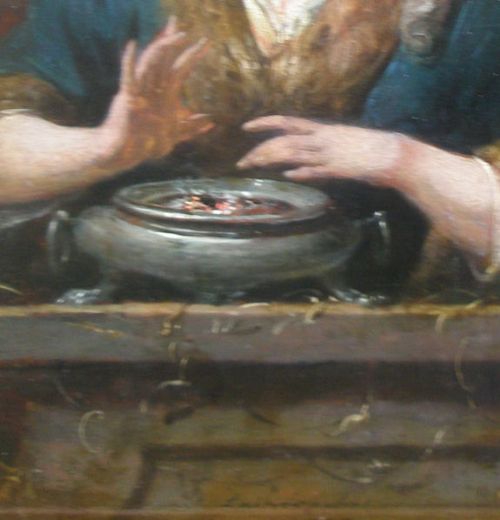
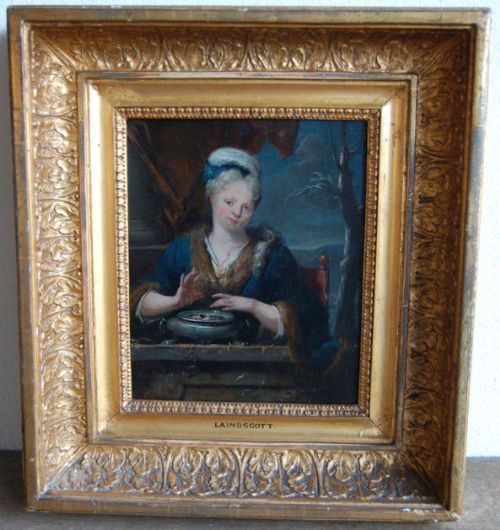
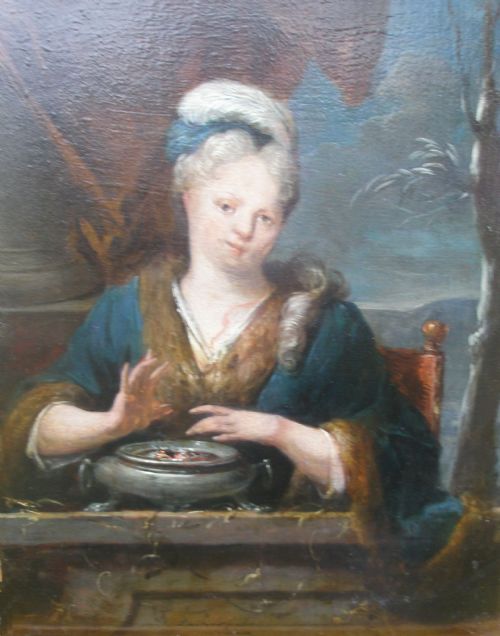
Circle of Casper Netscher 1639-1684 An Allegory of Winter, a Lady Warming Her Hands Over a Brazier
Sold by Artware Fineart
sold SA206150
Sorry, but this item has been sold.

Artware Fineart

Sellingantiques Verified Since Sep 2008
Browse dealers 243 items
Id #SA206150
PDF SHARE
SAVE

Circle of Casper Netscher 1639-1684 An Allegory of Winter, a Lady Warming Her Hands Over a Brazier

17th century
Sold 1 August 2017 · Artware Fineart
This “Circle of Casper Netscher 1639-1684 An Allegory of Winter, a Lady Warming Her Hands Over a Brazier” found a buyer.

It was listed by Artware Fineart. Sold pieces stay on Sellingantiques as a record of what has passed through, and the next one is rarely far away.

Description

Circle of Casper Netscher 1639-1684

An Allegory of Winter, A lady warming her hands over a Brazier.

oil on panel, framed

8.66 x 7.09 inches (22 x 18 cm.)

According to Arnold Houbraken's 17th century biographical study of Dutch painters he was born in Heidelberg or Prague. His father Johann Netscher was a sculptor from Stuttgart. The elder Netscher married Elizabet Vetter, the daughter of a mayor in Heidelberg, against her father's wishes. He died in Poland when Caspar was two years of age. It has been suggested that Caspar may have been the son of a Rotterdam painter. When Heidelberg was attacked during the civil war, Caspar's mother fled with four children to an estate outside the city. When the castle was laid under siege, the people there suffered from hunger and Caspar's two older brothers died.Caspar's mother fled in the night, carrying the young Caspar in her arms and with her young daughter on foot, staying at almshouses for widows and orphans. They travelled in this way to Arnhem, where they finally found safe quarter. In Arnhem Caspar was adopted by a rich physician named A. Tullekens. At first he was destined for the profession of his patron, but owing to his great aptitude for painting he was placed under a local artist named Hendrick Coster, and though the acquaintance of Wynant Everwyn in 1654, who had family connections to Tullekens, he became a student of Ter Borch in Deventer. He was Ter Borch's most gifted pupil, probably worked as an assistant as well and he appears several times as a model on Ter Borch's paintings.
The Lace-Maker by Caspar Netscher (1662), oil on canvas, 33 x 27 cm. Wallace Collection, London

When he came of age, he first worked for the Dutch "keelbeulen" (Houbraken called art dealers "cutthroats") until he had enough money to make a grand tour. In 1658 he set out for Italy to complete his education, booking passage on a ship to Bordeaux with letters of introduction from Tullekens for his cousin Neny there. From Bordeaux he planned to proceed overland to Italy. However, while in Bordeaux he met the mathematician and fountain designer Godijn, and married his daughter Margaretha Godijn on 25 November 1659, which halted his progress to Rome. In Bordeaux he toiled hard to earn a livelihood by painting small cabinet pictures which are now highly valued on account of their exquisite finish. Fearing the persecutions of Protestants, after his son was born he moved back North to The Hague in 1662, and turned his attention to portrait-painting. In this branch of his art was more successful. In 1668 he joined the Schutterij and Cosimo III de' Medici, traveling through the Netherlands bought four paintings.
It is likely that Netscher knew the painters Frans van Mieris, Sr. (1635?-1681) and Gerard Dou, but it is certain that he knew the painter Gerrit de Hooch from The Hague as his wife gave her name to Gerrit's new born daughter Margarita in 1676, the event being witnessed by Caspar as well as his wife.[citation needed] He was patronized by William III, and his earnings soon enabled him to gratify his own taste by depicting musical and conversational pieces.
It was in these that Netscher's genius was fully displayed. The choice of these subjects, and the habit of introducing female figures, dressed in glossy satins, were imitated from Ter Borch; they possess easy yet delicate pencilling, brilliant and correct colouring, and pleasing light and shade; but frequently their refinement passes into weakness. The painter was gaining both fame and wealth when he began to suffer from gout and took to his bed, where he continued to paint lying down and died prematurely in 1684, in The Hague. His sons Constantyn (1668–1722), and Theodorus (1661–1732), were also painters after their father's style, who Houbraken meant to include in his 4th volume of painters.

Date of Manufacture

Artware Fineart has dated this piece to the 17th Century.

Physical Dimensions
Height
30cm (11.81")
Width
26cm (10.24")
Depth
4cm (1.57")
Reference Numbers
Sellingantiques Reference
SA206150
Dealers Internal Reference
3544
Description
Circle of Casper Netscher 1639-1684

An Allegory of Winter, A lady warming her hands over a Brazier.

oil on panel, framed

8.66 x 7.09 inches (22 x 18 cm.)

“
According to Arnold Houbraken's 17th century biographical study of Dutch painters he was born in Heidelberg or Prague.
Artware Fineart

His father Johann Netscher was a sculptor from Stuttgart. The elder Netscher married Elizabet Vetter, the daughter of a mayor in Heidelberg, against her father's wishes. He died in Poland when Caspar was two years of age. It has been suggested that Caspar may have been the son of a Rotterdam painter. When Heidelberg was attacked during the civil war, Caspar's mother fled with four children to an estate outside the city. When the castle was laid under siege, the people there suffered from hunger and Caspar's two older brothers died.Caspar's mother fled in the night, carrying the young Caspar in her arms and with her young daughter on foot, staying at almshouses for widows and orphans. They travelled in this way to Arnhem, where they finally found safe quarter. In Arnhem Caspar was adopted by a rich physician named A. Tullekens. At first he was destined for the profession of his patron, but owing to his great aptitude for painting he was placed under a local artist named Hendrick Coster, and though the acquaintance of Wynant Everwyn in 1654, who had family connections to Tullekens, he became a student of Ter Borch in Deventer. He was Ter Borch's most gifted pupil, probably worked as an assistant as well and he appears several times as a model on Ter Borch's paintings.

fig 1. Circle of Casper Netscher 1639-1684
An Allegory of Winter, A lady warming her hands over a Brazier
fig 1. Circle of Casper Netscher 1639-1684 An Allegory of Winter, a Lady Warming Her Hands Over a Brazier

The Lace-Maker by Caspar Netscher (1662), oil on canvas, 33 x 27 cm. Wallace Collection, London

When he came of age, he first worked for the Dutch "keelbeulen" (Houbraken called art dealers "cutthroats") until he had enough money to make a grand tour. In 1658 he set out for Italy to complete his education, booking passage on a ship to Bordeaux with letters of introduction from Tullekens for his cousin Neny there. From Bordeaux he planned to proceed overland to Italy. However, while in Bordeaux he met the mathematician and fountain designer Godijn, and married his daughter Margaretha Godijn on 25 November 1659, which halted his progress to Rome. In Bordeaux he toiled hard to earn a livelihood by painting small cabinet pictures which are now highly valued on account of their exquisite finish. Fearing the persecutions of Protestants, after his son was born he moved back North to The Hague in 1662, and turned his attention to portrait-painting. In this branch of his art was more successful. In 1668 he joined the Schutterij and Cosimo III de' Medici, traveling through the Netherlands bought four paintings.

fig 2. Circle of Casper Netscher 1639-1684
An Allegory of Winter, A lady warming her hands over a Brazier
fig 2. Circle of Casper Netscher 1639-1684 An Allegory of Winter, a Lady Warming Her Hands Over a Brazier

It is likely that Netscher knew the painters Frans van Mieris, Sr. (1635?-1681) and Gerard Dou, but it is certain that he knew the painter Gerrit de Hooch from The Hague as his wife gave her name to Gerrit's new born daughter Margarita in 1676, the event being witnessed by Caspar as well as his wife.[citation needed] He was patronized by William III, and his earnings soon enabled him to gratify his own taste by depicting musical and conversational pieces.

fig 3. Circle of Casper Netscher 1639-1684
An Allegory of Winter, A lady warming her hands over a Brazier
fig 3. Circle of Casper Netscher 1639-1684 An Allegory of Winter, a Lady Warming Her Hands Over a Brazier

It was in these that Netscher's genius was fully displayed. The choice of these subjects, and the habit of introducing female figures, dressed in glossy satins, were imitated from Ter Borch; they possess easy yet delicate pencilling, brilliant and correct colouring, and pleasing light and shade; but frequently their refinement passes into weakness. The painter was gaining both fame and wealth when he began to suffer from gout and took to his bed, where he continued to paint lying down and died prematurely in 1684, in The Hague. His sons Constantyn (1668–1722), and Theodorus (1661–1732), were also painters after their father's style, who Houbraken meant to include in his 4th volume of painters.

Date of Manufacture

Artware Fineart has dated this piece to the 17th Century.

Height
30cm (11.81")
Width
26cm (10.24")
Depth
4cm (1.57")
Reference Numbers
Sellingantiques Ref
SA206150
Dealers Internal Ref
3544
Artware Fineart
Sellingantiques verified Since Sep 2008
Dealer Profile

You can view the stock and full dealer information on the Artware Fineart Profile Page
PDF SHARE
SAVE
Circle of Casper Netscher 1639-1684
An Allegory of Winter, A lady warming her hands over a Brazier SOLD6+ MONTHS AGO
1 / 5
Archive I Circle of Casper Netscher 1639-1684
An Allegory of Winter, A lady warming her hands over a Brazier SOLD6+ MONTHS AGO

Circle of Casper Netscher 1639-1684 An Allegory of Winter, a Lady Warming Her Hands Over a Brazier
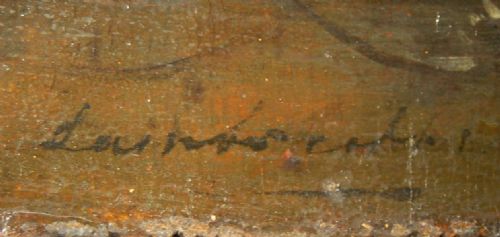
Archive II Circle of Casper Netscher 1639-1684
An Allegory of Winter, A lady warming her hands over a Brazier View II
Archive III Circle of Casper Netscher 1639-1684
An Allegory of Winter, A lady warming her hands over a Brazier View III
Archive IV Circle of Casper Netscher 1639-1684
An Allegory of Winter, A lady warming her hands over a Brazier View IV
Archive V Circle of Casper Netscher 1639-1684
An Allegory of Winter, A lady warming her hands over a Brazier View V
Enlarged Archival View
Telephone 07958 699 645
Location
18 La Gare
51 Surrey Row
London
SE1 0BZ
United Kingdom
Verified Since Sep 2008
Items For Sale 243
Items Sold 223
Artware Fineart
Verified Since Sep 2008
View Dealer Info
Location: 18 La Gare , 51 Surrey Row , London , SE1 0BZ , United Kingdom
Verified
Sep 2008
For Sale
243
Sold
223
Circle of Casper Netscher 1639-1684
An Allegory of Winter, A lady warming her hands over a Brazier
Circle of Casper Netscher 1639-1684 An Allegory of Winter, A lady warming her hands over a Brazier
Ref: SA206150
Circle of Casper Netscher 1639-1684
An Allegory of Winter, A lady warming her hands over a Brazier
Detail View 1
Detail View 2
Detail View 3
Detail View 4
Archival Detail
Every single antique dealer on our platform is individually approved by our internal team. We verify their professional trade history, ethical standards, and photographic quality to ensure a secure, high-standard buying environment. Upon joining, every dealer agrees to a strict 9-point code of conduct. While issues can occasionally arise, our dealers typically resolve them swiftly and directly with the buyer. In fact, since our founding in 2002, Sellingantiques has only had to step in to help resolve an issue on roughly five occasions—a true testament to the quality of our dealers and their dedication to your happiness.
Our dealers are highly experienced in packing and shipping fragile, high-value antiques. Because you are in direct contact with the dealer, you will be able to easily go through all available shipping and insurance options together to ensure your item arrives safely.
Antiques are the ultimate green purchase. By choosing historical pieces over newly manufactured goods, you completely eliminate the carbon footprint of modern mass production while preserving exceptional, timeless craftsmanship.
Written by Sellingantiques from the dealer’s photographs and listing
  • Period17th century
  • SizeH 30 cm (12 in) x W 26 cm (10 in) x D 4 cm (2 in)
items
Add keywords to the filter
Price
£100
£250000
Era
Period
Style
Material
Origin
Stock Location
Recently Added
Online Payments
Categories